Warm Homes Local Grant 2026: Up to 30000 Free for English Homeowners
The Warm Homes Local Grant eligibility requirements are more straightforward than many homeowners expect, and the funding available is substantial. Administered by local councils across England, this scheme provides up to 15,000 for insulation and a further 15,000 for heating system upgrades, giving a potential total of 30,000 in free improvements. If your household income is below 36,000, you could qualify. This guide covers everything you need to know about applying in 2026.
What Is the Warm Homes Local Grant?
The Warm Homes Local Grant is part of the UK Government’s broader Warm Homes Plan, which replaced the previous ECO and Green Homes Grant schemes. It channels funding directly through local authorities, who are responsible for identifying eligible households, managing applications, and overseeing installations in their area.
This local delivery model means the scheme operates slightly differently depending on where you live. Each council has its own application process, assessment criteria, and approved contractor network, though the core eligibility rules and maximum grant amounts are set nationally.
The scheme targets owner-occupiers and private tenants in England whose homes have poor energy performance and who meet the income criteria. It is one of the most generous energy efficiency grants currently available, particularly for households that need both insulation and heating system upgrades.
Warm Homes Local Grant Eligibility Criteria
To qualify for the Warm Homes Local Grant, you must meet the following requirements.
Income Threshold
Your total household income must be below 36,000 per year. This is the gross income of all adults in the property, calculated before tax. Some councils may apply slightly different thresholds depending on local fuel poverty data, but 36,000 is the national baseline.
Property Requirements
- The property must be in England
- It must be your main residence (or a privately rented property with landlord consent)
- The property should have an EPC rating of D, E, F, or G (some councils also accept properties rated C if specific measures are needed)
- The property must not be a new-build or have recently undergone substantial energy improvements funded by another government scheme
Qualifying Benefits (Fast-Track Route)
If you receive any of the following benefits, your application may be fast-tracked without a detailed income assessment.
- Pension Credit
- Universal Credit
- Income Support
- Income-based Jobseeker’s Allowance
- Income-related Employment and Support Allowance
- Child Tax Credit (with income below 18,725)
- Working Tax Credit (with income below 18,725)
- Housing Benefit
What Does the Warm Homes Local Grant Fund?
The grant covers two categories of improvement, each with its own cap.
Insulation Measures (Up to 15,000)
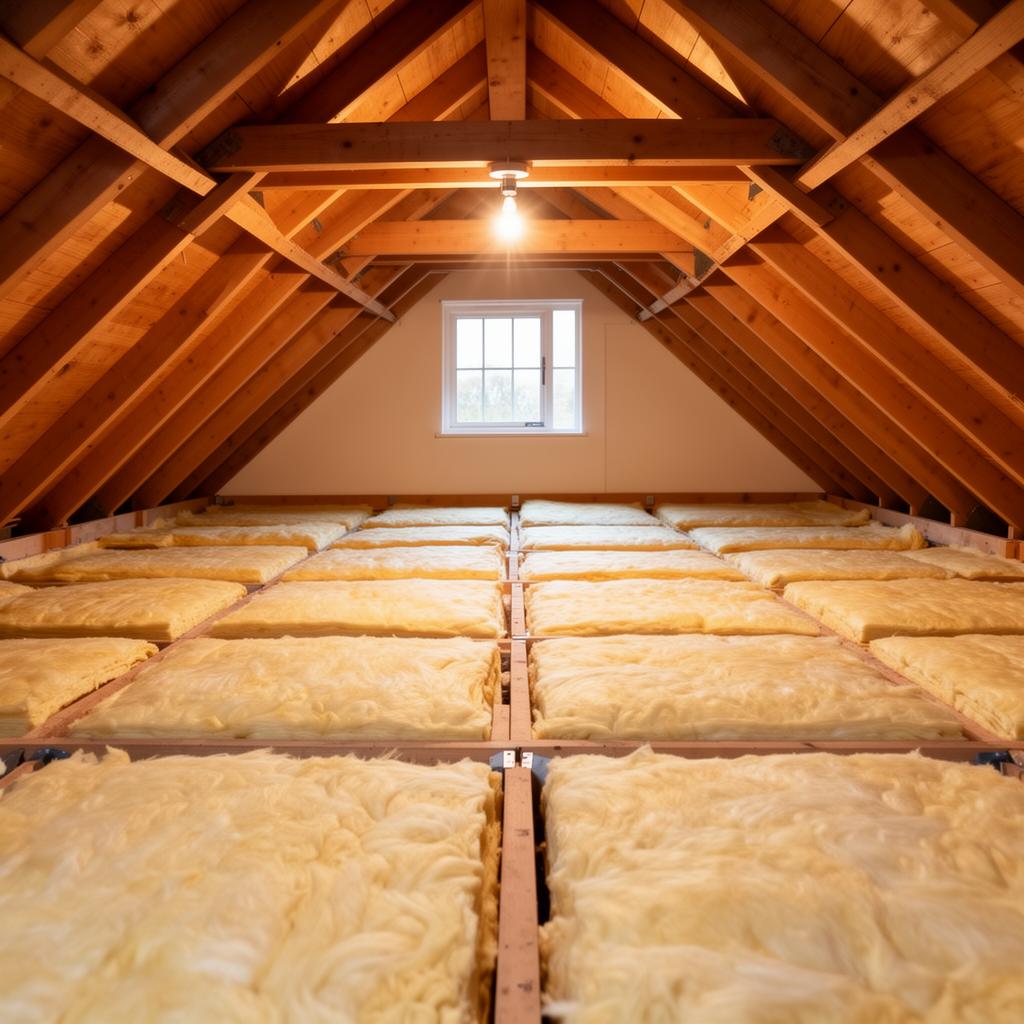
- Loft insulation (virgin or top-up to 270mm)
- Cavity wall insulation
- External wall insulation
- Internal wall insulation
- Floor insulation
- Room-in-roof insulation
- Flat roof insulation
Heating System Upgrades (Up to 15,000)
- Air source heat pumps
- Ground source heat pumps
- High-efficiency gas boilers (where a heat pump is not feasible)
- Heating controls and smart thermostats
- Radiator upgrades
- Solar PV panels (where combined with other measures)
The maximum combined grant is 30,000, though most households receive between 5,000 and 20,000 depending on the measures needed. The assessor will recommend the most effective combination for your property.
How the Grant Varies by Local Authority
Because delivery is managed at council level, the experience can vary significantly depending on where you live. Here are the main areas of variation.
| Factor | How It Varies |
|---|---|
| Application process | Some councils accept online applications; others require a phone call or referral |
| Waiting times | Range from 4 weeks to 6+ months depending on demand and budget |
| Approved contractors | Each council has its own vetted contractor network |
| Additional criteria | Some councils prioritise certain property types or areas |
| Budget availability | Funding is allocated annually and can run out before year-end |
The most important thing is to apply early. Councils receive a fixed annual budget, and once it is allocated, no further applications can be accepted until the next funding round. Do not wait until autumn or winter when demand peaks.
How to Apply for the Warm Homes Local Grant
Follow these steps to apply for the Warm Homes Local Grant in your area.
Step 1: Find Your Council’s Scheme
Visit the Simple Energy Advice website or search for your local council’s energy efficiency grants page. Many councils also list the scheme under names like “Warm Homes Fund” or “Home Energy Support.” If you cannot find it, call your council’s housing or environmental services department directly.
Step 2: Check Eligibility
Most councils have an online eligibility checker or phone-based screening process. You will need to provide your address, household income, benefits status, and a rough description of your current heating and insulation situation.
Step 3: Property Assessment
If you pass the initial screening, a qualified assessor will visit your home to survey the property. They will check current insulation levels, assess the heating system, inspect windows and ventilation, and determine which measures would deliver the greatest improvement.
Step 4: Grant Offer
Based on the assessment, the council will issue a grant offer detailing the approved measures and their value. You will have the opportunity to review the offer and ask questions before accepting.
Step 5: Installation
The council will assign an approved contractor to carry out the work. All contractors must be TrustMark registered and hold relevant certifications (MCS for heat pumps, PAS 2030 for insulation). The work is typically completed within two to eight weeks of the grant offer, depending on the complexity.
Typical Savings from Warm Homes Local Grant Improvements
The annual energy bill savings depend on your property’s starting condition and which measures are installed. Here are realistic estimates based on typical English homes.
| Measure | Typical Annual Saving |
|---|---|
| Loft insulation (0mm to 270mm) | 200 – 350 |
| Cavity wall insulation | 200 – 400 |
| External wall insulation | 300 – 700 |
| Air source heat pump (replacing gas boiler) | 100 – 300 |
| Air source heat pump (replacing electric heating) | 400 – 800 |
| New gas boiler (replacing 15+ year old model) | 200 – 400 |
| Heating controls upgrade | 75 – 150 |
A household receiving the full package of insulation and a heating system upgrade could save 600 to 1,200 per year on energy bills. Over 10 years, that represents savings of 6,000 to 12,000, all from improvements that cost you nothing.
Warm Homes Local Grant vs Other Energy Schemes
| Feature | Warm Homes Local Grant | ECO4 | Boiler Upgrade Scheme |
|---|---|---|---|
| Funding source | Government via councils | Energy suppliers | Government (Ofgem) |
| Maximum value | 30,000 | Varies | 7,500 |
| Income threshold | 36,000 | Benefits-based | None |
| Insulation | Yes (up to 15,000) | Yes | No |
| Heat pumps | Yes (up to 15,000) | Limited | Yes |
| Boilers | Yes | Yes | No |
| Application route | Local council | Energy supplier/installer | MCS installer |
If you qualify for the Warm Homes Local Grant, it typically offers more generous support than ECO4. However, if your council’s budget is exhausted, ECO4 may be available as an alternative. You cannot receive the same measure through both schemes, but you could receive different measures from each.
Not sure which scheme offers the best deal for your property? Request a free quote and we can help identify the most cost-effective route.
Frequently Asked Questions
Can private tenants apply for the Warm Homes Local Grant?
Yes, private tenants can benefit from the scheme, but the landlord must give written consent and may be required to contribute towards the cost of improvements. The exact landlord contribution varies by council and measure type. Contact your local council for specific requirements in your area.
What if my household income is just above 36,000?
If your income slightly exceeds the threshold, you may still be eligible through other routes. Some councils operate flexible eligibility criteria that consider factors like energy costs relative to income, health conditions, and property type. The Boiler Upgrade Scheme has no income threshold and provides 7,500 towards a heat pump, regardless of earnings.
How long does the Warm Homes Local Grant application process take?
Timescales vary significantly by council. In areas with available budget and low demand, the process from application to completed work can take as little as 6 to 8 weeks. In high-demand areas or where budgets are stretched, expect 3 to 6 months. Applying early in the financial year (April to June) typically gives the best chance of fast processing.
Do I need an EPC to apply?
You do not need to have a current EPC to apply. If your property does not have one, the council assessor will carry out an energy assessment as part of the survey visit. However, having a recent EPC can speed up the process because it provides ready-made data about your property’s energy performance. You can check if your home has a valid EPC on the government’s EPC register.
Can I choose my own installer?
In most cases, the council will assign a contractor from their approved list. You generally cannot choose your own installer because the council needs to ensure quality standards and value for money. All approved contractors are TrustMark registered and hold the relevant certifications for the work they carry out, including MCS for renewable energy installations and PAS 2030 for insulation.
See what these numbers mean for your home
Free instant estimate — costs, savings, payback and grants for your region.

Related Articles
Heat Pump Grant Rises to £9,000 for Oil and LPG Homes From 21 July 2026
The standard Boiler Upgrade Scheme grant stays at £7,500. From 21 July 2026 to 31 March 2027, homes currently heated by oil or LPG get an increased £9,000 grant. Corrected…
10 June 2026
The Warm Homes Plan 2026: What Every UK Homeowner Needs to Know
The UK government’s Warm Homes Plan is the biggest energy efficiency programme in British history. Launched in January 2026 with up to £15 billion in funding, it aims to upgrade…
5 June 2026
ECO4 Scheme 2026: Who Qualifies, What’s Covered and How to Apply
The ECO4 scheme runs until December 2026, offering fully funded insulation and heating upgrades for eligible UK households. Find out if you qualify through benefits or the ECO4 Flex route,…
11 May 2026