Window Energy Ratings Explained: What A++ to C Means for Your Home
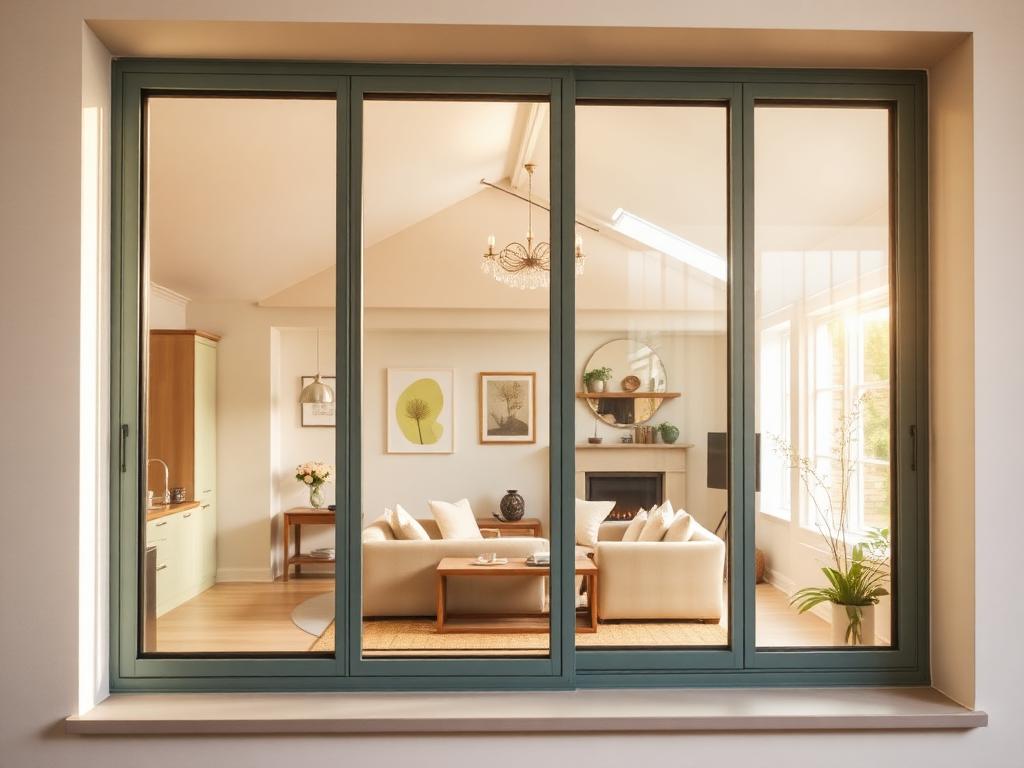
Window energy ratings UK homeowners encounter when shopping for replacement windows can seem confusing at first glance. The colourful rainbow label produced by the British Fenestration Rating Council (BFRC) condenses complex thermal performance data into a simple letter grade from A++ down to E. Understanding what these ratings actually measure, how they are calculated and what minimum standard your new windows must meet helps you compare quotes accurately and avoid paying for performance levels you do not need.
What Are Window Energy Ratings?
Window energy ratings are a standardised grading system run by the British Fenestration Rating Council (BFRC) that scores windows from A++ (most efficient) to G (least efficient) based on their overall thermal performance. The rating accounts for three factors: how much heat the window loses (U-value), how much free solar heat it gains (g-value) and how much air leaks through it (L-value).
Building regulations in England require replacement windows to achieve a minimum rating of band C or a U-value of 1.4 W/m²K or lower. Most modern double-glazed windows achieve band B or A as standard, while triple-glazed units often reach A+ or A++. Choosing A-rated windows over the minimum C-rated requirement can save an additional £10 to £25 per year on heating bills across a typical semi-detached home.
What Is the BFRC Window Energy Rating System?
The BFRC (British Fenestration Rating Council) is an independent organisation that operates the UK’s national window energy rating scheme. Established in 2004, it provides a standardised way to compare the energy performance of different window products using a single letter-based scale.
The rating system runs from A++ (most energy efficient) down to E (least energy efficient). Each rating band represents a specific range of overall energy performance, calculated using a formula that combines three separate measurements of how energy passes through the window.
The BFRC rainbow label is displayed on a sticker attached to new windows, similar in concept to the energy efficiency labels found on appliances such as washing machines and refrigerators. The label includes the overall letter rating, the numerical values for each performance component and the manufacturer details.
How Window Energy Ratings Are Calculated
The BFRC energy rating is derived from three separate performance factors that together describe how energy interacts with the window over a typical UK heating season.
U-Value (Heat Loss)
The U-value measures how quickly heat passes through the entire window assembly (glass, frame and spacer bar) from the warm inside to the cold outside. It is expressed in W/m2K (watts per square metre per degree Kelvin). A lower U-value means less heat loss.
Modern A-rated double-glazed windows typically achieve a whole-window U-value of 1.2-1.4 W/m2K. A++ rated windows achieve 0.8 W/m2K or better, usually requiring triple glazing.
Solar Heat Gain (g-value)
The g-value (also called solar factor or solar heat gain coefficient) measures how much of the sun’s warmth passes through the glass and contributes to heating the room. A higher g-value means more free solar heating.
This is a positive factor in the energy rating calculation because solar gain offsets heating costs during the winter months. Standard low-e double glazing has a g-value of approximately 0.55-0.65, meaning 55-65% of the sun’s thermal energy passes through the glass.
Air Leakage (L-value)
The L-value measures how much heat is lost through air leakage around the window frame, seals and opening mechanisms. It is expressed in W/m2K, with a lower value indicating better air-tightness.
Well-made modern windows with proper gasket seals achieve L-values as low as 0.01 W/m2K. Poorly sealed or badly fitting windows can have L-values of 0.1 W/m2K or more, significantly increasing overall heat loss.
The Energy Rating Formula
The BFRC combines these three values using the following approach: it takes the solar heat gain (a positive, as it adds free energy), subtracts the heat lost through the glass and frame (U-value), and subtracts the heat lost through air leakage (L-value). The resulting number is expressed in kWh/m2/year and mapped to the letter rating bands.
| Rating Band | Energy Index (kWh/m2/year) | Performance Level |
|---|---|---|
| A++ | 20 or above | Exceptional (typically triple glazed) |
| A+ | 10 to 20 | Excellent |
| A | 0 to 10 | Very good |
| B | -10 to 0 | Good (minimum for Building Regulations) |
| C | -20 to -10 | Acceptable |
| D | -30 to -20 | Below standard |
| E | -50 to -30 | Poor |
A positive energy index means the window theoretically generates more energy from solar gain than it loses through conduction and air leakage over a heating season. In practice, this depends on the window orientation (south-facing windows gain more solar heat than north-facing ones), but the rating provides a useful standardised comparison.
Minimum Window Energy Ratings Under Building Regulations
Building Regulations Approved Document L sets the minimum thermal performance requirements for replacement windows and new-build windows in England and Wales. There are two routes to compliance:
- Route 1 (Energy Rating): Minimum BFRC rating of B
- Route 2 (U-Value): Maximum whole-window U-value of 1.4 W/m2K
Both routes achieve broadly similar thermal performance, and manufacturers can choose which to certify their products against. In practice, most mainstream double-glazed windows comfortably achieve a B rating and a U-value at or below 1.4 W/m2K when fitted with soft-coat low-e glass and argon gas fill.
Scotland has slightly different requirements under Section 6 of its Building Standards, and Northern Ireland follows its own Technical Booklet F. The performance targets are broadly similar across all UK jurisdictions.
Any FENSA or CERTASS registered installer fitting replacement windows must ensure compliance with these minimum standards. If you receive a quote for windows rated C or below, they will not meet current Building Regulations and cannot be legally installed as replacement windows without additional justification (such as heritage exemptions for listed buildings).
How to Read a BFRC Rainbow Label
The BFRC label displayed on certified windows contains several pieces of information:
- The rainbow scale: Shows bands from A++ (dark green) through to E (red), with an arrow indicating the product’s rating
- Energy index: The numerical value in kWh/m2/year showing the overall energy performance
- Thermal transmittance (U-value): The whole-window U-value in W/m2K
- Solar factor (g-value): The proportion of solar energy transmitted through the glass
- Air leakage (L-value): The rate of heat loss through air permeability
- Licence number: A unique code confirming the product is genuinely BFRC certified
- Manufacturer details: The company name and product reference
When comparing quotes from different window installers, the BFRC label provides the most objective comparison tool available. Two windows with the same letter rating will perform similarly regardless of brand, frame material or marketing claims.
A-Rated vs B-Rated Windows: Is There a Real Difference?
Many window companies heavily promote their A-rated or A+ rated windows as a premium product, often charging a significant uplift over B-rated alternatives. But how much practical difference does one rating band make?
The honest answer is: not much. The difference between a B-rated window (energy index -10 to 0) and an A-rated window (energy index 0 to 10) translates to approximately GBP 2-5 per window per year in energy savings, depending on window size and orientation. For a full house of 8-10 windows, the annual saving might be GBP 20-50.
If the cost premium for A-rated over B-rated windows is GBP 300-500 for a full house, the payback period for the upgrade is 6-25 years. This is not a compelling economic case, and for many homeowners the B-rated product represents the best value.
That said, there are valid reasons to choose higher-rated windows:
- Future-proofing against potential tightening of Building Regulations
- Slightly better condensation resistance due to warmer inner glass surfaces
- Marginally better acoustic performance from the improved sealed unit specification
- Higher EPC rating for your property, which may be valuable for future sale or rental
Window Energy Ratings and Comparing Installer Quotes
When collecting quotes for replacement windows, use the BFRC rating as one of several comparison points. Here is a practical approach:
- Ensure all quotes specify the same rating: If one installer quotes A-rated windows and another quotes B-rated, the comparison is not like-for-like
- Check the U-value as well as the letter rating: Within the same rating band, U-values can vary. A B-rated window with a U-value of 1.3 is better than one with 1.4
- Ask for the BFRC licence number: This confirms the rating is genuine and not self-declared by the manufacturer
- Compare frame materials: uPVC, timber and aluminium frames all affect the overall U-value. Timber and thermally broken aluminium generally perform better than basic uPVC
- Consider the whole package: Installation quality, guarantee length, after-sales service and installer reputation matter as much as the glass specification
For help comparing window quotes and finding trusted installers in your area, get a free quote through our network.
New windows work best as part of a whole-house approach to energy efficiency. Pairing them with improved insulation and an efficient heating system such as a modern boiler or heat pump delivers the greatest overall savings.
Frequently Asked Questions
Are BFRC ratings mandatory for replacement windows?
BFRC ratings are not legally mandatory, but they provide the simplest route to demonstrating Building Regulations compliance. The alternative is to prove compliance using the U-value route (maximum 1.4 W/m2K), which requires the installer to provide a calculation for the specific window being installed. Most FENSA and CERTASS installers use BFRC-rated products because it simplifies the compliance process.
Do window energy ratings apply to doors as well?
The BFRC also operates a Door Energy Rating (DER) scheme that works on similar principles to the window rating. However, door ratings are less commonly displayed or referenced. Building Regulations require replacement doors with more than 50% glazing to achieve a U-value of 1.4 W/m2K or better, and fully glazed doors must meet the same standard as windows. Solid doors have a separate U-value requirement of 1.4 W/m2K.
What rating do my existing windows have?
Unless a BFRC sticker was placed on the window at installation and has been retained, you cannot determine the exact rating of existing windows without testing. However, you can estimate based on the age and type. Windows installed before 2002 are likely unrated (D or E equivalent). Those installed 2002-2010 are typically C-rated. Post-2010 installations are usually B-rated or above, and post-2022 installations should be B-rated minimum.
Can triple glazing achieve A++ ratings?
Yes. A++ is the highest BFRC rating band, requiring an energy index of 20 kWh/m2/year or above. This is achievable with well-specified triple-glazed units using low-e coatings on two surfaces, krypton or argon gas fills and thermally broken frames. A++ rated windows are typically 40-80% more expensive than equivalent A-rated double glazing and are most commonly specified in Passivhaus projects or very high-performance new builds.
Does the window orientation affect the energy rating?
The BFRC rating is calculated using a standardised UK average orientation and climate, not the specific orientation of your window. In reality, south-facing windows gain significantly more solar energy than north-facing ones. A B-rated south-facing window may perform as well as or better than an A-rated north-facing window in practice, because the real solar gain on the south side is higher than the standardised figure used in the rating calculation.
See what these numbers mean for your home
Free instant estimate — costs, savings, payback and grants for your region.

Related Articles
Home Insulation Costs and Grants: Your Complete 2026 Guide
Update (June 2026): ECO4 closed to new applications in March 2026. Approved installations continue to December 2026. The Warm Homes: Local Grant is now the main funding route for insulation.…
18 May 2026
How to Reduce Condensation and Damp While Keeping Your Home Warm
Learn why condensation forms in UK homes, the difference between condensation and rising damp, and proven ventilation strategies to fix damp without losing heat.
8 May 2026
Conservatory Roof Replacement: How a Solid Roof Cuts Energy Bills and Adds Value
Replacing an old polycarbonate or glass conservatory roof with a solid insulated roof can slash heat loss, cut energy bills and turn a seasonal room into a year-round living space.
6 May 2026