Phenolic Foam Insulation Boards Explained: Kingspan Kooltherm and Alternatives
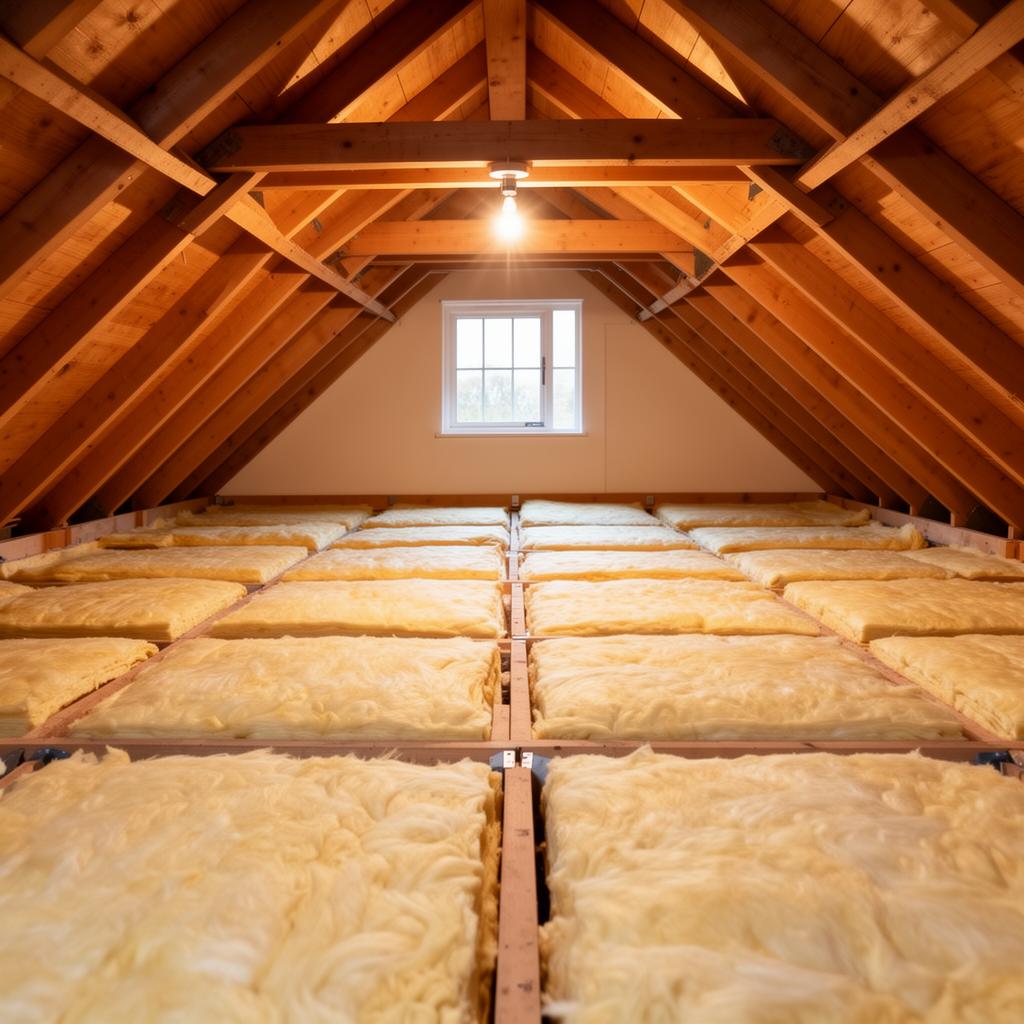
Phenolic foam insulation delivers the best thermal conductivity of any widely available rigid board product in the UK, with lambda values as low as 0.018 W/mK. That makes it roughly 20% more effective per millimetre than standard PIR (polyisocyanurate) insulation. For homeowners and builders looking to maximise thermal performance while minimising insulation thickness, phenolic foam boards from manufacturers like Kingspan Kooltherm and Xtratherm represent the top tier of conventional insulation technology.
What Is Phenolic Foam Insulation?
Phenolic foam is a rigid thermoset insulation material produced by expanding a phenol-formaldehyde resin with a blowing agent. The result is a closed-cell foam structure with extremely fine cells that trap gas more effectively than the larger cells found in PIR or EPS boards.
The key characteristics of phenolic foam that distinguish it from other rigid insulation boards include:
- Lowest thermal conductivity: 0.018 W/mK compared to 0.022 W/mK for PIR and 0.030-0.038 W/mK for EPS
- Excellent fire performance: Phenolic foam generates very low smoke and toxic gas emissions when exposed to fire, with a typical Euroclass B-s1,d0 rating
- Good compressive strength: Suitable for use in floor and flat roof applications where the insulation must bear weight
- Dark brown or maroon colour: Easily distinguishable from the yellow/gold colour of PIR boards
The main trade-off is that phenolic foam is more brittle than PIR and can be more difficult to cut cleanly. It also tends to absorb moisture if the cell structure is damaged, so careful handling and appropriate vapour management are important.
Kingspan Kooltherm Range: Product by Product
Kingspan’s Kooltherm range is the most widely specified phenolic foam insulation in the UK market. Each product is engineered for a specific application, with appropriate facings and edge details.
Kooltherm K103 Floorboard
Designed for use in ground floors and intermediate floors, K103 has a compressive strength of 100 kPa, making it suitable for placement beneath screed or between floor joists. With a thermal conductivity of 0.018 W/mK, a 75mm K103 board achieves a thermal resistance of 4.16 m2K/W, sufficient to meet the Building Regulations target U-value of 0.25 W/m2K for ground floors in most situations.
Typical applications include insulation above a concrete slab with screed overlay, insulation between timber floor joists, and underfloor heating systems where minimising build-up height is essential.
Kooltherm K106 Cavity Board
K106 is a full-fill or partial-fill cavity wall insulation board. It is faced with a low-emissivity foil on the cavity side to provide additional thermal resistance from the residual air gap. For partial-fill applications, a minimum 50mm residual cavity must be maintained.
A 50mm K106 board in a partial-fill cavity can help achieve a wall U-value of approximately 0.27 W/m2K, while 75mm can push this below 0.20 W/m2K. This is particularly useful for new-build projects aiming for high energy performance ratings.
Kooltherm K108 Cavity Board
K108 is similar to K106 but designed specifically for use behind brick or block outer leaf cladding in masonry cavity walls. It includes a glass tissue facing that provides a suitable surface for mortar droppings and cavity wall ties. Available in thicknesses from 25mm to 125mm, it covers the full range of cavity widths found in UK construction.
Other Kooltherm Products
The range also includes K112 Framing Board for timber and steel frame construction, K118 Insulated Plasterboard for internal wall insulation, and K107 Pitched Roof Board for between and over rafter applications. Each product shares the same 0.018 W/mK phenolic foam core but with facings and dimensions tailored to its specific application.
Xtratherm and Other Phenolic Foam Alternatives
While Kingspan dominates the phenolic foam market in the UK, several alternatives offer comparable performance, sometimes at a lower price point.
Xtratherm Safe-R Range
Xtratherm’s Safe-R products use phenolic foam cores with a declared thermal conductivity of 0.020 W/mK, slightly higher than Kingspan’s 0.018 but still better than PIR at 0.022. The range covers walls, floors, pitched roofs and flat roofs. Xtratherm tends to be 10-15% cheaper than equivalent Kingspan Kooltherm products, making it an attractive alternative where the marginal difference in lambda value is not critical.
Mannok (formerly Quinn Therm)
Mannok produces PIR boards rather than true phenolic foam, but some of their products achieve lambda values as low as 0.021 W/mK, bridging the gap between standard PIR and phenolic. They are widely available in Northern Ireland and increasingly across the rest of the UK.
Phenolic Foam vs PIR vs EPS: Which Board Should You Use?
Choosing between rigid board insulation types involves balancing thermal performance, cost, application suitability and thickness constraints. Here is a direct comparison of the three main options available for UK insulation projects.
| Property | Phenolic Foam | PIR | EPS |
|---|---|---|---|
| Lambda value (W/mK) | 0.018 | 0.022 | 0.030-0.038 |
| Thickness for U-value 0.18 (roof) | 100mm | 120mm | 170-210mm |
| Cost per m2 (100mm) | GBP 18-28 | GBP 12-20 | GBP 6-12 |
| Fire rating | B-s1,d0 | B-s1,d0 | E (with flame retardant) |
| Moisture resistance | Good (if undamaged) | Very good | Good |
| Ease of cutting | Brittle, needs care | Easy, clean cut | Crumbles slightly |
| Compressive strength | 100-140 kPa | 100-150 kPa | 60-100 kPa |
In most standard UK construction projects, PIR offers the best balance of performance and value. The 0.004 W/mK difference between phenolic and PIR translates to roughly 15-20mm less thickness for phenolic at the same thermal performance. Whether that saving is worth the 30-50% cost premium depends entirely on the specific project constraints.
When Phenolic Foam Insulation Is Worth the Extra Cost
The cost premium for phenolic foam over PIR is significant, so it makes financial sense only in specific scenarios where the extra performance or thinner profile delivers tangible benefits.
- Loft conversions with shallow rafters: Where every 10mm of additional headroom matters for Building Regulations compliance, the thinner phenolic board can be the difference between a project that works and one that does not
- Floor build-ups with height restrictions: Reducing insulation thickness by 20mm in a floor build-up can avoid the need to raise door thresholds or step down into rooms
- Achieving Passivhaus or EnerPHit standards: Ultra-low U-value targets require maximum performance from every component, making phenolic the logical choice for the rigid board element
- External wall insulation on narrow pavements: Where the building line meets the public highway, thinner EWI systems may be the only option that avoids planning complications
For standard cavity wall insulation, loft floor insulation or general wall upgrades, PIR or mineral wool will typically deliver adequate performance at a lower cost. Speak to a professional installer to determine the best approach for your home. You can get a free quote to compare options.
Installation Tips for Phenolic Foam Boards
Working with phenolic foam requires slightly more care than PIR due to its more brittle nature. Here are the key installation considerations:
- Cutting: Use a fine-toothed saw rather than a knife for clean, chip-free cuts. Score and snap is not recommended as the board tends to fracture unevenly.
- Storage: Keep boards dry and flat. Phenolic foam can absorb moisture through damaged edges, which permanently degrades its thermal performance.
- Taping joints: All joints between boards should be sealed with foil tape to maintain the vapour resistance of the insulation layer and prevent air movement through gaps.
- Compatibility: Check adhesive and fixing compatibility before installation. Some solvent-based adhesives can attack phenolic foam. Mechanical fixings with insulation-retaining washers are recommended for wall applications.
- Fire safety: Although phenolic foam has excellent fire performance, it must still be covered with a non-combustible lining (such as plasterboard) in most building applications to comply with Building Regulations.
Phenolic Foam Insulation and Building Regulations
All Kingspan Kooltherm and Xtratherm Safe-R products hold BBA certification and are accepted by building control officers across the UK. They comply with the thermal performance requirements of Building Regulations Approved Document L for new builds, extensions and renovations.
The current Part L targets for individual building elements are:
- Walls: U-value of 0.26 W/m2K (new build) or 0.30 W/m2K (renovation)
- Floors: U-value of 0.18 W/m2K (new build) or 0.25 W/m2K (renovation)
- Pitched roof: U-value of 0.16 W/m2K (new build) or 0.18 W/m2K (renovation)
- Flat roof: U-value of 0.18 W/m2K (new build) or 0.18 W/m2K (renovation)
Phenolic foam’s low lambda value means these targets can be met with the thinnest possible board, which is why architects increasingly specify it for projects where build-up depth is critical. Pairing high-performance insulation with efficient heating systems such as heat pumps or condensing boilers creates a whole-house approach to energy efficiency.
Frequently Asked Questions
Is phenolic foam insulation better than Celotex?
Celotex products are PIR (polyisocyanurate) insulation, not phenolic foam. Phenolic foam has a lower thermal conductivity (0.018 W/mK versus 0.022 W/mK for Celotex), so it performs approximately 18% better per millimetre. However, Celotex PIR boards are cheaper, easier to cut and more moisture-resistant. Phenolic foam is the better choice only when the thinnest possible insulation thickness is required.
Does phenolic foam insulation off-gas or smell?
Newly installed phenolic foam can release a mild acidic odour, which some people find noticeable. This off-gassing is temporary and typically dissipates within a few weeks once the board is covered with plasterboard or other finishes. In enclosed spaces with poor ventilation, the odour may linger longer. The off-gassing is not considered hazardous at the levels produced by building insulation products.
Can phenolic foam get wet?
Phenolic foam has a closed-cell structure that resists water absorption, but if the cell structure is damaged (through rough handling, poor cutting or mechanical impact), moisture can penetrate the board and permanently reduce its thermal performance. Boards should be stored under cover and any damaged sections replaced rather than installed. Once installed behind plasterboard or within a protected wall or roof build-up, moisture exposure is unlikely.
How thick does phenolic foam need to be for a loft conversion?
To achieve the target U-value of 0.18 W/m2K for a pitched roof renovation, you need approximately 100mm of phenolic foam between and over the rafters (the exact thickness depends on the rafter depth and whether an air gap is maintained). This compares to around 120mm for PIR board. A typical specification might use 75mm between 100mm rafters plus 25mm over the rafters, with a vapour control layer on the warm side.
Is Kingspan Kooltherm worth the price difference over PIR?
For most standard UK building projects, the answer is no. The cost premium of 30-50% over PIR is hard to justify when the thickness saving is only 15-20mm. The premium is worth paying only in applications where that 15-20mm genuinely matters, such as loft conversions with tight headroom, floor build-ups with fixed height constraints, or projects targeting Passivhaus performance levels.
See what these numbers mean for your home
Free instant estimate — costs, savings, payback and grants for your region.

Related Articles

Home Insulation Costs and Grants: Your Complete 2026 Guide
Update (June 2026): ECO4 closed to new applications in March 2026. Approved installations continue to December 2026. The Warm Homes: Local Grant is now the main funding route for insulation.…
18 May 2026
How to Reduce Condensation and Damp While Keeping Your Home Warm
Learn why condensation forms in UK homes, the difference between condensation and rising damp, and proven ventilation strategies to fix damp without losing heat.
8 May 2026
Conservatory Roof Replacement: How a Solid Roof Cuts Energy Bills and Adds Value
Replacing an old polycarbonate or glass conservatory roof with a solid insulated roof can slash heat loss, cut energy bills and turn a seasonal room into a year-round living space.
6 May 2026