Multifoil Insulation: Is It Worth It for UK Homes?
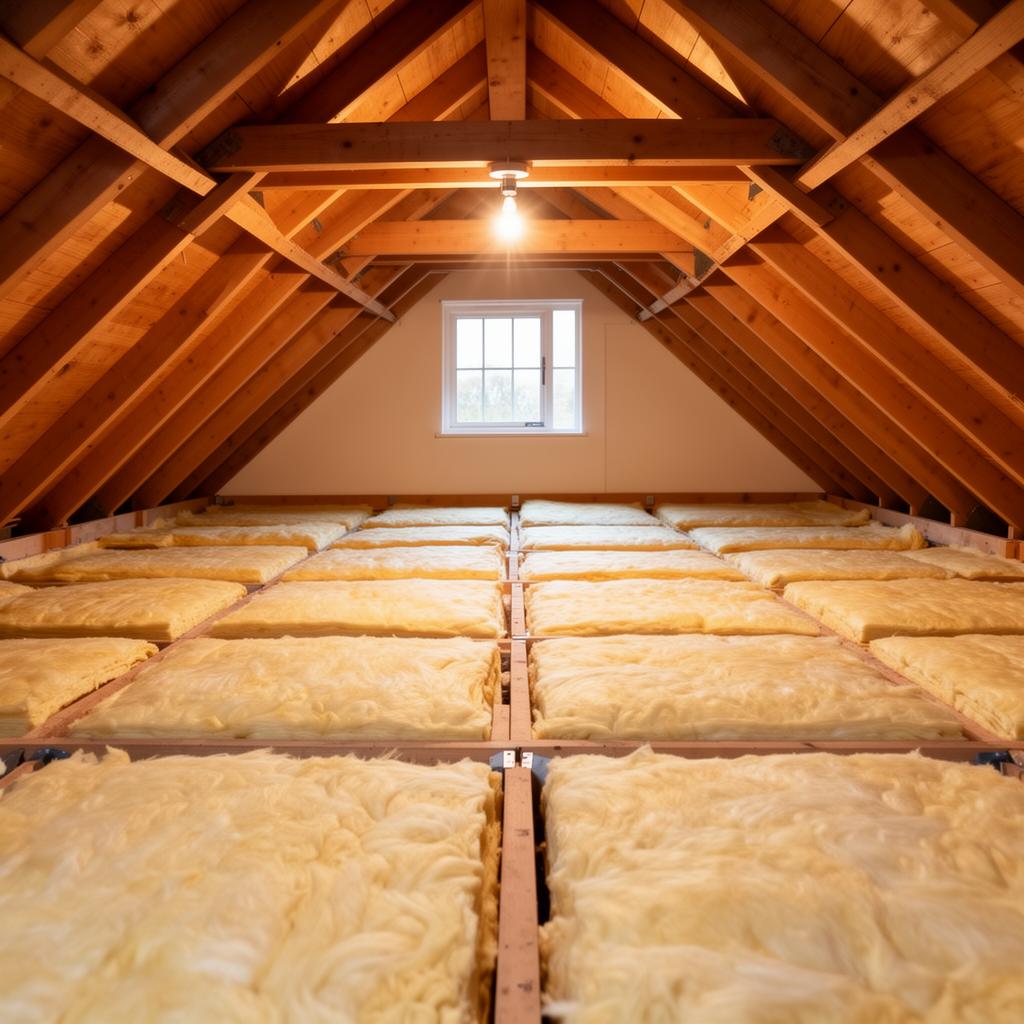
Multifoil insulation UK products have exploded in popularity over the past decade, promising remarkable thermal performance from wafer-thin layers of reflective foil and wadding. But do they live up to the marketing claims? If you are considering multifoil for a loft conversion, extension or renovation project, you need to understand both the genuine benefits and the well-documented limitations before committing your budget.
What Is Multifoil Insulation and How Does It Work?
Multifoil insulation consists of multiple thin layers of aluminium foil separated by wadding materials such as polyester fibre, foam or bubble film. The reflective foil surfaces work by reducing radiant heat transfer rather than relying solely on trapped air pockets like traditional insulation. When installed correctly with airspaces on each side, the shiny foil layers bounce radiant heat back towards the warm side of the building.
A typical multifoil product is between 25mm and 40mm thick, compared to 100mm or more for mineral wool or rigid board alternatives. This slim profile is the primary selling point, particularly where space is at a premium.
The most common construction involves anywhere from 7 to 19 layers. More layers generally means better performance, but also a higher price tag and slightly increased thickness. Leading brands in the UK market include SuperFOIL, TLX Silver, YBS BreatherQuilt and Actis Boost’R Hybrid.
Real-World Thermal Performance vs Manufacturer Claims
This is where multifoil insulation UK products become genuinely controversial. Manufacturers frequently claim their products deliver thermal resistance equivalent to far thicker traditional insulation. You may see claims such as “equivalent to 200mm of mineral wool” printed on packaging for a product only 40mm thick.
Independent testing tells a different story. The Building Research Establishment (BRE) has repeatedly tested multifoil products under controlled conditions and found that:
- A typical multifoil product achieves an R-value of around 1.6 to 1.7 m2K/W when tested as a standalone product
- This is roughly equivalent to 50-60mm of mineral wool, not the 200mm often claimed
- Performance improves significantly when airspaces are maintained on both sides, but real-world installations often compress or eliminate these gaps
- Thermal bridging through fixing points (battens, screws) reduces overall performance further
The discrepancy stems from how manufacturers test their products. Laboratory conditions with perfectly maintained airspaces and no thermal bridging produce far better results than actual installations in real homes.
BBA Certification and Building Regulations Compliance
For any insulation product to be used in a UK building project and satisfy Building Regulations Part L (conservation of fuel and power), it must have a credible declared thermal performance. The British Board of Agrement (BBA) provides third-party certification that building control officers trust.
Several multifoil products now hold BBA certification, including:
- SuperFOIL SF19 (BBA certified with declared R-value when installed to specification)
- TLX Silver (BBA certified for pitched roof applications)
- Actis Boost’R Hybrid (BBA certified with specific airspace requirements)
However, the certified R-values are significantly lower than the marketing claims on some manufacturer websites. Always ask for the BBA certificate number and check the declared thermal performance before buying. A building control officer may reject a multifoil installation that cannot demonstrate compliance with required U-values.
Where Multifoil Insulation Works Best in UK Homes
Despite the performance controversy, multifoil insulation does have legitimate applications where its thin profile and ease of installation offer genuine advantages over bulkier alternatives.
Loft Conversions
Loft conversions are the single strongest use case for multifoil. Rafter depths in most UK homes are only 100mm to 125mm, which is not deep enough to fit the 150mm+ of rigid board or mineral wool needed to achieve the target U-value of 0.18 W/m2K. Multifoil can be combined with rigid PIR board between rafters, with the multifoil stapled under the rafters to add extra thermal resistance and act as a vapour control layer. This hybrid approach minimises headroom loss while meeting Building Regulations.
Tight Spaces and Narrow Cavities
In extensions, garden rooms and conservatory roof replacements, where every millimetre of thickness matters, multifoil provides useful additional thermal resistance without eating into living space. It works particularly well as a supplementary layer over rigid board insulation. For conservatory improvements, consider a full conservatory roof replacement for the best thermal performance.
As a Vapour Control Layer
Many multifoil products double as a vapour control layer (VCL), eliminating the need for a separate membrane. This simplifies the build-up and reduces material costs. The foil surface naturally has very low vapour permeability, preventing warm moist air from reaching cold surfaces where it could condense.
Multifoil Insulation Costs Compared to Alternatives
One of the biggest drawbacks of multifoil insulation is cost. On a like-for-like thermal performance basis, it is significantly more expensive than both mineral wool and PIR rigid boards.
| Insulation Type | Thickness for R-value 1.5 | Cost per m2 | Cost per R-value unit |
|---|---|---|---|
| Multifoil (e.g. SF19) | 40mm | GBP 10-14 | GBP 7-9 |
| Mineral wool (e.g. Knauf) | 55mm | GBP 3-5 | GBP 2-3 |
| PIR rigid board (e.g. Celotex) | 35mm | GBP 7-10 | GBP 5-7 |
As the table shows, mineral wool delivers the same thermal resistance for roughly a third of the price. PIR board is cheaper per unit of thermal resistance and actually thinner than multifoil at the same R-value. The only metric where multifoil wins is when combined R-value and vapour control functionality are factored in, along with its flexibility in awkward spaces.
Multifoil vs Mineral Wool vs PIR: Which Should You Choose?
Choosing the right insulation depends on your specific project, budget and constraints. Here is a practical comparison across the key decision factors.
| Factor | Multifoil | Mineral Wool | PIR Board |
|---|---|---|---|
| Thermal performance per mm | Moderate | Low | High |
| Cost per m2 | High | Low | Medium |
| Ease of DIY install | Easy (staple gun) | Easy (friction fit) | Moderate (cutting) |
| Vapour control built in | Yes | No | Yes (foil-faced) |
| Fire performance | Class B-s1,d0 | Non-combustible (A1) | Class B-s1,d0 |
| Best application | Loft conversions, tight spaces | Loft floors, walls, floors | Walls, floors, flat roofs |
For standard loft insulation laid between and over joists, mineral wool at 270mm thickness remains the most cost-effective option and will comfortably achieve the recommended U-value of 0.16 W/m2K. There is no need for multifoil in this application.
For loft conversions where rafter depth is limited, a hybrid approach using PIR between rafters plus multifoil under the rafters is a well-proven solution that many building control officers accept.
For wall insulation, both internal and external, PIR board or mineral wool slabs are more practical and cost-effective. If you are considering wall insulation, get a free quote to compare options for your property.
Common Mistakes When Installing Multifoil Insulation
Many homeowners and even some builders make errors that reduce multifoil performance significantly. Avoid these common pitfalls:
- No airspace on the warm side: Multifoil needs a minimum 25mm air gap between the foil and the plasterboard to reflect radiant heat. Without this gap, performance drops dramatically.
- Compressing the product: Squashing multifoil into a space removes the air trapped between layers, reducing its insulating ability.
- Poor taping of joints: All laps must be sealed with foil tape to maintain vapour control. Gaps allow warm moist air to reach cold surfaces, causing condensation.
- Using it as the only insulation in a roof: Multifoil alone rarely achieves the U-value required by Building Regulations for a roof (0.18 W/m2K or better). It should be combined with other insulation materials.
- Ignoring cold bridging at timber elements: Rafters and battens conduct heat more readily than the insulation between them. The multifoil layer over the rafters helps reduce this, but the effect should be calculated properly.
Is Multifoil Insulation Worth It? Our Honest Verdict
Multifoil insulation UK products are neither the miracle solution some manufacturers suggest nor the waste of money that some critics claim. The truth sits firmly in the middle.
It is worth it if you have a specific space constraint that makes thicker insulation impractical, such as a loft conversion with shallow rafters or a narrow wall reveal. Used as part of a hybrid system alongside PIR or mineral wool, it adds genuine value.
It is not worth it as a standalone primary insulation where space is not a constraint. In a standard loft, cavity wall or solid wall project, you will get significantly better thermal performance per pound spent from conventional insulation products.
Before committing to any insulation solution, consider having a professional assessment of your home’s thermal envelope. A qualified retrofit assessor can identify the most cost-effective improvements for your specific property. You can also explore our guides on heat pumps and solar panels to maximise your home’s overall energy efficiency.
Frequently Asked Questions
Can multifoil insulation be used on its own to meet Building Regulations?
In most applications, multifoil alone will not achieve the U-values required by Part L of the Building Regulations. For a pitched roof, the target U-value is 0.18 W/m2K, and even the best-performing multifoil products typically achieve only around 1.6-1.7 m2K/W of thermal resistance on their own. You will almost certainly need to combine multifoil with rigid board or mineral wool insulation to pass building control.
How long does multifoil insulation last?
Multifoil insulation has an expected lifespan of 50 years or more when installed correctly. The aluminium foil layers do not degrade, and the wadding materials are typically rot-proof and resistant to vermin. Unlike mineral wool, multifoil does not sag or settle over time, maintaining its original thickness and performance indefinitely.
Is multifoil insulation safe to handle compared to mineral wool?
Yes, multifoil is significantly more comfortable to handle than mineral wool. It does not release irritating fibres that cause itching, and you do not need protective gloves or a dust mask during installation. This makes it a popular choice for DIY loft conversion projects.
Does multifoil insulation cause condensation?
When installed correctly with sealed joints and appropriate airspaces, multifoil acts as a vapour control layer and should prevent condensation. However, poor installation with unsealed laps or missing airspaces can trap moisture and lead to condensation problems. A condensation risk analysis (carried out using software such as JPA Designer) is recommended before installation, particularly in roof applications.
Can I get a grant for multifoil insulation?
Government grant schemes such as ECO4 and the Great British Insulation Scheme primarily fund conventional insulation measures like loft insulation, cavity wall insulation and solid wall insulation. Multifoil is not typically listed as an eligible measure on its own. However, if it forms part of a building control-approved roof insulation build-up, it may be covered as a component. Check your eligibility for insulation grants by requesting a free quote.
See what these numbers mean for your home
Free instant estimate — costs, savings, payback and grants for your region.

Related Articles

Home Insulation Costs and Grants: Your Complete 2026 Guide
Update (June 2026): ECO4 closed to new applications in March 2026. Approved installations continue to December 2026. The Warm Homes: Local Grant is now the main funding route for insulation.…
18 May 2026
How to Reduce Condensation and Damp While Keeping Your Home Warm
Learn why condensation forms in UK homes, the difference between condensation and rising damp, and proven ventilation strategies to fix damp without losing heat.
8 May 2026
Conservatory Roof Replacement: How a Solid Roof Cuts Energy Bills and Adds Value
Replacing an old polycarbonate or glass conservatory roof with a solid insulated roof can slash heat loss, cut energy bills and turn a seasonal room into a year-round living space.
6 May 2026