Which Insulation Improves Your EPC Rating the Most?
If you need to improve your Energy Performance Certificate, insulation EPC rating improvement is the single most effective strategy available to UK homeowners. Whether you are a landlord racing to meet the EPC C deadline, a homeowner trying to reduce energy bills, or preparing a property for sale, understanding which insulation measures deliver the biggest EPC point gains for the least money is essential knowledge.
Which Insulation Improves Your EPC Rating the Most?
- Solid wall insulation (internal or external) — adds 10 to 20 EPC points, the single biggest insulation improvement for pre-1930s homes with no cavity
- Cavity wall insulation — adds 10 to 15 EPC points for homes with unfilled cavities, typically built between the 1920s and 1990s
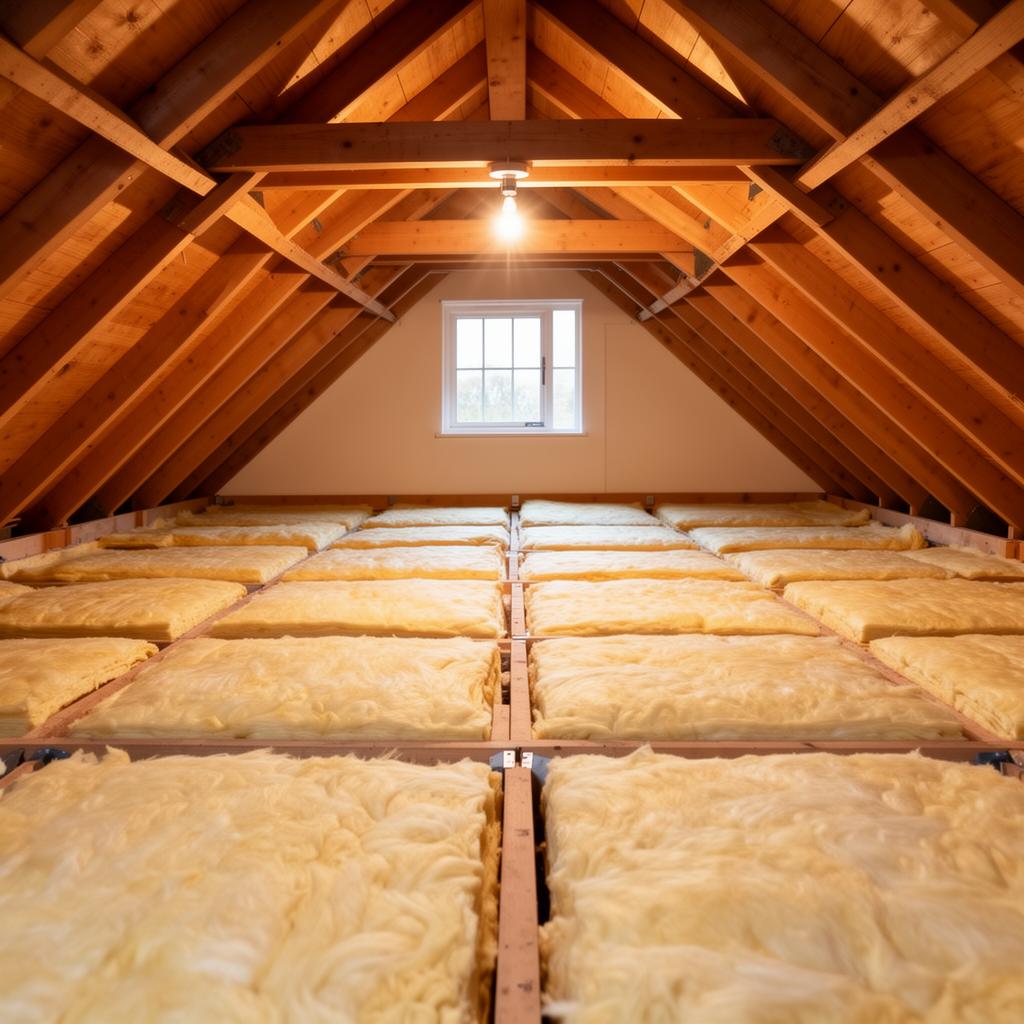
- Loft insulation (to 270mm) — adds 5 to 10 EPC points and is the cheapest measure to install at £300 to £600
- Underfloor insulation — adds 3 to 7 EPC points, particularly effective on suspended timber ground floors
- Flat roof insulation — adds 3 to 6 EPC points for properties with flat-roofed extensions or dormers
- Room-in-roof insulation — adds 3 to 5 EPC points for loft conversions with insufficient rafter insulation
Wall insulation delivers the greatest EPC improvement because walls account for the largest proportion of heat loss in a typical UK home — around 33 percent for uninsulated solid walls. If your property has both uninsulated walls and a loft below 270mm, combining both measures can improve your EPC by 15 to 30 points, potentially moving you up two full bands.
How EPC Ratings Work and Why They Matter
An Energy Performance Certificate rates your home’s energy efficiency on a scale from A (most efficient) to G (least efficient), with a numerical score from 1 to 100. The rating is calculated using the Standard Assessment Procedure (SAP), which models your home’s energy use based on its construction, insulation levels, heating system, glazing, and ventilation.
EPC ratings matter for several important reasons:
- Landlord legal requirements: Private rental properties must currently achieve a minimum EPC E. The government has proposed raising this to EPC C by 2028 for new tenancies and 2030 for existing ones.
- Property value: Research by the Department of Energy found that homes with EPC A or B ratings sell for up to 14% more than equivalent homes rated D or below.
- Mortgage products: An increasing number of lenders offer green mortgage products with better rates for energy-efficient homes.
- Energy costs: A higher-rated home costs significantly less to heat, with the difference between band D and band C saving a typical household GBP 300 to GBP 600 per year.
Insulation EPC Rating Improvement: Points by Measure
Not all insulation upgrades have the same impact on your EPC score. The table below ranks the main insulation measures by their typical EPC point improvement, though exact figures vary by property type, size, and existing insulation levels.
| Insulation Measure | Typical EPC Points Gained | Typical Cost | Cost per EPC Point |
|---|---|---|---|
| Solid wall insulation (external) | 15 to 25 points | GBP 8,000 to GBP 22,000 | GBP 500 to GBP 1,100 |
| Solid wall insulation (internal) | 15 to 25 points | GBP 4,000 to GBP 14,000 | GBP 260 to GBP 700 |
| Cavity wall insulation | 10 to 15 points | GBP 500 to GBP 1,500 | GBP 35 to GBP 150 |
| Loft insulation (0mm to 270mm) | 5 to 10 points | GBP 300 to GBP 600 | GBP 30 to GBP 120 |
| Loft insulation (top-up to 270mm) | 2 to 5 points | GBP 200 to GBP 400 | GBP 40 to GBP 200 |
| Floor insulation | 1 to 3 points | GBP 500 to GBP 2,000 | GBP 250 to GBP 1,000 |
| Flat roof insulation | 3 to 8 points | GBP 1,000 to GBP 3,000 | GBP 200 to GBP 600 |
| Room-in-roof insulation | 5 to 12 points | GBP 2,000 to GBP 5,000 | GBP 200 to GBP 500 |
As the table shows, cavity wall insulation offers the best cost-per-EPC-point ratio by a significant margin. If your property has unfilled cavities, this should be your first upgrade. Loft insulation from zero to the recommended 270mm depth is also excellent value. Solid wall insulation delivers the largest absolute EPC gains but at a much higher cost.
The Cheapest Upgrades to Jump an EPC Band
Most EPC bands span roughly 10 to 20 points. Moving from band D to band C requires reaching a score of 69 or above. If you are close to a band boundary, even modest insulation improvements can push you over.
The cheapest ways to gain EPC points through insulation include:
- Loft insulation top-up (GBP 200 to GBP 400): If you have 100mm of existing loft insulation, topping up to 270mm can add 2 to 5 points.
- Cavity wall insulation (GBP 500 to GBP 1,500): Where applicable, this delivers 10 to 15 points at very low cost per point.
- Hot water cylinder insulation (GBP 15 to GBP 30): An 80mm jacket on an uninsulated cylinder adds 1 to 3 points and pays for itself within months.
- Draught-proofing (GBP 100 to GBP 300): Sealing gaps around doors and windows typically adds 1 to 2 EPC points.
- Loft hatch insulation (GBP 20 to GBP 50): An insulated, sealed loft hatch is a small but measurable improvement.
For many properties rated band D, a combination of loft insulation top-up, cavity wall insulation, and draught-proofing can achieve band C for under GBP 2,000 total.
Why Landlords Must Act Before 2028
The current Minimum Energy Efficiency Standards (MEES) require rental properties to hold at least an EPC E rating. The government has confirmed plans to raise this to EPC C by 2028 for new tenancies and 2030 for all existing tenancies. Landlords who fail to comply face fines of up to GBP 30,000 per property.
For landlords with properties rated D, E, or below, insulation is typically the most cost-effective route to compliance. A strategic combination of measures, often starting with cavity wall and loft insulation, can achieve the required rating without the expense of replacing the heating system.
Where properties have solid walls and no cavity to fill, the cost of reaching band C increases substantially. Internal wall insulation is usually more affordable than external, though it reduces room sizes slightly. Landlords should factor in the cost cap proposed by the government, which may set a maximum spend of GBP 10,000 per property for the EPC C upgrade.
Combining Insulation with Other EPC Improvements
Insulation alone may not be enough to reach your target EPC band, especially for older properties starting from band E or below. Combining insulation with other upgrades creates a cumulative effect on your SAP score.
| Additional Measure | Typical EPC Points Gained | Typical Cost |
|---|---|---|
| Upgrading to a condensing boiler | 10 to 15 points | GBP 2,500 to GBP 4,500 |
| Installing a heat pump | 15 to 30 points | GBP 7,000 to GBP 13,000 |
| Adding solar panels (4kWp) | 10 to 15 points | GBP 5,000 to GBP 8,000 |
| Upgrading to double glazing | 5 to 10 points | GBP 4,000 to GBP 8,000 |
| Smart heating controls | 2 to 5 points | GBP 200 to GBP 500 |
| LED lighting throughout | 1 to 3 points | GBP 50 to GBP 150 |
The most effective strategy is to start with insulation, which reduces the home’s heat demand, then upgrade the heating system to serve that reduced demand more efficiently. Installing a heat pump in a poorly insulated home is far less effective than insulating first and then sizing the heat pump for the improved building fabric.
How the SAP Calculation Treats Different Insulation Types
The SAP assessment uses U-values to calculate heat loss through each building element. A lower U-value means better insulation and a higher EPC score. The current Part L Building Regulations set these target U-values for new-build elements:
- Walls: 0.26 W/m2K
- Roof: 0.16 W/m2K
- Floor: 0.18 W/m2K
- Windows: 1.4 W/m2K
For existing homes, the EPC assessment compares your current U-values against these targets. The further your home is from these standards, the more points you gain by improving. A solid-walled Victorian house with no insulation (U-value around 2.1 W/m2K) will gain far more EPC points from wall insulation than a 1990s cavity-walled home (U-value around 0.6 W/m2K with partial fill).
This means the older and less insulated your property, the bigger the EPC impact per pound spent on insulation.
Getting an Accurate EPC Assessment
An EPC assessment costs between GBP 60 and GBP 120 and is carried out by a qualified Domestic Energy Assessor (DEA). The certificate is valid for 10 years, but you can commission a new assessment at any time after making improvements.
To ensure you get the best possible rating, prepare for the assessment by:
- Having documentation of insulation work, including installation certificates with material types and thicknesses
- Providing boiler model details and installation date
- Showing evidence of glazing specifications, particularly if you have upgraded to energy-rated windows
- Pointing out any features the assessor might miss, such as underfloor insulation or roof insulation in a room-in-roof conversion
Without evidence, assessors must make default assumptions, which are often pessimistic. For example, if you cannot prove your cavity walls are insulated, the assessor will assume they are not, which could cost you 10 to 15 EPC points.
To find out which insulation upgrades would deliver the best EPC improvement for your specific property, request a free assessment from our team.
Frequently Asked Questions About Insulation and EPC Ratings
How many EPC points does loft insulation add?
Installing loft insulation from zero to the recommended 270mm adds 5 to 10 EPC points for a typical semi-detached house. Topping up existing insulation from 100mm to 270mm adds 2 to 5 points. The exact gain depends on your loft area and the current insulation level.
What is the cheapest way to improve an EPC rating?
Cavity wall insulation is the cheapest insulation upgrade per EPC point gained, costing as little as GBP 35 per point. Loft insulation is a close second. Non-insulation measures such as hot water cylinder jackets (GBP 15 to GBP 30) and LED lighting upgrades (GBP 50 to GBP 150) also offer affordable small gains that can tip you into the next band.
Can insulation alone get me from EPC D to EPC C?
In many cases, yes. If your property has unfilled cavity walls and less than 270mm of loft insulation, these two measures alone can add 15 to 25 EPC points, which is often enough to move from mid-D to band C. For solid-walled properties, wall insulation plus loft insulation can achieve the same result, though at higher cost.
Does floor insulation significantly improve EPC ratings?
Floor insulation typically adds only 1 to 3 EPC points because floors account for a smaller proportion of total heat loss compared to walls and roofs. It is worth doing for comfort and energy savings but is rarely the most cost-effective EPC improvement unless all other measures have already been completed.
Will the EPC C deadline definitely happen in 2028?
The government has confirmed its intention to raise the minimum rental EPC to C, but the exact implementation date and details are subject to final legislation. Landlords should plan for compliance regardless, as the direction of travel is clear and the improvements will reduce void periods, increase property value, and lower tenant energy bills even before any legal deadline.
See what these numbers mean for your home
Free instant estimate — costs, savings, payback and grants for your region.

Related Articles
Home Insulation Costs and Grants: Your Complete 2026 Guide
Update (June 2026): ECO4 closed to new applications in March 2026. Approved installations continue to December 2026. The Warm Homes: Local Grant is now the main funding route for insulation.…
18 May 2026
How to Reduce Condensation and Damp While Keeping Your Home Warm
Learn why condensation forms in UK homes, the difference between condensation and rising damp, and proven ventilation strategies to fix damp without losing heat.
8 May 2026
Conservatory Roof Replacement: How a Solid Roof Cuts Energy Bills and Adds Value
Replacing an old polycarbonate or glass conservatory roof with a solid insulated roof can slash heat loss, cut energy bills and turn a seasonal room into a year-round living space.
6 May 2026