Insulating Between Floors in a House: Why Mid-Floor Insulation Matters
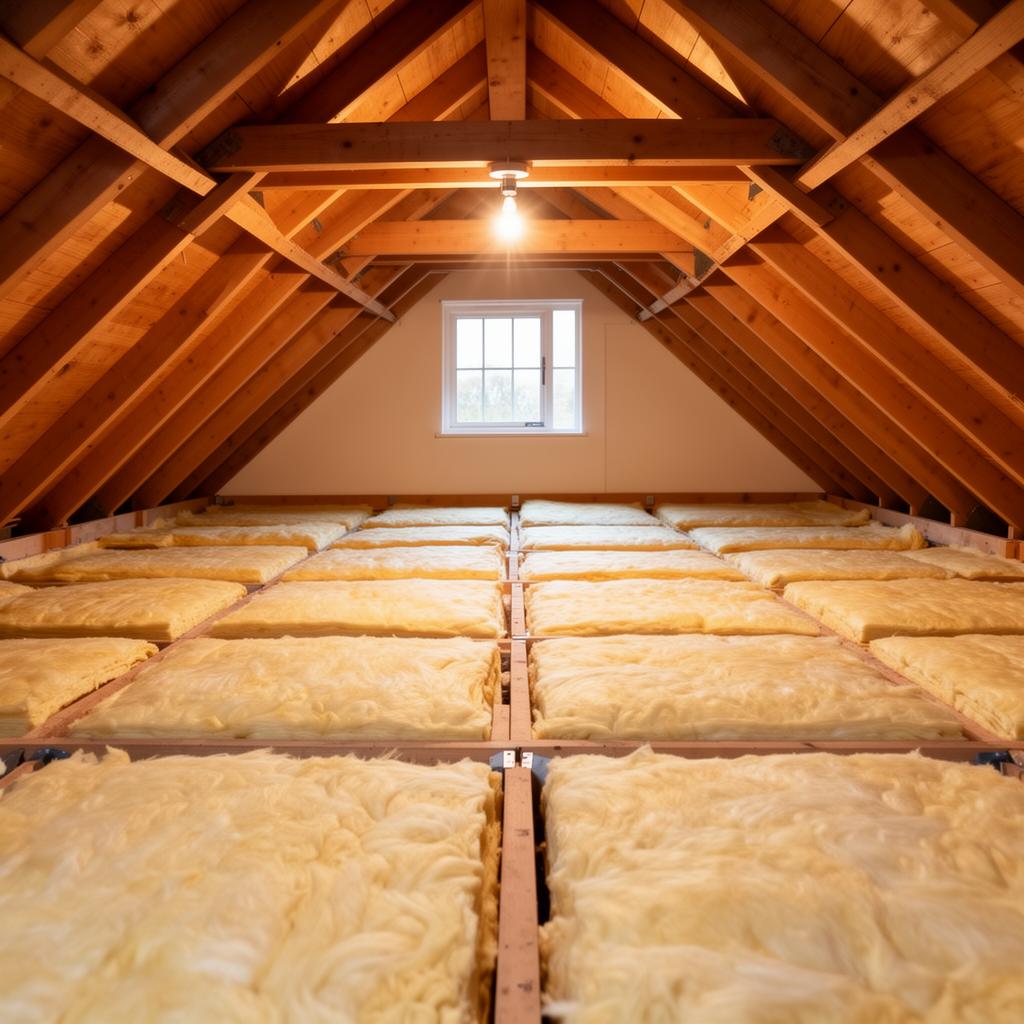
Most homeowners think of insulation as something that goes in the loft or the walls, but insulating between floors in a UK home can make a significant difference to both comfort and energy bills. Whether you want to stop sound travelling between storeys, create independent heating zones, or meet Building Regulations for a loft conversion, mid-floor insulation is an often-overlooked upgrade that delivers real benefits.
Why Should You Insulate Between Floors?
Insulating between floors reduces noise transfer between storeys, improves thermal comfort and can lower heating bills by 5 to 10 percent in homes where upper floors are kept cooler than downstairs rooms. Mid-floor insulation is especially valuable above unheated garages, above passageways and in homes where bedrooms are deliberately heated to a lower temperature than living areas.
The most common method is fitting 100mm mineral wool slabs between the floor joists from below, which can be done without lifting floorboards if there is access from the ceiling of the room below. For rooms above unheated spaces such as garages, building regulations require a U-value of 0.22 W/m²K, which typically means 100 to 150mm of rigid insulation plus a vapour barrier. Expect to pay £20 to £35 per square metre including materials and labour.
Why Insulating Between Floors Matters
The floor between your ground floor and first floor (or between any two storeys) serves as both a structural platform and a barrier between living spaces. Without insulation, it does a poor job of both separating sound and retaining heat where you want it.
There are three main reasons UK homeowners choose to insulate between floors:
- Acoustic separation: Reducing the transfer of sound between storeys, including footsteps, music, and conversation. This is particularly important in converted flats, houses with home offices above living rooms, and properties with teenagers.
- Thermal zoning: Allowing you to heat only the rooms you are using. If bedrooms are insulated from the living areas below, you can turn off first-floor heating during the day without cold air from above pulling heat out of the ground floor.
- Building Regulations compliance: If you are converting a loft, adding a room above a garage, or splitting a house into flats, Part E (sound) and Part L (thermal) of the Building Regulations require specific insulation performance between dwelling separations.
Acoustic Benefits of Insulating Between Floors UK
An uninsulated timber floor typically has a sound reduction of only 25 to 30 dB for airborne noise, which means normal conversation from the room below is clearly audible. Impact noise such as footsteps transmits with barely any reduction at all.
Adding insulation between the floor joists, combined with appropriate boarding and ceiling treatment, can improve airborne sound reduction to 43 to 50 dB and significantly reduce impact noise transfer. This transforms the experience of living in a multi-storey home, particularly where bedrooms sit above living areas.
| Floor Construction | Airborne Sound Reduction (DnTw) | Impact Sound (LnTw) |
|---|---|---|
| Uninsulated timber floor with plasterboard ceiling | 25 to 30 dB | 75 to 80 dB |
| Mineral wool between joists + plasterboard ceiling | 35 to 40 dB | 65 to 70 dB |
| Mineral wool + two layers acoustic plasterboard | 40 to 45 dB | 60 to 65 dB |
| Mineral wool + resilient bars + acoustic plasterboard | 43 to 48 dB | 55 to 60 dB |
| Full acoustic floor (floating deck + mineral wool + resilient ceiling) | 48 to 55 dB | 45 to 55 dB |
Thermal Zoning: How Mid-Floor Insulation Saves Energy
In a typical UK home, the ground floor is heated during the day while bedrooms upstairs are unoccupied. Without mid-floor insulation, heat from the ground floor rises through the uninsulated floor into the cold bedrooms above, wasting energy. At night, the pattern reverses: bedroom heating warms floors that lose heat downward into the cold ground floor.
Insulating between floors creates thermal zones that can be independently controlled. This is particularly effective when combined with smart heating controls, such as individual thermostatic radiator valves (TRVs) or smart radiator valves, allowing you to heat only occupied rooms.
The thermal benefit is especially significant for homes with heat pumps, which run most efficiently at lower flow temperatures. Thermal zoning reduces the total heat demand, allowing the heat pump to work at optimal efficiency rather than heating the entire house to the same temperature.
While the energy savings from mid-floor insulation alone are modest compared to loft or wall insulation (since the temperature difference between storeys is much less than between indoors and outdoors), the improvement in comfort and control can be noticeable, saving an estimated GBP 50 to GBP 150 per year when combined with zoned heating.
Material Options for Insulating Between Floor Joists
Several materials are suitable for insulating between floor joists, each with different properties and costs.
| Material | Thermal Conductivity (W/mK) | Acoustic Performance | Cost per m2 |
|---|---|---|---|
| Rock wool (acoustic grade, 45-60 kg/m3) | 0.035 to 0.038 | Excellent | GBP 5 to GBP 12 |
| Glass mineral wool (acoustic grade) | 0.035 to 0.040 | Very good | GBP 4 to GBP 8 |
| Wood fibre flexible batts | 0.038 to 0.042 | Very good | GBP 12 to GBP 20 |
| Sheep wool batts | 0.038 to 0.040 | Good | GBP 15 to GBP 25 |
| Blown cellulose | 0.038 to 0.040 | Good | GBP 8 to GBP 15 |
For acoustic performance, rock wool at a density of 45 to 60 kg/m3 is the best choice. Its high density makes it an excellent sound absorber, while its thermal conductivity is among the best available. Standard loft-grade mineral wool (lower density) provides thermal insulation but is less effective acoustically.
If the primary goal is sound reduction rather than thermal performance, specify acoustic-grade mineral wool. The price difference over standard insulation wool is minimal, typically just GBP 2 to GBP 4 per square metre more.
How to Insulate Between Floors: Practical Approaches
Access is the biggest practical challenge. You need to reach the cavity between the floor joists, which means either lifting the floorboards from above or removing the ceiling from below.
From above (lifting floorboards)
This is the preferred approach if you are replacing the floor covering or carrying out other upstairs renovation work. Floorboards or chipboard sheets are lifted, insulation is laid between the joists, and the floor is relaid. If you are adding a floating acoustic floor deck on top, this is the time to do it.
From below (removing ceiling)
If the ground-floor ceiling is being replaced or replastered, insulation can be installed from below. Mineral wool batts are pushed up between the joists and held in place by the new ceiling. Adding resilient bars between the joists and the new plasterboard significantly improves acoustic performance.
Without disruption (blown insulation)
Where neither the floor nor ceiling can be disturbed, blown cellulose insulation can be injected through small holes drilled in the ceiling. The holes are then filled and made good. This is less effective acoustically than fitted batts but delivers thermal benefits with minimal disruption.
Costs for Insulating Between Floors
| Method | Cost per m2 (installed) | Typical Room (15m2) |
|---|---|---|
| Mineral wool between joists (from above) | GBP 15 to GBP 30 | GBP 225 to GBP 450 |
| Mineral wool + resilient bars + acoustic plasterboard (from below) | GBP 45 to GBP 75 | GBP 675 to GBP 1,125 |
| Full acoustic floor system (from above) | GBP 60 to GBP 100 | GBP 900 to GBP 1,500 |
| Blown cellulose (through ceiling) | GBP 20 to GBP 35 | GBP 300 to GBP 525 |
These costs exclude the expense of lifting and relaying floorboards or making good the ceiling, which varies depending on the condition and type of existing floor and ceiling.
When Building Regulations Require Mid-Floor Insulation
Building Regulations require specific acoustic (Part E) and thermal (Part L) performance in the following situations:
- Converting a house into flats: The separating floor between dwellings must achieve minimum airborne sound insulation of DnTw 43 dB and maximum impact sound of LnTw 64 dB.
- Loft conversion creating a new storey: If the conversion creates a new dwelling (e.g., a flat), Part E applies. If it extends the existing dwelling, Part E does not apply to the floor between existing and new rooms, but Part L thermal requirements for the new roof do.
- Room above a garage: If the garage is unheated, the floor above it is a thermal element and must meet Part L U-value requirements (typically 0.18 to 0.22 W/m2K depending on circumstances).
- Extension above an existing structure: Building Control will specify the required performance standards based on the relationship between the new and existing spaces.
If you are planning any of these projects, factor mid-floor insulation into your budget from the outset. Retrofitting it later is considerably more expensive and disruptive.
For advice on the best insulation approach for your specific situation, request a free assessment from our team.
Frequently Asked Questions About Insulating Between Floors
Is it worth insulating between floors in a normal house?
If noise transfer between floors bothers you, or if you want to heat rooms independently with smart controls, yes. The acoustic improvement alone makes a significant difference to comfort. If neither noise nor thermal zoning is a concern, mid-floor insulation is a lower priority than loft, wall, and ground floor insulation.
Does mid-floor insulation reduce heating bills?
The thermal savings are modest because the temperature difference between floors is much less than between indoors and outdoors. However, when combined with zoned heating controls, mid-floor insulation enables you to avoid heating unoccupied rooms, which can save GBP 50 to GBP 150 per year depending on the size of the property and your heating pattern.
Can I insulate between floors myself?
If you are already lifting floorboards for another purpose, laying mineral wool between the joists is straightforward DIY. Installing resilient bars and acoustic plasterboard on the ceiling below requires more skill, particularly achieving a good plaster finish. For full acoustic floor systems designed to meet Part E requirements, professional installation is recommended to ensure compliance.
What is the best insulation for soundproofing between floors?
Acoustic-grade rock wool at 45 to 60 kg/m3 density is the best widely available material for between-floor sound insulation. It should be combined with resilient bars and at least one layer of acoustic plasterboard on the ceiling below for maximum effect. For impact noise (footsteps), a floating floor deck above the insulation provides the most significant improvement.
See what these numbers mean for your home
Free instant estimate — costs, savings, payback and grants for your region.

Related Articles
Home Insulation Costs and Grants: Your Complete 2026 Guide
Update (June 2026): ECO4 closed to new applications in March 2026. Approved installations continue to December 2026. The Warm Homes: Local Grant is now the main funding route for insulation.…
18 May 2026
How to Reduce Condensation and Damp While Keeping Your Home Warm
Learn why condensation forms in UK homes, the difference between condensation and rising damp, and proven ventilation strategies to fix damp without losing heat.
8 May 2026
Conservatory Roof Replacement: How a Solid Roof Cuts Energy Bills and Adds Value
Replacing an old polycarbonate or glass conservatory roof with a solid insulated roof can slash heat loss, cut energy bills and turn a seasonal room into a year-round living space.
6 May 2026