How to Insulate a Georgian House Without Causing Damp
Georgian house insulation is one of the most technically demanding retrofit challenges in the UK. Built between 1714 and 1837, Georgian properties feature thick solid walls constructed with soft bricks and lime mortar, designed to breathe and manage moisture naturally. The wrong insulation approach does not just fail to perform; it actively damages the building. This guide explains the breathable insulation methods that work with Georgian construction rather than against it, including lime-based insulating plasters, wood fibre boards and heritage-sensitive techniques that protect both the fabric and the character of these irreplaceable buildings.
How to Insulate a Georgian House Without Causing Damp
- Use breathable insulation only — wood fibre boards, lime-insulating plaster or sheep’s wool allow moisture to pass through solid walls rather than trapping it
- Insulate internally with care — fit 40–60mm of wood fibre insulation board to walls using lime adhesive, never cement or foil-backed products
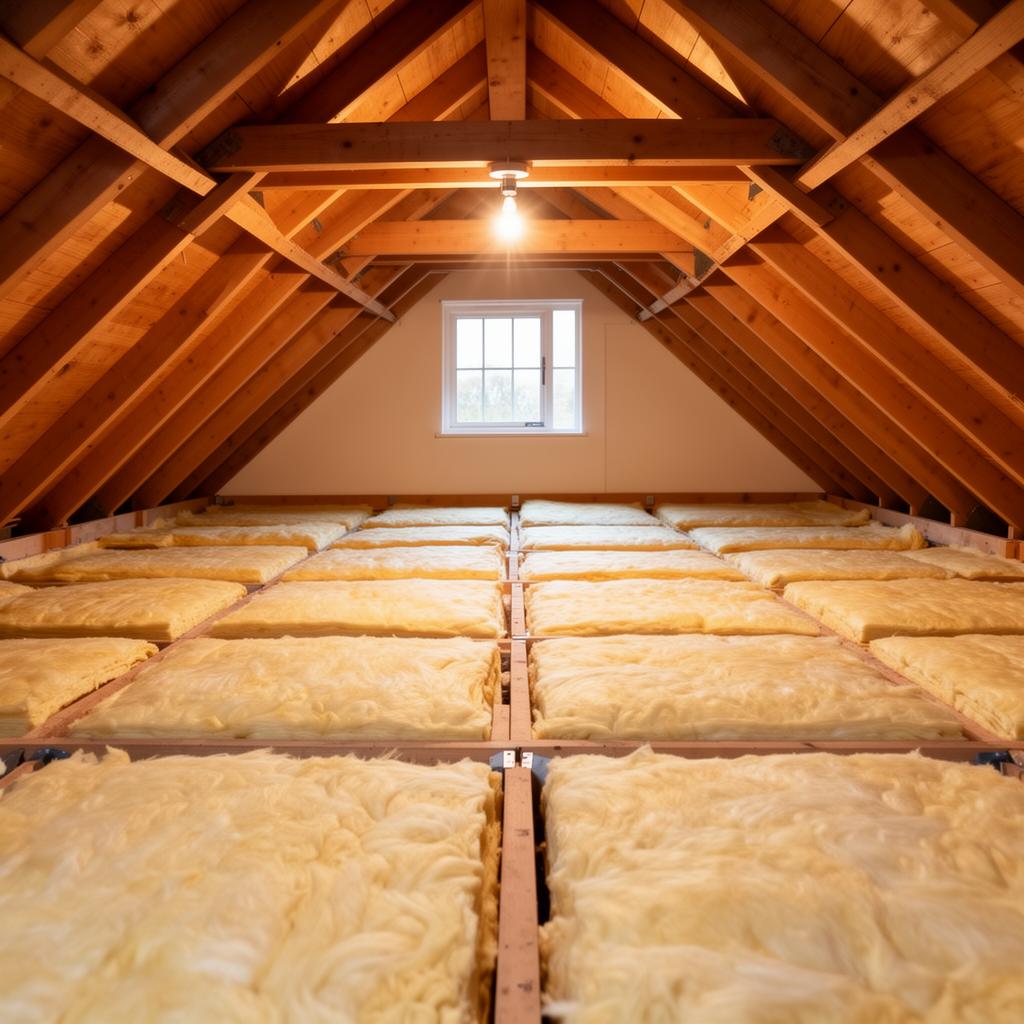
- Upgrade the loft — lay sheep’s wool or natural fibre insulation between and over joists to 270mm depth
- Draught-proof sash windows — fit brush pile weatherstripping into the sash channels rather than replacing original windows
- Add secondary glazing — internal secondary panels preserve original glazing while cutting heat loss by 50–65%
- Insulate the ground floor — limecrete or breathable insulation below suspended timber floors prevents damp while reducing heat loss
- Check planning and listed building consent — internal alterations to Grade I and II* listed buildings usually require consent
The critical rule with Georgian properties is to maintain breathability. Solid brick and stone walls manage moisture by absorbing and releasing it slowly. Impermeable modern insulation such as foil-backed PIR boards, cement renders or vinyl wallpaper traps moisture inside the wall, causing damp, mould and structural damage. Every material used must allow vapour to pass through the wall assembly.
Why Georgian Houses Need Breathable Insulation
Georgian buildings were not designed to be waterproof in the modern sense. Instead, they manage moisture through a continuous cycle of absorption and evaporation. Rain hits the external brick or stone, some of it penetrates into the wall, and it eventually evaporates back out through the porous lime mortar and lime plaster. Rising damp from the ground follows a similar path, wicking up through the masonry and evaporating from both internal and external surfaces.
This system works remarkably well, as evidenced by the hundreds of thousands of Georgian buildings that have survived 200-300 years in excellent condition. But it only works if the moisture has somewhere to go.
Modern impermeable insulation materials like PIR boards, polystyrene and foil-backed plasterboard block this evaporation pathway. Moisture that enters the wall can no longer escape through the internal surface. Instead, it accumulates within the masonry, leading to:
- Degradation of soft lime mortar joints
- Frost damage and spalling of soft Georgian brickwork
- Rot in embedded timber elements (joist ends, lintels, bonding timbers)
- Black mould on internal surfaces and behind the insulation
- Salt crystallisation damage as minerals dissolved in the moisture are deposited as the water evaporates from the external face only
- Structural damage over time as mortar joints deteriorate
The consequences can be catastrophic and prohibitively expensive to repair. This is why breathable insulation is not optional for Georgian houses; it is the only responsible approach.
Lime-Based Insulating Plasters for Georgian Walls
Lime-based insulating plasters are the most heritage-sensitive option for Georgian house insulation. They are applied directly to the existing wall surface, adding minimal thickness while providing genuine thermal improvement and maintaining full breathability.
Diasen Diathonite
Diathonite is an Italian-made insulating plaster consisting of cork granules, diatomaceous earth, lime and clay. It is applied in layers of 20-60mm directly onto the wall and finished with a lime topcoat. Key properties include:
- Thermal conductivity: 0.045 W/mK
- Fully breathable (vapour permeable)
- Excellent moisture buffering capacity
- Can be applied over existing lime plaster or directly to masonry
- Typical cost installed: GBP 80-130 per m2 at 40mm thickness
At 40mm thickness, Diathonite provides an R-value of approximately 0.9 m2K/W. This does not achieve the same level of thermal improvement as 60mm of wood fibre board, but the application is simpler and preserves room dimensions more effectively. It is particularly well suited to walls with irregular surfaces where rigid boards would leave gaps.
Warmcote
Warmcote is a UK-manufactured insulating plaster system using perlite (expanded volcanic glass) mixed with lime. It offers similar benefits to Diathonite with a thermal conductivity of approximately 0.065 W/mK. While thermally less effective per millimetre than Diathonite, it is typically less expensive at GBP 50-80 per m2 installed and is favoured by some heritage consultants for its compatibility with traditional UK lime plastering techniques.
Traditional Lime Plaster with Perlite or Vermiculite
Some specialist plasterers create bespoke insulating lime plasters by adding lightweight aggregates such as perlite, vermiculite or expanded clay granules to a hydraulic lime mix. This approach allows precise control over breathability and thermal performance but requires genuine expertise. Costs vary widely depending on the plasterer and specification.
Wood Fibre Insulation Boards for Georgian Walls
Wood fibre boards (also called woodfibre insulation) are rigid or semi-rigid panels made from compressed wood fibres. They are fully breathable, with vapour permeability that allows moisture to pass through while still providing excellent thermal insulation.
Leading products available in the UK include:
- Steico Protect and Steico Internal: Available in thicknesses from 40mm to 100mm, with a thermal conductivity of 0.038-0.042 W/mK
- Pavatex Pavatherm: Similar performance range, widely available through specialist suppliers
- Gutex Thermowall: A German-made product with excellent moisture buffering properties
Wood fibre boards are bonded to the wall using lime adhesive (not cement adhesive, which would compromise breathability) and finished with a lime plaster topcoat. The boards must be bedded onto a flat surface, so uneven Georgian walls often need a levelling coat of lime plaster before the boards are applied.
At 60mm thickness, a wood fibre board achieves an R-value of approximately 1.5 m2K/W, providing a more significant thermal improvement than insulating plaster at comparable thickness. Costs typically range from GBP 60-100 per m2 for materials and installation.
For comprehensive energy improvements, wood fibre wall insulation works well alongside loft insulation and upgraded heating systems such as heat pumps.
Why Cement Renders and PIR Boards Cause Moisture Trapping
It is worth explaining in detail why two commonly used materials are genuinely harmful to Georgian buildings, as they are still sometimes specified by contractors unfamiliar with historic construction.
Cement Render on External Walls
Hard cement render is far less vapour-permeable than the original lime mortar and lime render it often replaces. When applied to a Georgian wall, it dramatically reduces the wall’s ability to evaporate moisture from its external face. Moisture that would previously have evaporated harmlessly from the outer surface is now trapped, forced to evaporate from the internal surface instead or to accumulate within the wall.
Cement is also much harder than the soft Georgian brickwork beneath it. As the building moves and settles (all old buildings move slightly with temperature and moisture changes), the rigid cement cracks. Water enters through the cracks but cannot evaporate through the cement, creating pockets of sustained dampness that accelerate brick and mortar decay.
If your Georgian house has cement render, removing it and replacing it with a lime-based render is often one of the most beneficial improvements you can make, even before considering insulation.
PIR and Polystyrene Internal Insulation
PIR boards (Celotex, Kingspan, etc.) and polystyrene insulation have vapour resistances that are orders of magnitude higher than the breathable materials described above. When bonded or fixed to the internal face of a Georgian solid wall, they create a vapour barrier that prevents moisture from evaporating inward.
The result is a cold, damp zone between the insulation and the original wall surface. This is where embedded timber elements (joist ends, wooden lintels) are located, and these are the first components to suffer from the trapped moisture. Timber rot in joist ends can progress to the point of structural failure before any visible signs appear on the room-facing surface.
Heritage Listing Considerations for Georgian House Insulation
Many Georgian properties are listed buildings (Grade I, Grade II* or Grade II), and all work that affects their character requires Listed Building Consent from the local planning authority. Even internal insulation is controlled because it may affect:
- Original lime plaster surfaces with historic finishes
- Panelling, shutters, dado rails and other joinery
- Room proportions and moulding profiles
- The moisture balance of the building fabric
Applying for Listed Building Consent for insulation works involves submitting detailed specifications showing that the proposed materials are breathable, reversible and will not damage the historic fabric. Lime-based insulating plasters are generally well received by conservation officers because they are compatible with the original construction and can be removed in the future without damaging the wall beneath.
Wood fibre boards are also increasingly accepted, particularly when bonded with lime adhesive rather than mechanically fixed (which would damage the wall face). External insulation on a listed Georgian building is almost always refused on the principal elevation, though rear walls may be considered.
If your Georgian property is in a conservation area but not individually listed, external changes visible from the public highway may still require planning consent. Internal works are generally unrestricted in conservation areas.
Finding Specialist Installers for Georgian House Insulation
Georgian house insulation should not be entrusted to a general builder or insulation contractor without specific experience of pre-1837 construction. The materials, techniques and moisture management requirements are fundamentally different from modern retrofit work.
Look for installers who:
- Are trained in PAS 2035 retrofit standards, ideally with specific heritage building experience
- Can demonstrate previous projects on Georgian or pre-Victorian solid-wall buildings
- Understand lime-based materials and will not use cement products on your building
- Work with a Retrofit Coordinator who can produce a whole-building assessment and moisture risk analysis
- Are members of relevant trade bodies such as the IHBC (Institute of Historic Building Conservation) or SPAB (Society for the Protection of Ancient Buildings)
Expect to pay more for specialist heritage insulation work than for standard modern retrofit. The additional cost reflects the specialist materials, slower application processes and expertise required. A well-executed breathable insulation project protects both the building’s thermal performance and its long-term structural integrity.
Combining wall insulation with other energy efficiency measures such as solar panels and upgraded glazing can significantly reduce running costs. Get a free quote to explore your options.
Frequently Asked Questions
How much does it cost to insulate a Georgian house?
Costs vary significantly depending on the property size, chosen materials and whether listed building consent is required. For a typical Georgian terraced house, budget approximately GBP 8,000-15,000 for breathable internal wall insulation using wood fibre boards or lime-based insulating plaster, GBP 350-600 for loft insulation, and GBP 1,200-2,500 for suspended floor insulation. Total comprehensive insulation costs typically fall between GBP 10,000-20,000.
Can I insulate a Georgian house from the outside?
External wall insulation is possible on non-listed, non-conservation area Georgian properties, though it fundamentally changes the building’s appearance. On listed buildings, external insulation on the front elevation will almost certainly be refused. Rear and side elevations may be acceptable if the system is breathable (lime render over wood fibre board rather than acrylic render over EPS). Always consult your local conservation officer before planning EWI on any Georgian building.
Will insulating a Georgian house make it warmer immediately?
Yes, but with an important caveat. Lime-based insulating plasters and wood fibre boards need to dry fully before they reach their stated thermal performance. Lime plasters can take several weeks to cure in cooler weather. During the drying period, the wall may actually feel colder temporarily as moisture evaporates. Once fully dry, the thermal improvement is immediately noticeable, with warmer wall surfaces, fewer draughts and more even room temperatures.
Are there grants available for insulating Georgian houses?
Government grant schemes such as ECO4 do fund solid wall insulation, which covers Georgian properties. However, the specialist breathable materials required are more expensive than standard insulation, and grant funding may not cover the full cost. The grant covers a standard measure cost, with the homeowner potentially paying the difference. Some local authorities also offer heritage-specific grants for listed building improvements. Check eligibility through your local authority or by requesting a free assessment.
Should I remove cement render from my Georgian house before insulating?
If your Georgian house has cement render on the external walls, removing it and replacing with lime render is highly recommended before or alongside any insulation work. Cement render traps moisture and prevents the wall from breathing properly. Lime render restores the wall’s natural moisture management and significantly improves the effectiveness of any internal breathable insulation. The cost of re-rendering with lime is typically GBP 60-100 per m2 including removal of the old cement render.
See what these numbers mean for your home
Free instant estimate — costs, savings, payback and grants for your region.

Related Articles
Home Insulation Costs and Grants: Your Complete 2026 Guide
Update (June 2026): ECO4 closed to new applications in March 2026. Approved installations continue to December 2026. The Warm Homes: Local Grant is now the main funding route for insulation.…
18 May 2026
How to Reduce Condensation and Damp While Keeping Your Home Warm
Learn why condensation forms in UK homes, the difference between condensation and rising damp, and proven ventilation strategies to fix damp without losing heat.
8 May 2026
Conservatory Roof Replacement: How a Solid Roof Cuts Energy Bills and Adds Value
Replacing an old polycarbonate or glass conservatory roof with a solid insulated roof can slash heat loss, cut energy bills and turn a seasonal room into a year-round living space.
6 May 2026