How Long Does Insulation Last? Lifespan Guide for Every Type
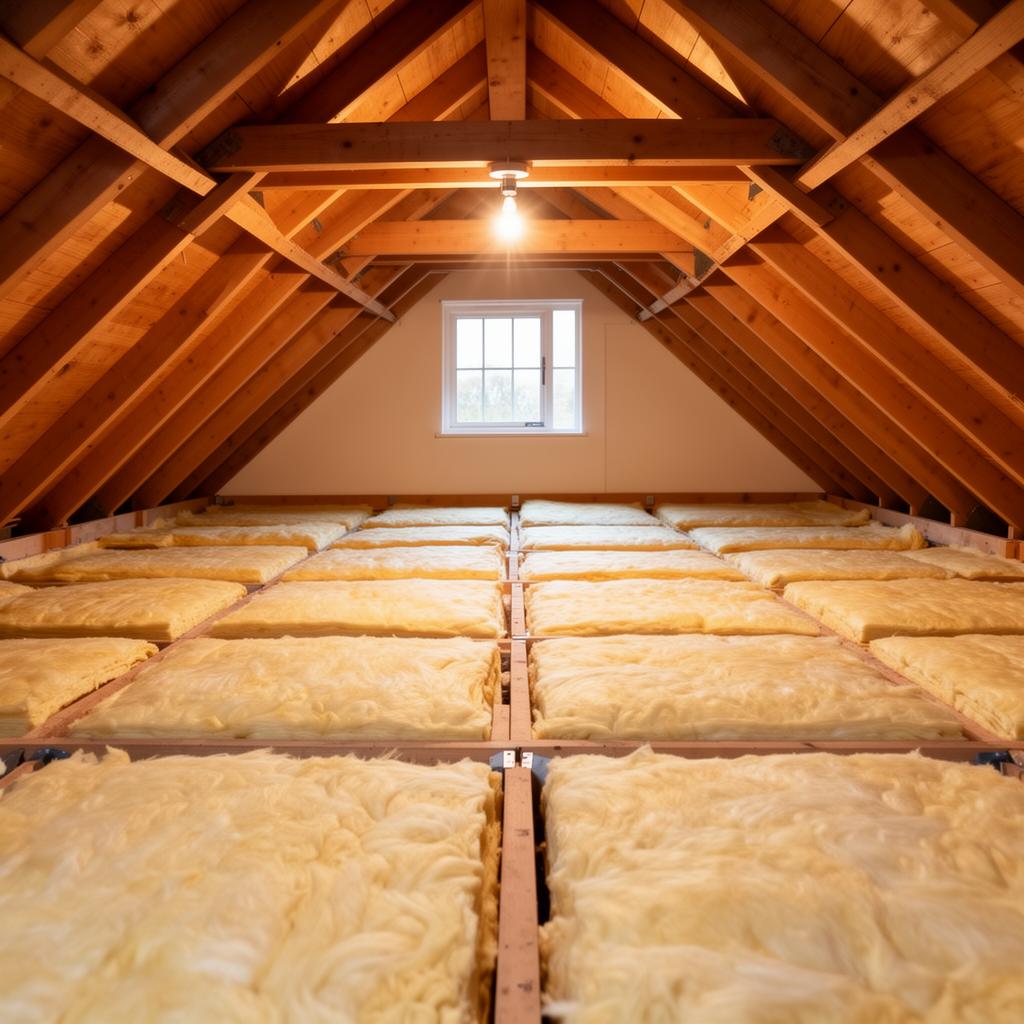
When you invest in insulation, you want to know it will keep performing for decades. The good news is that most insulation materials have impressive lifespans, but they are not all equal. Understanding the insulation lifespan UK homeowners can expect from each material helps you plan for long-term maintenance and decide when top-up or replacement makes sense. From mineral wool that can last the lifetime of the house to blown cellulose that may need attention after 20 years, here is what you need to know.
How Long Does Insulation Last?
| Insulation Type | Expected Lifespan | Key Factor Affecting Longevity |
|---|---|---|
| Mineral wool (loft) | 40–50 years | Compression and moisture exposure |
| Cavity wall fill (blown fibre) | 25–40 years | Settling and moisture ingress |
| Spray foam (closed-cell) | 50+ years | Quality of application |
| Rigid foam board (PIR/EPS) | 50+ years | UV exposure and physical damage |
| Blown cellulose | 20–30 years | Settling over time |
| Sheep wool | 40–60 years | Moth and pest protection |
Most insulation materials last decades when properly installed and kept dry. Loft insulation is the most likely to need topping up over time because it can compress under foot traffic or absorb moisture from condensation. If your loft insulation has settled below 200mm, topping up to the recommended 270mm depth will restore its thermal performance.
Insulation Lifespan UK: Every Material Compared
| Insulation Material | Expected Lifespan | Key Degradation Factors |
|---|---|---|
| Mineral wool (glass wool) | 40 to 80+ years | Compression, water damage, pest disturbance |
| Mineral wool (stone/rock wool) | 50 to 80+ years | Water damage (rare due to water-repellent treatment) |
| PIR / PUR rigid boards | 50+ years | UV exposure if uncovered, physical damage |
| Expanded polystyrene (EPS) | 50+ years | UV degradation, compression, pest damage |
| Phenolic foam boards | 50+ years | Moisture absorption at cut edges |
| Blown cellulose | 20 to 30 years | Settlement, moisture absorption, pest activity |
| Spray foam (closed cell) | 30 to 50+ years | Shrinkage, adhesion failure, UV exposure |
| Spray foam (open cell) | 25 to 40 years | Moisture absorption, compression |
| Sheep wool | 40 to 60 years | Moth damage (if boron treatment degrades), compression |
| Wood fibre boards | 40 to 60 years | Persistent moisture exposure, pest activity |
| Multifoil insulation | 25 to 50 years | Degradation of reflective layers, compression of internal layers |
| Cavity wall bead (polystyrene) | 50+ years | Very stable once installed; minimal degradation |
Mineral Wool: The Longest-Lasting Common Insulation
Mineral wool, in both its glass wool and stone (rock) wool forms, is the most durable widely used insulation material. It is made from inorganic fibres (glass or volcanic rock) that do not rot, do not support mould growth, and are not attractive to pests.
In ideal conditions, mineral wool can last 80 years or more, essentially the lifetime of the house. There are documented examples of mineral wool insulation performing well after 50+ years of service. The material itself does not degrade over time in the way that organic materials do.
However, mineral wool’s performance can be compromised by:
- Compression: If heavy items are stored on loft insulation, or if the material is squashed into a space smaller than its thickness, it loses thermal performance. Mineral wool compressed to half its thickness loses approximately half its insulating value.
- Water damage: If a roof leak soaks the insulation, the trapped water dramatically reduces thermal performance and can cause adjacent timbers to rot. Wet mineral wool does dry out, but it may take weeks and the fibres can compress during the drying process.
- Disturbance: Rodents, birds, and squirrels entering the loft can displace and compress loft insulation, creating gaps. Regular loft inspections help catch this early.
- UV exposure: Mineral wool left exposed to sunlight (for example, in an uncovered external application) degrades over time as UV breaks down the resin binder holding the fibres together. This is rarely an issue in typical domestic installations where the insulation is covered.
PIR and Rigid Foam Boards: Decades of Stable Performance
PIR (polyisocyanurate) and PUR (polyurethane) rigid insulation boards are chemically stable materials with expected lifespans exceeding 50 years. The closed-cell foam structure retains the blowing gas that gives these boards their high thermal performance for decades.
There is a phenomenon called thermal drift or off-gassing where the blowing gas gradually escapes from the cells and is replaced by air over the first few years. This slightly reduces thermal performance from the initial manufactured value. Manufacturers account for this by quoting an “aged” thermal conductivity value (typically measured after 25 years of simulated ageing) rather than the fresh-from-factory value.
For practical purposes, PIR boards installed in walls, roofs, or floors will maintain their rated thermal performance for the life of the building, provided they remain dry and undamaged.
Blown Cellulose: Good Performance but Shorter Lifespan
Blown cellulose insulation (recycled newspaper treated with boron salts for fire and pest resistance) has a shorter expected lifespan of 20 to 30 years compared to mineral wool or rigid boards. The main reason is settlement.
When cellulose is blown into a loft or wall cavity, it is installed at a specified density to achieve the target thermal resistance. Over time, the material settles under its own weight, particularly in vertical applications like wall cavities. In a loft, settlement can reduce the depth by 10 to 20% over 10 to 15 years, which proportionally reduces thermal performance.
Cellulose is also hygroscopic, meaning it absorbs moisture from the air. While this can be beneficial as a moisture buffer in some applications, prolonged exposure to high humidity can degrade the material and reduce the effectiveness of the boron treatment that protects against fire and pests.
After 20 to 30 years, cellulose insulation typically benefits from a top-up rather than full replacement. A professional can assess the remaining depth and blow additional material to restore the original performance level. Top-up costs are typically GBP 200 to GBP 400 for a loft.
Spray Foam: Variable Lifespan Depending on Type and Installation
Spray foam insulation has the most variable lifespan of any common material, largely because its long-term performance depends heavily on installation quality.
Closed-cell spray foam is the more durable type, with an expected lifespan of 30 to 50 years or more. Its rigid structure and closed cells resist moisture absorption and maintain their shape well. However, some closed-cell foams can shrink slightly over time, potentially creating gaps at the edges where the foam meets the substrate.
Open-cell spray foam has a shorter expected lifespan of 25 to 40 years. Its open-cell structure makes it more susceptible to moisture absorption, which can degrade thermal performance over time. In high-humidity environments or where the vapour control layer is inadequate, open-cell foam can absorb enough moisture to reduce its insulating value significantly.
A key concern with spray foam is that its condition is difficult to inspect once installed. Unlike mineral wool rolls that can be lifted and examined, spray foam bonds permanently to the surface it is applied to. Hidden problems such as adhesion failure, shrinkage gaps, or moisture accumulation may go undetected for years.
Signs Your Insulation Needs Replacing or Topping Up
Insulation does not typically fail suddenly. It degrades gradually, and there are clear signs that indicate when attention is needed.
- Rising energy bills without a change in usage: If your heating costs are increasing beyond energy price changes, degraded insulation could be a factor.
- Uneven room temperatures: Rooms that used to stay warm now feel cold or draughty, suggesting insulation has compressed, settled, or been displaced.
- Visible compression in the loft: If loft insulation that was once fluffy and deep has been squashed flat by stored items, its performance is significantly reduced.
- Damp or mouldy insulation: Insulation that has been wet (from roof leaks, condensation, or plumbing failures) should be assessed. Mineral wool may recover if dried thoroughly, but cellulose and some other materials may need replacing.
- Pest damage: Rodent nesting, bird activity, or insect infestation can displace and contaminate insulation. Affected areas should be removed and replaced.
- Musty smell in the loft: A persistent musty or damp smell suggests moisture is trapped within or beneath the insulation.
- Age of installation: If your insulation is more than 25 years old, a visual inspection to check depth, condition, and coverage is worthwhile.
Top-Up vs Full Replacement: When Does Each Make Sense?
In most cases, topping up existing insulation is more cost-effective than full replacement, provided the existing material is still in reasonable condition.
| Scenario | Recommended Action | Typical Cost |
|---|---|---|
| Loft insulation has settled from 270mm to 200mm | Top up with additional layer | GBP 150 to GBP 300 |
| Loft insulation is 100mm (old installation) | Add cross-layer to reach 270mm | GBP 250 to GBP 400 |
| Loft insulation is wet from roof leak | Remove wet sections, dry area, replace | GBP 300 to GBP 600 |
| Cavity insulation has slumped (gaps at top of wall) | Re-inject or top-up from above | GBP 400 to GBP 800 |
| Blown cellulose has settled 20%+ | Top up with additional cellulose | GBP 200 to GBP 400 |
| Spray foam has shrunk with visible gaps | Professional assessment, possible re-spray or replacement | GBP 500 to GBP 3,000 |
| Mineral wool contaminated by rodents | Remove and replace affected areas | GBP 200 to GBP 500 |
Full replacement is only necessary when the existing insulation is severely degraded, contaminated, or the wrong type for the application (for example, if spray foam was applied inappropriately and is causing moisture problems in a timber frame). In these cases, removal and replacement with the correct material is the right approach, even though it is more expensive.
How to Extend the Life of Your Insulation
Simple maintenance and awareness can significantly extend the functional life of your insulation.
- Fix roof leaks promptly: Water damage is the single biggest threat to insulation performance. Check your loft after heavy rain for any signs of water ingress.
- Do not compress loft insulation: Use raised platforms for loft storage so items sit above the insulation rather than on top of it.
- Control condensation: Good ventilation prevents moisture build-up that degrades insulation. Ensure loft ventilation paths (soffit vents, ridge vents) remain clear.
- Manage pests: Block access points for rodents and birds to prevent them disturbing loft insulation. Check for signs of activity during annual loft inspections.
- Inspect periodically: A visual check of your loft insulation every one to two years takes minutes and catches problems early. Look for compression, displacement, damp patches, and pest activity.
If you suspect your insulation has degraded or want to check whether a top-up would improve your home’s energy efficiency, request a free assessment from our team.
Frequently Asked Questions About Insulation Lifespan
Does loft insulation need replacing after 20 years?
Mineral wool loft insulation does not typically need replacing after 20 years. If it is dry, uncompressed, and at the correct depth (270mm), it will continue to perform well for decades more. However, if it has been compressed by storage, disturbed by pests, or reduced in depth, topping up to restore the full 270mm is a low-cost improvement. Older installations from the 1980s and 1990s are often only 100 to 150mm deep and benefit significantly from a top-up.
How do I know if my cavity wall insulation has failed?
Signs of failed or degraded cavity wall insulation include cold spots on internal walls, damp patches that worsen during rain (suggesting the insulation is bridging moisture across the cavity), and significantly higher heating bills than neighbours with similar properties. A borescope inspection, where a camera is inserted through a small hole in the mortar joint, allows a specialist to see the condition of the insulation within the cavity. This costs around GBP 100 to GBP 200.
Can I lay new insulation over old insulation in the loft?
Yes, provided the existing insulation is dry and in reasonable condition. Simply lay new mineral wool rolls perpendicular to the existing layer, building up to the recommended 270mm total depth. There is no need to remove old material unless it is wet, mouldy, or suspected to contain asbestos (vermiculite installed before 1980 should be tested).
Does spray foam insulation degrade over time?
All spray foam insulation undergoes some degree of thermal drift as the blowing agent slowly escapes from the cells. This typically stabilises within 5 to 10 years. Closed-cell spray foam is relatively stable long-term, while open-cell foam can absorb moisture in humid environments, degrading its performance. The biggest risk factor is installation quality; poorly mixed or applied spray foam can shrink, crack, or delaminate from surfaces much sooner than well-installed foam.
Is there a warranty on insulation?
Many insulation products carry manufacturer warranties of 25 to 40 years. Cavity wall insulation installed under ECO or CIGA-registered schemes carries a 25-year guarantee backed by the Cavity Insulation Guarantee Agency. Spray foam installers typically offer 10 to 25-year warranties. Keep all installation certificates and warranty documentation, as you may need them when selling the property or making a claim.
See what these numbers mean for your home
Free instant estimate — costs, savings, payback and grants for your region.

Related Articles
Home Insulation Costs and Grants: Your Complete 2026 Guide
Update (June 2026): ECO4 closed to new applications in March 2026. Approved installations continue to December 2026. The Warm Homes: Local Grant is now the main funding route for insulation.…
18 May 2026
How to Reduce Condensation and Damp While Keeping Your Home Warm
Learn why condensation forms in UK homes, the difference between condensation and rising damp, and proven ventilation strategies to fix damp without losing heat.
8 May 2026
Conservatory Roof Replacement: How a Solid Roof Cuts Energy Bills and Adds Value
Replacing an old polycarbonate or glass conservatory roof with a solid insulated roof can slash heat loss, cut energy bills and turn a seasonal room into a year-round living space.
6 May 2026