Building Regulations for Insulation: Part L Compliance Guide
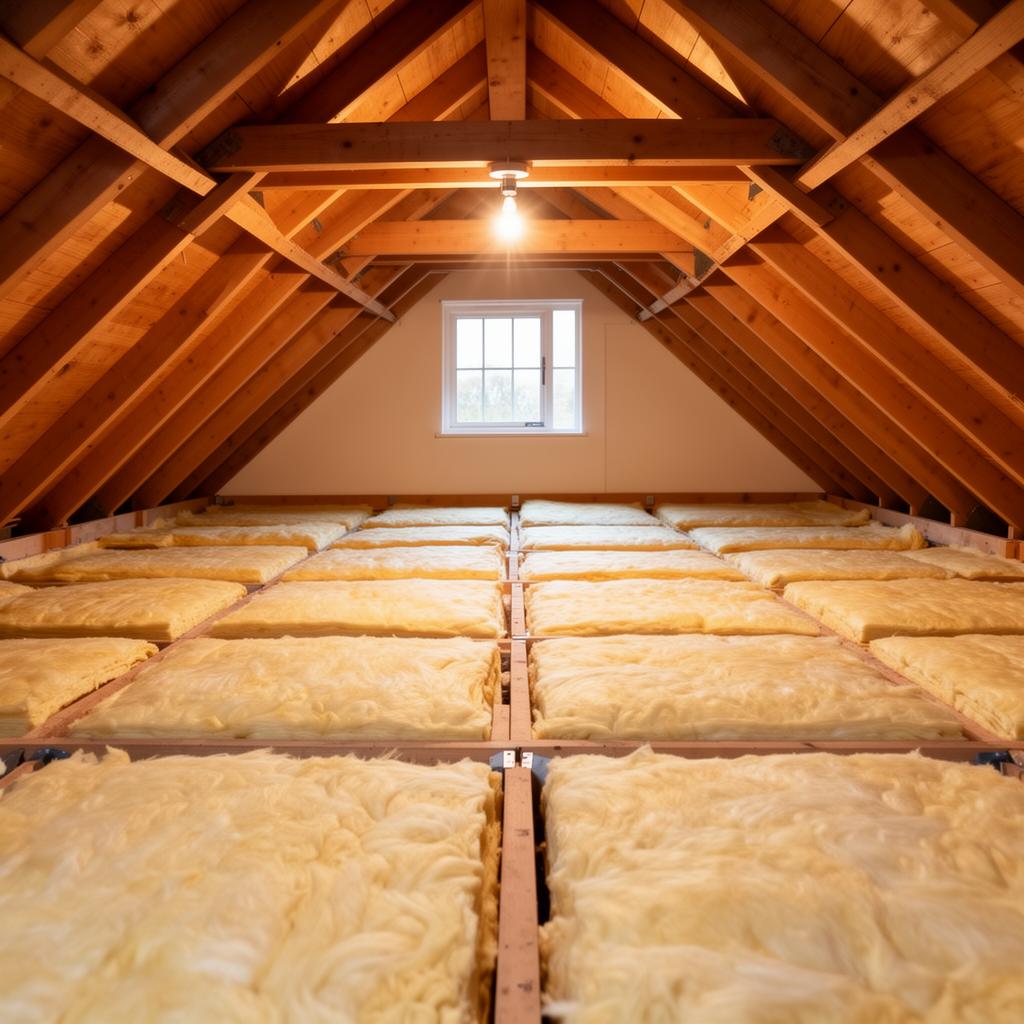
Understanding building regulations insulation requirements is essential whether you are hiring a professional or considering DIY work. Part L of the Building Regulations sets the energy efficiency standards for all buildings in England, including specific U-value targets for loft, wall, and floor insulation. Getting it wrong can lead to failed Building Control inspections, voided warranties, and problems when selling your property. This guide explains the requirements for every type of insulation, when Building Control sign-off is needed, and how to ensure compliance.
What Are the Building Regulations for Insulation?
Building Regulations Part L sets the minimum energy performance standards for buildings in England, including how well walls, roofs, floors and windows must be insulated. Since June 2022, the updated Part L requires new homes to produce around 31% less carbon than the previous standard and sets stricter U-value targets for insulation in both new builds and renovations.
| Building Element | Maximum U-value (W/m²K) | Typical Insulation Depth |
|---|---|---|
| Pitched roof (loft) | 0.16 | 270mm mineral wool |
| Flat roof | 0.18 | 150mm rigid board |
| External wall (new build) | 0.18 | 100mm+ cavity fill or rigid board |
| Ground floor | 0.18 | 100mm rigid insulation |
| Windows | 1.4 | Double or triple glazing |
If you are extending, converting or substantially renovating your home, the upgraded areas must meet current Part L standards. Minor repairs generally do not trigger compliance requirements. Building control will inspect the insulation as part of the sign-off process, and failure to comply can result in enforcement action or difficulty selling your property.
What Is Part L of the Building Regulations?
Part L of the Building Regulations covers the Conservation of Fuel and Power. It sets minimum energy efficiency standards for new buildings and for renovation work on existing buildings. The regulations are enforced by local authority Building Control or by approved inspectors.
For insulation specifically, Part L establishes target U-values that must be achieved when certain types of work are carried out. A U-value measures how much heat passes through a building element per unit area per degree of temperature difference. Lower U-values mean better insulation.
Part L was significantly updated in June 2022, introducing stricter energy efficiency requirements known as the “Part L 2021” standards. These apply to all building work commenced on or after 15 June 2022.
U-Value Targets for Insulation Work
The following U-value targets apply when renovating or improving the thermal performance of existing buildings.
| Building Element | Target U-Value (W/m2K) | Typical Insulation Needed |
|---|---|---|
| Pitched roof (loft insulation at ceiling level) | 0.16 | 270mm mineral wool |
| Pitched roof (insulation at rafter level) | 0.18 | 120-150mm rigid board between and below rafters |
| Flat roof | 0.18 | 130-150mm rigid insulation board |
| Cavity wall (fill) | 0.55 | Full-fill cavity insulation |
| External wall insulation | 0.30 | 90-120mm EWI system |
| Internal wall insulation | 0.30 | 60-100mm insulated dry lining |
| Ground floor | 0.25 | 70-100mm rigid insulation |
| Windows (replacement) | 1.4 | Double glazed, low-E, argon filled |
These are the standards that apply to renovation work in existing dwellings. New-build properties have even stricter requirements. The target U-values represent the maximum that Building Control will accept; aiming for better performance is always beneficial.
Loft Insulation: The 270mm Standard
Loft insulation is the most common insulation improvement and the one most homeowners are likely to carry out themselves. The key regulations are as follows.
When Building Regulations Apply
Building Regulations approval is required for loft insulation when it is installed as part of a material change of use (such as converting a loft into a room) or when it forms part of a larger renovation project. Simply topping up existing loft insulation in an unused loft space does not technically require Building Regulations approval, but it should still meet the standards.
The 270mm Requirement
To achieve the Part L target U-value of 0.16 W/m2K, you need approximately 270mm of mineral wool insulation at ceiling level. This is typically installed in two layers.
- First layer (100mm): Laid between the ceiling joists
- Second layer (170mm): Laid perpendicular across the top of the joists to eliminate thermal bridging
If using different insulation materials (such as sheep’s wool or cellulose fibre), the required thickness may vary because different materials have different thermal conductivities. The installer should calculate the exact thickness needed to achieve the target U-value based on the material’s lambda value.
Ventilation Requirements
Adequate roof ventilation must be maintained when installing loft insulation. Blocking eaves ventilation with insulation can cause condensation problems in the roof space. Leave a clear gap of at least 25mm at the eaves to allow air circulation, and consider using ventilation trays or baffles to maintain the gap.
Cavity Wall Insulation Regulations
Cavity wall insulation (CWI) is a controlled building operation and falls under Building Regulations. The main requirements are as follows.
- The insulation material must hold a current British Board of Agrement (BBA) certificate or equivalent
- The installation must be carried out by a registered installer, typically a member of CIGA (Cavity Insulation Guarantee Agency)
- A pre-installation survey must confirm that the cavity is suitable for filling (checking for rubble, moisture, and structural condition)
- The installer must provide a 25-year CIGA guarantee
- Building Control notification is handled by the installer through a Competent Person Scheme
Not all cavities are suitable for insulation. Properties with narrow cavities (below 50mm), cavities containing rubble, or properties in areas of severe driving rain exposure may not be appropriate for standard cavity fill. A qualified surveyor should assess suitability before work begins.
External and Internal Wall Insulation
Both external wall insulation (EWI) and internal wall insulation (IWI) require Building Regulations approval. These are significant building projects with multiple compliance considerations.
External Wall Insulation
- Must achieve a U-value of 0.30 W/m2K or better
- Requires Building Control approval (or notification through an approved scheme)
- May require planning permission if the property is listed, in a conservation area, or if the insulation significantly alters the appearance
- Must include appropriate fire barriers, particularly around windows and at party wall junctions
- The render or cladding system must be suitable for the exposure zone
Internal Wall Insulation
- Must achieve a U-value of 0.30 W/m2K or better
- Requires Building Control approval
- Vapour barriers must be correctly positioned to prevent interstitial condensation
- Room dimensions will be reduced by the thickness of the insulation (typically 60-100mm per wall)
- Electrical sockets, radiators, and window reveals may need repositioning
Floor Insulation Regulations
Floor insulation requirements depend on the type of floor.
Suspended Timber Floors
Insulation can be fitted between the floor joists from below (if there is a crawl space) or from above by lifting floorboards. The target U-value is 0.25 W/m2K, typically requiring 70-100mm of rigid insulation board.
Adequate underfloor ventilation must be maintained through air bricks and vents. Blocking these can cause timber rot and structural problems.
Solid Concrete Floors
Insulating a solid concrete floor is more disruptive and expensive. Options include laying rigid insulation on top of the existing floor (which raises the floor level) or excavating and replacing the floor with an insulated construction. Building Regulations apply whenever the floor is being replaced or significantly altered.
Building Control Sign-Off: When You Need It
The requirement for Building Control involvement depends on the type of work and who is carrying it out.
| Type of Work | Building Control Needed? | Alternative Route |
|---|---|---|
| Loft insulation top-up (unused loft) | Generally no | N/A |
| Loft conversion insulation | Yes | None (full plans submission) |
| Cavity wall insulation | Yes | Competent Person Scheme (installer self-certifies) |
| External wall insulation | Yes | Competent Person Scheme (some installers) |
| Internal wall insulation | Yes | Building notice or full plans |
| Floor insulation (as part of renovation) | Yes | Competent Person Scheme or building notice |
| Window replacement | Yes | FENSA or CERTASS self-certification |
When a Competent Person Scheme is available, the installer handles Building Control notification on your behalf, saving time and often the cost of a Building Control inspection. Always check that your installer is registered with the relevant scheme before work begins.
DIY Insulation: What the Regulations Mean for You
DIY insulation is increasingly popular, particularly for loft insulation top-ups. Here is what you need to know about compliance.
- Loft insulation DIY: Topping up loft insulation in an unused loft space is a straightforward DIY job. While it does not require Building Control approval, you should still follow the 270mm standard and maintain ventilation
- Cavity wall insulation: This is never a DIY job. It requires specialist equipment and must be installed by a registered professional to obtain the CIGA guarantee
- External wall insulation: Not suitable for DIY due to fire safety requirements, structural considerations, and the need for professional render application
- Internal wall insulation: Competent DIYers can install insulated dry lining, but Building Regulations approval is still required and a vapour barrier must be correctly installed
If you carry out work that requires Building Regulations approval without obtaining it, you may face problems when selling the property. Buyers’ solicitors routinely check for Building Control completion certificates, and missing certificates can delay or derail a sale.
For professional insulation installation with full regulatory compliance, get a free quote from TrustMark-registered insulation installers.
Frequently Asked Questions
Can I be fined for non-compliant insulation?
Local authorities have the power to require removal or rectification of non-compliant building work. In practice, enforcement action for insulation is rare for domestic properties, but the bigger risk is problems when selling. Missing Building Control certificates can cause significant delays and may require retrospective applications or indemnity insurance, both of which add cost and complexity to a sale.
Do grant-funded insulation installations comply with Building Regulations automatically?
Yes. Insulation installed through ECO4, the Warm Homes Local Grant, or other government-funded schemes must comply with all relevant Building Regulations. The approved installers are required to be TrustMark registered and PAS 2030 accredited, which includes compliance with Part L. Building Control notification is handled through Competent Person Schemes.
Are Part L requirements different for heat pump installations?
Heat pump installations fall under both Part L (energy efficiency) and Part P (electrical safety). MCS-certified installers can self-certify compliance with both. Part L requires that the overall energy efficiency of the building is not made worse by the installation, which a heat pump inherently satisfies because it is more efficient than the fossil fuel system it replaces.
What happens if my old insulation does not meet current standards?
Existing insulation that met the standards in force when it was installed does not need to be upgraded to current standards. Building Regulations only apply when new work is being carried out. However, if you are renovating and the work triggers a Building Regulations requirement (such as replacing more than 25% of the roof covering), you may be required to improve the insulation to current standards as part of that project. A boiler replacement, for instance, does not trigger insulation upgrade requirements.
See what these numbers mean for your home
Free instant estimate — costs, savings, payback and grants for your region.

Related Articles
Home Insulation Costs and Grants: Your Complete 2026 Guide
Update (June 2026): ECO4 closed to new applications in March 2026. Approved installations continue to December 2026. The Warm Homes: Local Grant is now the main funding route for insulation.…
18 May 2026
How to Reduce Condensation and Damp While Keeping Your Home Warm
Learn why condensation forms in UK homes, the difference between condensation and rising damp, and proven ventilation strategies to fix damp without losing heat.
8 May 2026
Conservatory Roof Replacement: How a Solid Roof Cuts Energy Bills and Adds Value
Replacing an old polycarbonate or glass conservatory roof with a solid insulated roof can slash heat loss, cut energy bills and turn a seasonal room into a year-round living space.
6 May 2026