Loft Conversion Energy Efficiency: Insulation Rules and Running Costs
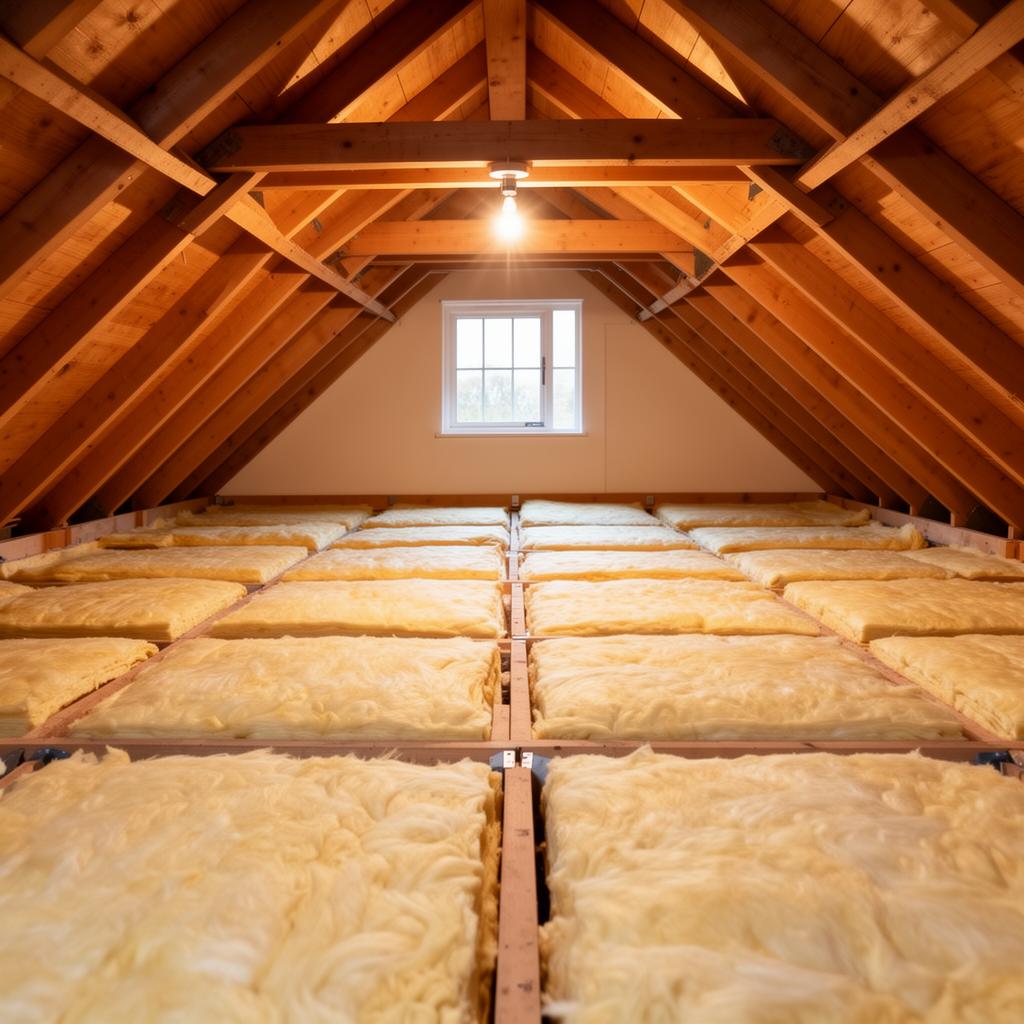
A loft conversion is one of the most popular ways to add space to a UK home, but the loft conversion insulation regulations UK building standards impose are strict — and for good reason. A poorly insulated loft conversion can become an oven in summer, a freezer in winter, and a major drag on your heating bills year round. Getting the insulation right from the start is essential.
What insulation do you need for a loft conversion?
A loft conversion in the UK must meet Part L building regulations, which require the roof slope insulation to achieve a U-value of 0.18 W/m²K or better. This typically means installing 100–120mm of rigid insulation board between the rafters plus 50–60mm of additional insulation below, or using a combination of mineral wool and insulated plasterboard. Walls, floors and dormers each have their own U-value targets, and all must be met for building control sign-off.
Properly insulating a loft conversion prevents it from becoming the most expensive room in the house to heat. Without adequate insulation, a converted loft can lose up to 25% of its heat through the roof. Budget around £1,500–£3,000 for the insulation element of a typical loft conversion, which will pay for itself through lower heating bills within five to eight years.
This guide covers everything you need to know about loft conversion energy efficiency, from the mandatory U-value requirements to the best insulation types for between and below rafters, window performance standards, ventilation needs, and how a well-insulated conversion affects your long-term running costs.
The 0.15 W/m2K Roof U-Value Requirement
Part L of the Building Regulations requires that the roof of a loft conversion achieves a maximum U-value of 0.15 W/m2K. This is one of the tightest U-value requirements for any building element, reflecting the fact that heat rises and an uninsulated or poorly insulated roof is responsible for significant heat loss.
To put this in context, the 0.15 W/m2K requirement typically means installing between 120mm and 170mm of rigid insulation board (such as PIR board like Celotex or Kingspan), or the equivalent performance using other insulation types. The exact thickness depends on the specific product’s thermal conductivity (lambda value).
| Insulation Type | Lambda Value (W/mK) | Approximate Thickness for 0.15 U-Value |
|---|---|---|
| PIR rigid board (Celotex/Kingspan) | 0.022 | 120-140mm |
| Mineral wool (between rafters) | 0.035-0.040 | 200-250mm |
| Sheep wool | 0.038-0.040 | 220-260mm |
| Spray foam (closed cell) | 0.025-0.028 | 140-160mm |
| Multifoil insulation (combined system) | Varies | Typically combined with rigid board |
The U-value calculation must account for thermal bridging at the rafters themselves (timber conducts heat better than insulation), so the overall system performance matters, not just the insulation between the rafters.
Insulation Methods: Between Rafters, Below Rafters, or Both
The method of insulating a loft conversion roof depends on the rafter depth, the headroom available, and the desired finish. There are three main approaches.
Between rafters only
Insulation is fitted snugly between the existing rafters. This is the most space-efficient method but only works if the rafters are deep enough to accommodate the required thickness of insulation. Standard rafters in older homes are often only 100mm deep, which is not enough for mineral wool alone.
Using high-performance PIR board (lambda 0.022) between 100mm rafters, you would achieve roughly 0.22 W/m2K — not enough to meet the 0.15 standard on its own.
Between and below rafters (the most common approach)
This combines insulation between the rafters with an additional layer fixed below them. It is the most common method in UK loft conversions and achieves the required U-value without needing to deepen the rafters.
A typical build-up might be:
- 100mm PIR board between rafters (friction-fitted)
- 25-50mm PIR board fixed below the rafters as a continuous layer
- Vapour control layer
- Plasterboard finish (12.5mm)
The continuous layer below the rafters is particularly important because it eliminates the thermal bridging through the timber, which can account for 10 to 15% of the total heat loss if left unaddressed.
Above rafters (warm roof)
Insulation is placed on top of the rafters, below the roof tiles or slates. This is technically the best-performing option because it eliminates thermal bridging entirely and keeps the rafters within the warm envelope of the building. However, it requires stripping and re-covering the roof, which adds significant cost and is usually only practical when the roof covering is being replaced anyway.
For most loft conversions, the between-and-below approach offers the best balance of performance, cost and practicality. If you are planning insulation upgrades elsewhere in your home, our insulation guide covers all the options.
Window and Rooflight Requirements for Loft Conversions
Windows in a loft conversion must meet specific energy and safety standards.
Thermal performance: Roof windows (such as Velux) must achieve a maximum U-value of 1.7 W/m2K, while vertical windows (such as dormer windows) must achieve 1.4 W/m2K. Most modern double-glazed roof windows meet these standards as standard, but it is worth checking the specific model’s data sheet.
Total glazed area: The combined area of all windows and rooflights should not exceed 25% of the floor area of the loft conversion, unless compensatory measures are used elsewhere (such as better wall or roof insulation).
Minimum light requirement: The glazed area of windows in habitable rooms must be at least 20% of the floor area of that room. This creates a narrow design window between the minimum light requirement and the maximum thermal limit.
Escape windows: At least one window must be large enough to serve as an emergency escape route, with a minimum clear opening of 450mm x 450mm and a sill height no more than 1,100mm above the floor.
Ventilation Requirements in Loft Conversions
A well-insulated loft conversion needs proper ventilation to prevent condensation and maintain healthy indoor air quality. Part F of the Building Regulations requires:
- Trickle vents in all new windows, providing continuous background ventilation
- Extract ventilation in any en-suite bathroom or shower room (minimum 15 litres per second intermittent, or 8 litres per second continuous)
- Purge ventilation via openable windows in each habitable room
The roof void above the insulation also needs ventilation to prevent moisture build-up within the roof structure. A 50mm ventilation gap must be maintained between the top of the insulation and the underside of the roof felt or membrane, with air entering at the eaves and exiting at the ridge.
If the original roof has a bituminous felt underlay (common in pre-2000 properties), this is not breathable and the ventilation gap is essential. If the roof has a modern breathable membrane, the ventilation requirements may be relaxed, but this should be confirmed with building control.
How a Well-Insulated Loft Conversion Affects Heating Bills
The impact on your heating bills depends on whether the loft was previously insulated at ceiling level and how well the conversion is built.
Before conversion: a loft with 270mm of mineral wool at ceiling level has a U-value of roughly 0.14 W/m2K. The loft space itself is cold and unheated, and the insulation keeps heat in the rooms below.
After conversion: the insulation moves from the ceiling to the roof slope. If the conversion meets the 0.15 W/m2K requirement, the thermal performance is very similar — but you now have a larger heated volume (the new room) which needs additional energy to maintain temperature.
A typical loft conversion adds 20 to 30 square metres of heated floor area. The additional heating cost depends on the insulation quality, the heating system efficiency, and how the room is used. Realistic figures are:
| Scenario | Estimated Additional Annual Heating Cost |
|---|---|
| Well-insulated conversion (meets 0.15 U-value), gas boiler | GBP 150 – GBP 250 |
| Well-insulated conversion, heat pump | GBP 100 – GBP 180 |
| Poorly insulated conversion (fails to meet standards) | GBP 400 – GBP 700 |
The difference between a compliant and a poorly insulated conversion is stark — up to GBP 500 per year in additional heating costs. Over 20 years, that adds up to GBP 10,000 in wasted energy, which is far more than the cost of doing the insulation properly in the first place.
Common Loft Conversion Insulation Mistakes to Avoid
Having seen many loft conversions over the years, certain insulation mistakes come up repeatedly.
- Compressing mineral wool into shallow rafters: compressed insulation performs significantly worse than its rated value. If rafters are too shallow, use rigid board or add insulation below
- Leaving gaps around roof windows: the junction between the roof window frame and the surrounding insulation is a common cold spot. Use expanding foam tape and ensure insulation is tight to all edges
- Ignoring the party wall junction: where the roof meets a party wall (terraced or semi-detached houses), heat can escape through the uninsulated junction. Insulation should be continued right to the wall
- No vapour control layer: warm, moist air from the room can penetrate the insulation and condense within the roof structure, causing timber rot over time. A properly sealed vapour control layer on the warm side of the insulation is essential
- Blocking the ventilation gap: insulation must not fill the entire rafter depth if a ventilation gap is needed. Proprietary ventilation spacers can help maintain the gap
Loft Conversion Insulation Costs
The cost of insulating a loft conversion is typically included in the overall build price, but here are indicative costs for the insulation element alone.
| Item | Typical Cost |
|---|---|
| PIR board insulation (between and below rafters, 25 sq m roof) | GBP 1,200 – GBP 2,000 |
| Mineral wool insulation (same area) | GBP 600 – GBP 1,000 |
| Vapour control membrane | GBP 100 – GBP 200 |
| Ventilation spacers and eaves vents | GBP 100 – GBP 250 |
| Labour for insulation installation | GBP 500 – GBP 1,000 |
| Total insulation package | GBP 1,500 – GBP 3,500 |
This represents a small fraction of a typical loft conversion cost of GBP 30,000 to GBP 60,000, yet it has an outsized impact on comfort and running costs for the lifetime of the building.
Frequently Asked Questions About Loft Conversion Insulation
Can I use spray foam insulation in a loft conversion?
Closed-cell spray foam can achieve good thermal performance in a thin build-up, but it has drawbacks. Some mortgage lenders are wary of spray foam on roof timbers, and it can make future roof repairs difficult because the foam bonds to the rafters and underside of tiles. Open-cell spray foam is more lender-friendly but requires a vapour control layer and may not achieve the required U-value without additional insulation. Check with your mortgage lender before specifying spray foam.
How much headroom do I lose with roof insulation?
Using the between-and-below method with PIR board, you typically lose 60 to 80mm of headroom from the underside of the rafters (the below-rafter layer plus plasterboard). Using mineral wool between deeper rafters with no below-rafter layer can preserve more headroom, but this usually requires the rafters to be deepened, which adds cost. Building regulations require a minimum ceiling height of 2.2 metres over at least 50% of the floor area.
Do I need to insulate the walls of a dormer window?
Yes. The walls (cheeks) of a dormer window are external walls and must achieve the same 0.18 W/m2K U-value as any other external wall in the conversion. The roof of the dormer must achieve 0.15 or 0.18 W/m2K depending on whether it is treated as a pitched or flat roof. These small areas are frequently under-insulated, creating cold spots and condensation risks.
Will a loft conversion improve my EPC rating?
It depends. A well-insulated loft conversion with efficient heating and good windows can improve your EPC by adding well-performing floor area. However, if the conversion increases the heated volume significantly without improving the existing house’s insulation, the effect can be neutral or even slightly negative. The best results come when you combine the conversion with whole-house improvements such as upgraded insulation and a more efficient heating system.
What grants are available for loft conversion insulation?
Insulation installed as part of a loft conversion is not typically covered by government grants such as the Great British Insulation Scheme, as these target existing building elements rather than new construction. However, the insulation materials currently benefit from 0% VAT, which applies to energy-saving materials fitted in residential properties. If the conversion also prompts a heat pump installation, the GBP 7,500 Boiler Upgrade Scheme grant may be available. Get a quote to explore your options.
See what these numbers mean for your home
Free instant estimate — costs, savings, payback and grants for your region.

Related Articles
Home Insulation Costs and Grants: Your Complete 2026 Guide
Update (June 2026): ECO4 closed to new applications in March 2026. Approved installations continue to December 2026. The Warm Homes: Local Grant is now the main funding route for insulation.…
18 May 2026
How to Reduce Condensation and Damp While Keeping Your Home Warm
Learn why condensation forms in UK homes, the difference between condensation and rising damp, and proven ventilation strategies to fix damp without losing heat.
8 May 2026
Conservatory Roof Replacement: How a Solid Roof Cuts Energy Bills and Adds Value
Replacing an old polycarbonate or glass conservatory roof with a solid insulated roof can slash heat loss, cut energy bills and turn a seasonal room into a year-round living space.
6 May 2026