Insulation and Fire Safety: What UK Homeowners Should Know
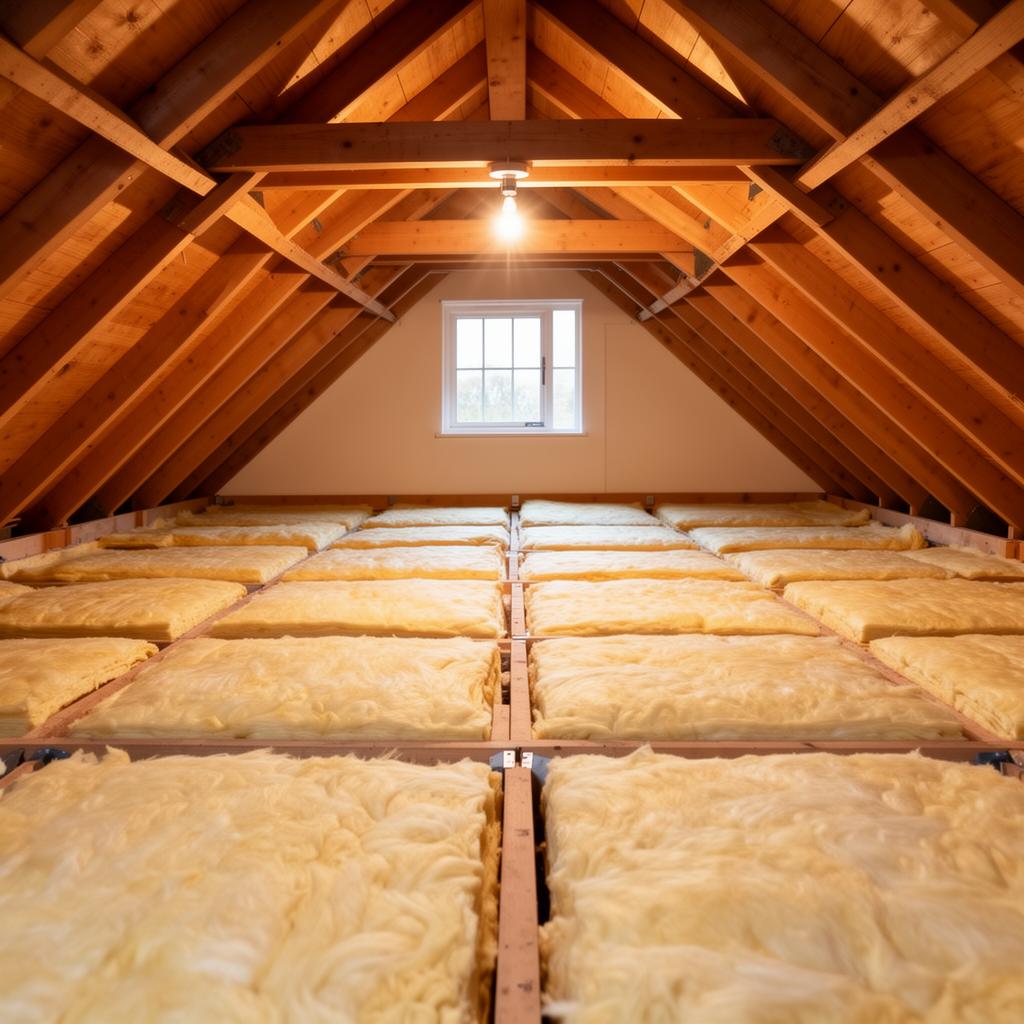
Choosing the right insulation is not just about thermal performance and cost. Insulation fire safety UK regulations are a critical consideration, particularly following the Grenfell Tower tragedy and the subsequent public inquiry that transformed how the construction industry thinks about fire risk in building materials. This guide explains fire classification ratings for common insulation materials, what Building Regulations require, and how to make safe choices for your home.
Is Home Insulation a Fire Risk?
Most home insulation materials used in the UK are either non-combustible or treated with fire retardants and pose a low fire risk when installed correctly. Mineral wool, glass fibre and stone wool are classified as non-combustible (Euroclass A1 or A2). Rigid foam boards such as PIR and EPS are combustible but are required to be covered by plasterboard or another fire-resistant barrier under UK building regulations.
Spray foam insulation has attracted the most fire safety concern. Open-cell spray foam is combustible and must always be covered by an intumescent coating or 30-minute fire-resistant board. If you are considering spray foam, ensure your installer provides a fire safety certificate and confirm the product meets BS 5852 or equivalent standards. Poorly installed spray foam without a fire barrier is also flagged by mortgage surveyors and can affect your property’s saleability.
Euroclass Fire Ratings Explained
All construction materials sold in the UK are classified under the European fire classification system, which rates materials from A1 (non-combustible) to F (no performance determined). Understanding these ratings helps you assess the fire risk of different insulation materials.
| Euroclass | Description | Example Materials |
|---|---|---|
| A1 | Non-combustible | Stone wool, glass mineral wool, concrete |
| A2 | Limited combustibility | Some stone wool products with binders |
| B | Very limited contribution to fire | Some phenolic foams, fire-retardant timber |
| C | Limited contribution to fire | Some PIR/PUR boards with fire-retardant additives |
| D | Acceptable contribution to fire | Standard PIR boards, wood fibre |
| E | Acceptable contribution to fire | Expanded polystyrene (EPS) |
| F | No performance determined / fails test | Untested materials |
The suffix “s” indicates smoke production (s1 = low smoke, s2 = moderate, s3 = high) and “d” indicates burning droplets (d0 = none, d1 = limited, d2 = significant). A full classification might read “B-s1,d0” meaning very limited fire contribution, low smoke, and no burning droplets.
Fire Performance of Common Insulation Materials
Different insulation materials behave very differently in a fire. Some will not burn at all, while others can contribute significantly to fire spread if not properly protected.
Mineral wool (stone wool and glass wool) – Euroclass A1
Mineral wool is non-combustible. It will not catch fire, will not contribute fuel to a fire, and produces no significant smoke or toxic fumes. Stone wool (rock wool) can withstand temperatures above 1,000 degrees Celsius without melting. This makes mineral wool the safest insulation material from a fire perspective and explains why it is the default choice for fire-critical applications such as party walls, fire barriers, and high-rise buildings.
PIR and PUR foam boards – Euroclass C to D
PIR (polyisocyanurate) and PUR (polyurethane) insulation boards are combustible materials. They will char and burn when exposed to flame, though PIR boards are formulated to form a protective char layer that slows fire spread. The charring behaviour varies between manufacturers and product grades.
PIR and PUR boards must always be protected by a fire barrier on the occupied side, typically plasterboard. A single layer of 12.5mm plasterboard provides 30 minutes of fire resistance, which is adequate for most domestic applications. Two layers provide 60 minutes.
Expanded polystyrene (EPS) – Euroclass E
EPS is highly combustible and melts at relatively low temperatures (around 100 degrees Celsius). It can produce burning, dripping material that spreads fire. EPS must always be protected by a non-combustible fire barrier and should not be used in applications where it could be exposed to flame. In external wall insulation systems, EPS is widely used but must be combined with mineral wool fire breaks at specific intervals to prevent fire spread across the facade.
Spray foam – Euroclass D to E
Spray foam insulation (both open-cell and closed-cell) is combustible. When exposed to flame, it can ignite and produce dense, toxic smoke. Open-cell spray foam is generally more flammable than closed-cell. Both types require a fire barrier (usually plasterboard) on the occupied side and should not be left exposed in any habitable space.
Phenolic foam boards – Euroclass B to C
Phenolic foam has better fire performance than PIR or EPS. It chars without significant flame spread and produces relatively low smoke. Some phenolic products achieve Euroclass B, making them one of the better-performing foam insulations for fire safety.
Wood fibre insulation – Euroclass D to E
Wood fibre is combustible, as you would expect from a wood-based product. However, its high density means it chars slowly rather than burning rapidly. Like other combustible insulation materials, it must be protected by a fire barrier on the occupied side.
Building Regulations Part B: Fire Safety Requirements
Approved Document Part B (Fire Safety) sets the Building Regulations requirements for fire performance in buildings. The key provisions affecting insulation in domestic properties include:
Internal linings
Wall and ceiling linings in habitable rooms must achieve a minimum Class 1 surface spread of flame (or Euroclass C-s3,d2) in most domestic situations. This means combustible insulation must be covered by plasterboard or another suitable lining material; it cannot be left exposed.
External wall materials (buildings over 18m)
Following the Grenfell Tower fire, the Building Safety Act 2022 banned the use of combustible materials in the external walls of buildings over 18 metres (approximately 6 storeys) in height. This means only insulation rated Euroclass A1 or A2 (i.e., mineral wool or similar non-combustible materials) can be used in the external walls of tall residential buildings.
While this ban does not directly affect most domestic houses and low-rise flats, it has influenced best practice across the industry. Many specifiers now prefer non-combustible insulation even for lower buildings as a precautionary measure.
Fire barriers and cavity barriers
Part B requires cavity barriers at specific locations to prevent fire spreading through concealed cavities. In external wall insulation systems using combustible insulation like EPS, mineral wool fire breaks must be installed:
- Around every window and door opening
- At each floor level
- At party wall junctions
- At maximum intervals of 8 to 10 metres horizontally
These fire breaks are typically 200mm wide bands of non-combustible mineral wool that prevent fire from tracking behind the combustible insulation layer.
Insulation Fire Safety UK: Lessons from the Grenfell Inquiry
The Grenfell Tower fire in June 2017 killed 72 people and fundamentally changed the UK’s approach to fire safety in buildings. The subsequent inquiry found that the rapid external fire spread was caused by the combination of combustible ACM (aluminium composite material) cladding panels and combustible PIR insulation in the external wall system.
Key lessons for homeowners from the inquiry include:
- Material testing matters: Some insulation products were found to have been marketed based on misleading test data. Always check that insulation products carry valid, current certification from an accredited testing laboratory.
- Installation quality is critical: Even when the right materials are specified, poor installation can compromise fire safety. Gaps in fire barriers, missing cavity barriers, and incomplete fire stopping can create pathways for fire to spread.
- Non-combustible alternatives exist: Mineral wool achieves comparable thermal performance to combustible foams in most applications. Where fire safety is a concern, specifying mineral wool eliminates the combustibility risk entirely.
- Retrofit and maintenance awareness: When upgrading insulation in existing buildings, consider the fire implications. Adding combustible insulation to external walls without appropriate fire breaks can create new fire risks that did not exist in the original construction.
Practical Guidance for Homeowners
For most domestic situations, the following guidelines ensure safe insulation choices:
- Loft insulation: Mineral wool is the standard and safest choice. It is non-combustible, widely available, and affordable. If using alternative materials, ensure they are covered by the loft floor or a fire barrier.
- Internal wall insulation: PIR boards behind plasterboard are safe in domestic use because the plasterboard acts as a fire barrier. Ensure at least 12.5mm plasterboard covers any combustible insulation.
- External wall insulation: If using EPS, ensure the system includes mineral wool fire breaks around openings and at floor levels. Alternatively, specify mineral wool throughout for zero combustibility risk.
- Cavity wall insulation: Blown mineral wool or bead insulation in cavities poses minimal fire risk because the insulation is enclosed within the masonry cavity.
- Spray foam: Always cover with plasterboard. Never leave spray foam exposed in a habitable space, loft conversion, or garage conversion. Be aware that spray foam in loft spaces may not be covered by a fire barrier if the loft is used only for storage.
- Around heat sources: Use non-combustible mineral wool insulation around boiler flues, boiler cupboards, and any area near heat-producing equipment. Never use combustible insulation in direct contact with or close to flue pipes, chimneys, or heating appliances.
Fire Safety Comparison Table
| Material | Euroclass | Combustible? | Fire Barrier Required? | Suitable Near Heat Sources? |
|---|---|---|---|---|
| Stone wool | A1 | No | No | Yes |
| Glass wool | A1 | No | No | Yes |
| PIR boards | C-D | Yes | Yes (plasterboard) | No |
| Phenolic boards | B-C | Yes (low) | Yes (plasterboard) | No |
| EPS | E | Yes (high) | Yes + fire breaks | No |
| Spray foam | D-E | Yes | Yes (plasterboard) | No |
| Wood fibre | D-E | Yes | Yes (plasterboard) | No |
| Sheep wool | D-E | Yes (low, self-extinguishing) | Yes (plasterboard) | No |
If you are unsure which insulation material is appropriate for your project from a fire safety perspective, contact our team for advice. We can help specify the right material for your specific application.
Frequently Asked Questions About Insulation Fire Safety
Is spray foam insulation a fire hazard?
Spray foam is combustible and will burn when exposed to flame, producing dense toxic smoke. However, when properly installed behind a fire barrier such as plasterboard, the fire risk is managed to an acceptable level for domestic use. The concern arises when spray foam is left exposed, for example in a loft space without a plasterboard lining, where it could be ignited by an electrical fault and burn without the protection of a fire barrier.
Do I need non-combustible insulation in my house?
For most domestic houses, combustible insulation like PIR boards is permitted provided it is protected by plasterboard or another fire-resistant lining. Non-combustible insulation (mineral wool) is required in specific situations: party walls between dwellings, around flue pipes and chimneys, in buildings over 18 metres tall, and wherever Building Regulations or a fire risk assessment specifies it.
Can I insulate around a chimney breast?
You can insulate the walls of a chimney breast, but you must use non-combustible mineral wool insulation and maintain a minimum 200mm clearance from any flue or flue liner. If the chimney is still in use, seek specialist advice to ensure compliance with Building Regulations Document J (combustion appliances) and adequate ventilation of the flue void to prevent condensation.
What insulation should I use around recessed downlights?
If your downlights are not fire-rated, you must either upgrade them to fire-rated LED downlights (which can be safely covered with insulation) or install non-combustible loft caps over each light before laying loft insulation. Never place combustible insulation directly against a non-fire-rated downlight, as the heat build-up can cause ignition. Fire-rated loft caps cost around GBP 5 to GBP 10 each and are a simple safety measure.
See what these numbers mean for your home
Free instant estimate — costs, savings, payback and grants for your region.

Related Articles
Home Insulation Costs and Grants: Your Complete 2026 Guide
Update (June 2026): ECO4 closed to new applications in March 2026. Approved installations continue to December 2026. The Warm Homes: Local Grant is now the main funding route for insulation.…
18 May 2026
How to Reduce Condensation and Damp While Keeping Your Home Warm
Learn why condensation forms in UK homes, the difference between condensation and rising damp, and proven ventilation strategies to fix damp without losing heat.
8 May 2026
Conservatory Roof Replacement: How a Solid Roof Cuts Energy Bills and Adds Value
Replacing an old polycarbonate or glass conservatory roof with a solid insulated roof can slash heat loss, cut energy bills and turn a seasonal room into a year-round living space.
6 May 2026