Insulating an Extension: Building Regulations, U-Values and Material Choices
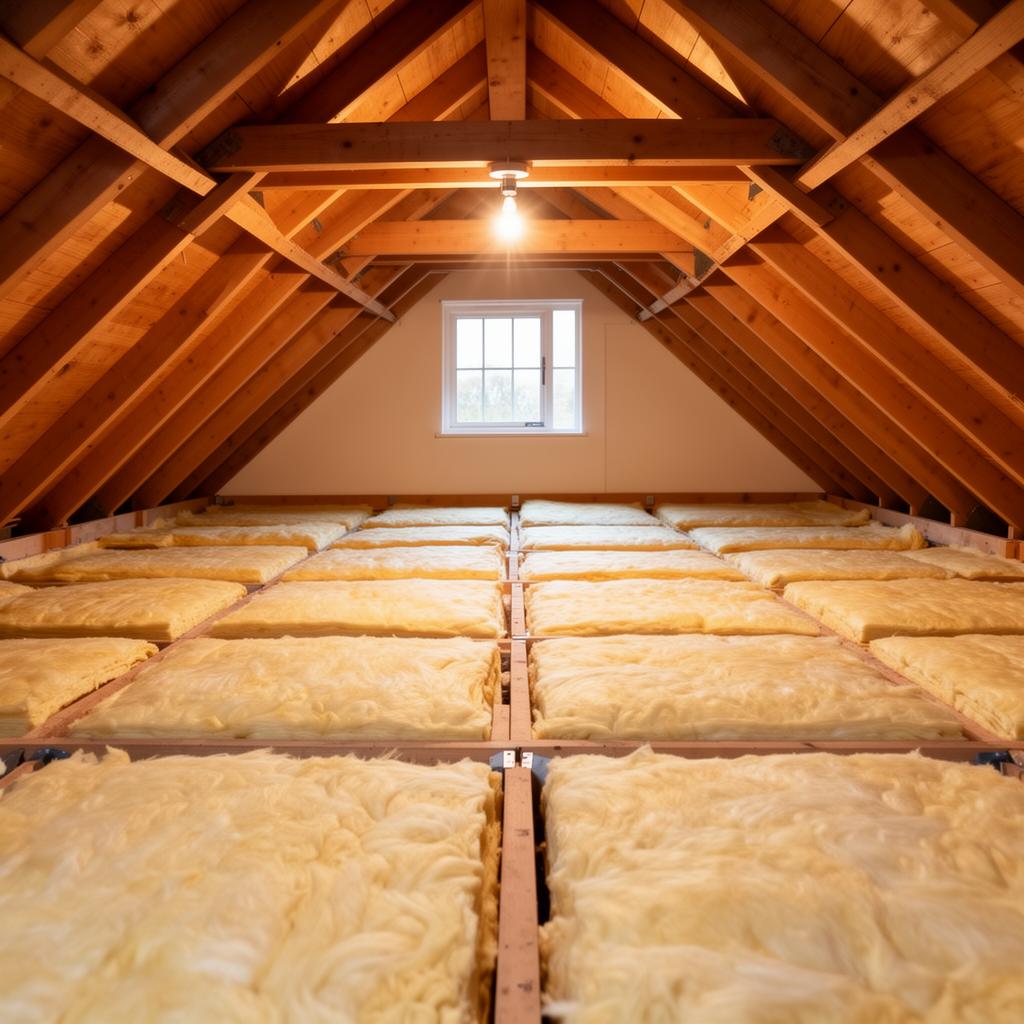
Building an extension is one of the most popular home improvement projects in the UK, but getting the insulation right is not optional. Extension insulation building regulations set strict thermal performance targets that must be met before Building Control will sign off the work. This guide covers the Part L U-value requirements, which insulation materials achieve compliance at minimum thickness, and how to handle the critical junction where the extension meets the original house.
What U-Values Do Building Regulations Require for Extensions?
Under current Building Regulations (Part L 2021), extensions in England must meet minimum U-values of 0.18 W/m²K for roofs, 0.26 W/m²K for walls, 0.18 W/m²K for floors and 1.4 W/m²K for windows. These standards apply to all new extensions and are enforced through building control sign-off. Meeting these targets typically requires 100 to 150mm of rigid insulation in walls, 150 to 200mm in roofs and 100mm under floors.
The choice of insulation material depends on the construction method. Timber-frame extensions commonly use mineral wool between studs with a layer of rigid PIR board externally. Masonry extensions use full-fill cavity insulation plus insulated plasterboard internally. For flat-roofed extensions, warm-roof insulation above the deck is preferred because it prevents condensation and is easier to maintain than cold-roof designs.
Part L Building Regulations: U-Value Targets for Extensions
Approved Document Part L (Conservation of Fuel and Power) sets the thermal performance standards that all new building elements must meet. For extensions, these targets apply to every external wall, roof, floor, window, and door in the new structure.
| Building Element | Maximum U-Value (Part L 2021) |
|---|---|
| External walls | 0.26 W/m2K |
| Roof (pitched or flat) | 0.16 W/m2K |
| Ground floor | 0.18 W/m2K |
| Windows and roof windows | 1.4 W/m2K |
| External doors | 1.4 W/m2K |
| Party walls (to unheated spaces) | 0.26 W/m2K |
These targets came into effect with the 2021 update to Part L (sometimes referred to as the 2021 uplift) and represent a significant tightening from the previous 2013 standards. Extensions submitted for Building Regulations approval from June 2022 onward must meet these requirements.
It is worth noting that these are maximum U-values. Your extension can exceed these targets (i.e., achieve lower U-values) without issue. Many builders and architects now design to exceed the minimum standards, anticipating further tightening and improving the extension’s long-term energy performance.
Wall Insulation: Achieving 0.26 W/m2K
The wall U-value target of 0.26 W/m2K can be achieved through several insulation approaches, depending on the wall construction type.
Masonry cavity walls
Most UK extensions use masonry cavity wall construction (an inner block leaf, a cavity, and an outer brick leaf). The insulation is placed within the cavity, either as partial fill or full fill.
| Insulation Material | Thickness Required for 0.26 W/m2K | Cavity Width Needed |
|---|---|---|
| PIR/PUR boards (0.022 W/mK) | 70mm | 100mm (with 30mm residual cavity) |
| Phenolic boards (0.020 W/mK) | 65mm | 100mm (with 35mm residual cavity) |
| Mineral wool full fill (0.035 W/mK) | 110mm | 110mm (full fill) |
| EPS (0.034 W/mK) | 105mm | 125mm (with 20mm residual cavity) |
PIR and phenolic boards achieve compliance with the least thickness, allowing a narrower overall wall build-up. Full-fill mineral wool is cheaper per square metre but requires a wider cavity. Most extension builders use a 100mm cavity with partial-fill PIR boards as the standard approach, leaving a residual air gap for drainage.
Timber frame walls
Timber frame extensions achieve excellent U-values because the insulation sits within the structural frame. A typical 140mm timber frame with mineral wool between studs and 25mm continuous insulation over the studs achieves around 0.20 W/m2K, comfortably exceeding the 0.26 target.
Steel frame and SIPs
Structural Insulated Panels (SIPs) consist of an insulating foam core bonded between two structural boards. They offer excellent thermal performance with minimal wall thickness. A 142mm SIP panel typically achieves 0.20 W/m2K. Steel frame extensions require insulation to be carefully detailed to avoid thermal bridging through the steel members.
Roof Insulation: Achieving 0.16 W/m2K
The roof U-value target of 0.16 W/m2K is more demanding than the wall target, reflecting the fact that hot air rises and roof heat loss is significant.
Pitched roof extensions
If the extension has a pitched roof with a cold loft space, achieving 0.16 W/m2K is straightforward with 270mm of mineral wool laid at ceiling level. If the roof space will be used as a vaulted ceiling, insulation must be at rafter level, requiring either deep rafters or insulation between and below the rafters.
Flat roof extensions
Flat roofs on extensions are typically warm-deck construction, with rigid insulation boards placed on top of the structural deck and beneath the waterproof membrane. To achieve 0.16 W/m2K:
- PIR boards (0.022 W/mK): 130mm thickness
- EPS boards (0.034 W/mK): 200mm thickness
The insulation must be continuous across the entire roof area with no gaps at joints. Boards should be staggered to prevent cold bridging at joints and taped or sealed for airtightness.
Floor Insulation: Achieving 0.18 W/m2K
The ground floor of an extension must achieve a U-value of 0.18 W/m2K, which typically requires:
- PIR boards (0.022 W/mK): 100mm thickness
- EPS boards (0.034 W/mK): 150mm thickness
In most extension ground floors, insulation sits beneath or within the concrete slab. The most common build-up is:
- Compacted hardcore
- Blinding sand
- Damp-proof membrane (DPM)
- Rigid insulation boards
- Concrete slab (or screed over insulation)
- Floor finish
The perimeter of the floor is the area of greatest heat loss, so some designs use thicker insulation around the edges (perimeter insulation) and thinner insulation in the centre to optimise the overall U-value while reducing material costs.
Thermal Bridging: The Junction Between Extension and Original House
One of the most critical and frequently mishandled details in extension insulation is the junction where the new structure meets the existing house. This junction is a potential thermal bridge that can cause cold spots, condensation, and mould if not properly detailed.
Wall-to-wall junction
Where the extension wall meets the original external wall (which typically becomes an internal wall once the extension is built), the insulation in the extension wall must return around the corner to meet the original wall. If this return is omitted, a cold strip runs vertically up the junction, visible as a damp or mouldy line on the internal wall.
Roof-to-wall junction
Where the extension roof meets the existing house wall, the roof insulation must continue right up to the wall and be sealed against it. Any gap between the roof insulation and the wall creates a cold bridge along the entire length of the junction.
Floor-to-wall junction
The floor insulation should extend right to the external walls without gaps. At the perimeter, a strip of insulation should also be placed vertically between the edge of the slab and the external wall to prevent heat loss sideways through the slab edge.
Building Control officers will check these junction details during inspections. Providing a thermal bridging calculation (psi-value calculation) for critical junctions demonstrates compliance and can avoid delays.
SAP Calculations for Extensions
For larger extensions or where the thermal performance is being optimised, a SAP (Standard Assessment Procedure) calculation or simplified SBEM (Simplified Building Energy Model) calculation may be required. These calculations model the energy performance of the extension as a whole, accounting for:
- U-values of all building elements
- Thermal bridging at junctions (psi-values)
- Air permeability (airtightness)
- Heating system efficiency
- Glazing solar gains
- Ventilation strategy
A SAP calculation costs between GBP 150 and GBP 400 depending on the complexity of the extension. Your architect or building designer can commission this as part of the Building Regulations application.
For simple extensions that follow standard construction details and meet the individual element U-value targets, Building Control may accept a straightforward compliance checklist without a full SAP calculation.
Material Costs for Extension Insulation
| Element | Material | Cost per m2 |
|---|---|---|
| Walls (cavity, PIR partial fill 70mm) | PIR boards | GBP 12 to GBP 18 |
| Walls (cavity, mineral wool full fill 110mm) | Mineral wool batts | GBP 6 to GBP 10 |
| Flat roof (PIR warm deck 130mm) | PIR boards | GBP 22 to GBP 35 |
| Pitched roof (mineral wool 270mm at ceiling) | Mineral wool rolls | GBP 5 to GBP 8 |
| Ground floor (PIR 100mm) | PIR boards | GBP 15 to GBP 25 |
| Windows (double glazed, 1.4 U-value) | Sealed units | GBP 350 to GBP 700 per window |
Insulation materials typically account for 5 to 10% of the total extension build cost. Given that Building Regulations compliance is mandatory, these costs are baked into every extension project. The question is not whether to insulate but which materials and thicknesses to use.
For advice on insulation specification for your extension project, or to combine the extension with wider home energy improvements like double glazing upgrades, request a free assessment from our team.
Frequently Asked Questions About Extension Insulation
Do I have to meet Part L standards for a small extension?
Yes. Part L requirements apply to extensions of any size. Even a small single-storey rear extension must meet the U-value targets for walls, roof, floor, and glazing. There is no minimum size threshold below which the standards do not apply.
Can I use the same insulation in the extension as in the original house?
You can use the same material types, but the thickness will likely need to be greater to meet current Part L standards. A house built in 2000 might have 50mm cavity insulation achieving 0.45 W/m2K. A new extension must achieve 0.26 W/m2K, requiring 70mm of PIR or 110mm of mineral wool in the cavity.
What happens if the extension insulation does not meet Part L?
Building Control will not issue a completion certificate until all elements meet the required U-values. Without a completion certificate, you may face difficulties selling the property, obtaining a mortgage on it, or making insurance claims. In serious cases, Building Control can require remedial work or even demolition of non-compliant elements.
Should I exceed the minimum insulation requirements?
Yes, where practical. The cost difference between meeting the minimum standard and exceeding it by 20 to 30% is usually modest (an extra 20 to 30mm of insulation). The energy savings over the extension’s lifetime are significant, and future Building Regulations will likely require better performance, so building to a higher standard now avoids the need for future upgrades. Many architects now design to 0.20 W/m2K for walls and 0.13 W/m2K for roofs as a sensible above-minimum standard.
See what these numbers mean for your home
Free instant estimate — costs, savings, payback and grants for your region.

Related Articles
Home Insulation Costs and Grants: Your Complete 2026 Guide
Update (June 2026): ECO4 closed to new applications in March 2026. Approved installations continue to December 2026. The Warm Homes: Local Grant is now the main funding route for insulation.…
18 May 2026
How to Reduce Condensation and Damp While Keeping Your Home Warm
Learn why condensation forms in UK homes, the difference between condensation and rising damp, and proven ventilation strategies to fix damp without losing heat.
8 May 2026
Conservatory Roof Replacement: How a Solid Roof Cuts Energy Bills and Adds Value
Replacing an old polycarbonate or glass conservatory roof with a solid insulated roof can slash heat loss, cut energy bills and turn a seasonal room into a year-round living space.
6 May 2026