Insulating a Timber Frame House: Best Practices and Common Mistakes
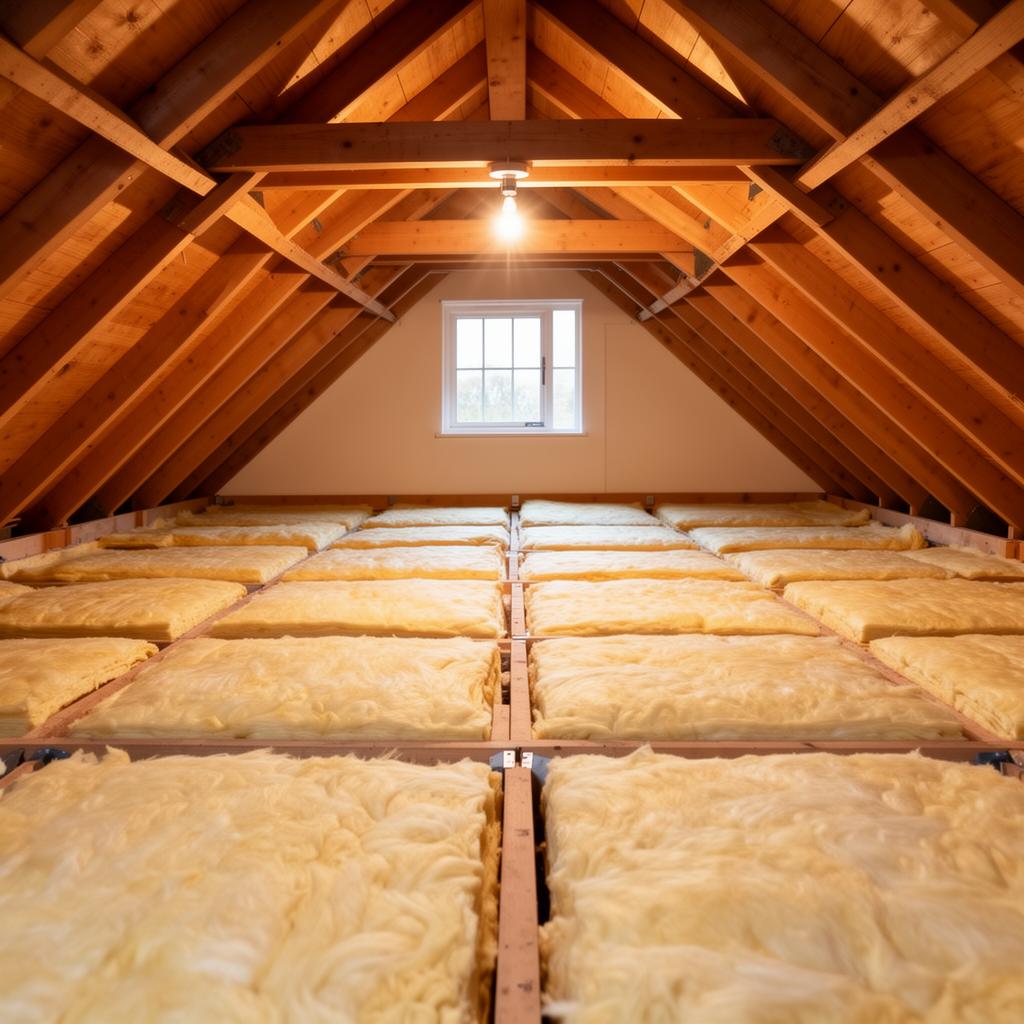
Timber frame construction accounts for roughly 25% of new UK homes and is also found in many older properties, from medieval cruck frames to post-war prefabs. Getting timber frame house insulation right is critical because the wrong materials or incorrect installation can trap moisture within the frame, leading to rot, structural damage, and costly remedial work. This guide covers which insulation materials are safe for timber frames, how to manage moisture, and the mistakes that cause the most problems.
Best Practices for Insulating a Timber Frame House
- Fill the full stud depth with insulation — use mineral wool or wood fibre batts that fit tightly between studs with no gaps or compression
- Add a continuous insulation layer externally — rigid foam or wood fibre board outside the sheathing eliminates thermal bridging through the timber studs
- Install a vapour control layer on the warm side — fit a sealed membrane behind the internal plasterboard to prevent moisture entering the wall structure
- Maintain a ventilated cavity behind cladding — a 25 to 50mm drained and ventilated cavity between external insulation and cladding prevents moisture buildup
- Use airtightness tape at all junctions — seal around windows, doors, sole plates and service penetrations to achieve an airtight envelope
- Avoid spray foam between studs — closed-cell spray foam can trap moisture in timber and makes future inspection or repair impossible without demolition
The most common mistake with timber frame insulation is neglecting the vapour control layer or installing it on the wrong side of the insulation. In the UK climate, the vapour barrier must always sit on the warm (internal) side to prevent warm moist air condensing within the cold wall structure, which can cause timber rot and mould growth within a few years.
Why Breathability Matters in Timber Frame Construction
The fundamental principle of timber frame house insulation is breathability. Timber is a hygroscopic material, meaning it naturally absorbs and releases moisture from the surrounding air. In a healthy timber frame, the wood’s moisture content stays below 20%, which is the threshold above which fungal decay begins.
Problems arise when insulation traps moisture against the timber, preventing it from drying out. This can happen in two ways:
- Warm moist air from inside the house condenses within the wall: This is interstitial condensation and occurs when the vapour control layer (VCL) is missing, damaged, or poorly detailed.
- Rain penetration through the outer cladding: If rain gets past the external skin, it must be able to drain and dry out. Non-breathable insulation that fills the drainage cavity can trap this moisture against the timber.
A correctly insulated timber frame manages moisture by using breathable insulation materials where appropriate, installing a vapour control layer on the warm side, and maintaining a ventilated or drained cavity between the insulation and the outer cladding.
Safe Insulation Materials for Timber Frame Houses
Not all insulation materials are suitable for timber frame construction. The key consideration is whether the material allows moisture vapour to pass through (breathable) or blocks it (non-breathable), and how each behaves if it gets wet.
| Material | Breathable | Safe for Timber Frame | Notes |
|---|---|---|---|
| Mineral wool (glass or rock) | Yes | Yes | Standard choice for most timber frames. Must include VCL on warm side. |
| Wood fibre boards | Yes | Yes | Excellent moisture buffering. Hygroscopic like timber itself. |
| Sheep wool | Yes | Yes | Naturally absorbs and releases moisture. Good for heritage frames. |
| Cellulose (blown) | Yes | Yes | Treated with boron for fire and pest resistance. Good for filling irregular cavities. |
| PIR / PUR rigid boards | No | Caution | Can trap moisture if installed without proper VCL. Not ideal against timber. |
| Closed-cell spray foam | No | Caution | Bonds to timber and prevents drying. Can cause hidden decay. |
| EPS (expanded polystyrene) | Slightly | Caution | Low vapour permeability. Better than PIR but still not ideal against timber. |
Why mineral wool is the standard choice
Mineral wool has been the default insulation material for UK timber frame construction for decades. It is vapour-permeable, meaning moisture can pass through it rather than being trapped. If it gets wet, it dries out readily once the moisture source is removed. It is also non-combustible, which is important for fire safety in timber construction.
For new timber frame builds, semi-rigid mineral wool batts are friction-fitted between the studs. A vapour control layer is installed on the warm (indoor) side, and a breather membrane on the cold (outdoor) side allows moisture to escape outward while preventing rain penetration inward.
Why wood fibre is gaining popularity
Wood fibre insulation boards are increasingly specified for timber frames, particularly in high-performance builds. Wood fibre is hygroscopic, just like the timber itself, meaning it can safely absorb significant quantities of moisture and release it when conditions allow. This moisture buffering capacity acts as a safety net, smoothing out temporary spikes in humidity that might cause condensation with less forgiving materials.
Wood fibre also has a high thermal mass compared to mineral wool, which helps regulate summer temperatures in lightweight timber frame buildings that can otherwise overheat.
The Danger of Non-Breathable Insulation Against Timber
PIR boards and closed-cell spray foam are excellent insulation materials in the right applications, but they create serious risks when installed directly against timber framing without careful moisture management.
The problem is straightforward. If any moisture reaches the timber, whether from internal condensation, rain penetration, or a plumbing leak, non-breathable insulation prevents it from drying out. The timber remains wet, and at moisture contents above 20%, fungal decay begins. Because the insulation covers the timber, this decay is invisible until structural damage has already occurred.
Closed-cell spray foam is particularly problematic because it bonds chemically to the timber. Not only does it prevent drying, it also makes inspection of the timber impossible without destructive removal of the foam. Several UK surveying bodies, including the Royal Institution of Chartered Surveyors (RICS), have raised concerns about spray foam in timber frame properties.
If you are considering a non-breathable insulation material for a timber frame property, ensure the design includes:
- A robust vapour control layer on the warm side with all joints taped and sealed
- No possibility of moisture reaching the timber from outside (perfect external weather barrier)
- Professional design review by a timber frame specialist or building physicist
Vapour Control Layer Placement: Getting It Right
The vapour control layer (VCL) is one of the most critical elements in a timber frame wall, yet it is frequently installed incorrectly. The VCL must be positioned on the warm side of the insulation (facing the interior of the house). Its purpose is to prevent warm, moist indoor air from migrating through the insulation and reaching the cold outer zone of the wall where it would condense.
A typical timber frame wall build-up from inside to outside should be:
- Plasterboard (internal finish)
- Service void (optional, avoids penetrating the VCL with electrical and plumbing runs)
- Vapour control layer (VCL)
- Insulation between timber studs
- Structural sheathing (OSB or plywood)
- Breather membrane (vapour-permeable, weather-resistant)
- Ventilated or drained cavity (minimum 25mm)
- External cladding (brick, render, timber, etc.)
The VCL must be continuous with all joints overlapped by at least 150mm and sealed with specialist tape. Penetrations for electrical sockets, pipes, and services must be sealed with grommets or tape. A single unsealed penetration can allow enough moisture vapour through to cause localised condensation problems.
NHBC Standards and Timber Frame Insulation
The National House Building Council (NHBC) sets construction standards that most UK new-build timber frame homes must comply with for their building warranty. Key NHBC requirements for timber frame insulation include:
- Insulation must be correctly specified and installed to achieve the designed U-value
- The VCL must have a vapour resistance of at least 200 MN.s/g (or the equivalent in modern units)
- The breather membrane must be vapour-permeable (allowing moisture to escape outward)
- A minimum 25mm drained and ventilated cavity must separate the insulation/sheathing from the outer cladding
- Insulation must not bridge the cavity or obstruct drainage paths
- Fire stops must be installed within the cavity at specified intervals
Non-compliance with these standards can void your NHBC warranty, leaving you liable for any defects related to moisture damage or thermal performance.
Common Mistakes in Timber Frame Insulation
These are the errors that most frequently cause problems in timber frame properties.
- Omitting or damaging the VCL: The single most common cause of moisture problems. Electricians and plumbers cutting through the VCL to install services, without sealing afterwards, accounts for many failures.
- Installing insulation in the wrong order: The VCL must be on the warm side. Installing it on the cold side traps moisture within the insulation.
- Using non-breathable insulation against timber without professional design: PIR boards screwed directly to the face of timber studs without a VCL behind will trap moisture.
- Blocking the cavity: Mortar droppings, insulation that has slumped, or incorrectly positioned cavity barriers can block the drainage and ventilation path in the outer cavity.
- Spray foam in unassessed timber frames: Applying closed-cell spray foam to a timber frame without understanding the moisture implications can lead to hidden timber decay.
- Insufficient insulation depth: Compressing mineral wool batts to fit a shallower cavity reduces both thermal and acoustic performance. If the studs are 90mm deep, use 90mm insulation, not 100mm squashed in.
- Ignoring thermal bridging at studs: Timber studs conduct heat more readily than the insulation between them. In high-performance builds, an additional layer of continuous insulation over the studs eliminates this thermal bridge.
If you are retrofitting insulation to an existing timber frame property, a specialist survey is strongly recommended. The construction details of the existing frame, including the type and condition of the breather membrane, the presence of a VCL, and the condition of the cavity, all influence which insulation approach is safe. Request a professional assessment to avoid costly mistakes.
Retrofitting Insulation in Older Timber Frame Properties
Older timber frame properties, from Tudor half-timbered buildings to 1950s BISF houses, present unique challenges.
For historic timber frame buildings, breathability is paramount. Traditional lime plaster and render allow moisture to move freely through the wall. Replacing these with cement render or adding non-breathable insulation can trap moisture and cause the centuries-old timber to decay rapidly. Wood fibre, sheep wool, and lime-hemp insulation are the preferred materials for these buildings.
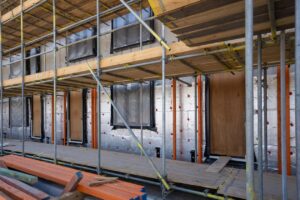
For post-war system-built timber frame houses (Airey, BISF, Wimpey, etc.), the specific construction system dictates the insulation approach. Many of these properties have thin timber panels with minimal insulation. External wall insulation is often the best solution, as it wraps the entire structure in a continuous insulated layer without disturbing the internal fabric. External insulation for a timber frame house typically costs GBP 8,000 to GBP 18,000 depending on the property size and cladding finish.
Modern timber frame houses built since the 1970s are easier to upgrade. If the original insulation has settled or degraded, it can often be topped up or replaced with current-specification materials, provided the VCL and breather membrane are intact and functional.
Frequently Asked Questions About Timber Frame Insulation
Can I use spray foam in a timber frame house?
Open-cell spray foam is vapour-permeable and can be used in timber frames with a VCL on the warm side. Closed-cell spray foam is not recommended for direct application to timber framing because it prevents the timber from drying and makes inspection impossible. If closed-cell foam is proposed, ensure the design has been reviewed by a building physicist who has carried out a condensation risk analysis.
What U-value should a timber frame wall achieve?
Current Part L Building Regulations require new walls to achieve 0.26 W/m2K. A standard 140mm timber frame with mineral wool between studs and 25mm of continuous insulation over the studs can achieve approximately 0.20 W/m2K, comfortably exceeding the minimum requirement. Older timber frame walls without insulation typically have U-values of 1.5 to 2.0 W/m2K.
How do I know if my timber frame house has a vapour control layer?
In homes built since the 1990s, a VCL should be present as standard construction practice. You can check by carefully removing an electrical socket faceplate from an external wall; the VCL (a polythene sheet) should be visible behind the plasterboard. In older timber frame homes, a VCL may not be present, which increases the importance of using breathable insulation materials.
Is cavity wall insulation suitable for timber frame houses?
No. The cavity in a timber frame wall serves a different purpose from the cavity in a masonry wall. It provides a drainage and ventilation path that protects the timber frame from moisture. Filling this cavity with blown insulation blocks the drainage path and can cause severe moisture problems. The insulation should always be within the timber frame panel, not in the external cavity.
Will adding insulation to a timber frame house cause damp?
Not if the right materials are used and the installation is done correctly. The risks arise from using non-breathable materials, omitting or damaging the VCL, or blocking the external drainage cavity. With breathable insulation, a properly installed VCL, and an intact outer cavity, adding insulation to a timber frame is safe and highly beneficial for both energy efficiency and comfort.
See what these numbers mean for your home
Free instant estimate — costs, savings, payback and grants for your region.

Related Articles
Home Insulation Costs and Grants: Your Complete 2026 Guide
Update (June 2026): ECO4 closed to new applications in March 2026. Approved installations continue to December 2026. The Warm Homes: Local Grant is now the main funding route for insulation.…
18 May 2026
How to Reduce Condensation and Damp While Keeping Your Home Warm
Learn why condensation forms in UK homes, the difference between condensation and rising damp, and proven ventilation strategies to fix damp without losing heat.
8 May 2026
Conservatory Roof Replacement: How a Solid Roof Cuts Energy Bills and Adds Value
Replacing an old polycarbonate or glass conservatory roof with a solid insulated roof can slash heat loss, cut energy bills and turn a seasonal room into a year-round living space.
6 May 2026