MVHR Systems Explained: Ventilation for Insulated Homes
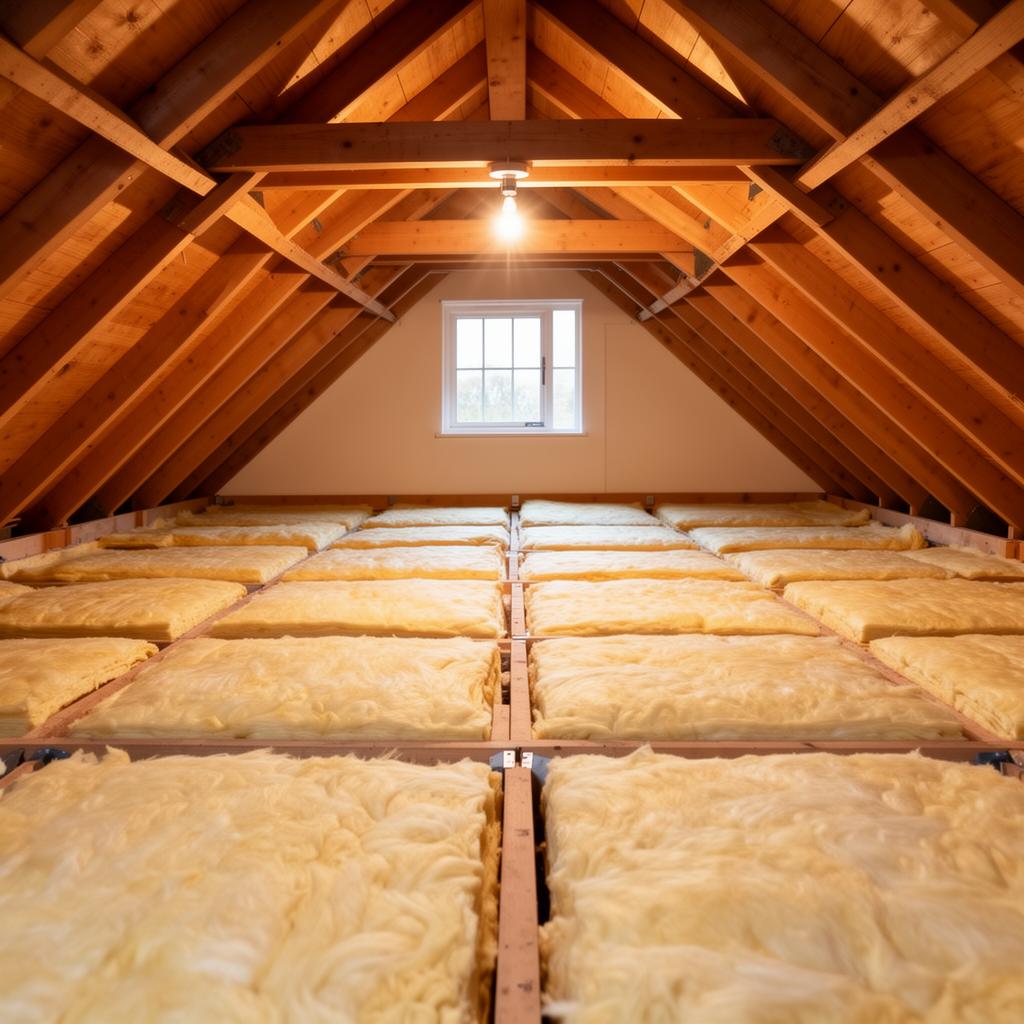
An MVHR system UK homeowners are increasingly considering is the missing piece of the energy efficiency puzzle for well-insulated homes. Mechanical Ventilation with Heat Recovery provides continuous fresh air to every room while recovering up to 90% of the heat from the stale air it extracts. As UK homes become better insulated and more airtight, MVHR becomes not just beneficial but essential for maintaining healthy indoor air quality without opening windows and wasting the energy you have invested in insulation. This guide explains how MVHR works, when it makes sense, what it costs and how it relates to Building Regulations.
What Is an MVHR System?
An MVHR (Mechanical Ventilation with Heat Recovery) system extracts stale, moist air from kitchens and bathrooms while simultaneously supplying fresh filtered air to living spaces. A heat exchanger recovers up to 90% of the warmth from outgoing air and transfers it to the incoming supply, reducing heating demand in well-insulated homes by 25–40%.
MVHR is most effective in airtight properties with insulation levels of 0.2 W/m²K or better, such as Passivhaus builds or deep retrofits. In leaky older homes, the system cannot maintain the pressure balance needed for efficient heat recovery. A typical whole-house MVHR unit costs £3,000 to £7,000 installed in the UK in 2026, with annual running costs of £30 to £60 in electricity.
How MVHR Systems Work
A Mechanical Ventilation with Heat Recovery system continuously extracts stale, moist air from wet rooms (kitchens, bathrooms, utility rooms) and supplies fresh, filtered air to habitable rooms (bedrooms, living rooms, home offices). The key innovation is the heat exchanger at the heart of the system.
The extracted warm air passes through one side of the heat exchanger while the incoming cold outdoor air passes through the other side. The two airstreams do not mix, but heat transfers from the warm outgoing air to the cold incoming air through thin metal or paper plates. By the time the fresh air enters your living spaces, it has been warmed to within a few degrees of room temperature.
The basic components of an MVHR system are:
- MVHR unit: Contains the heat exchanger, two fans (one for supply, one for extract), filters and controls. Typically wall-mounted in a utility room, loft or cupboard.
- Ductwork: Rigid or semi-rigid ducts distribute supply air to habitable rooms and collect extract air from wet rooms. Duct diameters are typically 100-150mm for main runs and 75mm for branch connections.
- Supply air valves: Ceiling or wall-mounted diffusers in bedrooms and living rooms that deliver fresh warmed air.
- Extract air valves: Ceiling or wall-mounted grilles in kitchens, bathrooms and utility rooms that collect stale moist air.
- External terminals: Two penetrations through the external wall or roof, one for fresh air intake and one for stale air exhaust. These are fitted with louvres and insect screens.
Why Well-Insulated Homes Need MVHR
There is a direct and critical link between insulation, airtightness and ventilation. As a home becomes more insulated and airtight, the natural air leakage that previously provided background ventilation is eliminated. Without replacement ventilation, the result is poor indoor air quality, excess moisture, mould growth and health problems.
The progression typically works like this:
- Draughty older home (air permeability 15-20 m3/m2/hr at 50Pa): Natural air leakage provides abundant (if energy-wasting) ventilation. Trickle vents and extract fans are supplementary. MVHR is not needed.
- Well-insulated home with improved airtightness (5-10 m3/m2/hr): Significantly reduced air leakage. Trickle vents and extract fans become the primary ventilation method. MVHR is beneficial but not essential.
- Very airtight home (below 5 m3/m2/hr): Natural air leakage is minimal. Trickle vents may not provide sufficient background ventilation. MVHR becomes the recommended ventilation strategy.
- Passivhaus-level airtightness (below 1 m3/m2/hr): Virtually no natural ventilation. MVHR is essential and is a core requirement of the Passivhaus standard.
The Building Regulations threshold is generally considered to be around 5 m3/m2/hr at 50Pa. Below this level, Approved Document F recognises that a whole-house mechanical ventilation system (MVHR or continuous mechanical extract) is the appropriate ventilation strategy.
Heat Recovery Efficiency: What 90% Really Means
MVHR manufacturers frequently claim heat recovery efficiencies of 90% or higher. Understanding what this means in practice is important for managing expectations.
The stated efficiency is the thermal efficiency of the heat exchanger under standardised test conditions. In a real installation, the overall system efficiency is affected by several factors:
- Duct heat loss: If ducts run through unheated spaces (lofts, wall cavities), they lose some of the recovered heat before it reaches the rooms. Insulating ducts in unheated spaces reduces this loss.
- Air leakage in ductwork: Poorly sealed duct joints allow heated air to escape before reaching the supply valves. Rigid ductwork with sealed joints performs better than flexible ducting.
- Frost protection: In very cold weather, the heat exchanger can freeze as moisture in the extract air condenses and freezes on the cold supply side. Most MVHR units have automatic frost protection that temporarily reduces or stops the supply fan, reducing effective efficiency during cold snaps.
- Filter condition: Dirty filters increase air resistance and reduce airflow, lowering effective heat recovery. Regular filter replacement is essential.
In a well-designed and properly installed system, the real-world annual average heat recovery is typically 75-85% of the laboratory figure. This still represents a substantial energy saving compared to opening windows or using extract-only ventilation, where 100% of the heat in the extracted air is lost.
MVHR Installation Costs in the UK
MVHR installation is a significant investment, particularly in retrofit projects where ductwork must be routed through an existing building. Costs vary depending on the size of the property, complexity of the duct routing and the MVHR unit specification.
| Component | Typical Cost |
|---|---|
| MVHR unit (mid-range, e.g. Vent-Axia Sentinel Kinetic, Zehnder ComfoAir) | GBP 1,500-3,000 |
| Ductwork, fittings and valves | GBP 800-2,000 |
| Installation labour (new build) | GBP 1,000-2,000 |
| Installation labour (retrofit) | GBP 2,000-4,000 |
| Commissioning and balancing | GBP 200-400 |
| Total (new build) | GBP 3,500-7,000 |
| Total (retrofit) | GBP 4,500-9,000 |
Retrofit installations are more expensive because routing ductwork through an existing building requires careful planning to minimise visual impact and structural disruption. Common retrofit duct routes include through the loft space (distributing to first-floor rooms through ceiling voids) and through bulkheads or boxing in corridors.
Some manufacturers offer decentralised MVHR units that serve individual rooms or zones, avoiding the need for long duct runs. These cost approximately GBP 500-1,000 per unit and are easier to retrofit but do not provide the whole-house air distribution that a central system delivers.
Running Costs and Energy Savings
MVHR systems consume electricity to run their fans continuously. The running cost depends on the fan speed, duct resistance and electricity tariff.
- Typical electrical consumption: 30-60 watts at normal speed, increasing to 100-150 watts at boost speed
- Annual electricity consumption: Approximately 300-500 kWh per year at normal speed
- Annual electricity cost: Approximately GBP 90-150 per year at current domestic electricity rates
This electricity cost must be offset against the heating energy saved by recovering heat from the extracted air. In a well-insulated home with an air permeability of 3-5 m3/m2/hr, the heat recovered by the MVHR system typically saves 1,500-2,500 kWh of heating energy per year. At gas heating costs, this equates to approximately GBP 120-200 per year.
The net financial saving (heating energy saved minus electricity consumed) is therefore relatively modest at GBP 30-80 per year. The economic case for MVHR is not primarily about energy savings. It is about maintaining healthy indoor air quality in an airtight, well-insulated home. The alternative to MVHR in a tight house is opening windows, which loses far more heat and negates much of the insulation investment.
Building Regulations Part F Requirements
Approved Document F (ventilation) recognises four ventilation strategies for domestic dwellings, of which MVHR is System 4:
- System 1: Background ventilation (trickle vents) with intermittent extract fans
- System 2: Passive stack ventilation
- System 3: Continuous mechanical extract ventilation (MEV)
- System 4: Continuous mechanical supply and extract with heat recovery (MVHR)
System 4 (MVHR) is the recommended strategy for dwellings with an air permeability below 5 m3/m2/hr at 50Pa. For Passivhaus and very airtight buildings, it is effectively mandatory to meet the minimum ventilation rates specified in the regulations.
Key Part F requirements for MVHR installations include:
- Minimum whole-dwelling supply and extract rates based on the number of bedrooms (e.g. 31 litres/second for a 3-bedroom house)
- Extract rates for individual wet rooms (kitchen: 13 l/s; bathroom: 8 l/s; utility: 8 l/s)
- Boost mode capability for periods of high moisture generation (cooking, bathing)
- Noise levels not exceeding 30 dB in bedrooms and 35 dB in living rooms
- Filters on both supply and extract air streams
- Commissioning and balancing by a competent person, with results recorded
MVHR and the Link Between Insulation and Indoor Air Quality
The relationship between insulation, airtightness and indoor air quality is one of the most important but least understood aspects of home energy efficiency. Getting this balance right is essential for a healthy, comfortable, energy-efficient home.
The principle is simple: insulate well, seal the building envelope, then provide controlled ventilation to replace the uncontrolled air leakage you have eliminated. MVHR is the most energy-efficient way to provide this controlled ventilation because it recovers the heat that would otherwise be lost.
Homes that are well insulated but poorly ventilated suffer from excess humidity, condensation, mould and stale air. Homes that are well ventilated but poorly insulated waste energy heating air that immediately escapes. MVHR in a well-insulated building delivers both energy efficiency and excellent air quality.
If you are planning a comprehensive retrofit involving wall insulation, loft insulation, new windows and improved airtightness, include MVHR in your plans from the outset. The ductwork is much easier and cheaper to install alongside other building work than as a standalone retrofit later. Combining MVHR with a heat pump and solar panels creates an ultra-efficient home that is comfortable, healthy and affordable to run. Get a free quote to start planning your whole-house energy upgrade.
Frequently Asked Questions
Is MVHR noisy?
A properly installed and commissioned MVHR system should be virtually inaudible in habitable rooms. The unit itself produces some noise (typically 30-45 dB at normal speed), which is why it is usually installed in a utility room, loft or cupboard rather than in a living space. Sound-attenuating ductwork (silencers) is fitted between the unit and the supply/extract valves to reduce noise transmission. In bedrooms, the target is below 30 dB, which is quieter than a whisper.
How often do MVHR filters need replacing?
Filters should be checked every 3-6 months and replaced when visibly dirty. Most systems use two sets of filters: coarser G4 filters on the extract side and finer F7 filters on the supply side. Replacement filter sets typically cost GBP 20-40. Some premium units have washable pre-filters that extend the life of the main filters. Failing to replace filters increases electrical consumption (the fans work harder to push air through dirty filters) and reduces ventilation effectiveness.
Can MVHR be retrofitted to an existing house?
Yes, though it is more complex and expensive than installing in a new build. The main challenge is routing ductwork through the existing structure without excessive visual impact. Common retrofit approaches include running ducts through the loft space to serve first-floor rooms, using void spaces above corridors, and installing semi-rigid duct in floor and ceiling voids. Decentralised MVHR units that serve individual rooms are an easier retrofit option where full ductwork is impractical.
Does my home need to be airtight for MVHR to work?
MVHR works most effectively in airtight buildings because the system controls all airflow through the heat exchanger. In a leaky building, air bypasses the MVHR by entering and leaving through cracks and gaps in the building fabric, reducing the proportion of ventilation air that passes through the heat exchanger. For MVHR to be worthwhile, a target air permeability of 5 m3/m2/hr at 50Pa or below is generally recommended. Above this level, System 1 (trickle vents with extract fans) or System 3 (continuous extract) may be more cost-effective.
Does MVHR work in summer?
Yes, but differently. In summer, when outdoor temperatures are similar to or higher than indoor temperatures, the heat recovery function is not needed. Most MVHR units have a summer bypass mode that diverts the incoming air around the heat exchanger, providing fresh air ventilation without adding unwanted heat. Some units can also provide passive cooling on summer nights by bringing in cooler outdoor air directly. MVHR provides year-round ventilation benefits, not just winter heat recovery.
See what these numbers mean for your home
Free instant estimate — costs, savings, payback and grants for your region.

Related Articles
Home Insulation Costs and Grants: Your Complete 2026 Guide
Update (June 2026): ECO4 closed to new applications in March 2026. Approved installations continue to December 2026. The Warm Homes: Local Grant is now the main funding route for insulation.…
18 May 2026
How to Reduce Condensation and Damp While Keeping Your Home Warm
Learn why condensation forms in UK homes, the difference between condensation and rising damp, and proven ventilation strategies to fix damp without losing heat.
8 May 2026
Conservatory Roof Replacement: How a Solid Roof Cuts Energy Bills and Adds Value
Replacing an old polycarbonate or glass conservatory roof with a solid insulated roof can slash heat loss, cut energy bills and turn a seasonal room into a year-round living space.
6 May 2026