Insulating a 1960s House: Concrete, No-Fines and System-Built Homes
1960s house insulation presents unique challenges because many homes from this era were built using non-traditional construction methods that standard insulation approaches cannot address. Wimpey no-fines concrete, BISF steel-framed houses, Reema concrete panels and other system-built homes require specialist assessment and specific insulation solutions. With an estimated 1.5 million non-traditional homes in the UK, this is a significant issue affecting property values, energy costs and mortgage eligibility. This guide explains the construction types, appropriate insulation methods, grant availability and what these properties mean for homeowners.
How to Insulate a 1960s House
- Identify your construction type — 1960s homes include traditional cavity brick, no-fines concrete, Wimpey no-fines, Reema, BISF steel-frame and other system-built designs, each needing a different insulation approach
- Get a professional survey — many 1960s system-built homes are classed as non-traditional and require specialist assessment before any insulation work
- Insulate cavity walls if suitable — standard cavity fill works for brick-and-block construction with a 50mm+ cavity, costing £600 to £1,500
- Consider external wall insulation for non-traditional builds — EWI cladding (£8,000–£22,000) is often the only safe option for no-fines concrete or steel-frame homes
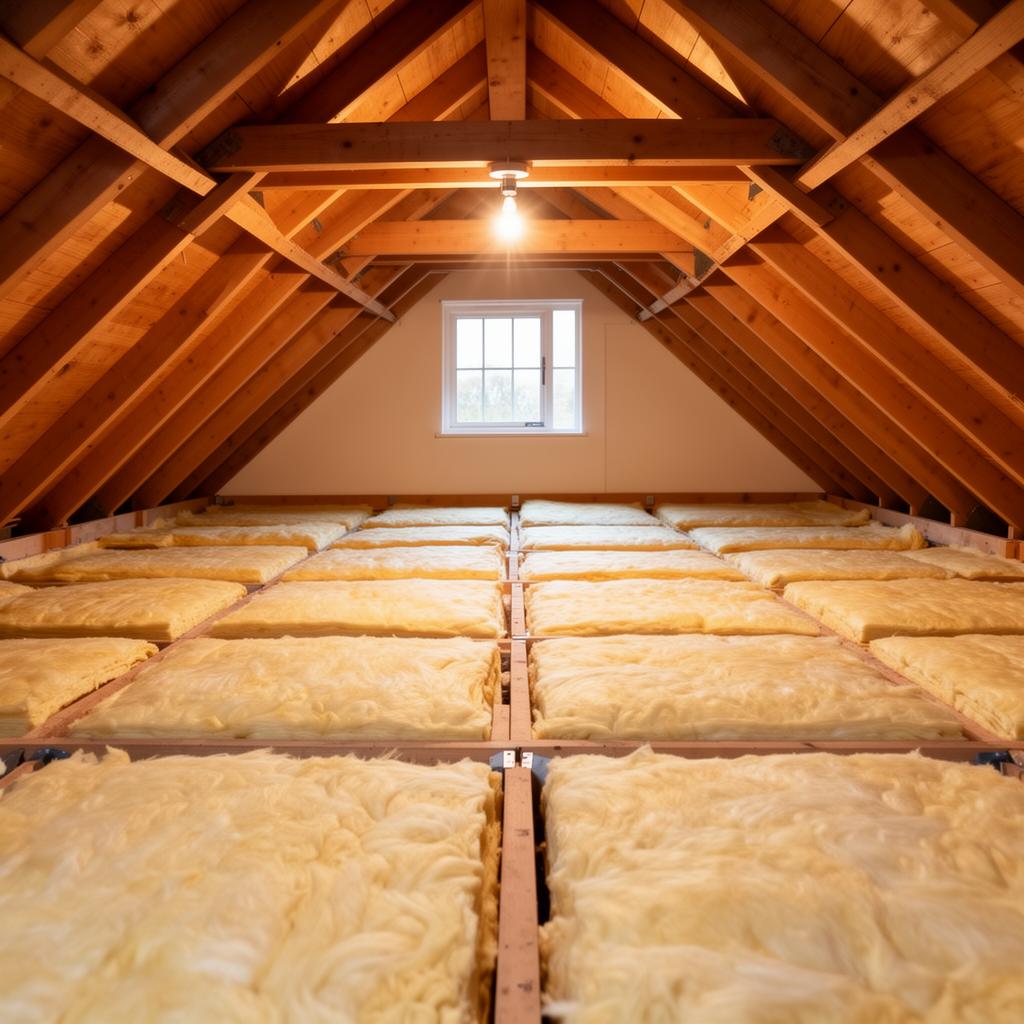
- Top up loft insulation to 270mm — many 1960s homes have only 25–50mm of original insulation
- Upgrade windows to double glazing — original 1960s single glazing loses 2–3 times more heat than modern double glazing
The biggest risk with 1960s homes is treating non-traditional construction the same as standard cavity walls. Injecting cavity fill into no-fines concrete, for example, can cause severe damp problems because the porous concrete relies on the cavity for moisture management. Always confirm your construction type through your mortgage valuation survey or a specialist assessment before choosing an insulation method.
Why 1960s Houses Were Built Differently
The post-war housing shortage created enormous pressure to build homes quickly and cheaply. Traditional brick-and-block construction required skilled bricklayers in short supply, so local authorities and developers turned to industrialised building systems that could be assembled by semi-skilled labour using factory-made components.
The result was a generation of homes built with concrete, steel and prefabricated panels rather than conventional masonry. While many of these construction methods are structurally sound, they share common problems when it comes to thermal performance:
- No cavity for cavity wall insulation
- Thin wall sections with poor inherent thermal resistance
- Cold bridging through concrete and steel structural elements
- Flat roofs with little or no insulation space
- Concrete floors with no insulation layer
These properties are consistently among the worst-performing homes in the UK for energy efficiency, with EPC ratings of E, F or even G being common. Heating a poorly insulated 1960s system-built home can cost GBP 2,500-4,000 per year at current energy prices.
Wimpey No-Fines Concrete Construction
Wimpey no-fines is one of the most common non-traditional construction types, with approximately 300,000 homes built in the UK between the 1940s and 1970s. The walls are made from in-situ poured concrete using a mix that deliberately omits fine aggregate (sand), creating a porous, lightweight concrete with large air voids throughout.
Key characteristics of Wimpey no-fines homes:
- Walls are typically 250-300mm thick solid concrete with no cavity
- The porous concrete has a rough, gravelly texture visible where render has been removed
- External walls are usually covered in a cement render finish
- The concrete has poor thermal conductivity, but the thin walls still lose heat rapidly
- There is no option for cavity wall insulation
The good news is that no-fines concrete homes are structurally robust and respond very well to external wall insulation. The rough concrete surface provides an excellent key for adhesive-fixed insulation systems.
BISF Steel-Framed Houses
British Iron and Steel Federation (BISF) houses were built between 1946 and 1955, primarily as part of post-war reconstruction. Approximately 36,000 were constructed across the UK. They consist of a steel frame with steel sheet external cladding on the upper storey and brick or rendered concrete block on the ground floor.
BISF houses have specific insulation challenges:
- The steel frame conducts heat very efficiently, creating severe cold bridging
- Upper-storey steel cladding panels have minimal insulation behind them
- Original insulation (if any) was typically a thin layer of compressed fibreboard
- The steel cladding can corrode if moisture becomes trapped by insulation
Insulating a BISF house requires a specialist approach that addresses the steel frame thermal bridging while preventing moisture from reaching the steel cladding. External wall insulation with a ventilated cavity behind the cladding is the recommended approach, but this is a significant undertaking costing GBP 15,000-25,000.
Reema Concrete Panel Construction
Reema homes were built using precast reinforced concrete panels bolted together on site. The panels form both the structural frame and the external walls. Around 30,000 Reema homes were built in the UK, primarily in the 1950s and 1960s.
Insulation challenges include:
- Concrete panels are typically only 100-150mm thick with no cavity
- Panel joints can be sources of significant air leakage and cold bridging
- Some Reema properties have been identified as having structural defects in the panel connections
- Internal insulation may not be practical due to thin walls and small room sizes
External wall insulation is the preferred solution for Reema homes, both for thermal improvement and for protecting the concrete panels from further weathering. A structural assessment should be carried out before any insulation work to confirm the panels are in sound condition.
External Wall Insulation: The Primary Solution for 1960s Houses
External wall insulation (EWI) is the default solution for most non-traditional 1960s construction types. It works by wrapping the entire building in a continuous layer of insulation, eliminating cold bridging at structural elements and protecting the original wall from weathering.
A typical EWI system for a 1960s house comprises:
- Insulation layer: 90-100mm of EPS (expanded polystyrene) or mineral wool slab, mechanically fixed and adhesive-bonded to the wall
- Reinforcement layer: Glass fibre mesh embedded in a polymer-modified render base coat
- Finish coat: Textured or smooth through-coloured render in a wide range of colours
EWI costs for a typical three-bedroom 1960s semi-detached house:
| Element | Typical Cost |
|---|---|
| EWI system (materials and labour) | GBP 10,000-16,000 |
| Scaffolding | GBP 1,500-3,000 |
| Window sill extensions and detailing | GBP 1,000-2,000 |
| Total | GBP 12,500-21,000 |
The thermal improvement is dramatic. A typical uninsulated no-fines concrete wall has a U-value of around 1.5-2.0 W/m2K. Adding 100mm of EPS brings this down to approximately 0.25-0.30 W/m2K, representing a 75-85% reduction in heat loss through the walls.
Annual energy savings of GBP 500-900 are realistic for a fully externally insulated 1960s house, depending on the original construction type and heating system efficiency.
Grant Availability for Non-Traditional 1960s Homes
Non-traditional construction homes are specifically prioritised in several government grant schemes because they are among the hardest-to-treat properties in the UK housing stock.
ECO4 Scheme
The Energy Company Obligation (ECO4) scheme explicitly targets the worst-performing properties (EPC bands D-G) and provides fully funded insulation for households on qualifying benefits. Non-traditional homes frequently qualify because of their low EPC ratings. Solid wall insulation (including EWI) is an eligible measure, with funding covering most or all of the cost for qualifying households.
Social Housing Decarbonisation Fund
Many 1960s non-traditional homes are council-owned or housing association properties. The Social Housing Decarbonisation Fund (SHDF) provides grants to social landlords specifically for upgrading the energy performance of their housing stock. If you rent a 1960s system-built home from a housing association or council, ask your landlord whether they have applied for SHDF funding.
To check your personal eligibility for insulation grants, Green Reach Energy’s quote-comparison service is launching soon — register your interest and we’ll let you know when you can compare quotes from qualified installers.
Mortgage and Survey Implications
Non-traditional construction has significant implications for mortgage lending and property valuation that homeowners and prospective buyers should understand.
- Mortgage restrictions: Some lenders will not lend on non-traditional construction unless it has been repaired and insulated under an approved scheme. Wimpey no-fines and BISF houses that have received EWI under a PRC (Prefabricated Reinforced Concrete) repair scheme are generally mortgageable.
- Structural surveys: Standard RICS Home Buyer Reports may flag non-traditional construction as requiring further investigation. A specialist non-traditional housing survey is often needed before lenders will proceed.
- PRC certificates: If your home has been upgraded under a PRC Homes Ltd scheme or similar, a completion certificate should have been issued. This certificate is essential for mortgage applications and should be retained with your property deeds.
- Property value: Unremediated non-traditional homes typically sell for 20-40% less than equivalent brick-built properties. After successful EWI installation with appropriate certification, the discount narrows significantly.
EWI installation on a non-traditional home is therefore not just an energy efficiency measure; it is often essential for maintaining or restoring the property’s mortgageability and market value.
Additional Insulation Measures for 1960s Houses
Beyond external wall insulation, 1960s houses benefit from several other improvements:
- Loft insulation: Most 1960s lofts have either no insulation or a thin 25-50mm layer. Topping up to 270mm costs GBP 350-600 and is the cheapest single improvement.
- Flat roof insulation: Many 1960s homes have flat roof sections (over extensions, garages or entire roofs). Adding insulation above the existing roof covering or as part of a replacement is essential.
- Floor insulation: Ground floor concrete slabs common in 1960s homes have no insulation. Adding rigid board insulation above the slab with a new floor finish costs GBP 1,500-3,000 but reduces floor level heat loss significantly.
- Window upgrades: Original single-glazed windows should be replaced with modern double glazing. Cost for a typical three-bedroom 1960s house: GBP 4,000-7,000.
- Heating system upgrade: Once insulation is in place, a modern condensing boiler or heat pump can be sized to the reduced heat demand, delivering further savings.
Frequently Asked Questions
How do I know if my house is non-traditional construction?
Several clues indicate non-traditional construction. Walls that sound hollow when knocked, external render with no visible brickwork, very thin walls (less than 250mm including render), concrete lintels and sills, and an absence of a damp-proof course are all indicators. Your local authority may also hold records of non-traditional housing in the area. A specialist surveyor can carry out a construction type assessment, which typically costs GBP 300-500.
Can I get a mortgage on a Wimpey no-fines house?
Yes, if the property has been externally insulated under an approved repair scheme and has a PRC completion certificate. Without this certification, many mainstream lenders will decline the application. Some specialist lenders will consider non-remediated no-fines properties, but typically at higher interest rates and lower loan-to-value ratios.
Is internal wall insulation an option for 1960s concrete houses?
Internal wall insulation is technically possible but rarely recommended for non-traditional 1960s homes. The rooms are often already smaller than modern standards, and losing 60-100mm from each external wall makes them uncomfortably tight. More importantly, IWI does not address cold bridging at structural elements and does not protect the external concrete or steel from weathering. EWI is almost always the better solution for these property types.
How much can I save by insulating a 1960s house?
A comprehensive insulation upgrade (EWI, loft insulation, floor insulation and double glazing) on a typical 1960s non-traditional three-bedroom semi can reduce annual heating costs by GBP 800-1,400 at current energy prices. The EPC rating typically improves from E or F to C, with associated benefits for property value and mortgage eligibility.
Do I need planning permission for external wall insulation on a 1960s house?
EWI is usually permitted development for houses (not requiring planning permission) provided it does not project more than a certain distance from the original wall face and does not face a highway. However, specific rules vary between local authorities, and properties in conservation areas or near listed buildings may have additional restrictions. Always check with your local planning department before proceeding.
See what these numbers mean for your home
Free instant estimate — costs, savings, payback and grants for your region.

Related Articles
Home Insulation Costs and Grants: Your Complete 2026 Guide
Update (June 2026): ECO4 closed to new applications in March 2026. Approved installations continue to December 2026. The Warm Homes: Local Grant is now the main funding route for insulation.…
18 May 2026
How to Reduce Condensation and Damp While Keeping Your Home Warm
Learn why condensation forms in UK homes, the difference between condensation and rising damp, and proven ventilation strategies to fix damp without losing heat.
8 May 2026
Conservatory Roof Replacement: How a Solid Roof Cuts Energy Bills and Adds Value
Replacing an old polycarbonate or glass conservatory roof with a solid insulated roof can slash heat loss, cut energy bills and turn a seasonal room into a year-round living space.
6 May 2026