Aerogel Insulation: The Thinnest Way to Insulate Walls in the UK
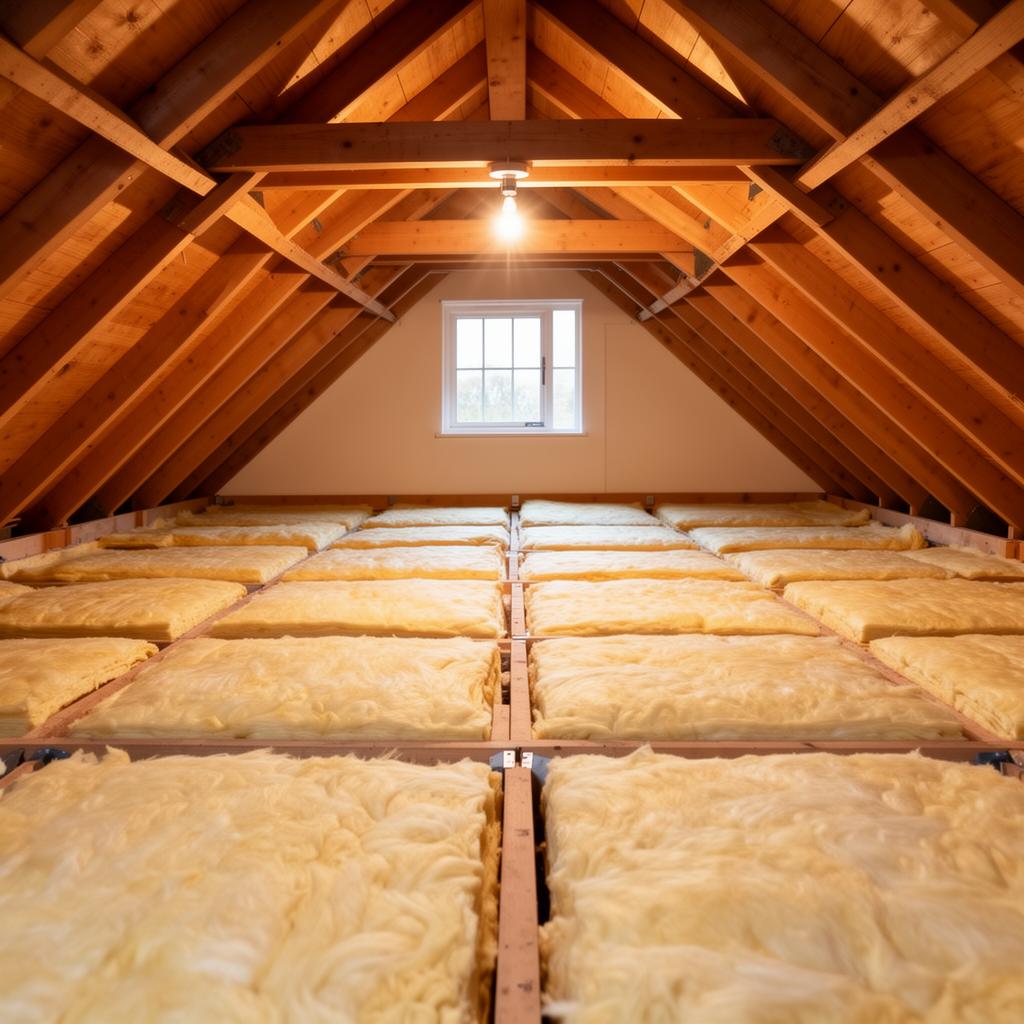
Aerogel insulation UK products represent the cutting edge of building insulation technology. Originally developed for space exploration, aerogel is now available as ultra-thin insulation boards and strips that solve thermal bridging problems conventional materials simply cannot address. If you are dealing with narrow window reveals, thin party walls or heritage buildings where every millimetre of internal space matters, aerogel may be the only realistic solution.
What Is Aerogel Insulation?
Aerogel insulation is an ultra-thin, high-performance material with a thermal conductivity of just 0.015 to 0.019 W/mK — the lowest of any commercially available insulation. A 10mm aerogel blanket or board provides equivalent performance to 25mm of phenolic foam or 50mm of mineral wool, making it the best option where every millimetre of space counts.
In the UK, aerogel is most commonly used for internal wall insulation in period properties, listed buildings and flats where adding thick insulation would significantly reduce room sizes. Spacetherm and Calostat are the main brands available. The cost is £80 to £140 per square metre for boards, compared to £10 to £25 for standard PIR, so aerogel is typically reserved for situations where no other insulation type is thin enough to work.
What Is Aerogel and How Does It Insulate So Effectively?
Aerogel is often described as the world’s lightest solid material. It is made by replacing the liquid component of a silica gel with gas, creating a structure that is approximately 95-99% air by volume. The remaining solid framework is an incredibly fine network of nanoscale silica strands that effectively block all three forms of heat transfer: conduction, convection and radiation.
The result is a material with a thermal conductivity as low as 0.013 to 0.015 W/mK, making it roughly twice as effective per millimetre as PIR rigid board (0.022 W/mK) and nearly three times more effective than mineral wool (0.035-0.044 W/mK). In practical terms, a 10mm aerogel board provides the same thermal resistance as approximately 25mm of PIR or 40mm of mineral wool.
For building insulation applications, pure aerogel is too fragile and expensive to use alone. Instead, it is combined with reinforcing fibres or bonded to rigid boards to create composite products that can be cut, handled and fixed using conventional building techniques.
Aerogel Insulation Products Available in the UK
Several aerogel-based insulation products are now readily available through UK building merchants and specialist suppliers. The two most established brands are Spacetherm and Thermablok.
Spacetherm Products
Spacetherm is manufactured by Proctor Group and is one of the most widely specified aerogel insulation products in the UK. The range includes:
- Spacetherm Wall Liner: A 10mm aerogel blanket bonded to plasterboard, providing a total thickness of around 22mm. Designed for internal wall insulation where space loss must be minimised.
- Spacetherm CBS (Cold Bridge Strip): Narrow strips of aerogel for insulating window reveals, door frames and structural elements that create thermal bridges.
- Spacetherm Multi: A versatile aerogel blanket that can be used in multiple applications including behind radiators, inside window reveals and within floor build-ups.
Thermablok Products
Thermablok offers aerogel strips specifically designed to address thermal bridging through timber studs and steel framing in walls and roofs. Key products include:
- Thermablok Aerogel Strip: A 10mm x 45mm strip that is placed between timber studs and plasterboard, reducing heat loss through the stud by up to 50%.
- Thermablok Internal Wall Insulation Board: A composite board combining aerogel with conventional insulation for internal wall applications.
Other manufacturers including Armacell (with its Armagel range) and various European producers are also entering the UK market, increasing competition and gradually driving costs down.
Thermal Performance Data: Aerogel vs Conventional Insulation
The numbers clearly demonstrate why aerogel is in a class of its own when it comes to thermal performance per unit thickness.
| Insulation Material | Thermal Conductivity (W/mK) | Thickness for R-value 2.0 |
|---|---|---|
| Aerogel composite | 0.013-0.015 | 26-30mm |
| PIR rigid board | 0.022 | 44mm |
| Phenolic foam | 0.018 | 36mm |
| Mineral wool | 0.035-0.044 | 70-88mm |
| EPS (expanded polystyrene) | 0.032-0.038 | 64-76mm |
This exceptional performance means aerogel can deliver meaningful thermal improvements in spaces where no other insulation material can fit. A 10mm Spacetherm Wall Liner bonded to 12.5mm plasterboard adds just 22.5mm to the wall thickness while providing an R-value of approximately 0.7 m2K/W, which is enough to significantly reduce heat loss through a solid brick wall.
Best Applications for Aerogel Insulation in UK Homes
Aerogel is not a general-purpose insulation product. Its high cost means it should be targeted at specific problem areas where conventional insulation cannot fit or where thermal bridging undermines the performance of the wider insulation strategy.
Window and Door Reveals
This is the single most common application for aerogel in UK retrofit projects. When internal wall insulation (IWI) is added to a solid wall, the window and door reveals become thermal bridges. The insulation cannot continue into the reveal without reducing the window opening to an impractical size. A 10mm aerogel strip applied to the reveal provides enough thermal resistance to eliminate the cold bridge without noticeably narrowing the opening.
Thin Solid Walls with Limited Internal Space
In terraced houses, flats and rooms where losing 50-100mm of floor space to conventional internal wall insulation is unacceptable, aerogel wall liner provides a workable compromise. While it will not achieve the same U-value as a full 60mm PIR-backed plasterboard system, it delivers a meaningful improvement from just 22mm of added thickness.
Heritage and Listed Buildings
Conservation officers may reject bulky internal or external wall insulation systems on listed buildings. Aerogel’s ultra-thin profile often makes it the only insulation option that preserves room proportions, decorative features and historic fabric. It can be applied directly to lime plaster walls with appropriate lime-based adhesives, maintaining breathability.
Thermal Bridging at Structural Elements
Steel lintels, concrete ring beams, balcony connections and structural steelwork all create thermal bridges that can account for a significant proportion of total heat loss, even in otherwise well-insulated buildings. Wrapping these elements with aerogel strips dramatically reduces heat flow through the structure.
Aerogel Insulation Costs in the UK
There is no avoiding the fact that aerogel insulation is expensive. It is a specialist product with high manufacturing costs, and prices reflect this.
| Product | Typical Cost per m2 | Notes |
|---|---|---|
| Spacetherm Wall Liner (10mm + plasterboard) | GBP 80-120 | Includes plasterboard backing |
| Spacetherm CBS strips (10mm) | GBP 60-90 | Per linear metre of reveal |
| Thermablok strips (10mm x 45mm) | GBP 25-35 | Per linear metre of strip |
| Spacetherm Multi blanket (10mm) | GBP 70-100 | Versatile sheet product |
For comparison, conventional internal wall insulation using 50mm PIR board with plasterboard costs approximately GBP 25-40 per m2 for materials. Aerogel is therefore 2-4 times more expensive on a material cost basis, and that gap widens when you consider that conventional insulation delivers better overall U-values despite being thicker.
The economic case for aerogel is strongest when the value of the floor space saved is factored in. In London and the South East, where property values can exceed GBP 5,000 per square metre, saving 40mm of room depth across an entire wall may represent thousands of pounds in retained property value.
Installation Considerations for Aerogel Insulation
Installing aerogel products is straightforward for anyone with basic building skills, though professional installation is recommended for whole-wall applications to ensure correct adhesion and vapour management.
- Cutting: Aerogel boards and strips can be cut with a standard insulation knife or fine-toothed saw. The material produces fine silica dust when cut, so a dust mask (FFP2 or better) should be worn.
- Fixing: Spacetherm Wall Liner can be dot-and-dab bonded to walls using standard plasterboard adhesive. For reveal applications, contact adhesive or mechanical fixings are used.
- Vapour control: In most internal wall applications, a vapour control layer is needed on the warm side to prevent interstitial condensation. Some aerogel products include an integral vapour control layer.
- Compatibility: Aerogel is compatible with lime-based substrates, making it suitable for older buildings where breathability must be maintained.
If you are planning a comprehensive retrofit that includes aerogel alongside other measures, consider combining it with new double glazing and upgraded heat pump heating for the best overall energy performance improvement.
Is Aerogel Insulation Worth the Premium?
Aerogel is not a like-for-like replacement for conventional insulation. It is a problem-solving product for situations where conventional materials fall short. If you have the space for 50mm or more of PIR board or mineral wool, these products will deliver better thermal performance at a fraction of the cost.
Aerogel is worth the premium when:
- Space loss from thicker insulation is genuinely unacceptable (small rooms, narrow reveals)
- Thermal bridging at specific details undermines your overall insulation strategy
- Heritage or planning restrictions rule out bulkier insulation systems
- Property values are high enough that saved floor space has real monetary value
If your property has solid walls and you are exploring your options, request a free assessment to understand which insulation approach best suits your home and budget.
Frequently Asked Questions
Is aerogel insulation safe to handle?
Aerogel insulation products designed for building use are safe to handle with basic precautions. The composite products (aerogel bonded to boards or contained in blankets) do not release significant amounts of dust during normal handling. However, cutting aerogel produces fine silica particles, so an FFP2 dust mask and eye protection should be worn during cutting operations. Gloves are recommended as aerogel can dry out the skin.
Can aerogel insulation be used externally?
Most aerogel building products are designed for internal applications or for use within the building fabric (such as inside cavity walls or rafter spaces). External use is possible but requires robust weatherproofing as standard aerogel products are not waterproof. Some specialist external aerogel render systems are available for heritage buildings where external wall insulation must be as thin as possible.
How does aerogel compare to vacuum insulation panels?
Vacuum insulation panels (VIPs) offer even lower thermal conductivity than aerogel (approximately 0.007 W/mK versus 0.013-0.015 W/mK). However, VIPs cannot be cut on site, are vulnerable to puncture damage that destroys their performance, and are significantly more expensive. Aerogel is more practical for most building applications because it can be cut, shaped and adapted on site without losing its thermal properties.
Is aerogel insulation eligible for government grants?
Aerogel insulation used as part of a solid wall insulation project may be eligible for partial funding through ECO4 or the Great British Insulation Scheme. However, the high material cost means the grant is unlikely to cover the full expense. Aerogel strips used solely for reveal treatment or thermal bridging are not typically listed as standalone grant-eligible measures.
How long does aerogel insulation last?
Aerogel is an inorganic silica-based material that does not degrade, rot, compress or lose its thermal properties over time. Building aerogel products have a projected lifespan matching that of the building itself, typically 60 years or more. Unlike some foam insulation products, aerogel does not off-gas or deteriorate when exposed to moderate heat. It is one of the most durable insulation materials available.
See what these numbers mean for your home
Free instant estimate — costs, savings, payback and grants for your region.

Related Articles
Home Insulation Costs and Grants: Your Complete 2026 Guide
Update (June 2026): ECO4 closed to new applications in March 2026. Approved installations continue to December 2026. The Warm Homes: Local Grant is now the main funding route for insulation.…
18 May 2026
How to Reduce Condensation and Damp While Keeping Your Home Warm
Learn why condensation forms in UK homes, the difference between condensation and rising damp, and proven ventilation strategies to fix damp without losing heat.
8 May 2026
Conservatory Roof Replacement: How a Solid Roof Cuts Energy Bills and Adds Value
Replacing an old polycarbonate or glass conservatory roof with a solid insulated roof can slash heat loss, cut energy bills and turn a seasonal room into a year-round living space.
6 May 2026