Blown-In Cellulose Insulation: Costs, Pros and Cons for UK Homes
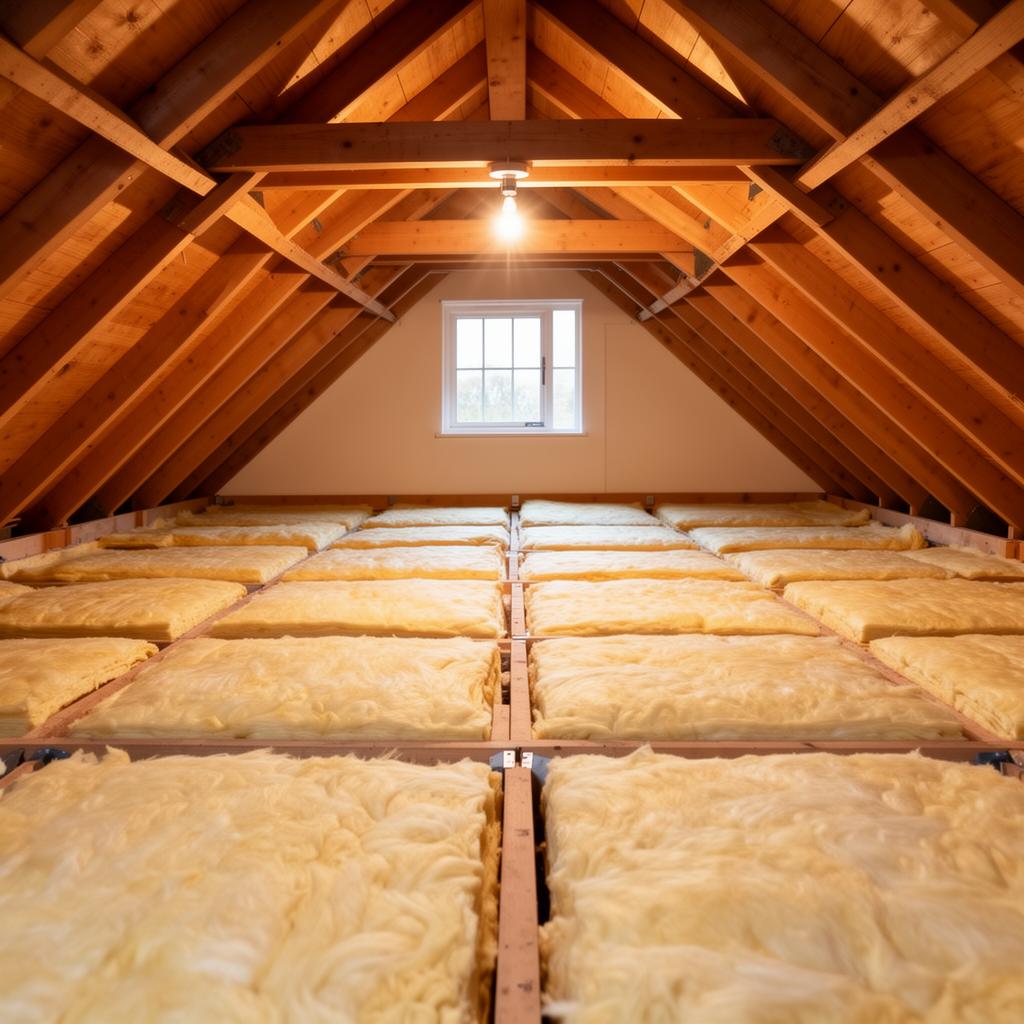
Blown in cellulose insulation is one of the most eco-friendly insulation materials available to UK homeowners, yet it remains far less well known than mineral wool or rigid board alternatives. Made primarily from recycled newspaper treated with fire retardant, it can be installed quickly using specialist blowing machines to fill lofts, cavity walls and hard-to-reach voids. This guide covers everything you need to know about cellulose insulation, from realistic costs and performance data to the genuine drawbacks you should consider before choosing it for your home.
How Much Does Blown-In Cellulose Insulation Cost?
Blown-in cellulose insulation costs £20 to £35 per square metre installed in the UK in 2026, making it one of the most affordable insulation options. For a typical 3-bedroom semi-detached loft, expect to pay £500 to £1,200 for professional installation. Cellulose is made from recycled newspaper treated with fire retardants and achieves a thermal conductivity of 0.035 to 0.040 W/mK.
The main advantages of cellulose are its low cost, high recycled content (typically 80–85% post-consumer paper) and ability to fill irregular cavities and spaces that rigid boards cannot reach. It is blown in using specialist equipment, filling gaps around pipes, wiring and joists for a seamless insulation layer. The main downside is that cellulose absorbs moisture more readily than mineral wool or rigid foam, so it should not be used in damp or poorly ventilated spaces without a vapour barrier.
What Is Blown Cellulose Insulation and How Is It Made?
Cellulose insulation is manufactured from recycled paper products, primarily old newspapers and cardboard. The paper is shredded into small fibres, then treated with mineral salts such as borax and boric acid to provide resistance to fire, mould and insects. The finished product looks like grey or off-white fluffy material, similar in appearance to loose-fill mineral wool but with a slightly denser, more fibrous texture.
The production process uses significantly less energy than manufacturing mineral wool or rigid foam boards. A typical cellulose product contains 80-85% recycled content, giving it one of the lowest embodied carbon footprints of any insulation material. For homeowners who prioritise environmental credentials alongside thermal performance, this is a compelling advantage.
In the UK, cellulose insulation is available from several manufacturers, including Warmcel (one of the longest-established UK producers), Excel Industries and Thermofloc. It is installed using pneumatic blowing machines that force the loose fibres through a flexible hose into the target area.
Where Blown In Cellulose Insulation Works Best
Cellulose insulation is remarkably versatile, but certain applications play to its particular strengths more than others.
Loft Floors
Blowing cellulose across a loft floor is one of the fastest and most cost-effective ways to insulate a standard loft. The material flows around pipes, cables, junction boxes and other obstructions that would need to be carefully worked around with mineral wool rolls. A professional installer can insulate a typical three-bedroom semi-detached loft in under two hours.
Cavity Walls
Blown cellulose can be injected into cavity walls as an alternative to mineral wool or polystyrene beads. It fills the cavity completely, including around wall ties and other obstructions. However, cavity wall applications require careful moisture assessment first, as cellulose is more sensitive to water than some alternatives.
Hard-to-Reach Voids
The flexible hose delivery system means cellulose can reach areas that are impractical to insulate with batt or board products. This includes spaces behind knee walls in loft conversions, voids beneath floorboards accessed through small holes, and rafter spaces filled through a breathable membrane. If your home has awkward spaces that need insulation, cellulose is often the most practical solution.
Thermal Performance of Cellulose Insulation
Cellulose insulation has a thermal conductivity (lambda value) of approximately 0.035 to 0.040 W/mK, depending on the specific product and installed density. This places it in a similar performance bracket to mineral wool (0.035-0.044 W/mK) and well below PIR rigid board (0.022 W/mK).
To achieve the recommended loft insulation U-value of 0.16 W/m2K, you need approximately 250-275mm of cellulose at typical settled density. This compares to 270mm for mineral wool and around 125mm for PIR board.
One area where cellulose can outperform mineral wool in practice is airtightness. When blown to the correct density, cellulose fills gaps and irregular spaces more completely than pre-cut batts, reducing air leakage through the insulation layer. Some studies suggest this can improve real-world thermal performance by 10-15% compared to poorly fitted mineral wool batts with gaps at edges and around services.
Blown In Cellulose Insulation Costs in the UK
Cellulose insulation is competitively priced, particularly for professional loft installations where the speed of blowing reduces labour costs significantly.
| Application | Typical Cost per m2 | Typical Total Cost (3-bed semi) |
|---|---|---|
| Loft floor (275mm depth) | GBP 8-12 | GBP 400-700 |
| Cavity wall injection | GBP 12-18 | GBP 900-1,500 |
| Timber frame rafter fill | GBP 15-22 | GBP 1,200-2,000 |
For comparison, professional installation of 270mm mineral wool loft rolls typically costs GBP 350-600 for the same three-bedroom semi. The price difference is modest, and many homeowners find the faster installation and better gap-filling properties of cellulose justify any small premium.
Government grant schemes including ECO4 may cover part or all of the cost if you are on qualifying benefits or live in a low-EPC-rated property. Get a free quote to check your eligibility.
Settlement: The Biggest Concern with Cellulose Insulation
The most commonly cited drawback of blown cellulose insulation is settlement. Over time, gravity causes the loose fibres to compact, reducing the insulation thickness and therefore its thermal performance.
In horizontal loft floor applications, settlement of 10-20% is typical within the first few years. This means a freshly blown 275mm layer may settle to around 220-250mm. Reputable installers account for this by over-filling, blowing the cellulose to 15-20% above the target thickness so that post-settlement depth still meets the required specification.
In vertical applications such as timber frame walls, settlement is a more serious concern. Without proper installation at the correct density (typically 45-55 kg/m3 for wall applications versus 25-30 kg/m3 for loft floors), the cellulose can settle away from the top of the wall, leaving a cold gap. Dense-pack installation techniques, where the cellulose is blown at higher pressure to achieve greater density, largely eliminate this problem when carried out by experienced installers.
Moisture Sensitivity and Damp Risks
As a paper-based product, cellulose insulation is inherently more sensitive to moisture than mineral wool or synthetic insulation. While the boric acid treatment provides resistance to mould growth, prolonged exposure to high moisture levels can cause the cellulose to clump, compact and lose its insulating properties.
Practical implications for UK homeowners include:
- Cavity wall applications should only proceed after a thorough exposure assessment, as driving rain penetration through outer leaf brickwork can wet the cellulose
- Loft installations must have adequate roof ventilation to prevent condensation forming on the cold side of the insulation
- Any roof leaks must be repaired before installation, as wet cellulose is difficult to dry out and may need replacing
- In bathrooms and kitchens, a vapour control layer on the warm side is essential to prevent moisture-laden air from reaching the insulation
That said, cellulose has a useful property called hygric buffering. It can absorb and release small amounts of moisture without significant performance loss, helping to regulate humidity levels within the building fabric. This makes it well suited to older, breathable construction types when combined with appropriate vapour management.
Cellulose vs Loose-Fill Mineral Wool: Head-to-Head Comparison
Loose-fill mineral wool (such as Knauf Supafil or Isover Blow-In) is the most direct competitor to blown cellulose in UK applications. Here is how they compare across the key decision factors.
| Factor | Blown Cellulose | Loose-Fill Mineral Wool |
|---|---|---|
| Thermal conductivity | 0.035-0.040 W/mK | 0.035-0.044 W/mK |
| Recycled content | 80-85% | 20-30% |
| Fire resistance | Euroclass B-s2,d0 | Euroclass A1 (non-combustible) |
| Moisture sensitivity | Higher | Lower |
| Settlement risk | 10-20% (loft floor) | 5-10% (loft floor) |
| Embodied carbon | Very low | Moderate |
| Cost per m2 (loft) | GBP 8-12 | GBP 7-11 |
| Sound absorption | Excellent | Very good |
Neither product is clearly superior in all areas. Cellulose wins on environmental credentials and sound absorption. Mineral wool wins on fire resistance and moisture tolerance. Costs are similar, and thermal performance is broadly comparable. Your choice may come down to installer availability in your area, as not all insulation contractors carry both products.
Pros and Cons Summary
Advantages of Blown Cellulose
- Excellent eco-credentials with 80-85% recycled content
- Fast professional installation, typically under two hours for a loft
- Fills gaps and irregular spaces better than batt insulation
- Good acoustic performance, reducing noise transfer between rooms
- Low embodied energy compared to mineral wool and foam products
- Treated to resist fire, mould and insect damage
Disadvantages of Blown Cellulose
- Settlement reduces thickness and performance over time
- More sensitive to moisture than mineral wool alternatives
- Not suitable for exposed or damp locations without robust moisture management
- Requires specialist blowing equipment (not a straightforward DIY job)
- Lower fire classification than mineral wool (combustible, though treated)
- Limited UK installer network compared to mainstream mineral wool
If you are weighing up insulation options for your home, cellulose is well worth considering alongside more conventional products. It pairs well with other energy efficiency measures such as double glazing and modern boiler upgrades to create a comprehensive approach to reducing your energy bills.
Frequently Asked Questions
Is blown cellulose insulation a fire risk?
Cellulose insulation is treated with boric acid and borax during manufacture, which acts as a fire retardant. It achieves a Euroclass B-s2,d0 fire rating, meaning it is not easily ignitable and produces limited smoke. However, it is not non-combustible like mineral wool (which achieves the highest A1 rating). In practice, cellulose insulation chars rather than burning with open flame, and the fire retardant treatment means it self-extinguishes when the heat source is removed.
Can I install blown cellulose insulation myself?
While it is technically possible to hire a cellulose blowing machine, professional installation is strongly recommended. Achieving the correct density is critical for long-term performance, and experienced installers have the equipment and knowledge to do this consistently. Over-blowing wastes material and money, while under-blowing leads to excessive settlement. Most specialist insulation companies offer competitive rates that make DIY false economy for this particular product.
How long does cellulose insulation last?
When installed correctly and kept dry, cellulose insulation has an expected lifespan of 40-60 years. The boric acid treatment protects against biological degradation. The main risk to longevity is water damage from roof leaks or condensation, which can cause clumping and loss of thermal performance. Regular loft inspections to check for moisture issues will help ensure your cellulose insulation continues to perform well.
Does cellulose insulation attract rodents or insects?
No. The boric acid treatment that provides fire resistance also acts as a deterrent to insects and rodents. In fact, cellulose is often considered more pest-resistant than mineral wool, which mice can nest in. Some pest control professionals recommend cellulose over other loose-fill products for properties with a history of rodent problems in the loft space.
Is blown cellulose eligible for government insulation grants?
Yes. Cellulose loft insulation and cavity wall insulation are eligible measures under the ECO4 scheme and the Great British Insulation Scheme, provided the installation is carried out by a TrustMark-registered installer using a PAS-certified product. Eligibility depends on your household income, benefits status and current EPC rating. Request a free quote to check whether you qualify for funded insulation.
See what these numbers mean for your home
Free instant estimate — costs, savings, payback and grants for your region.

Related Articles
Home Insulation Costs and Grants: Your Complete 2026 Guide
Update (June 2026): ECO4 closed to new applications in March 2026. Approved installations continue to December 2026. The Warm Homes: Local Grant is now the main funding route for insulation.…
18 May 2026
How to Reduce Condensation and Damp While Keeping Your Home Warm
Learn why condensation forms in UK homes, the difference between condensation and rising damp, and proven ventilation strategies to fix damp without losing heat.
8 May 2026
Conservatory Roof Replacement: How a Solid Roof Cuts Energy Bills and Adds Value
Replacing an old polycarbonate or glass conservatory roof with a solid insulated roof can slash heat loss, cut energy bills and turn a seasonal room into a year-round living space.
6 May 2026