External Wall Insulation: What It Looks Like and How It Works in Lancashire
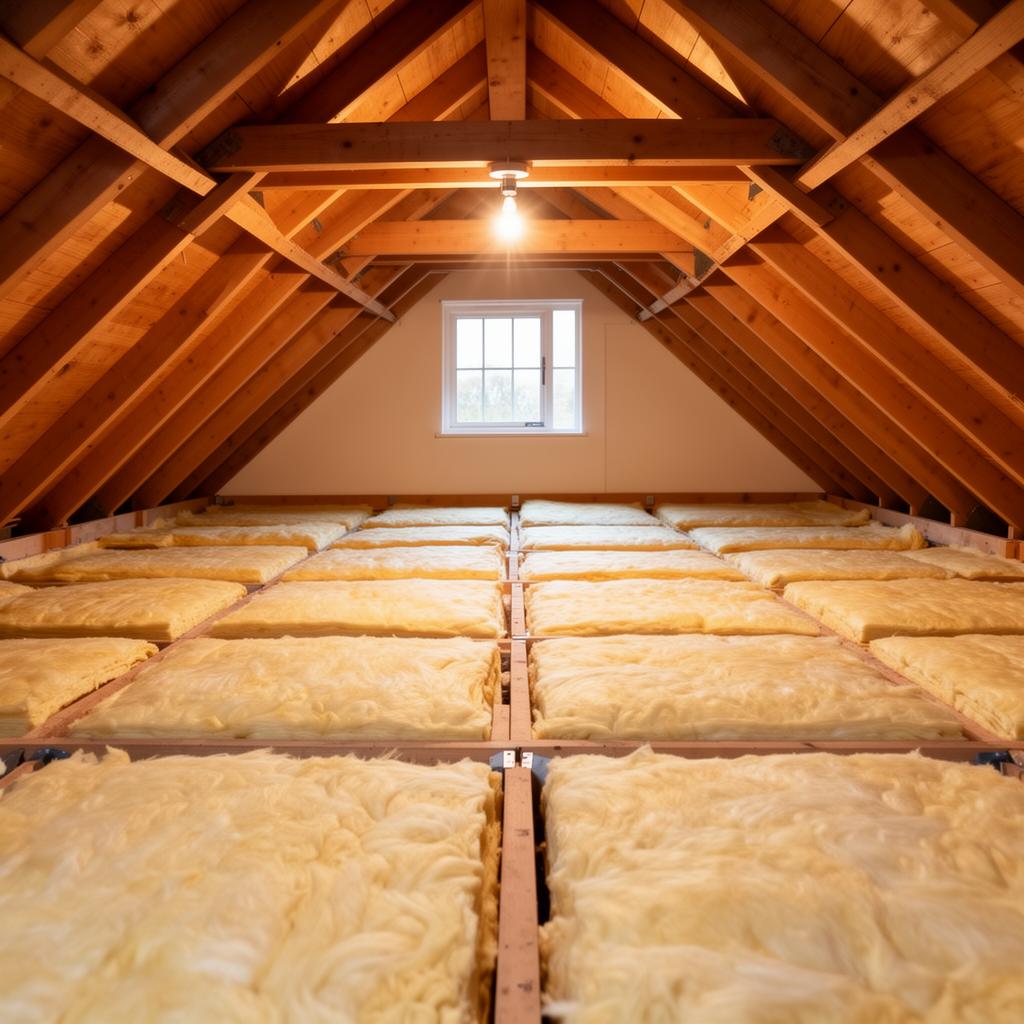
External wall insulation (EWI) involves fixing insulation boards to the outside of your walls and covering them with a protective render or cladding finish. It transforms the thermal performance of solid-walled Lancashire homes – reducing heat loss through walls by 50-65% and saving an estimated £200-£450 per year on heating bills. It also changes the exterior appearance of your home, which is both the biggest benefit (it can rejuvenate a tired-looking property) and the biggest concern (it covers the original brickwork or stonework). For homes with poor exterior condition, EWI effectively gives you a new facade. For homes with attractive original features, the change requires careful thought.
What Is External Wall Insulation and How Does It Work?
External wall insulation (EWI) is a layer of insulation material fixed to the outside of your home’s walls and finished with a protective render or cladding. It works by wrapping the building envelope in a thermal blanket, reducing heat loss through solid walls by up to 50 percent. A typical Lancashire home with solid walls loses around a third of its heat through uninsulated walls, making EWI one of the most effective upgrades available.
The installation adds 50mm to 100mm of thickness to external walls using expanded polystyrene (EPS) or mineral wool boards. The finished render is available in a wide range of colours and textures, so most homes look freshly renovated rather than noticeably different. EWI costs £8,000 to £22,000 for a typical semi-detached home, though Lancashire homeowners on qualifying benefits may receive full funding through ECO4 or the Warm Homes: Local Grant.
Thousands of Lancashire homes have already had EWI installed, particularly in East Lancashire towns where council-funded schemes have treated whole streets of terraces in Burnley, Hyndburn, Pendle and Blackburn. If you have seen streets where some houses look freshly rendered while others retain their original brick or stone, you are looking at EWI in action. Here is a comprehensive guide to how it works, what it looks like and whether it is right for your home.
How External Wall Insulation Works
The system consists of three layers applied to the outside of your existing walls:
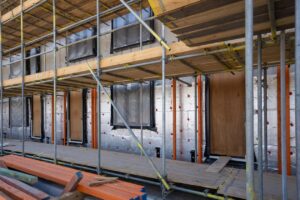
Layer 1 – Insulation boards: Rigid insulation boards (typically expanded polystyrene/EPS or mineral wool) are mechanically fixed and adhesive-bonded to the external wall surface. The boards are usually 50-100mm thick depending on the required thermal performance. EPS is lighter and cheaper; mineral wool is heavier but offers better fire resistance and acoustic performance.
Layer 2 – Reinforcement mesh: A fibreglass mesh is embedded in a base coat of render over the insulation boards. This creates a strong, crack-resistant surface that bridges joints between the insulation boards and provides a key for the final render coat.
Layer 3 – Finish coat: The top render coat provides the visible finish and weather protection. Options include smooth render, textured render (pebbledash-style), through-coloured render (colour throughout rather than painted), or decorative cladding. The finish can be any colour, with light greys, creams and whites being the most popular choices in Lancashire.
The total thickness added to the outside of your walls is typically 70-120mm, which extends the footprint of the building slightly. This affects the position of window sills, drainpipes, external doors and any adjacent boundaries.
What Does It Look Like?
The appearance of EWI depends entirely on the finish chosen. Most Lancashire installations use a smooth or lightly textured render in a neutral colour. The result is a clean, modern-looking exterior that is very different from the original brick or stone but can be attractive in its own right.
Common finishes seen across Lancashire include:
- Smooth silicone render: A flat, uniform finish that looks crisp and modern. Available in a wide range of colours. Self-cleaning properties mean it stays looking fresh. This is the most popular finish for Lancashire terraces.
- Textured render: A rougher finish that mimics pebbledash or Tyrolean render. Hides minor imperfections and suits rural properties where a too-smooth finish might look out of place.
- Brick-effect cladding: Thin brick slips applied over the insulation to replicate the appearance of a brick wall. More expensive but preserves a traditional appearance. Used on some Lancashire schemes where maintaining a brick look was important.
- Combination finishes: Some installations use different finishes on different elevations – for example, brick slips on the front and smooth render on the sides and rear. This balances appearance with cost.
On terraced streets where EWI has been applied to some houses but not others, the contrast can be stark. Council-funded street-by-street schemes (common in East Lancashire) avoid this issue by treating every property in the row.
Costs in Lancashire
- Mid-terrace (2 external walls): £6,500-£9,000
- End-terrace (3 external walls): £8,000-£12,000
- Semi-detached: £9,000-£14,000
- Detached: £12,000-£20,000
- Add for scaffolding on 3+ storey properties: £1,000-£2,500 extra
These costs include scaffolding, surface preparation, insulation, render, window sill extensions, downpipe re-routing and making good around doors and windows. They benefit from 0% VAT on residential energy-saving installations.
Grants and Funding
EWI is one of the most expensive home insulation measures, but substantial funding is available:
- government energy efficiency schemes: Fully funded for households on qualifying benefits with an EPC of D or below. EWI is a key government energy efficiency schemes measure and has been widely delivered across Lancashire.
- government insulation scheme: Can fund EWI for homes in Council Tax bands A-D. The maximum contribution under government insulation scheme for EWI is capped but can cover a significant proportion of the cost.
- Local authority schemes: Several Lancashire councils have run or are running EWI programmes, sometimes funding work for entire streets. Contact your local council’s housing team.
Our guide to government energy efficiency schemes eligibility in Lancashire covers the main funding route in detail.
Installation Process
A typical EWI installation on a Lancashire terrace takes 2-4 weeks per property and follows this sequence:
- Week 1: Scaffolding erected. Surface preparation – cleaning walls, removing loose render, treating any damp or damaged masonry. Window sill extensions fabricated.
- Week 2: Insulation boards fixed to the walls using adhesive and mechanical fixings. Boards cut around windows, doors and other features. Reinforcement mesh applied over insulation.
- Week 3: Base coat applied over mesh. Window sill extensions, new drip edges and other detailing installed. Downpipes re-routed if needed.
- Week 4: Top render coat applied. Making good around doors and windows. Scaffolding removed. Clean up.
The work is almost entirely external, so disruption inside the house is minimal. You can continue living in the property throughout. The main inconvenience is the scaffolding around the outside and some noise from the fixing process.
Maintenance and Lifespan
A well-installed EWI system lasts 25-30 years or more. The render finish may need cleaning or repainting every 10-15 years, depending on the finish type and local conditions. Through-coloured silicone render has self-cleaning properties and typically looks good for 15-20 years without intervention.
In Lancashire’s damp climate, algae growth on north-facing walls can be an issue over time (as with any rendered surface). Anti-algae treatments can be applied, or the render can be washed periodically. This is a maintenance consideration rather than a defect.
Does EWI need planning permission?
In most cases, EWI on a house falls under permitted development and does not need planning permission. However, if your home is in a conservation area, is a listed building, or the EWI would project beyond the front building line towards a highway, you may need permission. Check with your local planning authority before starting work.
Will EWI cause damp?
Properly installed EWI should not cause damp. The render finish is waterproof and prevents rain from reaching the wall beneath. However, if there are existing damp issues (rising damp, penetrating damp from defective guttering), these must be resolved before EWI is installed. Covering up damp problems with insulation will make them worse. A good installer will identify and address any damp issues during the survey.
What about the neighbours in a terraced row?
If you are insulating a mid-terrace, the EWI stops at your property boundary. This can create a visible step between your insulated walls and the un-insulated neighbour’s walls. Most installers create a neat edge detail at the boundary. In council-funded schemes, the entire terrace is typically treated at once, which avoids this issue. If you are doing it privately, discussing the project with your neighbours and potentially encouraging them to get theirs done at the same time can improve the overall appearance and may reduce scaffolding costs.
See what these numbers mean for your home
Free instant estimate — costs, savings, payback and grants for your region.

Related Articles
Home Insulation Costs and Grants: Your Complete 2026 Guide
Update (June 2026): ECO4 closed to new applications in March 2026. Approved installations continue to December 2026. The Warm Homes: Local Grant is now the main funding route for insulation.…
18 May 2026
How to Reduce Condensation and Damp While Keeping Your Home Warm
Learn why condensation forms in UK homes, the difference between condensation and rising damp, and proven ventilation strategies to fix damp without losing heat.
8 May 2026
Conservatory Roof Replacement: How a Solid Roof Cuts Energy Bills and Adds Value
Replacing an old polycarbonate or glass conservatory roof with a solid insulated roof can slash heat loss, cut energy bills and turn a seasonal room into a year-round living space.
6 May 2026