Room-in-Roof Insulation: Costs and Benefits for Lancashire Loft Conversions
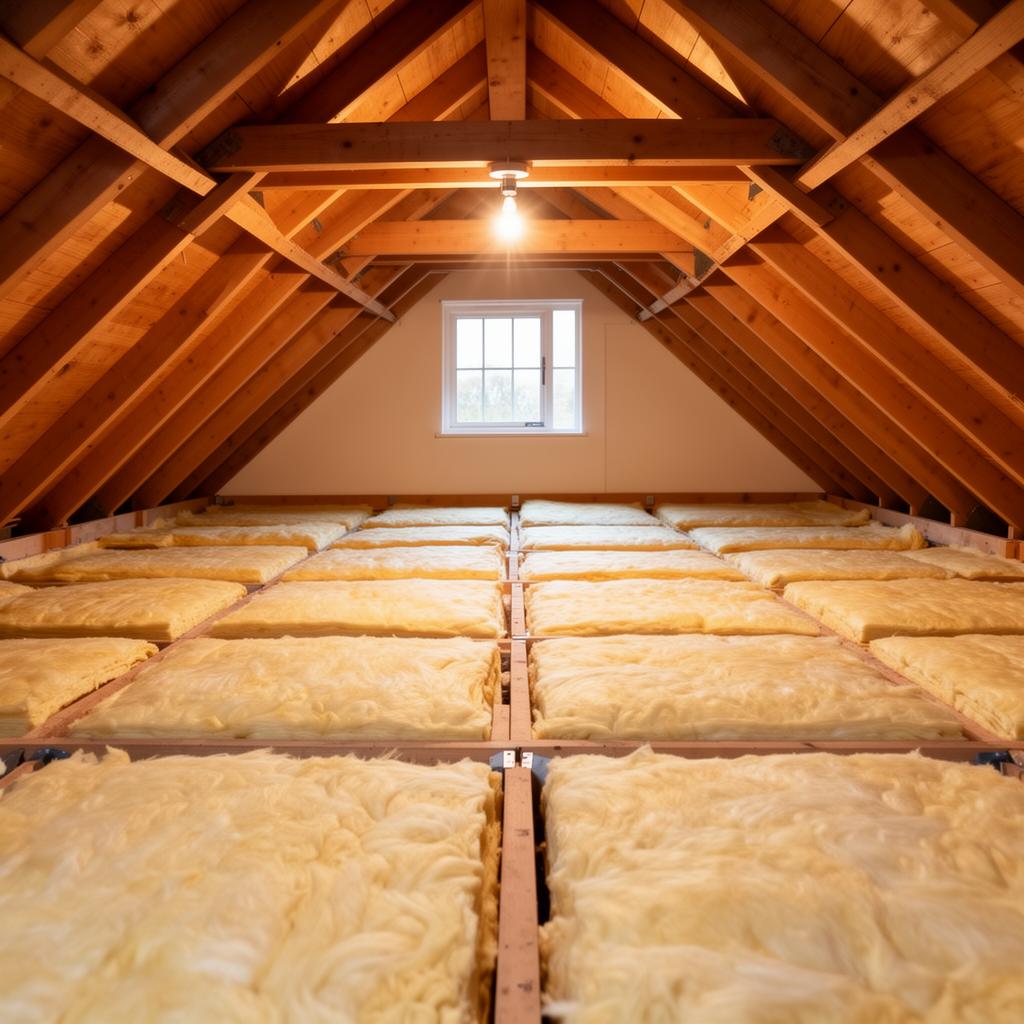
Room-in-roof insulation costs between £1,500 and £4,500 for a typical Lancashire loft conversion, and it reduces heat loss from the converted space by up to 60%. Converted loft rooms are often the hottest rooms in summer and coldest in winter because the insulation – if present at all – is inadequate. The sloped ceilings, knee walls and flat ceiling sections that make up a room-in-roof all need insulating to different standards, and many Lancashire loft conversions done before 2006 have little or no insulation in these areas.
How Much Does Room-in-Roof Insulation Cost?
Room-in-roof insulation costs between £2,500 and £5,500 for a typical Lancashire loft conversion in 2026. The exact price depends on the room size, roof pitch, access and whether existing finishes need to be removed and replaced. Eligible homeowners can receive full funding through ECO4 or the Warm Homes: Local Grant, as room-in-roof insulation is a qualifying measure under both schemes.
Without insulation, a converted loft room loses up to 30 percent of its heat through the sloping ceiling and knee walls. Insulating between and under the rafters with 100mm rigid board or mineral wool reduces this dramatically, saving £200 to £400 per year on heating bills. The work typically takes two to three days and involves insulating the sloped ceilings, knee walls, dormer cheeks and any flat ceiling sections above the converted space.
Loft conversions are hugely popular across Lancashire, particularly in areas where house prices make extending or moving expensive. Towns like Burnley, Accrington, Blackburn and across Greater Manchester have thousands of terraces and semis with converted loft rooms that were done years or even decades ago without adequate insulation. If your converted loft room is uncomfortable in winter, expensive to heat, or suffers from condensation, room-in-roof insulation could transform it.
What Is Room-in-Roof Insulation?
Room-in-roof insulation means insulating all the surfaces of a converted loft room that separate the heated living space from the unheated areas outside. A typical loft conversion has three distinct areas that each need treatment:
- Sloped ceiling (rafter level): The insulation goes between and below the rafters in the sloped sections of the ceiling. This is the largest area and the most critical to insulate well.
- Knee walls (dwarf walls): The short vertical walls at the sides of the room where the roof slope meets the floor. Behind these walls is unheated loft space. Insulation goes on the back of these walls (the loft side) or within the wall structure.
- Flat ceiling (if present): Some loft conversions have a flat ceiling section at the top of the room (between the rafters and the ridge). Insulation goes above this ceiling, as with standard loft insulation.
All three areas need to be insulated to create a continuous thermal envelope around the living space. Missing any one area creates a significant weak point where heat escapes.
Common Problems with Uninsulated or Poorly Insulated Loft Rooms
Lancashire homeowners with poorly insulated loft conversions typically experience:
- Extreme temperature swings: Boiling hot in summer (temperatures can exceed 35 degrees) and freezing cold in winter. The room is often uncomfortable for much of the year.
- High heating costs: Heat pours through the inadequately insulated roof, walls and floor, making the room expensive to keep warm.
- Condensation: Warm moist air from the living space meets cold surfaces, causing condensation on windows, in corners and sometimes on the ceiling. This can lead to mould growth.
- Noise: Without insulation, road noise, rain noise and aircraft noise penetrate easily through the thin roof structure.
Many loft conversions done in Lancashire during the 1980s and 1990s have little or no insulation between the rafters, thin plasterboard directly on the rafter faces, and uninsulated knee walls. Even conversions done under building regulations may have insulation that was adequate at the time but falls well short of current standards.
Insulation Methods and Materials
The method depends on whether you are insulating during a new conversion or retrofitting an existing one:
Between rafters: Rigid PIR (polyisocyanurate) boards or mineral wool batts are fitted between the rafters. PIR boards offer better thermal performance per unit thickness (which matters when headroom is tight). Mineral wool is cheaper but needs a greater depth. For a retrofit, the existing plasterboard may need to be removed to access the rafter spaces.
Below rafters: An additional layer of insulation board is fixed to the underside of the rafters before new plasterboard. This adds 25-50mm to the ceiling thickness (reducing headroom slightly) but provides continuous insulation without cold bridges at the rafter timbers.
Knee walls: Insulation boards or mineral wool batts are fixed to the back of the knee walls (on the cold side). A vapour barrier on the warm side prevents moisture getting into the insulation. Alternatively, the entire loft space behind the knee walls can be insulated at roof level, effectively bringing the eaves space within the thermal envelope.
Spray foam: An option for the rafter spaces, spray foam fills gaps and provides both insulation and air-tightness. However, spray foam is controversial in heritage properties and can cause issues with mortgage valuations. It is not recommended for older Lancashire properties without careful assessment.
Costs for Lancashire Properties
- Retrofit insulation (existing conversion, accessible from loft side): £1,500-£3,000
- Retrofit insulation (existing conversion, requires internal re-boarding): £2,500-£4,500
- Insulation as part of a new conversion: £500-£1,500 (marginal cost, as the conversion work provides access)
- DIY insulation of accessible knee walls and flat ceiling only: £200-£500 in materials
The higher costs for retrofit work reflect the need to strip and reinstate internal finishes. If the room needs redecorating anyway, combining insulation with redecoration is the most cost-effective approach.
Grants Available
Room-in-roof insulation is eligible for several grant schemes:
- government energy efficiency schemes: Fully funded for eligible households on qualifying benefits with an EPC of D or below. Room-in-roof insulation is specifically listed as a qualifying measure under government energy efficiency schemes.
- government insulation scheme: Can fund room-in-roof insulation for homes in Council Tax bands A-D.
- 0% VAT: Insulation materials and installation labour are zero-rated for VAT when installed on a residential property, saving 20% on the cost.
Our guide to government energy efficiency schemes eligibility in Lancashire explains how to check whether you qualify for fully funded insulation.
Energy Savings and Comfort
Properly insulating a room-in-roof in a Lancashire home may save an estimated £100-£200 per year on heating bills (based on independent energy organisations figures and adjusted for Lancashire gas usage). The payback period for privately funded installation is 8-20 years depending on the cost.
But the comfort improvement is often more valued than the financial saving. A properly insulated loft room maintains a consistent, comfortable temperature year-round. Summer overheating is reduced (insulation works both ways – keeping heat out as well as in), winter cold is eliminated, and condensation problems disappear. For families using converted loft rooms as bedrooms in Lancashire, the difference in sleep quality alone is worth the investment.
Can I insulate my loft room myself?
Insulating accessible areas (the back of knee walls, flat ceiling sections) is a manageable DIY project if you are comfortable working in confined loft spaces. However, insulating between rafters – especially in a retrofit where you need to remove and reinstate plasterboard – is best left to professionals. Getting the vapour barrier and ventilation gaps right is critical to avoid moisture problems.
Does room-in-roof insulation need ventilation?
Yes. There must be a ventilation gap of at least 25mm between the insulation and the roof covering (tiles or slates) to allow moisture to escape. Without this gap, moisture can build up in the roof structure, leading to timber decay and roof covering damage. This is a common mistake in DIY or poorly executed installations. A professional installer will ensure the ventilation gap is maintained.
Will room-in-roof insulation reduce my headroom?
Insulation below the rafters adds 25-50mm to the ceiling thickness. In a loft room with already limited headroom, this can be significant. Using high-performance PIR boards (which provide better insulation per unit thickness) minimises the headroom reduction. Insulation fitted solely between the rafters (without an under-rafter layer) has zero impact on headroom but provides less thermal performance.
See what these numbers mean for your home
Free instant estimate — costs, savings, payback and grants for your region.

Related Articles
Home Insulation Costs and Grants: Your Complete 2026 Guide
Update (June 2026): ECO4 closed to new applications in March 2026. Approved installations continue to December 2026. The Warm Homes: Local Grant is now the main funding route for insulation.…
18 May 2026
How to Reduce Condensation and Damp While Keeping Your Home Warm
Learn why condensation forms in UK homes, the difference between condensation and rising damp, and proven ventilation strategies to fix damp without losing heat.
8 May 2026
Conservatory Roof Replacement: How a Solid Roof Cuts Energy Bills and Adds Value
Replacing an old polycarbonate or glass conservatory roof with a solid insulated roof can slash heat loss, cut energy bills and turn a seasonal room into a year-round living space.
6 May 2026