How EPC Assessors Rate Insulation in Lancashire Homes
Your Energy Performance Certificate rating is largely determined by how much insulation your home has – or more precisely, how much insulation the EPC assessor believes your home has. The distinction matters because EPC assessments rely heavily on assumptions, visual inspections, and standardised calculations rather than direct measurement. Understanding how assessors rate insulation helps you ensure your Lancashire home gets an accurate EPC and identifies where improvements will have the biggest impact on your rating.
How Do EPC Assessors Rate Insulation?
EPC assessors rate insulation using the Standard Assessment Procedure (SAP), which scores loft, wall, floor and window insulation on a scale from “very poor” to “very good.” They inspect loft depth (270mm is the current standard), check cavity wall fill through drill-test holes or construction records and assess window glazing type. Each element is assigned a U-value that feeds into the overall energy efficiency score.
In Lancashire, many homes built before 1930 have solid walls that assessors automatically classify as uninsulated unless evidence of retrofitted insulation is provided. If you have had insulation installed but lack documentation, ask your assessor to do a physical check rather than relying on default assumptions, as this can make a significant difference to your final EPC rating.
How Assessors Evaluate Insulation
EPC assessors use the Reduced Data Standard Assessment Procedure (RdSAP) to calculate your home’s energy performance. For insulation, the assessor records what they can see and applies default assumptions for what they cannot. The main insulation elements assessed are loft insulation, wall insulation, floor insulation, and window glazing.
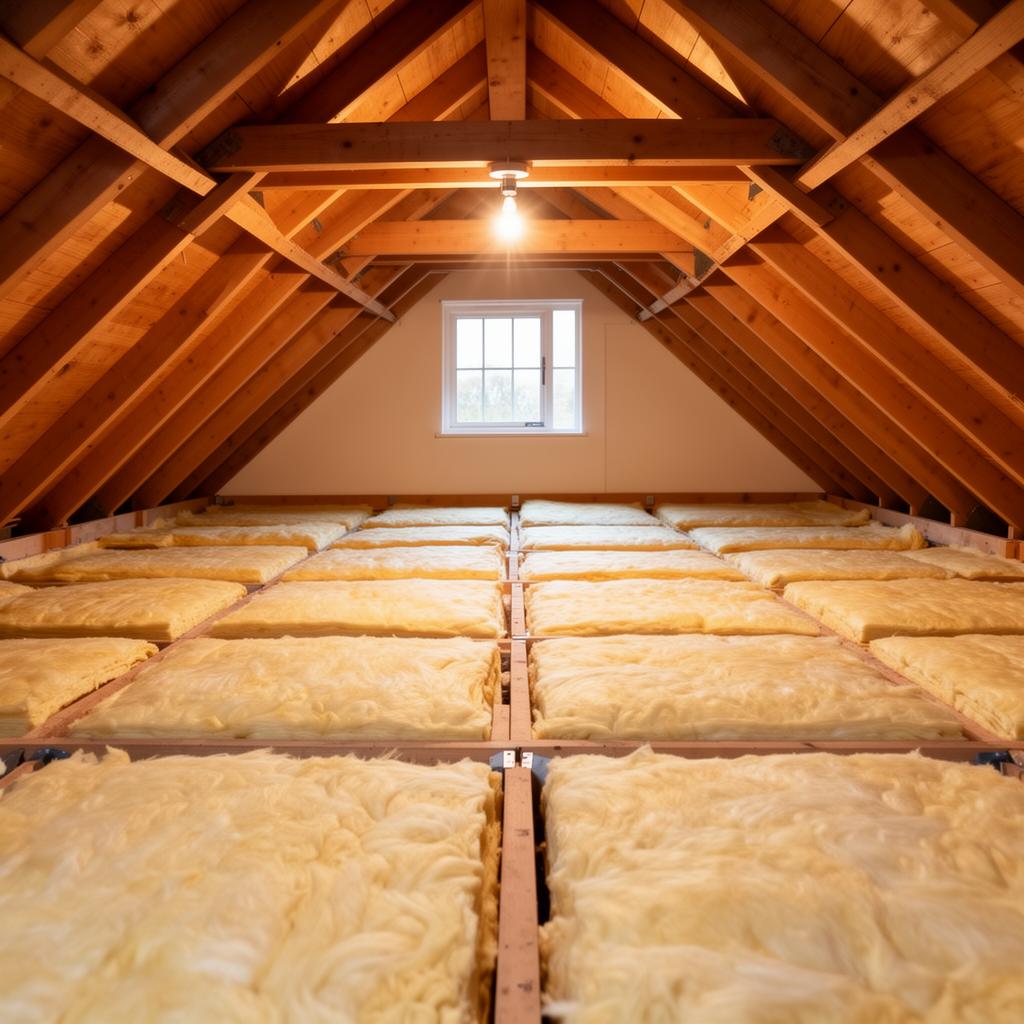
For loft insulation, the assessor measures the depth of insulation visible in the loft space. They record the insulation type (mineral wool, cellulose, rigid board) and its thickness. If the loft is boarded over and insulation is not visible, the assessor must make assumptions based on the property’s age and type. This frequently leads to inaccuracies – many Lancashire homeowners who have insulated under loft boards find their EPC does not reflect this improvement because the assessor could not verify it.
For wall insulation, the assessor determines the wall construction type (solid, cavity, or timber frame) and whether cavity walls have been filled. They check for visual evidence of cavity wall insulation (drill holes filled with coloured plugs are the main indicator) and may use a borescope or core sample in some cases. For solid walls, the assessor records whether internal or external insulation has been added.
Floor insulation is the least accurately assessed element. Most assessors cannot inspect the underfloor area and rely on age-based assumptions. Properties built before 1930 are assumed to have uninsulated suspended timber floors, while post-1980 properties are assumed to have insulated solid floors. If your Lancashire home has had floor insulation added retrospectively, the assessor needs evidence (installation certificate, photographs) to record it accurately.
Common Insulation Assumptions That Hurt Lancashire Homes
Several default assumptions in the RdSAP methodology consistently underestimate insulation in Lancashire properties. Solid stone walls are assumed to have a U-value of approximately 2.1 W/m2K in the absence of evidence of insulation. In reality, the thick stone walls common in Pennine Lancashire (400-600mm) perform slightly better than this assumption, though still poorly by modern standards.
Pre-1920 terraced houses in Lancashire are often assumed to have uninsulated solid brick walls, even when they actually have early cavity construction. Some Victorian and Edwardian properties in the Bolton, Wigan, and Blackburn areas were built with a narrow air gap between two skins of brick – technically a cavity wall. If the assessor records these as solid walls, the EPC will be worse than reality. Providing evidence of cavity construction (through building records, bore-hole inspection, or previous insulation documentation) can improve the rating.
Homes that have been improved over time often fare poorly because individual improvements are hard for the assessor to identify. A homeowner who has added internal wall insulation to the living room, upgraded the loft insulation, and replaced some windows with double glazing may have evidence of some but not all improvements visible during the assessment. Without documentary evidence of each improvement, the assessor may apply less favourable default assumptions.
How to Prepare for an EPC Assessment
Getting the best possible EPC rating starts with preparation. Before the assessor visits, gather documentation of any insulation work carried out on the property, including installation certificates, invoices, and photographs. Make the loft accessible so the assessor can inspect insulation directly – clear a path to the loft hatch and ensure the loft light works.
If you have had cavity wall insulation installed, locate the CIGA (Cavity Insulation Guarantee Agency) certificate or the installer’s documentation. If you cannot find the paperwork but know the walls were insulated, check the CIGA register (free online search) or look for evidence of drill holes on the external walls – they are usually visible as a regular pattern of filled circles at approximately 1-metre spacing.
Point out any improvements the assessor might not spot during a standard visual inspection. Under-floor insulation, internal wall insulation behind plasterwork, secondary glazing that is not immediately obvious, and upgraded hot water cylinder jackets can all be missed if you do not draw attention to them.
Which Insulation Improvements Have the Biggest EPC Impact?
Not all insulation improvements affect your EPC equally. The SAP methodology weights different elements based on their contribution to overall energy performance. Here is a rough guide to the EPC impact of common insulation measures for a typical Lancashire three-bedroom semi.
Cavity wall insulation improves the EPC by approximately 10-15 SAP points, often shifting a property up by one full EPC band. This is typically the single most impactful insulation measure for Lancashire homes with unfilled cavities. Loft insulation from zero to 270mm improves the EPC by approximately 8-12 SAP points. Topping up from 100mm to 270mm improves by approximately 3-5 points. Solid wall insulation (internal or external) improves by approximately 12-18 SAP points – the largest single measure impact, reflecting the high heat loss through uninsulated solid walls.
Floor insulation improves by approximately 3-6 SAP points. Double glazing replacing single glazing improves by approximately 5-10 SAP points depending on window area. Hot water cylinder insulation improves by approximately 1-3 SAP points. Draught-proofing improves by approximately 1-2 SAP points.
Challenging an Inaccurate EPC
If you believe your EPC does not accurately reflect your home’s insulation, you have options. First, contact the assessor who produced the certificate and provide evidence of any insulation they may have missed. A responsible assessor will review their assessment and issue a corrected certificate if warranted, usually at no additional charge.
If the assessor is unresponsive or you disagree with their assessment, you can lodge a complaint with the assessor’s accreditation body (Quidos, Elmhurst Energy, or Stroma, depending on the assessor). The accreditation body will review the assessment against RdSAP methodology and may require a re-assessment.
As a last resort, you can commission a new EPC from a different assessor. EPCs cost £60-100, and the new assessment will replace the previous one on the EPC register. If you provide clear evidence of your insulation to the new assessor, the resulting certificate should be more accurate. Some Lancashire homeowners have improved their EPC by one or even two bands simply by getting a more thorough assessment with proper documentation.
Does the EPC assessor test my insulation’s effectiveness?
No. EPC assessors do not measure thermal performance directly. They record the type and thickness of insulation present and the SAP calculation applies standardised U-values based on this information. If your insulation has been poorly installed (gaps, compression, moisture damage), the EPC will not reflect the reduced effectiveness. Similarly, well-installed premium insulation will be rated the same as basic insulation of the same type and thickness.
My home has spray foam insulation. How does the assessor record this?
The assessor records spray foam as cavity fill (for cavity walls) or loft insulation (for roof applications) with its appropriate thickness. The thermal conductivity value used in the SAP calculation depends on the foam type. Open-cell and closed-cell foam have different conductivity values. Provide the assessor with the specification sheet from your spray foam installation so they can record the correct product properties. Note that some mortgage lenders have concerns about spray foam insulation, so EPC recording accuracy may be relevant if you plan to sell or remortgage.
Will adding insulation always improve my EPC rating?
Almost always, but the improvement depends on your starting point and what else affects the rating. If your home already has good insulation but a very old boiler, adding more insulation will improve the SAP score marginally, while replacing the boiler would have a much bigger impact. The EPC recommendations section lists the measures that would improve your specific property’s rating and their estimated impact. Focus on the measures that move the needle most for your property type.
See what these numbers mean for your home
Free instant estimate — costs, savings, payback and grants for your region.

Related Articles
Home Insulation Costs and Grants: Your Complete 2026 Guide
Update (June 2026): ECO4 closed to new applications in March 2026. Approved installations continue to December 2026. The Warm Homes: Local Grant is now the main funding route for insulation.…
18 May 2026
How to Reduce Condensation and Damp While Keeping Your Home Warm
Learn why condensation forms in UK homes, the difference between condensation and rising damp, and proven ventilation strategies to fix damp without losing heat.
8 May 2026
Conservatory Roof Replacement: How a Solid Roof Cuts Energy Bills and Adds Value
Replacing an old polycarbonate or glass conservatory roof with a solid insulated roof can slash heat loss, cut energy bills and turn a seasonal room into a year-round living space.
6 May 2026