Comparing Insulation Materials: Mineral Wool vs PIR vs EPS for Lancashire Homes
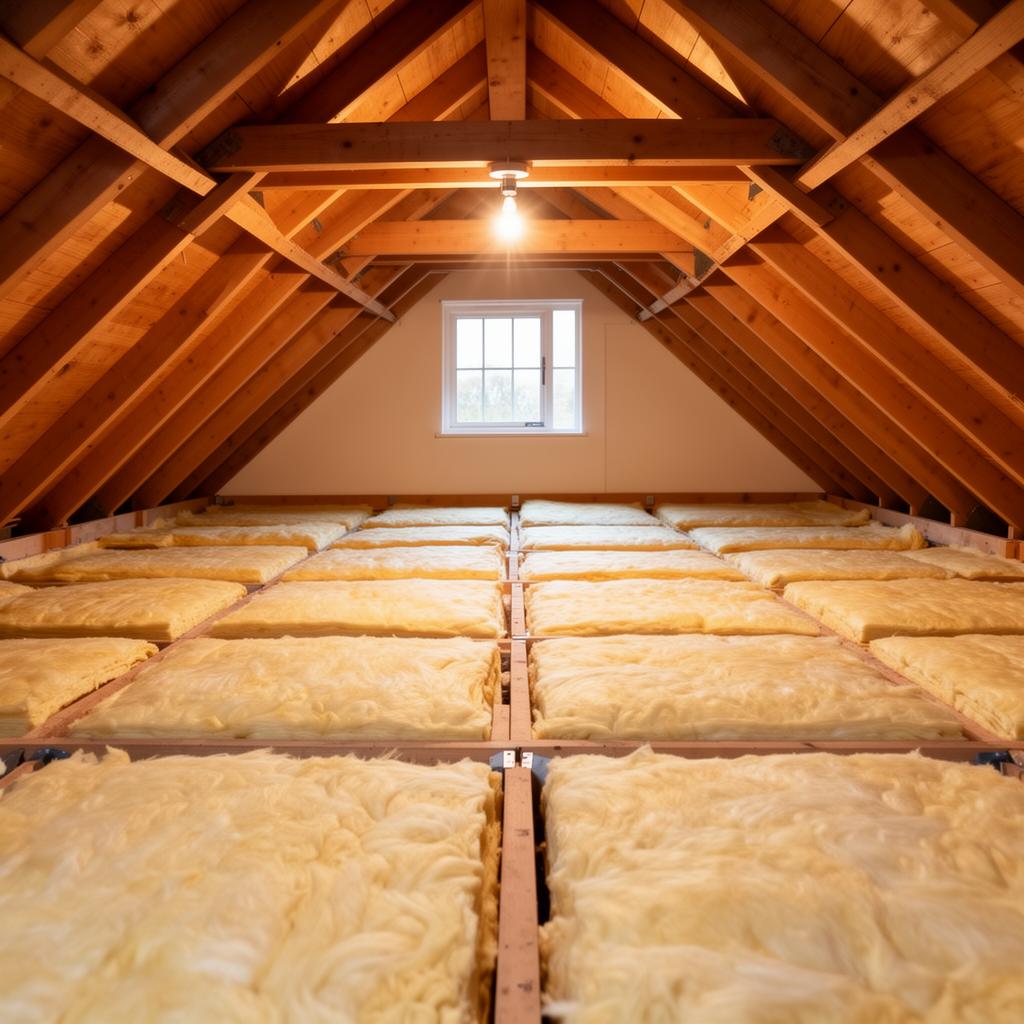
Choosing the right insulation material for your Lancashire home can feel overwhelming. Mineral wool, PIR (polyisocyanurate), EPS (expanded polystyrene), and several newer options all have different properties, costs and ideal applications. The best choice depends on where you are insulating (loft, walls, floor), your budget, the space available, and your property’s specific needs. Here is a straightforward comparison to help you make the right decision.
Mineral Wool vs PIR vs EPS Insulation
| Feature | Mineral Wool | PIR (Polyisocyanurate) | EPS (Expanded Polystyrene) |
|---|---|---|---|
| Thermal conductivity | 0.035–0.044 W/mK | 0.022–0.025 W/mK | 0.030–0.038 W/mK |
| Cost per m² (100mm) | £5–£10 | £12–£22 | £6–£12 |
| Fire rating | Non-combustible (A1) | Class B (fire-retardant) | Class E (requires fire barrier) |
| Moisture resistance | Absorbs water — needs vapour barrier | Closed-cell — excellent moisture resistance | Low absorption but not breathable |
| Best application | Lofts, cavity walls, timber frames | Solid walls, flat roofs, floors | External wall insulation, floors |
| Thickness needed for U-value 0.18 | 180–200mm | 90–110mm | 130–160mm |
The best insulation material for a Lancashire home depends on the specific application and property type. Mineral wool is the most cost-effective choice for loft insulation and timber-framed cavity walls. PIR boards deliver the highest thermal performance per millimetre, making them ideal for solid wall insulation where minimising thickness is important — particularly in terraced houses with narrow rooms. EPS is widely used for external wall insulation systems on rendered properties across Lancashire’s social housing stock.
Mineral Wool: The Reliable All-Rounder
Mineral wool (including glass wool brands like Knauf and Isover, and rock wool like Rockwool) is the most widely used insulation material in UK homes. It has been the standard choice for loft insulation for decades, and for good reason. It is cheap, effective, fireproof, easy to handle and available from every builder’s merchant in Lancashire.
Thermal performance: 0.032 to 0.044 W/mK depending on the specific product. To achieve the recommended U-value of 0.16 for a loft, you need approximately 270mm of mineral wool (usually laid as two layers – 100mm between joists and 170mm across the top). For cavity walls, blown mineral wool fibre achieves good fill but is less commonly used than cavity batts.
Cost: £3 to £8 per square metre for materials, making it the cheapest option by far. A full loft insulation top-up for a three-bedroom Lancashire semi costs £300 to £600 in materials, or £500 to £900 installed. This is why mineral wool is the default choice for loft insulation under government energy efficiency schemes and government insulation scheme schemes.
Best for: loft insulation at joist level, stud wall infill, suspended timber floor insulation (supported by netting), acoustic insulation between floors. Not ideal for situations where space is limited (it needs more thickness than rigid boards) or where moisture resistance is critical (it loses performance when wet).
PIR Board: Maximum Performance in Minimum Space
PIR (polyisocyanurate) boards, sold under brands like Celotex, Kingspan and Recticel, offer the best thermal performance per millimetre of any widely available insulation. This makes them ideal where space is at a premium – between rafters, on walls where every millimetre of room width matters, and in floor buildups where height is constrained.
Thermal performance: 0.022 to 0.025 W/mK, roughly twice as effective per millimetre as mineral wool. A 60mm PIR board provides similar insulation to 120mm of mineral wool. For between-rafter insulation in a Lancashire dormer conversion, this space saving is significant – the difference between an acceptably-sized room and a cramped one.
Cost: £15 to £30 per square metre for materials. Significantly more expensive than mineral wool, but the reduced thickness needed partially offsets this for space-constrained applications. PIR is available from all major builders’ merchants across Lancashire. Installation requires accurate cutting (a fine-tooth saw works well) and careful fitting to minimise gaps.
Best for: between-rafter insulation, internal wall insulation, floor insulation, garage conversions, and any application where minimising thickness is important. PIR boards are not breathable, so they should not be used on solid stone walls in traditional Lancashire cottages without careful moisture management.
EPS: The Budget Rigid Board
Expanded polystyrene (EPS) is the white beaded board familiar from packaging. As insulation, it offers reasonable performance at a lower cost than PIR, making it popular for floor insulation and external wall insulation systems.
Thermal performance: 0.030 to 0.038 W/mK, better than mineral wool but not as good as PIR. You need approximately 100mm of standard EPS to match 60mm of PIR for the same U-value. Grey EPS (which contains graphite for improved performance) narrows this gap, achieving 0.030 to 0.032 W/mK.
Cost: £8 to £18 per square metre, positioning it between mineral wool and PIR. Grey EPS costs slightly more than white but significantly less than PIR for similar performance. EPS is widely used in external wall insulation (EWI) systems across Lancashire because it is lightweight, easy to shape around features like window reveals, and provides a good substrate for render finishes.
Best for: floor insulation under screed, external wall insulation, cavity wall insulation (as bead), and any application where moderate performance at a lower cost is acceptable. Not suitable for high-temperature applications or areas where space is very limited.
Head-to-Head Comparison
Here is how the three main materials compare across the factors that matter most for Lancashire homeowners:
- Thermal performance per mm: PIR (best) > EPS (good) > Mineral Wool (adequate)
- Cost per square metre: Mineral Wool (cheapest) > EPS (moderate) > PIR (most expensive)
- Fire resistance: Mineral Wool (non-combustible, best) > PIR (fire-retardant, good) > EPS (combustible, requires protection)
- Moisture resistance: PIR (excellent) > EPS (good) > Mineral Wool (poor when wet)
- Breathability: Mineral Wool (good) > EPS (limited) > PIR (poor)
- Ease of DIY installation: Mineral Wool (easiest) > PIR (moderate) > EPS (moderate)
- Environmental impact: Mineral Wool (moderate) > EPS (moderate) > PIR (highest embodied carbon)
The Right Material for Each Lancashire Application
For loft insulation at joist level: Mineral wool. It is the cheapest, most straightforward option and works perfectly laid between and across joists. No reason to use anything more expensive for this application.
For between-rafter insulation (dormer rooms, room-in-roof): PIR board. The superior thermal performance per millimetre preserves maximum headroom in Lancashire’s loft conversions and dormer bedrooms.
For internal wall insulation on cavity or modern walls: PIR-backed plasterboard (insulated dry lining). Quick to install, minimal thickness, and provides a finished surface ready for decoration.
For internal wall insulation on solid stone walls: Wood fibre board, sheep’s wool or hempcrete. These breathable materials are essential for traditional Lancashire stone properties. PIR and EPS should not be used on solid stone walls.
For floor insulation: PIR or EPS depending on budget. Both work well under screed or floating floors. PIR is better where floor height is constrained. EPS is cheaper for larger areas where 20mm extra thickness is not critical.
For external wall insulation: EPS (usually grey) in a render system. Its light weight, easy shaping and good adhesion to render make it the default choice for EWI across Lancashire’s social and private housing retrofit programmes.
For cavity wall insulation: Blown mineral wool fibre, EPS bead or polyurethane foam (injected). The choice depends on the cavity width, the installer’s preference, and the specific requirements of the property. All achieve similar results when properly installed.
Newer Materials Worth Considering
Aerogel insulation blankets offer extraordinary thermal performance (0.015 W/mK) in ultra-thin profiles (10 to 20mm). They cost significantly more (£40 to £80 per square metre) but are valuable for specific applications like insulating window reveals or thin walls where every millimetre counts. A few Lancashire installers now offer aerogel for targeted use in heritage properties and space-constrained conversions.
Multifoil insulation (thin layers of foil and wadding) is sometimes marketed as a space-saving alternative to rigid boards. Performance claims should be treated with caution – independent testing typically shows multifoil alone does not match the claimed U-values without supplementary insulation. It can be useful as part of a system but should not be relied on as the sole insulation in a roof or wall.
Which insulation material is cheapest?
Mineral wool is the cheapest at £3 to £8 per square metre, followed by EPS at £8 to £18, and PIR at £15 to £30. However, the cheapest material is not always the most cost-effective. PIR’s superior performance means you need less thickness, saving space and reducing associated costs (thinner battening, less plasterboard depth). For loft insulation, mineral wool is both the cheapest and the best choice. For walls and floors, PIR often offers better value despite the higher material cost.
Can I mix different insulation materials?
Yes. Combining materials is common and often optimal. A typical Lancashire between-rafter installation might use 80mm PIR between the rafters topped with 25mm PIR-backed plasterboard below. Floor insulation might use EPS below the slab and PIR above. Mineral wool in the loft can be supplemented with PIR board if you want to use the loft for storage (PIR board laid on the joists, mineral wool beneath).
Is PIR safe on a stone cottage wall?
No. PIR is not breathable and will trap moisture in solid stone walls, potentially causing damp, timber rot and damage to the building. Stone cottages in Lancashire’s Ribble Valley, Pendle and Forest of Bowland need breathable insulation materials such as wood fibre board, sheep’s wool or hempcrete. These materials allow moisture to pass through while providing good thermal insulation.
See what these numbers mean for your home
Free instant estimate — costs, savings, payback and grants for your region.

Related Articles
Home Insulation Costs and Grants: Your Complete 2026 Guide
Update (June 2026): ECO4 closed to new applications in March 2026. Approved installations continue to December 2026. The Warm Homes: Local Grant is now the main funding route for insulation.…
18 May 2026
How to Reduce Condensation and Damp While Keeping Your Home Warm
Learn why condensation forms in UK homes, the difference between condensation and rising damp, and proven ventilation strategies to fix damp without losing heat.
8 May 2026
Conservatory Roof Replacement: How a Solid Roof Cuts Energy Bills and Adds Value
Replacing an old polycarbonate or glass conservatory roof with a solid insulated roof can slash heat loss, cut energy bills and turn a seasonal room into a year-round living space.
6 May 2026