Garage Conversion Insulation Requirements in Lancashire
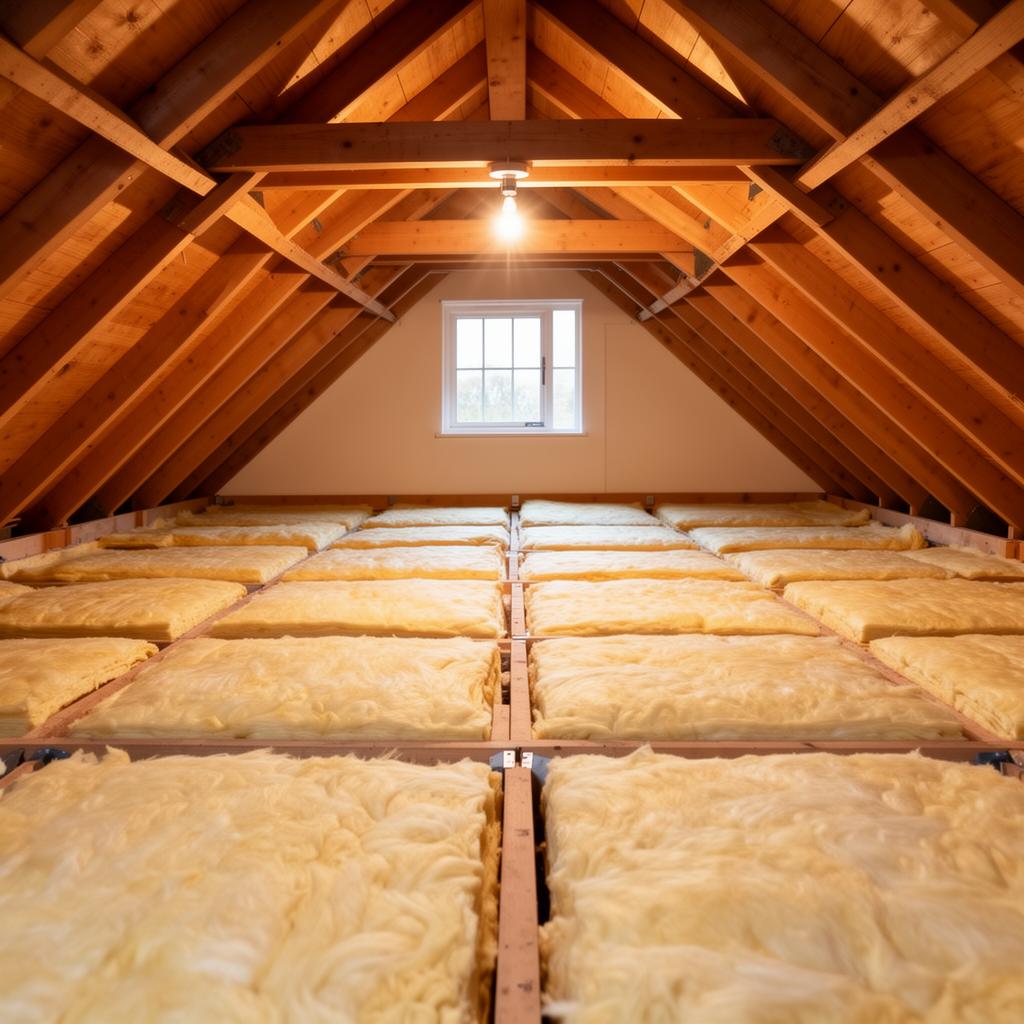
Garage conversions are one of the most popular home improvements across Lancashire, adding valuable living space without extending the footprint. But a converted garage that is not properly insulated will be cold, damp and expensive to heat – essentially an uninsulated box attached to your house. Building Regulations set minimum insulation standards for garage conversions that, when met properly, create a room as warm and energy-efficient as the rest of your home. Here are the requirements, the best methods for Lancashire garages, and the costs involved.
What Are the Insulation Requirements for a Garage Conversion?
A garage conversion in Lancashire must meet Building Regulations Part L (Conservation of Fuel and Power) insulation standards. The minimum requirements are: walls at U-value 0.30 W/m²K or better, floor at 0.25 W/m²K, and roof or ceiling at 0.16 W/m²K. In practice, this means approximately 75mm to 100mm of PIR insulation on the walls, 100mm to 150mm under the floor, and 150mm to 200mm in the ceiling, depending on the material used and construction method.
Garage conversions require Building Regulations approval from your local authority or an approved inspector — this is separate from planning permission, which is usually not needed for a standard conversion. Lancashire building control officers will check insulation values, ventilation, fire safety, structural integrity and damp-proofing before issuing a completion certificate. The typical cost of insulating a single garage conversion to regulation standard is £1,500 to £3,000 for materials and installation, depending on the existing floor construction and whether the walls need studwork or can be dry-lined directly.
Building Regulations Insulation Requirements
Any garage conversion in Lancashire that creates habitable space (a bedroom, home office, living room, gym, etc.) must comply with Part L of the Building Regulations (Conservation of Fuel and Power). The 2021 update sets the following maximum U-values for converted elements:
- Walls: 0.30 W/m2K (typically requiring 60 to 100mm of insulation depending on the material and construction method)
- Floor: 0.25 W/m2K (requiring 70 to 100mm of floor insulation)
- Roof or ceiling: 0.16 W/m2K (requiring 150 to 200mm of insulation between and above joists)
- Windows and doors: 1.4 W/m2K for windows, 1.4 W/m2K for doors (standard double glazing meets this)
These requirements apply to all elements being converted – the garage door opening (now a wall or window), the external walls, the floor, and the ceiling/roof. Existing party walls between the garage and the house may not need additional insulation if they already form part of the thermal envelope, but this depends on the specific construction.
Insulating Garage Walls
Most Lancashire garages are built with single-skin blockwork or brick, offering very little thermal resistance on their own. The standard approach is internal insulation, which can be achieved in two ways:
Rigid PIR board (Celotex, Kingspan) fixed directly to the wall with adhesive and mechanical fixings, finished with plasterboard. A 60mm layer of PIR plus 12.5mm plasterboard achieves approximately U-value 0.30, meeting the Building Regulations requirement. This method loses just 72.5mm of room width per insulated wall. Cost: £25 to £40 per square metre installed.
Timber stud frame filled with mineral wool insulation, covered with a vapour barrier and plasterboard. A 50mm x 50mm stud frame with 50mm mineral wool plus 25mm PIR board and plasterboard also achieves U-value 0.30 or better. This method loses about 90mm per wall but provides a service cavity for running electrical cables. Cost: £30 to £50 per square metre installed.
The front wall, where the garage door was, requires particular attention. The new wall (block, timber frame or panel) must achieve the required U-value and incorporate a proper damp-proof course continuous with the rest of the building. If you are fitting a window and new external wall where the door was, the total cost for this element is typically £2,000 to £4,000 including the window, wall construction and insulation.
Insulating the Garage Floor
Garage floors are typically bare concrete with no insulation, and they are usually lower than the main house floor level (to accommodate the drive slope and prevent water ingress). Insulating the floor and raising it to the correct level is one of the more complex aspects of a garage conversion.
The standard approach is to lay rigid insulation board (PIR or EPS) on top of a damp-proof membrane over the existing concrete slab, then finish with a screed or chipboard floating floor. A 75mm to 100mm layer of floor-grade PIR achieves U-value 0.25 or better. The floor buildup adds approximately 100 to 130mm to the total floor height, which needs to tie in with the step down from the house threshold.
If the existing garage floor is in poor condition or significantly lower than the house floor, digging out and relaying a new insulated floor slab may be necessary. This adds £1,500 to £3,000 to the project but produces a better result, especially for garages that have had persistent damp issues – common in older Lancashire properties where the garage floor has settled or cracked over decades.
Underfloor heating can be incorporated during the floor insulation work at relatively low additional cost (£30 to £50 per square metre for a wet system). This is particularly worthwhile if the conversion will be a home office or living room, as it provides comfortable, even heat without using wall space for radiators.
Insulating the Garage Ceiling and Roof
If the garage has a flat roof (common on attached garages across Lancashire’s 1960s to 1990s housing), insulation can be installed above or below the existing roof structure. Below the roof (internal insulation) is cheaper but reduces headroom. Above the roof (as part of a re-roof) is thermally superior but more expensive.
For garages with a pitched roof and no room above, insulating at ceiling level (between and above the joists) is standard. A combination of 100mm mineral wool between the joists and 100mm laid across the top of the joists achieves U-value 0.16 or better. Cost: £15 to £25 per square metre.
If there is a bedroom above the garage (a common layout in many Lancashire detached and semi-detached homes), the floor between the garage and bedroom becomes the insulation line. The room above is already heated, so you are insulating the garage ceiling to prevent the cold garage from chilling the floor of the room above. With the conversion, both spaces become heated, and the insulation between them becomes less critical, though it still provides useful sound insulation.
Ventilation Requirements
Building Regulations also require adequate ventilation in the converted space. This means trickle vents in windows, an extractor fan if the room includes cooking or bathing facilities, and sufficient background ventilation to prevent condensation – particularly important in Lancashire’s damp climate.
For a home office or bedroom conversion, trickle vents in the new window and an adequate air supply (usually through the trickle vent area calculation) are sufficient. For a utility room or kitchen conversion, a mechanical extractor fan (minimum 60 litres per second for a kitchen, 15 litres per second for a utility room) is required.
Total Costs for Lancashire Garage Conversion Insulation
Insulation costs form a significant portion of the overall garage conversion budget. Here is a breakdown for a typical single garage (approximately 15 square metres):
- Wall insulation (three external walls): £800 to £1,500
- New front wall with window (replacing garage door): £2,000 to £4,000
- Floor insulation and levelling: £1,200 to £2,500
- Ceiling/roof insulation: £400 to £800
- Total insulation element: £4,400 to £8,800
This is typically 40% to 50% of the total conversion cost, which ranges from £10,000 to £20,000 for a full Building Regulations-compliant conversion including electrics, plumbing, heating and finishing. It is not a cheap project, but the added living space typically adds £15,000 to £25,000 to the property value in most Lancashire areas, making it a worthwhile investment.
All insulation materials and labour for garage conversions benefit from 0% VAT when installed as part of an energy-saving improvement to an existing dwelling. Ensure your builder claims this reduced rate, as it saves 20% on the insulation element of the project.
Building Control Approval
A garage conversion requires Building Regulations approval, which you obtain either through your local authority Building Control department or a private Approved Inspector. The cost is £200 to £500 for the application and inspections. The inspector will check insulation installation at the appropriate stages (before plasterboarding covers the insulation) and issue a completion certificate when satisfied.
Do not skip Building Control. An unapproved conversion can cause problems when selling the property and may not meet insulation or safety standards. Lancashire conveyancing solicitors routinely check for Building Regulations certificates during property sales, and a missing certificate for a garage conversion can delay or complicate a sale.
Do I need planning permission for a garage conversion in Lancashire?
Usually not. Converting an integral or attached garage to habitable space is typically permitted development, as long as the external appearance does not change dramatically. A new window where the garage door was is usually acceptable. However, Building Regulations approval is always required, regardless of whether planning permission is needed. Check with your local authority if you are unsure about planning requirements for your specific property.
How thick does garage conversion insulation need to be?
Wall insulation: 60 to 100mm depending on material (PIR board needs less thickness than mineral wool). Floor insulation: 75 to 100mm of floor-grade PIR. Ceiling insulation: 150 to 200mm of mineral wool or equivalent. These thicknesses achieve the Building Regulations U-values of 0.30 for walls, 0.25 for floors, and 0.16 for ceilings.
Can I insulate a garage conversion myself?
DIY insulation is feasible if you have good construction skills. However, the work must still meet Building Regulations and pass inspection. Common DIY mistakes include insufficient thickness, gaps at junctions, missing vapour barriers, and blocked ventilation. For the floor and front wall elements in particular, professional installation is recommended to ensure damp-proofing and structural integrity.
See what these numbers mean for your home
Free instant estimate — costs, savings, payback and grants for your region.

Related Articles
Home Insulation Costs and Grants: Your Complete 2026 Guide
Update (June 2026): ECO4 closed to new applications in March 2026. Approved installations continue to December 2026. The Warm Homes: Local Grant is now the main funding route for insulation.…
18 May 2026
How to Reduce Condensation and Damp While Keeping Your Home Warm
Learn why condensation forms in UK homes, the difference between condensation and rising damp, and proven ventilation strategies to fix damp without losing heat.
8 May 2026
Conservatory Roof Replacement: How a Solid Roof Cuts Energy Bills and Adds Value
Replacing an old polycarbonate or glass conservatory roof with a solid insulated roof can slash heat loss, cut energy bills and turn a seasonal room into a year-round living space.
6 May 2026