Storage Heaters vs Heat Pumps: Which Is Cheaper to Run in 2026?
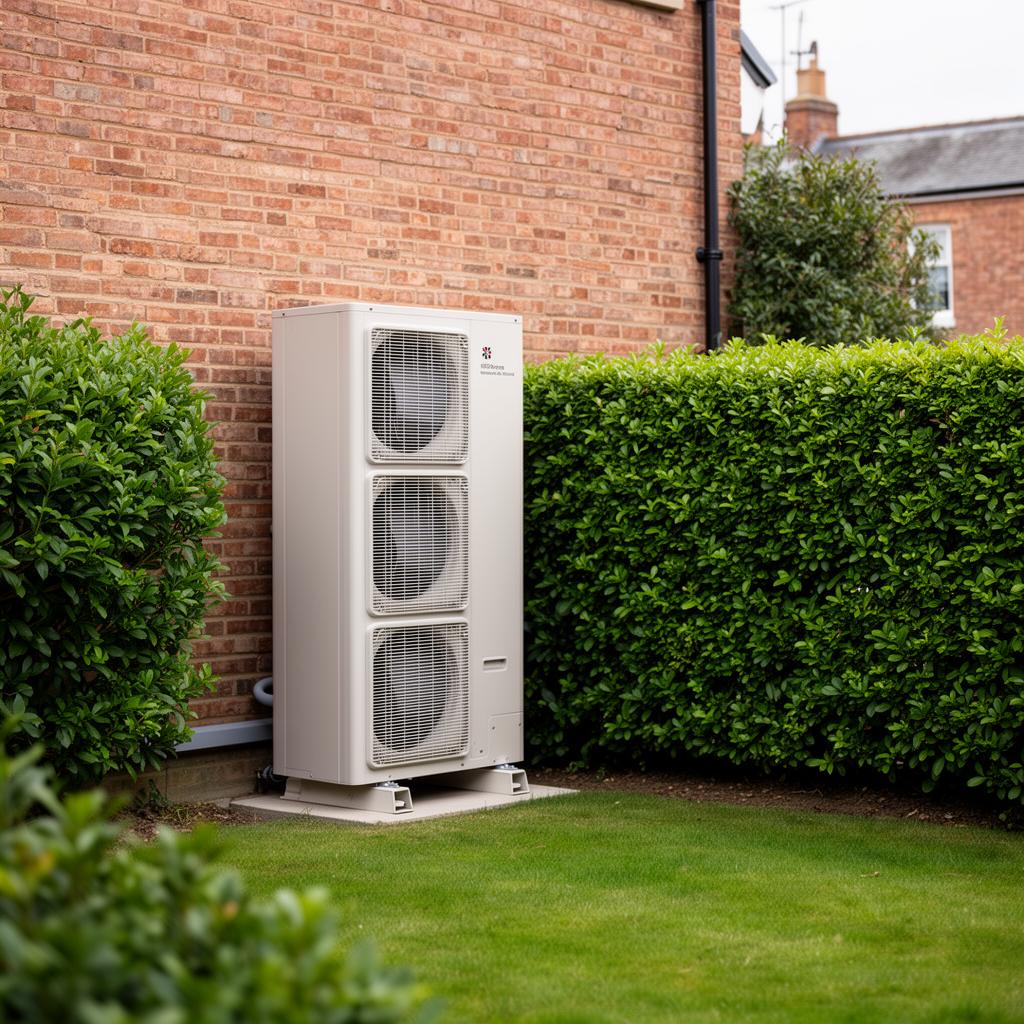
The debate between storage heaters vs heat pump systems is particularly relevant in 2026 as electricity prices remain high and government grants make heat pumps more accessible than ever. If you are currently heating your home with storage heaters, you are using one of the most expensive heating methods available, paying full electricity rates for every unit of heat. A heat pump, by contrast, delivers 3-4 times more heat per unit of electricity consumed, potentially saving a typical 3-bed house £1,200 or more per year.
Storage Heaters vs Heat Pumps: Which Is Cheaper to Run?
| Feature | Storage Heaters | Air Source Heat Pump |
|---|---|---|
| Upfront cost | £3,000–£5,000 (full house) | £7,000–£14,000 (after BUS grant) |
| Annual running cost (3-bed) | £1,800–£2,600 | £700–£1,100 |
| Efficiency | 100% (but heat lost during day) | 300–400% (COP 3–4) |
| Control over heating | Limited — charges overnight only | Full — heats on demand |
| Hot water included | No — separate immersion needed | Yes — integrated cylinder |
Heat pumps are significantly cheaper to run than storage heaters, saving a typical three-bedroom household £1,000–£1,500 per year. Storage heaters charge on cheap overnight electricity but release heat uncontrollably during the day, often leaving rooms cold by evening. A heat pump provides responsive, thermostat-controlled heating whenever you need it, and the BUS grant of up to £7,500 helps close the gap on installation costs.
This guide provides a detailed cost comparison, explains the efficiency difference, and shows how the Boiler Upgrade Scheme grant makes switching from storage heaters to a heat pump surprisingly affordable.
How Storage Heaters and Heat Pumps Work Differently
Understanding why the cost difference is so dramatic requires a quick look at how each system generates heat.
Storage heaters use electrical resistance to heat ceramic bricks overnight, typically on an Economy 7 or Economy 10 tariff. The stored heat then radiates into the room during the day. The fundamental limitation is that resistance heating is only 100% efficient: one unit of electricity produces exactly one unit of heat, with no multiplier effect.
Heat pumps work entirely differently. Rather than generating heat from electricity, they move heat from outside air into your home using a refrigerant cycle. This process is remarkably efficient: for every 1 kWh of electricity consumed, a well-installed air source heat pump delivers 3.0-4.0 kWh of heat (measured as the Seasonal Coefficient of Performance, or SCOP). Even in cold weather, modern heat pumps maintain a COP of 2.5 or above.
This 3-4x efficiency advantage is the core reason heat pumps cost so much less to run, even though they use the same fuel source: electricity.
Storage Heaters vs Heat Pump: Annual Running Cost Comparison
The following comparison is based on a typical 3-bed semi-detached house with an annual heat demand of 12,000 kWh, using January 2026 electricity prices.
| Factor | Storage Heaters (Economy 7) | Air Source Heat Pump |
|---|---|---|
| Efficiency | 100% | 300-350% (SCOP 3.0-3.5) |
| Electricity needed | 12,000 kWh | 3,430-4,000 kWh |
| Off-peak rate used | ~80% at 12p/kWh | N/A (or ToU tariff) |
| Peak rate used | ~20% at 28p/kWh | 100% at 24.5p/kWh |
| Annual heating cost | £1,820 | £840-£980 |
| Hot water cost | £350 | £120-£160 |
| Total annual cost | £2,170 | £960-£1,140 |
| Annual saving | – | £1,030-£1,210 |
These figures are conservative. If you are on a heat pump-specific tariff like Octopus Cosy, with off-peak rates as low as 7p per kWh, the heat pump running cost drops further to around £650-£800 per year, increasing the saving to £1,370-£1,520.
For larger properties or homes with poor insulation, the savings are even more substantial. A 4-bed detached house with storage heaters might spend £3,000-£3,500 per year on heating, while a heat pump could reduce this to £1,200-£1,600.
The Problem With Economy 7 and Storage Heaters in 2026
Storage heaters were designed for an era when overnight electricity was genuinely cheap compared to daytime rates. The Economy 7 tariff historically offered night rates at 40-50% of the daytime rate, making overnight charging relatively affordable.
In 2026, the gap between Economy 7 night and day rates has narrowed significantly. Typical Economy 7 rates are now around 12p per kWh overnight and 28-32p per kWh during the day. While the night rate is still cheaper, it is far from the bargain it once was. Crucially, storage heaters often run out of stored heat by late afternoon, forcing the boost element to activate at full daytime rates, which can account for 15-25% of total consumption.
Modern storage heaters with better insulation and fan-assisted output control help, but they cannot overcome the fundamental efficiency limitation: 1 kWh of electricity still produces exactly 1 kWh of heat, regardless of how sophisticated the storage heater design.
Comfort Comparison: Storage Heaters vs Heat Pumps
Beyond running costs, the comfort difference between storage heaters and heat pumps is significant:
- Temperature control – Storage heaters offer limited control; they charge overnight and release heat throughout the day whether you need it or not. Heat pumps provide precise, room-by-room temperature control with smart thermostats
- Responsiveness – Storage heaters cannot respond to sudden cold snaps or unexpected temperature drops. Heat pumps adjust output in real time
- Hot water – Storage heater homes typically use an immersion heater for hot water at full electricity rates. Heat pumps heat water at 3x efficiency
- Air quality – Storage heaters can dry the air and circulate dust. Heat pumps maintain more consistent humidity levels
- Summer cooling – Some heat pumps can provide cooling in summer; storage heaters obviously cannot
- Noise – Storage heaters are silent. Heat pumps produce a low hum from the outdoor unit, typically 40-45 dB at 1 metre
Most homeowners who switch from storage heaters to a heat pump report a transformative improvement in comfort, particularly the ability to maintain consistent temperatures throughout the day and respond to changing conditions.
Installation Cost and the BUS Grant for Switching
The main barrier to switching has historically been the upfront installation cost. Here is what you can expect:
| Cost Element | Typical Range | Notes |
|---|---|---|
| Air source heat pump | £10,000-£15,000 | Supply and installation |
| BUS grant | -£7,500 | Deducted at installation |
| Radiators (if needed) | £1,500-£3,500 | Larger radiators for lower flow temps |
| Hot water cylinder | £500-£1,200 | If not already fitted |
| Pipework modifications | £500-£2,000 | Depends on existing system |
| Electrical supply upgrade | £0-£1,500 | May need single to three-phase |
| Net total cost | £5,000-£15,700 | After BUS grant |
At annual savings of £1,030-£1,520, the net investment pays for itself within 4-12 years, depending on the complexity of the installation. Properties that already have a wet radiator system (some storage heater homes do not) will be at the lower end of the cost range and see the fastest payback.
For homes without existing wet central heating, the installation is more complex and costly because pipework and radiators must be installed from scratch. In these cases, consider whether improving insulation first could reduce the heat pump size needed, offsetting some of the additional installation cost.
Practical Considerations When Replacing Storage Heaters
Switching from storage heaters to a heat pump involves several practical considerations that are unique to this type of changeover:
- Wet central heating installation – If your home has no radiators or pipework, a complete wet system must be installed. This is the biggest additional cost and most disruptive element
- Economy 7 meter change – You will likely want to switch from an Economy 7 meter to a standard smart meter, or move to a heat pump-specific tariff like Octopus Cosy
- Electrical capacity – Storage heater homes often have a higher-rated electrical supply (due to overnight charging demand), which is actually an advantage for heat pump installation
- Asbestos check – Older storage heaters may contain asbestos and require specialist removal at £200-£500 per heater
- Wall space – Removing storage heaters frees up significant wall space, but you will need space for new radiators in appropriate positions
- Outdoor unit placement – You will need a suitable location for the heat pump outdoor unit with adequate clearance and airflow
Despite these considerations, the long-term financial and comfort benefits of switching make it one of the highest-impact home energy upgrades available. Get a free quote to find out what switching would cost for your specific property.
Alternative Options: Infrared Panels as a Stepping Stone
If the cost of a full heat pump installation is prohibitive, infrared heating panels offer an intermediate option. While still 100% efficient (like storage heaters), infrared panels heat objects and people directly rather than air, which can feel warmer at lower thermostat settings. They are cheaper to install than a heat pump system and can be added room by room. However, they do not match a heat pump’s 3-4x efficiency multiplier and should be seen as an improvement over storage heaters rather than a long-term replacement for a heat pump.
Frequently Asked Questions
How much cheaper is a heat pump to run than storage heaters?
A heat pump typically costs 50-60% less to run than storage heaters for the same level of heating. For a 3-bed semi-detached house, this translates to annual savings of £1,030-£1,520, depending on your electricity tariff and the heat pump’s efficiency. The saving comes from the heat pump’s ability to deliver 3-4 units of heat for every unit of electricity consumed.
Can I get a grant to replace storage heaters with a heat pump?
Yes. The Boiler Upgrade Scheme provides a grant of £7,500 towards the cost of an air source heat pump installation, regardless of your current heating system. This applies to storage heater homes just as it does to gas boiler homes. The grant is deducted from the installation cost at the point of purchase, so you do not need to fund the full amount upfront.
Do I need to install radiators to switch from storage heaters to a heat pump?
In most cases, yes. Heat pumps distribute heat through a wet central heating system with radiators and pipework. If your home currently only has storage heaters with no wet system, radiators and pipework must be installed. This adds £2,000-£5,500 to the total cost. Some homes built with storage heaters do have a wet system with a back boiler, which significantly reduces this cost.
Is it worth upgrading to modern storage heaters instead of a heat pump?
Modern storage heaters with fan-assisted output and better insulation are an improvement over older models, but they cannot overcome the fundamental efficiency limitation. They still use 1 kWh of electricity to produce 1 kWh of heat, while a heat pump produces 3-4 kWh. Upgrading storage heaters might cost £2,000-£4,000 but will only save 10-15% on running costs. The same investment towards a heat pump, combined with the BUS grant, delivers far greater long-term savings.
Will a heat pump work in a flat that currently has storage heaters?
Heat pumps can work in flats, but there are additional challenges. You need consent from the freeholder or management company for the outdoor unit, and there may be planning restrictions on external equipment. Space for the outdoor unit and noise considerations for neighbours are also factors. In some flats, a communal heat pump system shared between multiple units is a more practical solution. Read more about heat pump options for different property types.
See what these numbers mean for your home
Free instant estimate — costs, savings, payback and grants for your region.

Related Articles
Heat Pump Installation Costs in 2026: The Real Numbers
Heat pumps are now the default replacement for gas boilers in UK government policy, but the question most homeowners ask first is always the same: how much does it actually…
28 May 2026
Infrared Panels vs Heat Pumps: Which Heating System Is Right for Your Home?
Comparing infrared panels vs heat pumps across cost, efficiency, running expenses, and grant eligibility. This guide helps UK homeowners choose the right low-carbon heating system for their property.
8 May 2026
Renewable Heating vs Gas Boiler: An Honest Cost and Comfort Comparison
An honest comparison of heat pumps, biomass and solar thermal against gas boilers on cost, comfort, maintenance, grants and carbon savings for UK homes.
8 May 2026