Smart Thermostats for Heat Pumps: Best UK Options Compared
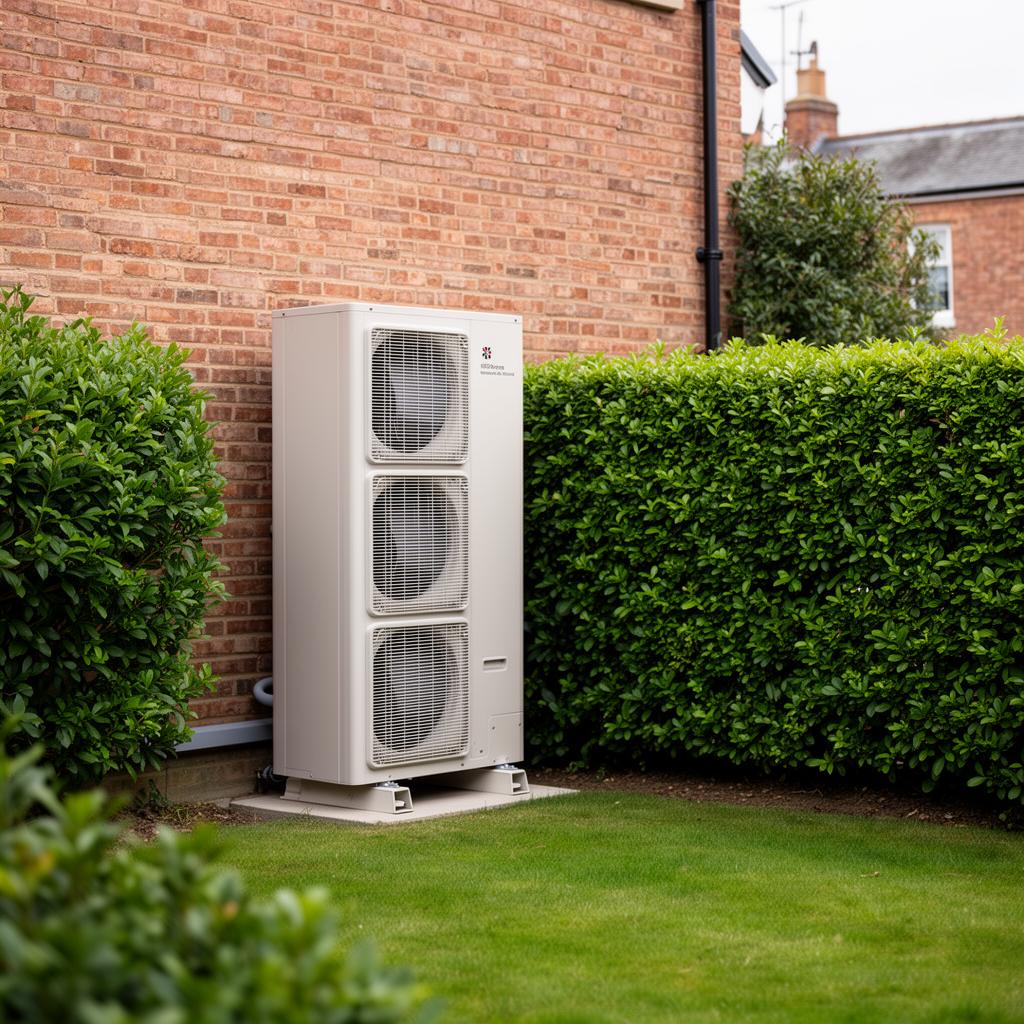
Choosing the right smart thermostat heat pump combination is one of the most effective ways to reduce your running costs and maximise system efficiency. Unlike gas boilers that simply switch on and off, heat pumps work best when they run at low output for extended periods, and most mainstream smart thermostats are not designed for this. Picking the wrong controller can reduce your heat pump’s efficiency by 15-30%, costing you hundreds of pounds each year.
Best Smart Thermostats for Heat Pumps in the UK
- Vaillant sensoComfort VRC 720 — designed specifically for Vaillant heat pumps with weather compensation control and room-by-room zoning
- Homely Energy — AI-driven thermostat built for heat pumps that learns your home’s thermal profile and optimises flow temperatures automatically
- Hive Active Heating — affordable option compatible with most heat pump systems, offering smartphone scheduling and geofencing
- Nest Learning Thermostat — self-learning schedule with OpenTherm support for modulating heat pump output
- Tado V3+ — geofencing, open window detection and multi-zone control, compatible with most hydronic heat pump systems
- Myson TouchOne — budget-friendly option with weather compensation integration for compatible heat pump brands
The most important feature in a heat pump thermostat is weather compensation support, which adjusts flow temperatures based on outdoor conditions to maximise efficiency. A good smart thermostat can improve heat pump COP by 0.3–0.5, saving £100–£200 per year. Avoid thermostats designed only for boilers that use simple on/off switching, as these reduce heat pump efficiency by forcing frequent start-stop cycles.
This guide compares the leading smart thermostat options for UK heat pump owners, explains why some popular choices actually harm performance, and helps you find the right controller for your system.
Why Standard Smart Thermostats Fail With Heat Pumps
The fundamental problem is simple: most smart thermostats were designed for gas boilers. A gas boiler responds well to on-off control because it reaches full output within minutes and has minimal startup losses. A heat pump, by contrast, operates most efficiently when it runs continuously at a low flow temperature, gradually adjusting output to match demand.
When a standard thermostat like Nest or Hive sends a simple on-off signal to a heat pump, it forces the system into repeated start-stop cycles. Each restart requires the compressor to ramp up from cold, consuming significantly more electricity than steady-state operation. This cycling behaviour can push your Coefficient of Performance (COP) down from a potential 3.5 to below 2.5, effectively increasing running costs by 30% or more.
The smart thermostats that work well with heat pumps use weather compensation curves, modulating control signals, and predictive algorithms to keep the system running smoothly rather than cycling.
Best Smart Thermostats for Heat Pumps: Detailed Comparison
Homely Energy
Homely is purpose-built for heat pumps and is widely regarded as the best smart thermostat for heat pump systems in the UK. It uses weather compensation, learning algorithms, and room-by-room temperature sensing to optimise flow temperatures automatically. The system monitors both internal and external temperatures, adjusting the heat pump’s output curve in real time.
Homely integrates with most major heat pump brands including Vaillant, Daikin, Mitsubishi, and Samsung. It supports OpenTherm and modbus protocols, allowing it to communicate directly with the heat pump rather than relying on simple relay switching. Users report COP improvements of 0.3-0.8 compared to manufacturer controllers, which translates to annual savings of £150-£350.
The Homely system costs around £250-£350 including installation and comes with a monthly subscription of approximately £5 per month for the cloud optimisation service.
Passiv
Passiv is another UK-designed controller built specifically for heat pump optimisation. It focuses heavily on weather compensation automation and off-peak tariff scheduling, making it particularly attractive for households on time-of-use electricity tariffs like Octopus Cosy or Intelligent.
The system uses external temperature sensors and predictive modelling to pre-heat your home during cheaper rate periods, then maintain temperature with minimal energy during peak hours. Passiv claims typical savings of 20-30% compared to standard heat pump controls. It works with a wide range of heat pump brands and communicates via modulating signals rather than on-off relay control.
Passiv costs approximately £200-£300 installed, with no ongoing subscription fees, making it an attractive long-term option.
tado Smart Thermostat
tado occupies a middle ground between heat pump-specific and mainstream controllers. The latest tado X range supports OpenTherm modulating control, which means it can communicate with compatible heat pumps to adjust flow temperatures rather than simply switching on and off. This makes it significantly better than pure on-off thermostats, though it lacks the deep weather compensation algorithms of Homely and Passiv.
tado’s strengths lie in its multi-zone capability, with individual room thermostats and smart TRVs allowing room-by-room temperature control. The geofencing feature can also reduce energy waste by lowering temperatures when nobody is home. The system costs £150-£250 for a starter kit, with additional room thermostats at around £70 each. A subscription of £3 per month unlocks advanced features.
Drayton Wiser
Drayton Wiser offers good value multi-zone control with OpenTherm support in its latest generation. While not specifically designed for heat pumps, the OpenTherm capability means it can modulate compatible systems rather than cycling them. The Eco and Comfort modes allow you to balance efficiency against response time.
Wiser’s main advantage is affordability: starter kits begin at around £120, with additional room thermostats at £40 each. There are no subscription fees. However, its weather compensation integration is limited compared to Homely and Passiv, and it works best as an upgrade from basic controls rather than as an optimisation tool for already well-controlled systems.
Smart Thermostat Heat Pump Compatibility Table
| Feature | Homely | Passiv | tado X | Drayton Wiser | Nest / Hive |
|---|---|---|---|---|---|
| Heat pump optimised | Yes | Yes | Partial | Partial | No |
| Weather compensation | Full auto | Full auto | Basic | Basic | None |
| Modulating control | Yes | Yes | OpenTherm | OpenTherm | On-off only |
| Off-peak tariff scheduling | Yes | Yes | Limited | No | No |
| Multi-zone support | Yes | Limited | Yes | Yes | Limited |
| Typical cost installed | £250-£350 | £200-£300 | £150-£250 | £120-£200 | £180-£220 |
| Subscription | £5/month | None | £3/month | None | None |
| Estimated COP improvement | 0.3-0.8 | 0.2-0.6 | 0.1-0.3 | 0.1-0.3 | -0.3 to -0.8 |
Why Nest and Hive Are Poor Choices for Heat Pumps
Google Nest and Hive remain the UK’s most popular smart thermostats, but they are fundamentally unsuitable for controlling heat pumps efficiently. Both devices use simple on-off relay switching, which means they can only tell the heat pump to run at full output or stop completely. There is no ability to modulate the flow temperature or adjust output to match demand.
The Nest learning algorithm, while clever for gas boilers, actively works against heat pump efficiency. Its “early on” feature tries to predict when to start heating to reach the target temperature by a set time. With a gas boiler this saves energy, but with a heat pump it creates aggressive start-stop cycles that hammer efficiency.
Real-world monitoring data from the Electrification of Heat Demonstration Project showed that homes using standard on-off thermostats with heat pumps had average COPs of 2.2-2.6, while those with weather-compensated controls achieved 3.0-3.8. That difference equates to annual running cost savings of £300-£600 for a typical 3-bed semi-detached house.
Weather Compensation: The Key to Heat Pump Efficiency
Weather compensation is the single most important feature for a heat pump thermostat. The concept is straightforward: as the outside temperature rises, the heat pump’s flow temperature drops. On a mild 10 degrees C day, the system might run at a flow temperature of 30 degrees C. On a freezing -2 degrees C day, it might need 45 degrees C.
This matters because heat pump efficiency is directly linked to the temperature difference between the source (outside air) and the output (flow temperature). Every degree you reduce the flow temperature improves efficiency by approximately 2-3%. A smart thermostat that continuously optimises this curve can make a dramatic difference to your annual bill.
Most heat pumps come with a built-in weather compensation feature, but the manufacturer controllers tend to use conservative, fixed curves. A dedicated smart thermostat like Homely or Passiv learns your home’s specific thermal characteristics and creates a bespoke curve that squeezes maximum efficiency from the system. Combined with proper home insulation, the results can be transformative.
Off-Peak Tariff Integration for Maximum Savings
One of the most compelling reasons to invest in a heat pump-specific smart thermostat is the ability to exploit time-of-use electricity tariffs. Tariffs like Octopus Cosy offer heat pump owners off-peak rates as low as 7-10p per kWh during certain windows, compared to peak rates of 24-30p per kWh.
A smart thermostat with tariff awareness can pre-heat your home during cheap rate periods, building up thermal mass in the walls and floors, then maintain comfort with minimal energy during expensive periods. For a well-insulated home, this strategy alone can reduce electricity costs by 25-40%.
Homely and Passiv both offer this feature, automatically importing tariff data and adjusting the heating schedule. Passiv in particular has been designed with tariff optimisation as a core feature, integrating directly with Octopus, E.ON, and other suppliers’ API data.
If you are considering a heat pump installation, pairing it with a solar panel system can further reduce your reliance on grid electricity, and a smart thermostat can prioritise heating when solar generation is at its peak.
How to Choose the Right Smart Thermostat for Your Heat Pump
The right choice depends on your priorities, budget, and existing system. Here is a quick decision framework:
- Maximum efficiency and savings – Choose Homely if you want the most advanced optimisation and are comfortable with a monthly subscription
- Best value with no ongoing costs – Choose Passiv for strong weather compensation and tariff integration without subscription fees
- Multi-zone control priority – Choose tado X if room-by-room temperature control is your main requirement and your heat pump supports OpenTherm
- Budget-friendly upgrade – Choose Drayton Wiser if you want a significant improvement over basic controls at the lowest upfront cost
- Avoid – Do not use Google Nest, Hive, or any thermostat that only offers on-off control with a heat pump
Whatever system you choose, the investment will typically pay for itself within 12-18 months through improved efficiency and lower electricity bills. Request a free quote to discuss smart thermostat options alongside your heat pump installation.
Frequently Asked Questions
Can I use my existing Nest thermostat with a heat pump?
Technically yes, but it is not recommended. Nest uses on-off control that causes frequent cycling, reducing your heat pump’s efficiency by 15-30%. If you already own a Nest, consider adding a weather compensation controller alongside it, or replace it with a heat pump-optimised thermostat like Homely or Passiv.
What is weather compensation and why does it matter for heat pumps?
Weather compensation automatically adjusts your heat pump’s flow temperature based on the outside temperature. When it is warmer outside, the system runs at a lower flow temperature, which dramatically improves efficiency. Every degree reduction in flow temperature improves performance by approximately 2-3%. Without weather compensation, your heat pump runs harder than necessary, wasting electricity and money.
How much can a smart thermostat save on heat pump running costs?
A heat pump-optimised smart thermostat typically saves £150-£500 per year compared to basic on-off controls. The exact saving depends on your property size, insulation levels, and electricity tariff. Homes on time-of-use tariffs like Octopus Cosy tend to see the highest savings due to tariff scheduling features.
Do I need a smart thermostat if my heat pump has a built-in controller?
Most heat pumps come with a basic controller that includes weather compensation, but these tend to use conservative fixed curves. A dedicated smart thermostat learns your home’s specific characteristics and optimises more aggressively, typically improving COP by 0.2-0.8. If you are happy with your comfort levels and running costs, the built-in controller may be sufficient, but most homeowners see a worthwhile improvement from upgrading.
Can I install a smart thermostat myself or do I need a professional?
Basic installation is possible for competent DIYers, but heat pump-specific thermostats like Homely and Passiv typically require professional setup to configure the communication protocols correctly. Getting the weather compensation curve dialled in also benefits from professional commissioning. Most installers charge £50-£150 for thermostat installation and setup.
See what these numbers mean for your home
Free instant estimate — costs, savings, payback and grants for your region.

Related Articles

Heat Pump Installation Costs in 2026: The Real Numbers
Heat pumps are now the default replacement for gas boilers in UK government policy, but the question most homeowners ask first is always the same: how much does it actually…
28 May 2026
Infrared Panels vs Heat Pumps: Which Heating System Is Right for Your Home?
Comparing infrared panels vs heat pumps across cost, efficiency, running expenses, and grant eligibility. This guide helps UK homeowners choose the right low-carbon heating system for their property.
8 May 2026
Renewable Heating vs Gas Boiler: An Honest Cost and Comfort Comparison
An honest comparison of heat pumps, biomass and solar thermal against gas boilers on cost, comfort, maintenance, grants and carbon savings for UK homes.
8 May 2026