Heat Pumps in Conservation Areas: What UK Homeowners Need to Know
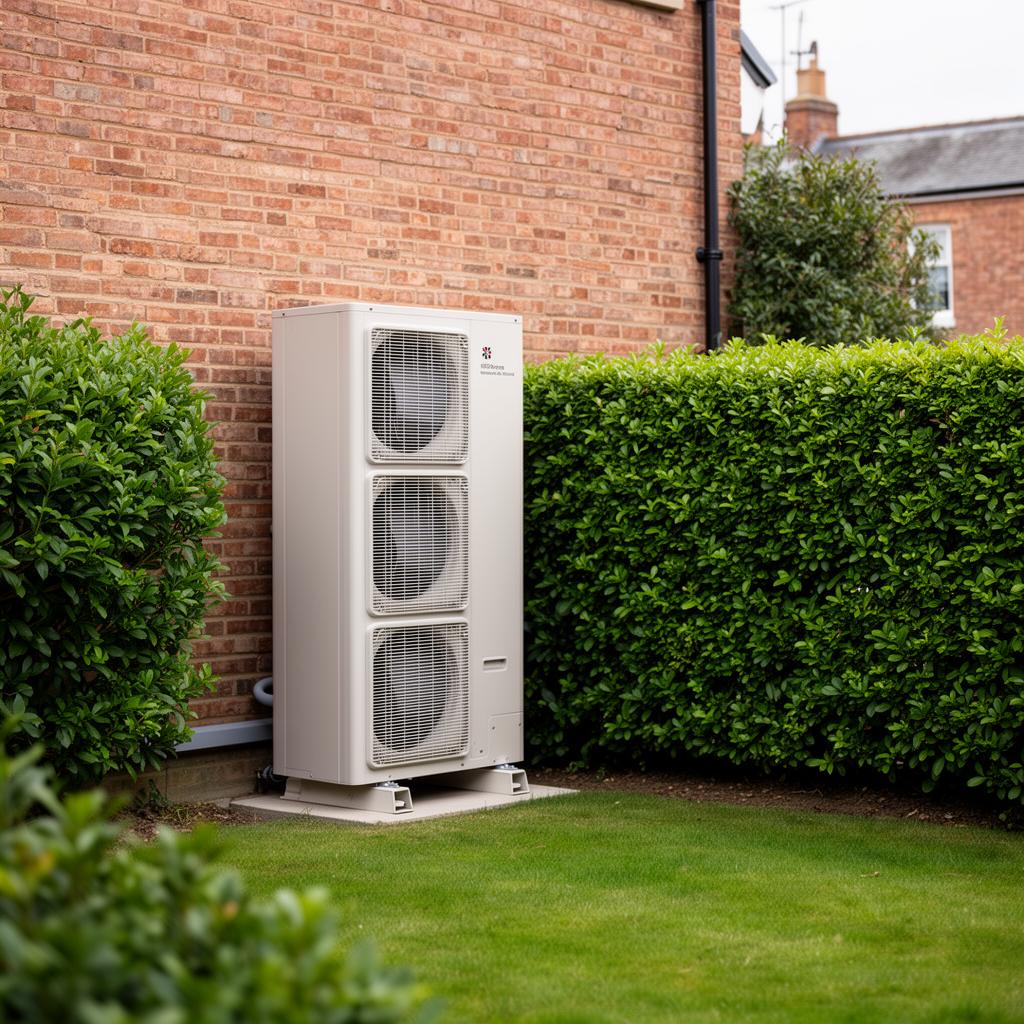
Living in a conservation area does not prevent you from installing a heat pump conservation area, but the rules are stricter than for standard residential properties. Approximately 10,000 conservation areas exist across England, covering a significant number of UK homes. This guide explains exactly which restrictions apply, how to position your unit compliantly, and what to do if your area has an Article 4 direction that removes permitted development rights entirely.
Can You Install a Heat Pump in a Conservation Area?
Yes, you can install a heat pump in a conservation area, but you will need to apply for planning permission because permitted development rights for air source heat pumps are removed in conservation areas across England and Wales. The local planning authority will assess whether the outdoor unit’s appearance, noise and position are acceptable within the conservation setting. Ground source heat pumps with buried loops typically face fewer planning objections.
To improve your chances of approval, choose a unit with a low noise rating (below 42 dB at one metre), position it away from street-facing elevations and consider screening with timber fencing or planting. Many conservation area applications are approved when the unit is sited in a rear garden and not visible from any public highway. Your installer should submit a heritage impact statement alongside the planning application, and approval typically takes eight to twelve weeks.
Permitted Development Rules for Heat Pumps in Conservation Areas
Unlike listed buildings, properties in conservation areas do still benefit from permitted development rights for heat pump installation, but with additional restrictions. Under the General Permitted Development Order (GPDO), Schedule 2, Part 14, Class G, an air source heat pump can be installed without planning permission if all the following conditions are met:
- The unit is not installed on a wall or roof that fronts a highway
- The unit does not exceed 0.6 cubic metres in external dimensions
- No part of the unit is within 1 metre of the property boundary
- The unit complies with the MCS planning standards (MCS 020)
- Noise does not exceed 42dB at the nearest neighbour’s habitable room
- Only one air source heat pump is installed on the property
- The unit is removed when no longer needed
The critical additional restriction for conservation areas is the no front-facing installation rule. In standard residential areas, this rule only applies to installations facing a highway. In conservation areas, permitted development prohibits installation on any wall or roof forming the principal or side elevation that is visible from a highway. This effectively limits installation to rear walls and rear gardens in most conservation area properties.
Article 4 Directions: When Permitted Development Is Removed
Some conservation areas have Article 4 directions that remove specific permitted development rights. If your conservation area has an Article 4 direction covering Part 14 (renewable energy installations), you will need full planning permission for a heat pump installation regardless of where it is positioned.
Article 4 directions are set by the local planning authority and vary widely across the country. Some are narrow, only removing rights for specific types of development like window replacement or external painting. Others are broad, covering all permitted development including renewable energy installations.
To check whether your property is affected:
- Contact your local planning authority’s conservation team
- Check the council’s website for conservation area appraisals and Article 4 direction notices
- Request a Lawful Development Certificate (approximately £103 fee) for definitive confirmation of your permitted development rights
Even if an Article 4 direction applies, planning permission for heat pumps is frequently granted in conservation areas. The application process adds cost (typically £250-£400 for the planning fee) and time (8 weeks standard determination), but approval rates for well-designed, sensitively positioned installations are high.
Noise Limits: The 42dB Boundary Rule
The 42dB noise limit measured at the nearest neighbour’s habitable room is a permitted development condition that applies to all heat pump installations, not just conservation areas. However, conservation area properties are often in denser, older housing stock where neighbouring properties are closer together, making compliance more challenging.
To meet the 42dB limit, the key factors are:
Unit selection: Choosing a quieter heat pump model is the most effective strategy. The Samsung EHS Gen 7 at 35dB at 1 metre in quiet mode drops to approximately 23dB at 3 metres, giving enormous headroom against the 42dB limit. The Mitsubishi Ultra Quiet at 45dB at 1 metre translates to approximately 33dB at 3 metres.
Distance from boundary: Sound level drops by approximately 6dB for every doubling of distance. A unit producing 50dB at 1 metre will produce approximately 38dB at 4 metres. Maximising the distance between the unit and the nearest boundary is therefore critical.
Reflective surfaces: Hard walls and paving near the unit can reflect sound and increase measured noise levels by 3-6dB. Positioning the unit away from corners and hard surfaces, or using sound-absorbing landscaping, helps reduce reflected noise.
Acoustic barriers: Purpose-built acoustic enclosures or fencing can reduce noise by 5-10dB, provided they do not restrict airflow to the heat pump. Any barrier must maintain at least 300mm clearance on all sides of the unit for adequate air circulation.
Positioning Your Heat Pump Compliantly in a Conservation Area
The ideal position for a heat pump in a conservation area meets all permitted development conditions while maintaining good efficiency. The best locations are:
Rear garden at ground level: This is the most common compliant position. The unit sits on a concrete pad in the rear garden, away from the highway-facing elevation. Ensure it is at least 1 metre from any property boundary and positioned where airflow is not restricted by fencing or vegetation.
Rear wall of the property: Wall-mounting or positioning the unit against the rear wall keeps it hidden from the street. This works well for properties with rear extensions or single-storey additions where the unit is naturally screened from public view.
Behind an outbuilding or garage: Using existing structures to screen the unit from view is an effective strategy that typically satisfies both planning and conservation concerns. The screening also helps with noise attenuation.
Avoid positioning the unit in side passages between terraced or semi-detached houses, as the enclosed space can amplify noise and the location may be visible from the highway. Also avoid placing the unit directly beneath bedroom windows, as noise during defrost cycles can be disruptive even when general operating noise is within acceptable limits.
Costs of Heat Pump Installation in Conservation Areas
If your installation meets permitted development conditions, the cost is no different from a standard installation at approximately £9,000-£14,000 fully installed, reduced to £1,500-£6,500 after the £7,500 BUS grant.
If planning permission is required (due to an Article 4 direction or non-compliant positioning), additional costs include:
| Additional Cost | Amount |
|---|---|
| Planning application fee | £250-£400 |
| Acoustic assessment | £200-£500 |
| Heritage/design statement | £300-£800 |
| Acoustic enclosure (if needed) | £400-£1,200 |
| Total additional costs | £500-£2,900 |
These additional costs are modest in the context of the overall installation and are fully offset by the BUS grant in most cases. Get a free quote from an MCS-certified installer familiar with conservation area requirements in your area.
Combining Heat Pumps with Other Energy Improvements
Conservation area properties often benefit from a whole-house approach to energy efficiency. While external wall insulation is rarely permitted on the front elevation in conservation areas, several improvements can be made:
- Internal wall insulation using thin, high-performance materials that do not significantly reduce room sizes
- Loft insulation to at least 270mm, which has no visual impact
- Secondary glazing behind original windows, preserving the external appearance while improving thermal performance
- Sympathetic replacement windows using slim-profile double glazing that replicates original designs
- Solar panels on rear-facing roof slopes (permitted development in conservation areas if not on the principal elevation)
Improving insulation before installing a heat pump reduces heat demand, allowing a smaller and quieter unit that is easier to position compliantly. This combined approach delivers the best overall results for both energy efficiency and conservation compliance.
Frequently Asked Questions
Do I need planning permission for a heat pump in a conservation area?
Not necessarily. If you can position the unit to comply with all permitted development conditions (rear-facing, within 1 metre of boundary limits, under 42dB at the nearest neighbour, and within 0.6 cubic metres), planning permission is not required. However, if your conservation area has an Article 4 direction covering renewable energy, you will need planning permission regardless.
Can I put a heat pump on the side of my house in a conservation area?
Only if the side elevation is not visible from a highway. In most terraced and semi-detached conservation area properties, the side elevation is visible from the street, which means installation on that wall would not qualify for permitted development. A rear position is almost always the safer choice.
What if my neighbours object to a heat pump in a conservation area?
If your installation meets permitted development conditions, neighbours cannot prevent it through objections, as no planning application is required. If planning permission is needed, neighbours can submit objections, but these must relate to material planning considerations such as noise, visual impact, or heritage harm, not personal preference. The planning officer weighs these objections against the benefits of the proposal.
Does the BUS grant apply in conservation areas?
Yes. The £7,500 Boiler Upgrade Scheme grant applies regardless of whether your property is in a conservation area. The grant eligibility criteria relate to the property type and existing heating system, not the planning designation. Request a free quote to confirm your eligibility and get an accurate net cost.
Can I install a ground source heat pump in a conservation area?
Yes, and ground source systems face fewer conservation concerns because there is no visible outdoor unit. Borehole drilling and ground loop installation are temporary construction activities that do not permanently alter the appearance of the property or its setting. The BUS grant of £7,500 also applies to ground source installations.
See what these numbers mean for your home
Free instant estimate — costs, savings, payback and grants for your region.

Related Articles
Heat Pump Installation Costs in 2026: The Real Numbers
Heat pumps are now the default replacement for gas boilers in UK government policy, but the question most homeowners ask first is always the same: how much does it actually…
28 May 2026
Infrared Panels vs Heat Pumps: Which Heating System Is Right for Your Home?
Comparing infrared panels vs heat pumps across cost, efficiency, running expenses, and grant eligibility. This guide helps UK homeowners choose the right low-carbon heating system for their property.
8 May 2026
Renewable Heating vs Gas Boiler: An Honest Cost and Comfort Comparison
An honest comparison of heat pumps, biomass and solar thermal against gas boilers on cost, comfort, maintenance, grants and carbon savings for UK homes.
8 May 2026