Heat Pump vs Air Conditioning: What Is the Difference?
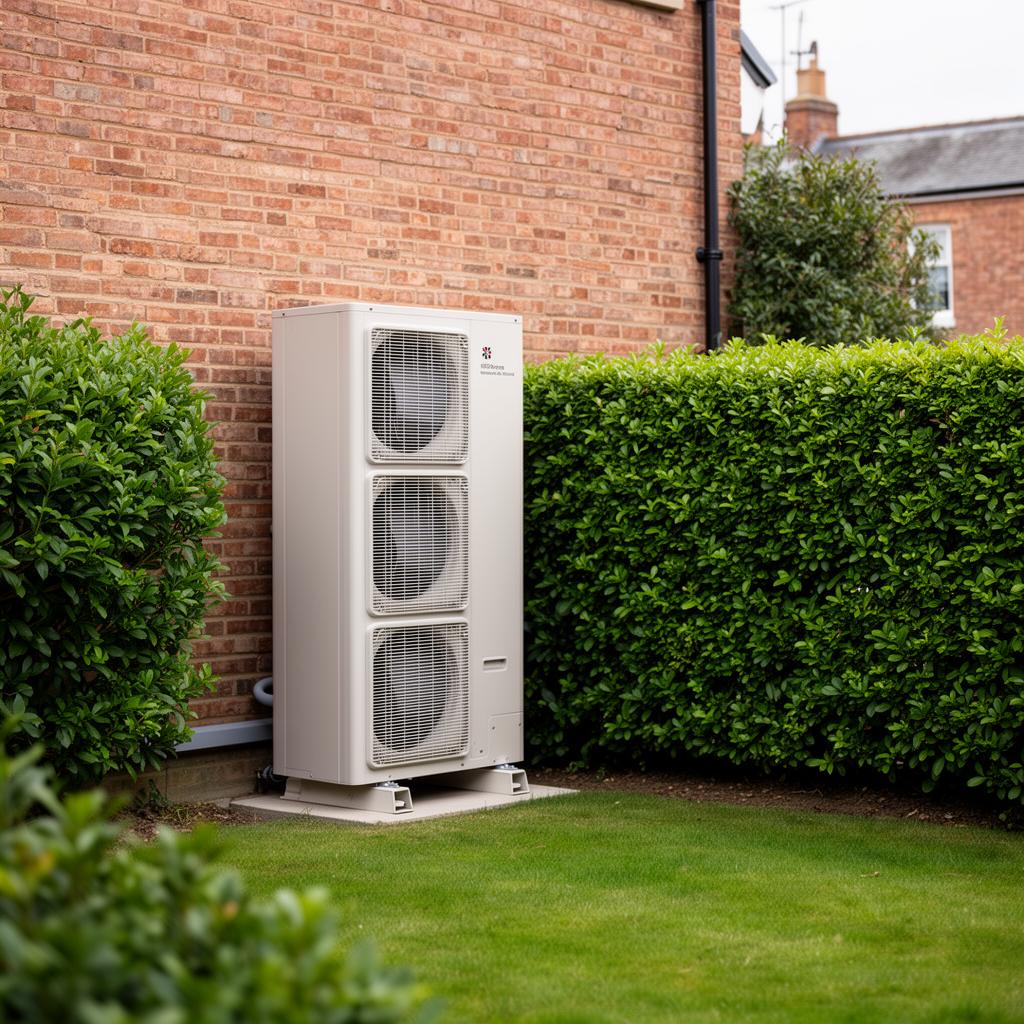
The confusion between heat pump vs air conditioning UK systems is entirely understandable because, at a fundamental level, they are the same technology. Both use a refrigerant cycle to move heat from one place to another. The difference lies in their primary purpose: air conditioning is designed to cool, while a heat pump is designed to heat, though most modern systems can do both. With the introduction of a £2,500 BUS grant for air-to-air heat pumps alongside the existing £7,500 grant for air-to-water systems, understanding the distinction has become directly relevant to your wallet.
Heat Pump vs Air Conditioning: What Is the Difference?
| Heat Pump | Air Conditioning | |
|---|---|---|
| Primary function | Heating (with cooling option) | Cooling (with limited heating) |
| Efficiency in heating mode | COP 3.0–4.5 (300–450%) | COP 1.5–2.5 (less efficient) |
| Designed for UK winters | Yes, works down to -20°C | No, most units lose efficiency below 5°C |
| Hot water production | Yes (via cylinder) | No |
| Typical installed cost | £7,000–£14,000 (before grant) | £1,500–£5,000 |
| BUS grant eligible | Yes (£7,500; £9,000 for oil/LPG-heated homes 21 Jul 2026 – 31 Mar 2027) | No |
The core difference is that a heat pump is an entire heating system designed to replace your boiler, while air conditioning is a comfort cooling system with limited heating capability. Both use the same refrigeration cycle, but heat pumps are engineered with larger compressors, higher-capacity heat exchangers and defrost cycles that maintain performance throughout the UK winter. A reversible heat pump can both heat and cool your home, combining both functions in a single system.
This guide clarifies the overlap, explains the different system types, compares the BUS grant levels, and helps you decide which approach suits your home and priorities.
The Technology Is Identical: How Both Systems Work
Every air conditioning unit is technically a heat pump, and every heat pump can theoretically provide cooling. The underlying process is the same:
- A compressor pressurises a refrigerant gas, raising its temperature
- The hot refrigerant flows through a condenser, where it releases heat and becomes a liquid
- The liquid passes through an expansion valve, where it rapidly cools and drops in pressure
- The cold refrigerant flows through an evaporator, where it absorbs heat from the air and becomes a gas again
- The cycle repeats continuously
In cooling mode, the evaporator is indoors (absorbing heat from your rooms) and the condenser is outdoors (dumping heat outside). In heating mode, the cycle reverses: the evaporator is outdoors (absorbing heat from outside air) and the condenser is indoors (releasing heat into your rooms).
A reversible system uses a four-way valve to switch the refrigerant flow direction, providing both heating and cooling from a single outdoor unit. This is standard in air-to-air systems and available as an option in some air-to-water heat pumps.
Air-to-Air vs Air-to-Water: The Key Difference
The meaningful difference between what is sold as “air conditioning” and what is sold as a “heat pump” in the UK market comes down to how heat is delivered indoors:
Air-to-air systems (marketed as AC or air-to-air heat pumps)
Air-to-air systems deliver heating and cooling directly through indoor fan units mounted on walls, ceilings, or concealed in ducting. They heat or cool the air directly, providing rapid temperature changes and effective dehumidification. They cannot heat water or connect to radiators.
These systems are identical to conventional split air conditioning units. They are sold as “air conditioning” when marketed for cooling and as “air-to-air heat pumps” when marketed for heating. The hardware is the same product.
Air-to-water systems (marketed as heat pumps)
Air-to-water systems heat water, which is then distributed through radiators or underfloor heating and stored in a hot water cylinder for taps and showers. This is the most common type of heat pump installed in UK homes because it integrates with existing wet central heating systems.
Air-to-water systems are primarily designed for heating and hot water. Some models can provide limited cooling through underfloor heating circuits, but they are not as effective at cooling as air-to-air units.
Heat Pump vs Air Conditioning: Detailed Comparison
| Feature | Air-to-Water Heat Pump | Air-to-Air Heat Pump / AC |
|---|---|---|
| Primary function | Heating and hot water | Heating and cooling |
| Heat distribution | Radiators / underfloor heating | Wall units / ceiling cassettes / ducts |
| Hot water production | Yes (via cylinder) | No |
| Cooling capability | Limited (underfloor only) | Full AC cooling |
| BUS grant available | £7,500 (or £9,000 for oil/LPG) | £2,500 |
| Works with existing radiators | Yes (may need upsizing) | No |
| Installation complexity | Moderate to high | Low to moderate |
| Typical installed cost | £10,000-£16,000 | £5,000-£10,000 (whole house) |
| Net cost after grant | £2,500-£8,500 | £2,500-£7,500 |
| Annual running cost (3-bed) | £700-£1,100 | £650-£1,000 |
| Heating efficiency (SCOP) | 3.0-3.5 | 3.2-4.0 |
BUS Grant Comparison: £7,500 vs £2,500
The significant difference in BUS grant levels reflects the different roles and costs of each system type:
Air-to-water heat pumps: £7,500 (or £9,000)
The higher grant reflects the higher installation cost (including cylinder, pipework, and radiator modifications) and the system’s ability to provide both space heating and domestic hot water. Air-to-water systems are considered the primary replacement for gas and oil boilers and receive the maximum grant accordingly.
Air-to-air heat pumps: £2,500
The lower grant reflects the lower installation cost and the fact that air-to-air systems cannot produce hot water. You will still need a separate hot water system (typically an immersion heater in an existing cylinder, or an instantaneous electric water heater). The £2,500 grant was introduced in 2026 to recognise that air-to-air systems are a legitimate and efficient heating option, particularly for well-insulated modern homes.
To qualify for either grant, the system must provide whole-house heating (not just a single room) and must be installed by an MCS-certified installer.
Which System Suits Your Home?
The right choice depends on your property type, priorities, and existing infrastructure:
Choose an air-to-water heat pump if:
- You have an existing wet central heating system with radiators
- You need the system to produce domestic hot water
- You want to maximise the BUS grant (£7,500-£9,000)
- Your primary goal is efficient heating with cooling as a secondary benefit
- You prefer radiators or underfloor heating over wall-mounted fan units
Choose an air-to-air heat pump if:
- You want powerful cooling as well as heating
- Your home does not have a wet central heating system (e.g., currently has storage heaters)
- You live in a well-insulated modern home where air distribution is effective
- You already have an alternative hot water system (e.g., solar thermal, immersion heater)
- You want lower installation costs and simpler installation
- You prefer rapid room temperature response over gradual radiant heating
For many UK homes, particularly those replacing a gas boiler, the air-to-water heat pump is the natural choice because it slots directly into the existing heating infrastructure. For newer homes, properties without existing radiators, or homeowners who prioritise summer cooling, the air-to-air option is increasingly attractive.
Can You Have Both Systems?
Some homeowners choose to install an air-to-water heat pump for heating and hot water, then add a single-room air-to-air unit for cooling in a specific room (typically a home office or south-facing living room). This hybrid approach provides comprehensive heating, hot water, and targeted cooling.
The cost of adding a single-room air-to-air unit is approximately £1,200-£2,500 installed. It operates independently of the air-to-water system. This is a practical solution for homeowners who want the benefits of both system types without replacing their entire heating infrastructure.
Another option is choosing an air-to-water heat pump that supports cooling through underfloor heating. Systems from Daikin, Samsung, and Vaillant offer this capability, providing gentle whole-house cooling of 2-4 degrees C without any additional indoor equipment. This is less dramatic than air-to-air cooling but requires no visible indoor units.
Running Cost Comparison for Heating
When used purely for heating, air-to-air systems are typically slightly more efficient than air-to-water because they avoid the thermal losses associated with heating water and distributing it through pipes. However, the difference is modest:
- Air-to-air SCOP: 3.2-4.0 (higher because heat is delivered directly to air)
- Air-to-water SCOP: 3.0-3.5 (slightly lower due to water distribution losses)
For a 3-bed semi with 12,000 kWh annual heat demand, the running cost difference is approximately £50-£150 per year in favour of air-to-air. However, the air-to-air system does not provide hot water, so you need to add the cost of an alternative hot water method (immersion heater: approximately £300-£500 per year), which typically wipes out the heating efficiency advantage.
The total energy cost comparison, including both heating and hot water, usually favours the air-to-water system because it produces hot water at 3x efficiency rather than the 1x efficiency of an immersion heater. Pairing either system with solar panels and good insulation further reduces costs.
Not sure which system is right for your property? Get a free quote and our MCS-certified installers will assess both options and recommend the best approach for your specific situation.
Frequently Asked Questions
Is a heat pump just an air conditioning unit that works in reverse?
Essentially, yes. The refrigerant cycle used in heat pumps and air conditioning units is identical. The only difference is the direction of heat flow: AC moves heat from inside to outside (cooling), while a heat pump moves heat from outside to inside (heating). Most modern units include a reversing valve that allows both directions, providing heating and cooling from one system.
Can I get a grant for air conditioning?
If the system is an air-to-air heat pump that provides whole-house heating (not just cooling), it qualifies for the £2,500 BUS grant. A system installed purely for cooling does not qualify. The grant requires MCS certification and the system must be designed to heat the entire property. In practice, all qualifying air-to-air heat pumps also provide cooling as a standard feature.
Do I still need a boiler if I get an air-to-air heat pump?
You do not need a boiler for space heating, but you will need a separate hot water system. Options include an electric immersion heater in an existing cylinder, an instantaneous electric water heater, or a solar thermal system. An air-to-water heat pump provides both heating and hot water from a single system, which is why it remains the more popular choice for homes replacing a gas boiler.
Which system is quieter: air-to-air or air-to-water?
The outdoor units produce similar noise levels (40-50 dB at 1 metre). The main difference is indoors: air-to-air systems have fan units in each room that produce a gentle background hum of 20-30 dB (quieter than a whisper). Air-to-water systems deliver heat through radiators, which are completely silent. Some people find the indoor fan units noticeable, particularly in bedrooms at night, while others find the white noise effect soothing.
Can an air-to-air heat pump heat a whole UK house in winter?
Yes, provided the system is correctly sized and the property is reasonably well insulated. Modern air-to-air heat pumps maintain full heating output at outdoor temperatures down to -15 degrees C or below, well beyond typical UK winter conditions. A multi-split system with indoor units in each main room provides even heat distribution. The key requirement is that the total heating capacity matches the property’s heat loss calculation, just as with an air-to-water system.
See what these numbers mean for your home
Free instant estimate — costs, savings, payback and grants for your region.

Related Articles
Heat Pump Installation Costs in 2026: The Real Numbers
Heat pumps are now the default replacement for gas boilers in UK government policy, but the question most homeowners ask first is always the same: how much does it actually…
28 May 2026
Infrared Panels vs Heat Pumps: Which Heating System Is Right for Your Home?
Comparing infrared panels vs heat pumps across cost, efficiency, running expenses, and grant eligibility. This guide helps UK homeowners choose the right low-carbon heating system for their property.
8 May 2026
Renewable Heating vs Gas Boiler: An Honest Cost and Comfort Comparison
An honest comparison of heat pumps, biomass and solar thermal against gas boilers on cost, comfort, maintenance, grants and carbon savings for UK homes.
8 May 2026