How Long Do Heat Pumps Last? Lifespan, Servicing and Replacement Guide
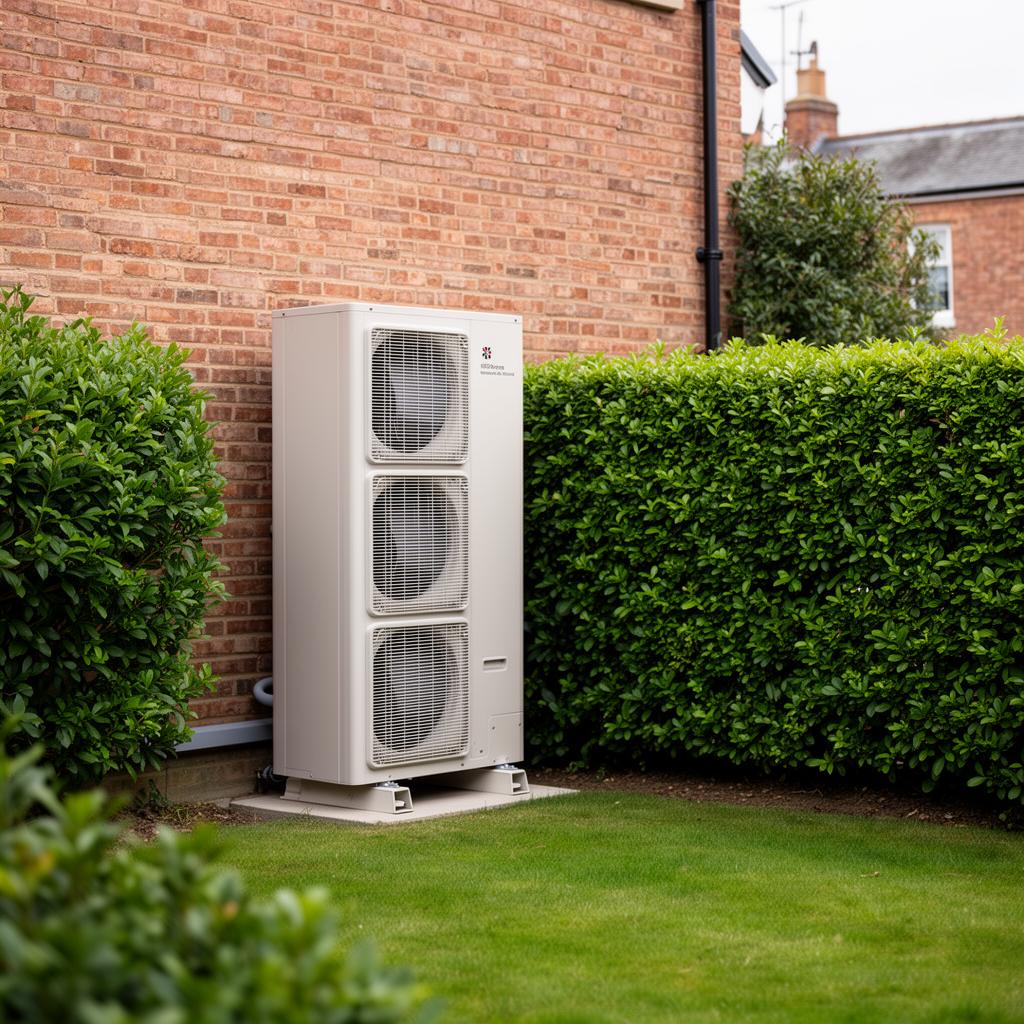
One of the most important questions for anyone investing in a heat pump is how long do heat pumps last in real UK conditions. The headline answer is 20-25 years for the heat pump unit itself, but the reality is more nuanced. Air source and ground source systems have different lifespans, maintenance requirements play a significant role, and certain components wear out faster than others. This guide gives you the full picture so you can plan for the long term.
How Long Do Heat Pumps Last?
An air source heat pump typically lasts 20 to 25 years with proper maintenance, while ground source heat pumps can last 25 to 30 years or more because the ground loop has no moving parts. By comparison, a gas boiler averages just 12 to 15 years. The compressor — the most expensive component — usually lasts 15 to 20 years, while the outdoor fan, controller and circulation pump may need replacing once during the system’s lifetime.
Regular annual servicing costing £100–£180 per year is the single biggest factor in extending heat pump life. This includes checking refrigerant levels, cleaning filters, inspecting the outdoor unit and verifying system pressures. Neglecting servicing can reduce lifespan by five to eight years and void your manufacturer warranty.
Expected Lifespan: Air Source vs Ground Source
The lifespan of a heat pump depends primarily on the type of system and how well it is maintained. The two main types have significantly different longevity profiles:
Air source heat pumps typically last 15-20 years in UK conditions. The outdoor unit is exposed to weather, temperature extremes, and airborne debris, all of which contribute to gradual wear. The compressor is the most critical component and is expected to last the full 15-20 year lifespan in most cases. Other components like the fan motor, control boards, and expansion valves have shorter service lives and may need replacement during the unit’s lifetime.
Ground source heat pumps have a split lifespan. The heat pump unit itself lasts approximately 20-25 years, similar to but slightly longer than air source units because it operates in a more stable, sheltered environment with less thermal stress. The ground loop (boreholes or horizontal pipes) lasts 50+ years with virtually no maintenance, meaning only the heat pump unit needs replacing at end of life. This makes the second installation significantly cheaper.
| Component | Air Source | Ground Source |
|---|---|---|
| Heat pump unit | 15-20 years | 20-25 years |
| Compressor | 15-20 years | 20-25 years |
| Fan motor | 10-15 years | N/A (no outdoor fan) |
| Control board / PCB | 10-15 years | 10-15 years |
| Circulation pump | 8-12 years | 8-12 years |
| Expansion valve | 10-15 years | 10-15 years |
| Ground loop | N/A | 50+ years |
| Hot water cylinder | 15-25 years | 15-25 years |
Real UK Data: How Long Are Heat Pumps Actually Lasting?
The UK heat pump market is relatively young compared to Scandinavia, where heat pumps have been mainstream for over 30 years. However, we now have approximately 15 years of UK installation data to draw on, primarily from the Mitsubishi Ecodan range which was one of the first widely installed models in Britain.
Early Ecodan units installed in 2011-2013 are still operating in many UK homes, confirming that the 15-20 year lifespan expectation is realistic. Data from the Renewable Heat Incentive (RHI) scheme, which tracked installations from 2014 onwards, shows failure rates of approximately 2-4% per year for air source units, which is comparable to or better than gas boiler failure rates.
In Scandinavia, where heat pumps have been installed since the 1980s, units routinely reach 20-25 years before replacement. The colder climate puts more thermal stress on the systems, suggesting UK units may achieve the upper end of this range due to milder operating conditions.
Ground source data from Sweden, where over 500,000 ground source heat pumps are installed, shows ground loops performing without degradation after 30+ years. The heat pump units themselves are typically replaced at 20-25 years, with the new unit connecting to the existing ground loop at a fraction of the original installation cost.
Maintenance Factors That Extend Heat Pump Lifespan
The difference between a heat pump that lasts 12 years and one that lasts 22 years often comes down to maintenance. How long do heat pumps last is directly influenced by how well owners and installers look after the system.
Annual professional servicing is the single most important maintenance activity. A service covers:
- Refrigerant pressure and charge check
- Electrical connection tightness and condition
- Water system pressure and flow rate
- Control settings verification and optimisation
- Outdoor unit coil condition and cleaning
- Filter inspection and cleaning
- Safety device testing
Annual servicing costs approximately £100-£200 and is required to maintain most manufacturer warranties. Over a 20-year lifespan, servicing costs total £2,000-£4,000, which is comparable to gas boiler servicing and a small price for extending the equipment’s life.
Homeowner maintenance tasks between professional services include:
- Keeping the outdoor unit clear of leaves, debris, and vegetation (monthly check)
- Checking system water pressure is between 1.0-1.5 bar (monthly)
- Cleaning or replacing air filters on the indoor unit (every 3-6 months)
- Checking magnetic filter condition and cleaning if visibly contaminated (every 6-12 months)
- Ensuring drainage around the outdoor unit is clear, particularly in autumn and winter
- Monitoring energy performance through the manufacturer’s app for any unusual changes
What Shortens a Heat Pump’s Lifespan
Several factors can reduce a heat pump’s operational life below the expected 15-20 years:
Poor installation quality: This is the biggest risk factor. Incorrect refrigerant charge, inadequate pipework sizing, poor electrical connections, and improper system design all place unnecessary stress on the heat pump. Choosing an experienced, MCS-certified installer is the best protection.
Short cycling: Frequent on/off cycling accelerates compressor wear. Each start-up produces a surge of electrical and mechanical stress. Systems that short-cycle due to oversizing, low system volume, or missing buffer tanks will have shorter compressor life.
Running at excessive flow temperatures: Operating consistently at 55-65C puts more thermal stress on the compressor and heat exchanger than running at 35-45C. This is another reason why correct system design with appropriate radiator sizing and insulation matters for long-term durability.
Neglected maintenance: Dirty coils, blocked filters, and low refrigerant charge all force the compressor to work harder, increasing energy consumption and accelerating wear. An unmaintained heat pump may fail 5-8 years earlier than a well-maintained one.
Corrosive environments: Coastal properties where salt spray reaches the outdoor unit experience faster corrosion of aluminium fins and steel casings. Coastal installations should consider units with enhanced corrosion protection (epoxy-coated coils) and may need more frequent coil cleaning.
Common Component Replacements During the Heat Pump’s Life
While the main heat pump unit lasts 15-25 years, individual components may need replacement along the way. These are not failures of the overall system but normal wear items, similar to replacing brake pads on a car.
| Component | Typical Replacement Age | Approximate Cost |
|---|---|---|
| Circulation pump | 8-12 years | £150-£350 |
| Control board / PCB | 10-15 years | £300-£800 |
| Fan motor | 10-15 years | £200-£500 |
| Expansion valve | 10-15 years | £200-£400 |
| Pressure/flow sensors | 5-10 years | £50-£200 |
| Expansion vessel | 8-12 years | £100-£300 |
| Immersion heater element | 8-15 years | £50-£150 |
Over a 20-year lifespan, you should budget approximately £500-£2,000 for component replacements in addition to annual servicing costs. This is broadly comparable to the repair costs for a gas boiler over a similar period.
Warranty Coverage and What It Means for Lifespan
Manufacturer warranties provide insight into expected component lifespans. The standard warranties for major UK heat pump brands are:
- Samsung EHS Gen 7: 7 years parts and labour
- Grant Aerona3: 7 years parts and labour
- Vaillant Arotherm Plus: 5 years standard, up to 7 years with approved installer
- Mitsubishi Ecodan: 5 years standard, extended options to 10 years
- Daikin Altherma 3: 5 years standard
- Nibe: 5 years standard
A 5-7 year warranty does not mean the heat pump will only last that long. Warranties are set conservatively to manage the manufacturer’s financial risk. They typically cover all components including the compressor, which is the most expensive single part. After the warranty period, repair costs fall to the homeowner, but as shown above, individual component replacements are generally affordable.
Extended warranties beyond the standard period are available from some brands and independent warranty providers. These typically cost £100-£300 per year and may be worth considering if you want financial protection against major component failure after the standard warranty expires.
When to Plan for Heat Pump Replacement
Knowing when to replace rather than repair is an important financial decision. General guidelines for replacement planning:
Years 1-10: Most repairs are covered by warranty and worthwhile regardless. Servicing costs are the main expense.
Years 10-15: Minor component replacements may be needed. These are cost-effective if the compressor and main heat exchanger are healthy. Budget for occasional repairs of £200-£800.
Years 15-20: If the compressor or heat exchanger fails, replacement cost (£2,000-£4,000 for the compressor alone) may not be justified versus replacing the entire unit. Start budgeting for eventual replacement. New units will be more efficient than 15-20 year old technology.
Beyond 20 years: Even if the unit is still operational, efficiency will have degraded compared to new models. A new unit will be significantly more efficient, use more environmentally friendly refrigerant, and come with a fresh warranty. For ground source systems, the replacement heat pump connects to the existing ground loop, reducing replacement cost to approximately £5,000-£10,000.
Pairing a new heat pump with improved insulation and solar panels at the replacement stage can further reduce running costs and extend the overall value of the system. Get a free quote for a new heat pump installation or replacement.
Heat Pump vs Gas Boiler Lifespan Comparison
For homeowners weighing up a heat pump against a gas boiler replacement, comparing lifespans helps put the investment in context:
| Factor | Heat Pump | Gas Boiler |
|---|---|---|
| Expected lifespan | 15-20 years (ASHP) | 12-15 years |
| Annual servicing cost | £100-£200 | £80-£150 |
| Typical repair costs (lifetime) | £500-£2,000 | £500-£2,500 |
| Replacement cost | £9,000-£14,000 (before grant) | £2,500-£4,500 |
| Replacement grant available | £7,500 BUS grant | None |
| Running cost (annual, 3-bed) | £700-£1,000 | £850-£1,200 |
| Total cost of ownership (20 yrs) | £18,000-£28,000 | £22,000-£32,000 |
When the BUS grant, lower running costs, and longer lifespan are factored in, the total cost of ownership for a heat pump is competitive with or lower than a gas boiler over a 20-year period. The heat pump’s financial advantage increases if gas prices rise faster than electricity prices, as is widely projected.
Frequently Asked Questions
Do heat pumps last longer than gas boilers?
Yes. Air source heat pumps typically last 15-20 years compared to 12-15 years for gas boilers. Ground source heat pumps last even longer at 20-25 years for the unit, with the ground loop lasting 50+ years. Heat pumps have fewer moving parts than gas boilers and do not experience the combustion-related corrosion that limits boiler life.
How much does it cost to replace a heat pump at end of life?
Replacing an air source heat pump at end of life costs approximately £7,000-£12,000 because the pipework, cylinder, and radiators are already in place. If a BUS grant or successor scheme is available, the net cost could be £2,000-£5,000. For ground source systems, the existing ground loop is reused, reducing replacement cost to approximately £5,000-£10,000.
Can a heat pump last 25 years?
Yes, particularly for well-maintained ground source systems and some air source units in mild UK climates. Scandinavian data shows many heat pumps reaching 25+ years. However, efficiency degrades with age, and a 25-year-old unit will use significantly more electricity than a modern replacement. Replacing at 18-22 years is often the economically optimal point for air source units.
Is annual servicing really necessary?
Yes, for both warranty maintenance and longevity. Annual servicing costs £100-£200 and catches potential issues before they cause expensive failures. Skipping servicing can void your warranty and reduce the heat pump’s lifespan by several years. The cost of servicing over 20 years (£2,000-£4,000) is far less than the cost of premature replacement.
What is the most common reason for heat pump failure?
The most common cause of premature heat pump failure is compressor damage from short cycling or incorrect refrigerant charge. Both are preventable through correct installation and regular servicing. Electrical component failures (PCBs, sensors) are more common than compressor failures but are relatively inexpensive to repair. Choosing a quality installer and maintaining the system properly are the best protections against early failure.
See what these numbers mean for your home
Free instant estimate — costs, savings, payback and grants for your region.

Related Articles
Heat Pump Installation Costs in 2026: The Real Numbers
Heat pumps are now the default replacement for gas boilers in UK government policy, but the question most homeowners ask first is always the same: how much does it actually…
28 May 2026
Infrared Panels vs Heat Pumps: Which Heating System Is Right for Your Home?
Comparing infrared panels vs heat pumps across cost, efficiency, running expenses, and grant eligibility. This guide helps UK homeowners choose the right low-carbon heating system for their property.
8 May 2026
Renewable Heating vs Gas Boiler: An Honest Cost and Comfort Comparison
An honest comparison of heat pumps, biomass and solar thermal against gas boilers on cost, comfort, maintenance, grants and carbon savings for UK homes.
8 May 2026