Ground Source Heat Pumps Explained: Costs, Boreholes and UK Suitability
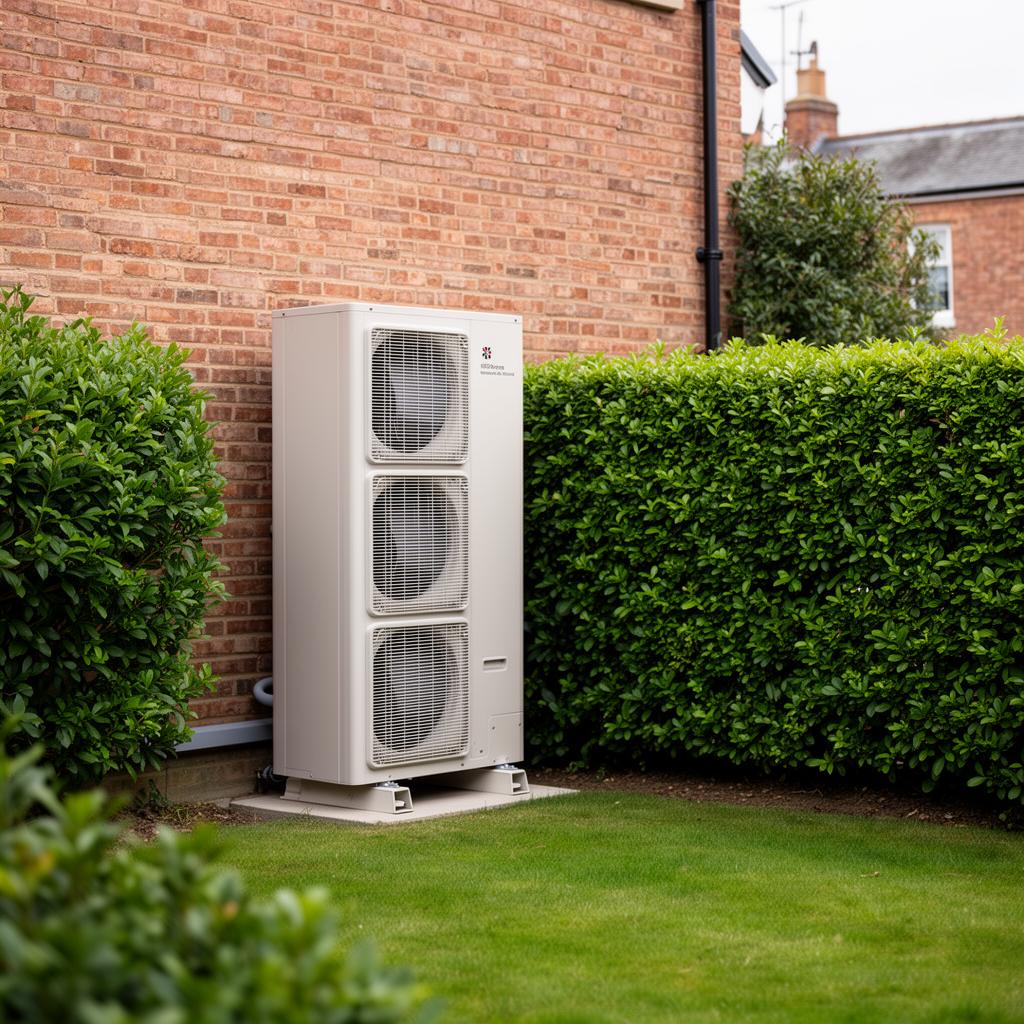
Ground source heat pumps (GSHPs) are the most efficient heating systems available to UK homeowners, but they are also the most expensive to install. If you are researching ground source heat pump cost UK, you will find figures ranging from £16,200 to £49,000 depending on the system type, ground conditions, and property size. This guide explains what drives these costs, the differences between borehole and horizontal installations, and whether a ground source system makes financial sense for your property.
How Much Does a Ground Source Heat Pump Cost in the UK?
A ground source heat pump costs £20,000–£35,000 installed before the £7,500 BUS grant, bringing the typical out-of-pocket cost to £12,500–£27,500. Borehole systems for smaller plots cost £18,000–£30,000 for drilling and installation, while horizontal trench systems for larger gardens cost £15,000–£25,000. Annual running costs are £500–£900 for an average three-bedroom home, making ground source the cheapest heating system to operate in the UK.
Ground source heat pumps achieve higher efficiency than air source because underground temperatures remain stable at 10–12°C year round, delivering a seasonal COP of 4.0–4.5. They are best suited to properties with sufficient garden space for horizontal trenches (roughly 200–400 square metres) or budget for vertical boreholes (100–200 metres deep). Despite the higher upfront cost, ground source systems last 25–30 years with minimal maintenance and can save £500–£800 per year compared to gas heating.
How Ground Source Heat Pumps Work
A ground source heat pump extracts heat from the earth using a network of underground pipes called a ground loop. A fluid (usually a water and antifreeze mixture) circulates through these pipes, absorbing heat from the surrounding ground. The heat pump then concentrates this low-grade heat using a refrigerant compression cycle and delivers it to your home at a usable temperature.
The key advantage over air source heat pumps is the stability of the heat source. While outdoor air temperature in the UK varies from -10C to 30C+ throughout the year, ground temperature at depths below 1.5 metres remains remarkably stable at 8-12C year-round. This stability means the heat pump operates at a consistent, high level of efficiency regardless of the weather.
This consistent ground temperature translates to seasonal COP figures of 4.0-5.0 for well-installed UK ground source systems, compared to 3.0-4.2 for air source units. The efficiency advantage is most pronounced during the coldest winter months when air source performance dips but ground source performance remains stable.
Horizontal Ground Loops vs Vertical Boreholes
The ground loop is the defining feature and primary cost driver of a ground source heat pump system. There are two main types:
Horizontal ground loops are buried in trenches at a depth of 1.2-2 metres. The pipes are laid in a series of parallel loops, typically requiring 200-400 square metres of garden space for a standard UK home. The trenches are backfilled after installation, and the garden can be reinstated with grass, though trees with deep roots should not be planted directly above the loops.
Vertical boreholes are drilled to depths of 60-150 metres, with the ground loop pipes inserted into the boreholes and sealed with thermally conductive grout. A 3-4 bedroom home typically needs 2-4 boreholes spaced at least 6 metres apart. Boreholes require much less surface area than horizontal loops, making them suitable for properties with smaller gardens.
| Feature | Horizontal Loop | Vertical Borehole |
|---|---|---|
| Depth | 1.2-2 metres | 60-150 metres |
| Garden space needed | 200-400 sq metres | 20-50 sq metres |
| Ground works cost | £6,000-£12,000 | £10,000-£25,000 |
| Efficiency | Slightly lower | Slightly higher |
| Disruption | Large trenched area | Small drilling area |
| Installation time | 3-5 days | 2-5 days per borehole |
| Geology dependence | Low | High |
A third option, slinky coils, uses coiled pipe in shorter, shallower trenches, reducing the garden area needed to approximately 100-200 square metres. Slinky systems are cheaper than standard horizontal loops but slightly less efficient due to the denser pipe spacing, which can cause localised ground cooling over time.
Ground Source Heat Pump Costs: Full Breakdown
The total ground source heat pump cost UK homeowners should expect breaks down into several components. The ground works (drilling or trenching) typically account for 40-60% of the total cost, which is why GSHP installations are significantly more expensive than air source.
| Cost Component | Horizontal Loop | Vertical Borehole |
|---|---|---|
| Heat pump unit | £5,000-£8,000 | £5,000-£8,000 |
| Ground loop / boreholes | £6,000-£12,000 | £10,000-£25,000 |
| Hot water cylinder | £1,500-£2,500 | £1,500-£2,500 |
| Internal pipework and emitters | £2,000-£5,000 | £2,000-£5,000 |
| Installation and commissioning | £1,700-£3,500 | £2,200-£4,000 |
| Total installed cost | £16,200-£31,000 | £20,700-£49,000 |
| BUS grant deduction | -£7,500 | -£7,500 |
| Net cost | £8,700-£23,500 | £13,200-£41,500 |
The wide cost range reflects the significant variation in ground conditions, property sizes, and system specifications across the UK. Properties with easy-to-drill ground (clay, sandstone) have lower borehole costs than those with hard rock (granite, limestone), which requires specialised drilling equipment and takes longer.
The £7,500 BUS Grant for Ground Source Systems
The Boiler Upgrade Scheme (BUS) grant provides £7,500 towards ground source heat pump installations, the same amount as for air source systems. While this covers a smaller proportion of the total ground source cost, it still represents a significant contribution.
Eligibility requirements for the BUS grant with ground source systems are the same as for air source:
- The property must have an existing fossil fuel heating system being replaced
- The installation must be by an MCS-certified installer
- The property must have a valid Energy Performance Certificate
- The property must be in England or Wales
Some homeowners have advocated for a higher BUS grant for ground source systems to reflect the greater cost. While this has not been implemented, the significantly lower running costs of ground source systems mean the total cost of ownership over 20 years can be comparable to or lower than air source, despite the higher upfront investment.
Garden Space and Ground Conditions
The feasibility of a ground source system depends heavily on your garden and local geology. Here is what you need to know:
For horizontal loops: You need approximately 200-400 square metres of garden that can be excavated. The area must be free of underground services (gas, water, electric, drainage), mature tree roots, and any structures. After installation, the garden is reinstated but may take 6-12 months for the lawn to fully recover.
For boreholes: You need access for a drilling rig (approximately 3 metres wide and 6 metres long) and space for 2-4 boreholes at least 6 metres apart. The drilling rig must be able to reach the borehole positions, which may require temporary removal of fencing or access through a side passage at least 3 metres wide.
Ground conditions: The thermal conductivity of the ground determines how effectively heat can be extracted. A geological survey or thermal response test (costing approximately £500-£2,000) is recommended for borehole installations to optimise the design. Clay and saturated ground have better thermal conductivity than dry sand or gravel.
Running Costs: Ground Source vs Air Source vs Gas
The running cost advantage of ground source systems is where the higher upfront investment pays dividends. Based on a 3-4 bedroom UK home with 15,000kWh annual heat demand:
| Heating System | SCOP / Efficiency | Annual Energy Cost | Annual Saving vs Gas |
|---|---|---|---|
| Ground source HP (SCOP 4.5) | 4.5 | £817 | £284 |
| Air source HP (SCOP 3.5) | 3.5 | £1,050 | £51 |
| Gas boiler (92%) | 0.92 | £1,101 | – |
| Oil boiler (90%) | 0.90 | £1,500 | N/A |
The ground source system saves approximately £284 per year compared to gas and £683 per year compared to oil. Over the 20-25 year lifespan of the heat pump, total savings reach £5,700-£7,100 versus gas and £13,700-£17,100 versus oil. When factoring in projected gas price increases, the lifetime savings are likely to be substantially higher.
Pairing a ground source system with solar panels further reduces running costs by offsetting electricity consumption. A 4kW solar array can reduce annual heating costs by approximately £200-£400, bringing the total annual heating cost below £500 for most homes.
Which UK Properties Benefit Most From Ground Source?
Ground source heat pumps make the most financial and practical sense for:
- Properties with large gardens where horizontal loops are feasible and keep costs lower
- Off-gas homes replacing oil or LPG, where the running cost savings are substantial
- Rural detached properties with higher heat demand and no noise-sensitive neighbours
- New builds and self-builds where ground works can be incorporated into the construction programme at lower cost
- Properties planning to stay long-term where the 20+ year payback period is acceptable
- Listed buildings and conservation areas where the absence of an outdoor unit avoids visual impact concerns
Ground source is less suitable for terraced houses, flats, and properties with small gardens where there is insufficient space for either loops or boreholes. In these cases, an air source heat pump is the more practical choice. Request a free assessment to determine which system type suits your property.
Before committing to a ground source system, ensure your home’s insulation is optimised. Reducing heat demand through insulation allows a smaller, cheaper ground loop and heat pump, improving the overall economics of the installation.
Frequently Asked Questions
How long does a ground source heat pump last?
The heat pump unit itself typically lasts 20-25 years, comparable to an air source unit. The ground loop has a much longer lifespan of 50+ years, meaning only the heat pump needs replacing when it reaches end of life. This makes the second installation significantly cheaper, as the most expensive component (the ground works) is already in place.
Do I need planning permission for a ground source heat pump?
Ground source heat pumps generally benefit from permitted development rights because there is no visible outdoor unit. The borehole drilling or trenching is a temporary construction activity. However, if you are in a protected area (SSSI, AONB) or your property is listed, check with your local planning authority before proceeding.
Will a ground source system damage my garden?
Horizontal loop installation involves significant excavation that will temporarily disrupt your garden. The area is backfilled and can be turfed or seeded after installation. Full recovery takes 6-12 months. Borehole installations cause less surface disruption, limited to the drilling positions and header trench connecting the boreholes to the house.
Can I install a ground source heat pump in clay soil?
Yes, and clay is actually one of the better ground conditions for heat extraction. Its relatively high moisture content and thermal conductivity mean the ground loop can extract heat efficiently. Saturated clay is among the best performing ground types, while dry sand and gravel are less effective. A thermal response test can confirm the ground conditions at your specific location.
Is a ground source heat pump worth the extra cost over air source?
The additional cost of ground source over air source is approximately £8,000-£25,000. Annual running cost savings of £200-£500 mean the payback on the extra investment is 16-50 years compared to air source. The financial case is strongest for off-gas properties replacing oil heating, where annual savings of £500-£700 reduce the payback to 11-35 years.
See what these numbers mean for your home
Free instant estimate — costs, savings, payback and grants for your region.

Related Articles
Heat Pump Installation Costs in 2026: The Real Numbers
Heat pumps are now the default replacement for gas boilers in UK government policy, but the question most homeowners ask first is always the same: how much does it actually…
28 May 2026
Infrared Panels vs Heat Pumps: Which Heating System Is Right for Your Home?
Comparing infrared panels vs heat pumps across cost, efficiency, running expenses, and grant eligibility. This guide helps UK homeowners choose the right low-carbon heating system for their property.
8 May 2026
Renewable Heating vs Gas Boiler: An Honest Cost and Comfort Comparison
An honest comparison of heat pumps, biomass and solar thermal against gas boilers on cost, comfort, maintenance, grants and carbon savings for UK homes.
8 May 2026