Heat Pumps for Detached Houses: The Ideal Property Type?
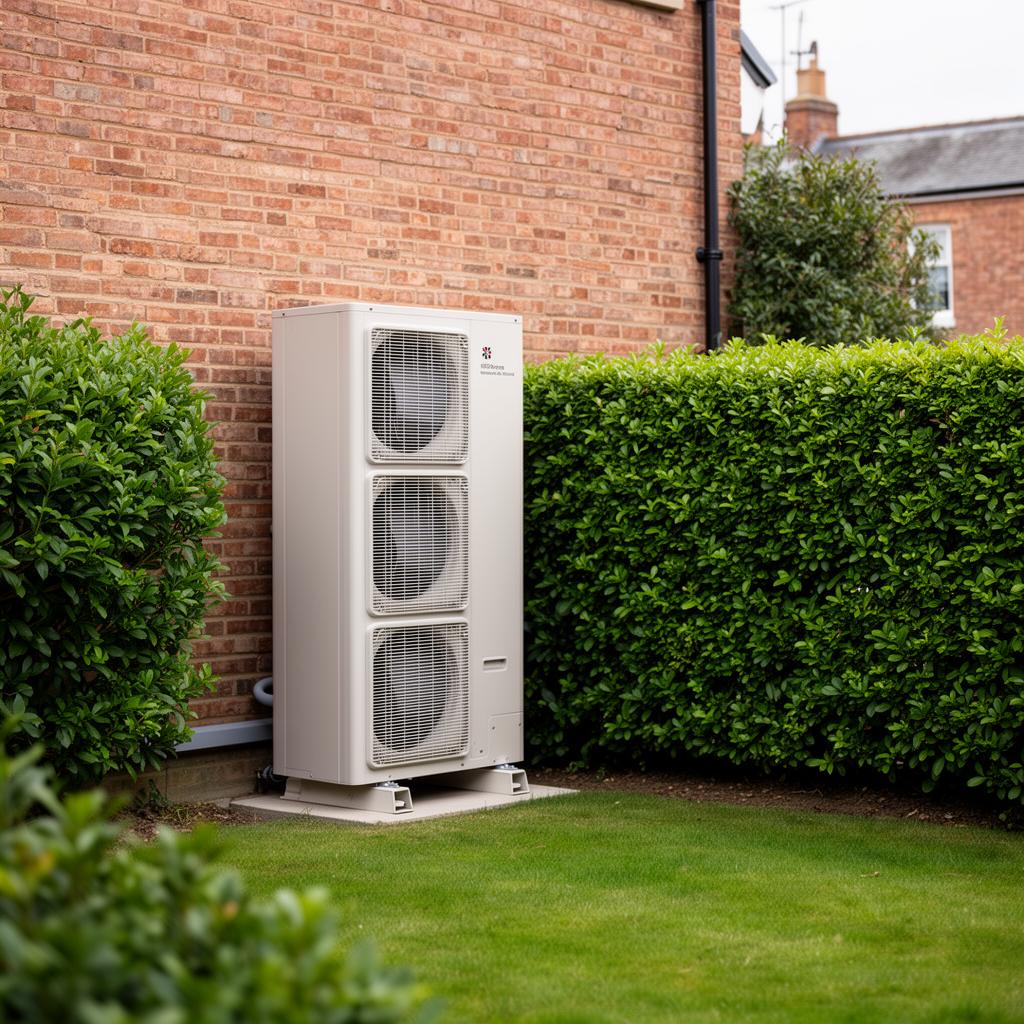
A heat pump detached house UK installation represents the ideal match of technology and property type. Detached houses offer the space, boundary clearance, and garden access that make heat pump installation straightforward, and the 2025 permitted development rule changes have made it even easier. With the ability to install up to two air source heat pumps under permitted development and the removal of minimum boundary distances, detached house owners now have more flexibility than any other property type.
Are Heat Pumps Suitable for Detached Houses?
Yes, detached houses are the ideal property type for air source heat pumps. They have ample outdoor space for the unit, no shared walls creating noise concerns with neighbours, and typically enough garden area to meet the one-metre boundary clearance required by planning rules. Most heat pump installations in the UK are on detached or semi-detached properties for these reasons.
The main consideration for detached homes is higher heat demand due to four exposed walls, which means a larger heat pump may be needed. A typical 4-bedroom detached house requires a 10 to 16 kW heat pump, costing £9,000 to £14,000 before the £7,500 BUS grant. Good insulation is essential — a detached house with an EPC rating of D or better will run a heat pump efficiently, while poorly insulated properties may need fabric upgrades first to avoid excessive running costs.
However, detached houses also tend to have higher heat demand due to four exposed external walls, which means correct sizing and insulation are particularly important. This guide covers everything detached homeowners need to know about heat pump installation, from sizing and placement to costs and the specific advantages of your property type.
Why Detached Houses Are Ideal for Heat Pumps
Detached houses have several inherent advantages for heat pump installation:
- Outdoor unit placement – Multiple options for positioning the heat pump, including side passages, rear walls, or garden locations. No shared walls means fewer constraints on where the unit can go
- Boundary distance – Since the 2025 rule change, detached houses have no minimum boundary distance requirement under permitted development, provided the MCS 020 noise standard is met. This opens up positions that would be impossible for semi-detached properties
- Two-unit permitted development – Detached houses can now install two ASHPs under permitted development, ideal for larger properties that need more than 16 kW of capacity
- Less noise concern – Greater distance between your unit and neighbours’ windows makes meeting the 42 dB noise limit straightforward
- Garden space – Room for ground source heat pump boreholes or horizontal loops if preferred over air source
- Garage or plant room – Many detached houses have a garage or utility area perfect for the indoor components (cylinder, buffer tank, controls)
These advantages make the installation process smoother, provide more design flexibility, and often result in better system performance because the installer can choose the optimal placement without compromise.
Heat Pump Sizing for Detached Houses
Detached houses typically need a larger heat pump than equivalent-sized semi-detached or terraced properties because they have four external walls rather than two or three. A room-by-room heat loss calculation is essential, but here are the typical ranges:
| Property Size | Floor Area | Typical Heat Loss (well insulated) | Typical Heat Loss (average insulation) | Heat Pump Size Needed |
|---|---|---|---|---|
| 3-bed detached | 100-140 m2 | 5-7 kW | 7-10 kW | 6-10 kW |
| 4-bed detached | 140-200 m2 | 7-10 kW | 10-14 kW | 8-14 kW |
| 5-bed detached | 200-300 m2 | 10-15 kW | 14-22 kW | 12-22 kW |
| Large period property | 300+ m2 | 15-25 kW | 22-40 kW | 16-40 kW (may need two units) |
The difference between well-insulated and averagely insulated is stark. A 4-bed detached house with filled cavity walls and 300mm loft insulation might need an 8 kW heat pump, while the same house with unfilled cavities and minimal loft insulation could need 14 kW. Investing in insulation before installation can literally halve the heat pump size required, saving £2,000-£5,000 on the heat pump and reducing running costs for the life of the system.
Placement and Positioning Best Practice
The placement of the outdoor unit affects both performance and noise. For detached houses, the following guidelines ensure optimal results:
Ideal locations:
- Side of the house – Keeps the unit out of sight from the front while maintaining easy access for servicing. The side passage of a detached house is often the perfect location
- Rear wall – Good for noise management (sound directed away from the street) and usually close to the kitchen or utility room for short pipework runs
- Garden on a dedicated base – If wall-mounting is not suitable, a ground-level base in the garden provides maximum airflow. Keep at least 300mm clearance around the unit and 1 metre in front of the fan discharge
Positions to avoid:
- Front of the house – Not permitted under permitted development if it faces a highway
- Enclosed spaces – The unit needs free airflow; enclosed areas cause recirculation and reduced performance
- Directly below bedroom windows – While noise levels are low, the persistent hum can be noticeable at night if the unit is directly beneath a sleeping area
- Low-lying areas prone to flooding – The unit should be raised on a base if the area is susceptible to standing water
For larger detached properties needing two units, stagger the placement to avoid acoustic interaction. Two units placed side by side can create a combined noise level 3 dB higher than a single unit, which may affect compliance with the MCS 020 noise standard at the nearest boundary.
Cost Breakdown for Detached House Heat Pump Installation
Detached house installations tend to be slightly more expensive than semi-detached or terraced properties due to higher heat demand and longer pipework runs:
| Cost Element | 3-Bed Detached | 4-Bed Detached | 5-Bed+ Detached |
|---|---|---|---|
| Heat pump unit | £5,000-£8,000 | £7,000-£10,000 | £9,000-£15,000 |
| Installation labour | £2,000-£3,500 | £2,500-£4,000 | £3,000-£5,000 |
| Hot water cylinder | £500-£1,200 | £800-£1,500 | £1,000-£2,000 |
| Radiator upgrades | £0-£2,500 | £0-£3,500 | £0-£5,000 |
| Pipework and fittings | £500-£1,500 | £800-£2,000 | £1,000-£3,000 |
| Controls and thermostat | £200-£500 | £300-£600 | £400-£800 |
| Electrical work | £300-£800 | £400-£1,000 | £500-£1,500 |
| Gross total | £8,500-£18,000 | £11,800-£22,600 | £14,900-£32,300 |
| BUS grant | -£7,500 | -£7,500 | -£7,500 |
| Net total | £1,000-£10,500 | £4,300-£15,100 | £7,400-£24,800 |
The £7,500 BUS grant (or £9,000 for oil/LPG-heated homes) makes a significant dent in the total cost. For a well-insulated 3-bed detached house with a straightforward installation, the net cost after grant can be as low as £1,000-£4,000.
Ground Source Heat Pumps: A Strong Option for Detached Properties
Detached houses with sufficient garden space are also well-suited to ground source heat pumps, which extract heat from the ground rather than the air. Ground source systems offer higher efficiency (SCOP 3.5-4.5) because ground temperatures remain stable at 8-12 degrees C year-round, avoiding the efficiency drop that air source units experience in cold weather.
Two types of ground collector are available:
- Horizontal ground loop – Requires a garden of at least 200-400 m2 for trenches at 1.2 metres depth. Installation costs £15,000-£25,000 after the £7,500 BUS grant
- Vertical borehole – Requires one or more boreholes drilled to 80-150 metres. Needs minimal surface area but costs £20,000-£35,000 after the grant
Ground source systems are more expensive to install but cheaper to run, with typical annual savings of £100-£300 compared to an equivalent air source system. The payback on the additional cost depends on electricity prices and the SCOP achieved, but is typically 10-15 years.
For most detached homeowners, an air source heat pump offers the best balance of cost and performance. Ground source becomes more attractive for larger properties with high heat demand and available garden space. Pairing either option with solar panels maximises the financial return.
Running Costs for a Detached House Heat Pump
Annual running costs for a detached house heat pump vary by property size and insulation quality:
- 3-bed detached (well insulated) – £750-£1,000 per year at standard electricity rates
- 4-bed detached (well insulated) – £1,000-£1,400 per year
- 5-bed detached (well insulated) – £1,300-£1,800 per year
On a heat pump-specific tariff like Octopus Cosy, these figures drop by approximately 25-35%. Combined with solar panels, further reductions of £300-£600 are achievable.
Ready to explore heat pump options for your detached property? Get a free quote from MCS-certified installers who will carry out a proper heat loss assessment and recommend the right system for your home.
Frequently Asked Questions
Can I install two heat pumps on my detached house?
Yes. Since 2025, detached houses can install up to two air source heat pumps under permitted development rights, without needing planning permission. This is particularly useful for larger properties needing more than 16 kW of heating capacity. Both units must meet the MCS 020 noise standard, and their combined noise at the nearest neighbouring window must not exceed 42 dB(A).
How close to my boundary can I put a heat pump on a detached house?
Following the 2025 rule change, there is no minimum boundary distance for heat pump installations on detached houses under permitted development. The only requirement is that the MCS 020 noise standard of 42 dB(A) is met at the nearest neighbouring window. In practice, most installations are placed 0.5-2 metres from the boundary for practical access and airflow reasons.
Do detached houses need bigger radiators for a heat pump?
Not necessarily. Whether existing radiators need upgrading depends on the flow temperature the heat pump operates at and the original sizing of the radiators. Many detached houses have generously sized radiators that can work at heat pump flow temperatures of 40-45 degrees C. Your installer’s heat loss calculation will identify which rooms, if any, need larger radiators. Typically, 30-60% of radiators can be retained in a well-insulated property.
Is a detached house more expensive to heat with a heat pump than a semi?
Yes, because detached houses have four exposed walls compared to two or three for a semi. This means higher heat loss and higher electricity consumption. A typical 3-bed detached house costs approximately £150-£350 more per year to heat with a heat pump than an equivalent 3-bed semi. However, the savings compared to gas are still significant, and insulation improvements can narrow the gap substantially.
Can I put a heat pump in my garage?
The outdoor unit must be positioned outside with unrestricted airflow and cannot be installed inside a garage. However, the indoor components such as the hot water cylinder, buffer tank, and controls can be installed in a garage, which is often an ideal location in a detached property. The pipework runs from the outdoor unit through the garage wall to the indoor components, then out to the radiator circuit.
See what these numbers mean for your home
Free instant estimate — costs, savings, payback and grants for your region.

Related Articles
Heat Pump Installation Costs in 2026: The Real Numbers
Heat pumps are now the default replacement for gas boilers in UK government policy, but the question most homeowners ask first is always the same: how much does it actually…
28 May 2026
Infrared Panels vs Heat Pumps: Which Heating System Is Right for Your Home?
Comparing infrared panels vs heat pumps across cost, efficiency, running expenses, and grant eligibility. This guide helps UK homeowners choose the right low-carbon heating system for their property.
8 May 2026
Renewable Heating vs Gas Boiler: An Honest Cost and Comfort Comparison
An honest comparison of heat pumps, biomass and solar thermal against gas boilers on cost, comfort, maintenance, grants and carbon savings for UK homes.
8 May 2026