R32 vs R290 Refrigerant: Which Heat Pump Should You Choose?
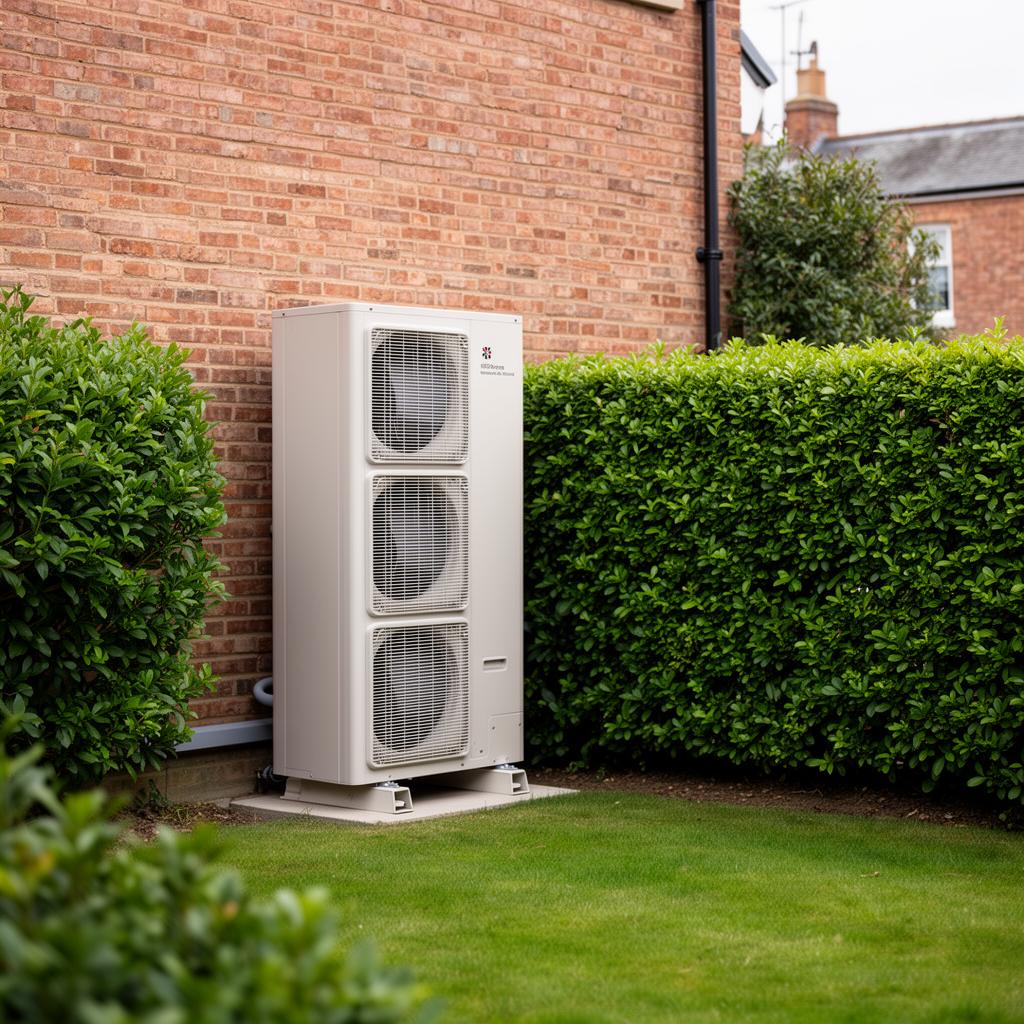
The choice between R32 vs R290 heat pump refrigerants is becoming one of the most important technical decisions in the UK heat pump market. As the industry phases out R410A (the previous standard refrigerant), manufacturers have split into two camps: those using R32 and those moving to R290 (propane). The difference matters because it affects your heat pump’s environmental impact, efficiency in cold weather, safety classification, and potentially its long-term regulatory status.
R32 vs R290 Refrigerant in Heat Pumps
| R32 | R290 (Propane) | |
|---|---|---|
| GWP (Global Warming Potential) | 675 | 3 (ultra-low) |
| Flammability | Mildly flammable (A2L) | Highly flammable (A3) |
| Efficiency | High | Slightly higher than R32 |
| Placement restrictions | Few — can be wall-mounted | Must be 1m+ from openings; outdoor unit only |
| EU F-Gas compliance (2027+) | At risk of phase-down | Fully compliant long-term |
| Common brands | Daikin, Mitsubishi, Samsung | Vaillant, NIBE, Bosch, Grant |
R290 (propane) is increasingly seen as the future-proof choice for UK heat pumps because its ultra-low GWP of 3 makes it immune to the EU F-Gas phase-down regulations that are tightening R32 availability from 2027 onwards. R32 remains an excellent refrigerant with strong efficiency, but rising costs and supply constraints are likely as quotas reduce. If you are installing a heat pump in 2026, an R290 model provides the best long-term confidence, provided your site allows the required safety clearances around the outdoor unit.
This guide explains the technical differences in plain English, compares the two refrigerants across every factor that matters to homeowners, and identifies which UK heat pump brands use each type.
Why Refrigerant Choice Matters for Heat Pumps
The refrigerant is the working fluid that circulates through your heat pump, absorbing heat from outside and releasing it inside your home. Different refrigerants have different thermodynamic properties, which directly affect how efficiently the system operates, particularly in cold weather when you need it most.
Refrigerants also have an environmental impact if they leak. This is measured by Global Warming Potential (GWP), a scale where CO2 has a GWP of 1. The higher the GWP, the more damaging a leak is to the climate. The EU F-Gas Regulation is progressively restricting high-GWP refrigerants, which is driving the shift from R410A to lower-GWP alternatives.
For heat pump buyers, the refrigerant choice affects efficiency, environmental credentials, safety considerations, and long-term serviceability. Understanding the trade-offs helps you make an informed decision.
R32 vs R290: Technical Comparison
| Property | R32 (Difluoromethane) | R290 (Propane) | R410A (for reference) |
|---|---|---|---|
| Global Warming Potential (GWP) | 675 | 3 | 2,088 |
| Safety classification | A2L (mildly flammable) | A3 (flammable) | A1 (non-flammable) |
| Ozone Depletion Potential | 0 | 0 | 0 |
| Typical charge weight | 1.5-3.5 kg | 0.5-1.5 kg | 2.0-4.0 kg |
| Efficiency at -7 degrees C | Good | Very good | Good |
| Maximum flow temperature | 60-65 degrees C | 70-75 degrees C | 55-60 degrees C |
| Regulatory future | Uncertain (F-Gas phase-down) | Secure (natural refrigerant) | Being phased out |
R32 Refrigerant: The Current Market Leader
R32 is currently the most widely used refrigerant in UK domestic heat pumps. It replaced R410A as the industry standard because it has a 68% lower GWP (675 vs 2,088) while offering similar thermodynamic performance and being compatible with existing manufacturing processes.
Advantages of R32:
- Proven technology – Widely used globally with millions of installations and extensive real-world performance data
- Broad manufacturer support – Available from Daikin, Mitsubishi, Samsung, LG, and Panasonic
- Lower charge weight – Requires approximately 30% less refrigerant by weight than R410A for the same capacity
- Good efficiency – Delivers strong COPs across the UK temperature range
- Established service network – Most F-Gas engineers are trained and equipped for R32
- Competitive pricing – Mature supply chains keep costs lower than newer alternatives
Disadvantages of R32:
- GWP of 675 – While much lower than R410A, this is still high compared to natural refrigerants. A typical heat pump charge of 2.5 kg R32 has an equivalent CO2 impact of 1,688 kg if fully released
- F-Gas Regulation uncertainty – The ongoing phase-down of HFC refrigerants may restrict R32 availability or increase costs in the future. The EU has signalled a potential ban on certain HFC applications by 2030
- Mildly flammable – Classified as A2L (lower flammability), requiring specific safety measures for indoor units and enclosed spaces
R290 Refrigerant: The Natural Alternative
R290, also known as propane, is a natural refrigerant that is gaining rapid market share in the European and UK heat pump markets. Its GWP of just 3 makes it virtually climate-neutral if released, which is driving significant industry investment in R290 heat pump development.
Advantages of R290:
- Ultra-low GWP of 3 – Essentially zero climate impact from refrigerant leakage. A full charge release has the equivalent CO2 impact of approximately 4.5 kg, compared to 1,688 kg for R32
- Excellent cold-weather performance – R290 maintains higher efficiency at low ambient temperatures, achieving COPs of 2.5-3.0 at -10 degrees C
- Higher flow temperatures – Can reach 70-75 degrees C, making it suitable for older radiator systems without upgrades
- Very low charge weight – Typically only 0.5-1.5 kg per unit, reducing both cost and environmental impact
- Regulatory certainty – As a natural refrigerant, R290 faces no risk of future F-Gas restrictions. It is considered the long-term solution by the European Commission
- Excellent efficiency – Thermodynamic properties are well-suited to the heat pump cycle, with some models achieving SCOPs of 3.8-4.2
Disadvantages of R290:
- Flammable (A3 classification) – Propane is flammable, requiring specific safety measures. The outdoor unit must meet minimum clearance distances from ignition sources and building openings. Indoor refrigerant-containing components are sealed units with leak detection
- Newer technology in heat pumps – While propane has been used in refrigeration for decades, its application in domestic heat pumps is more recent. The service network is still developing
- Installation restrictions – Some additional installation requirements around ventilation and clearance for the outdoor unit
- Limited but growing model range – Fewer models currently available than R32, though this is changing rapidly
UK Heat Pump Brands: Which Refrigerant Do They Use?
| Brand | Model Range | Refrigerant |
|---|---|---|
| Vaillant | aroTHERM plus | R290 |
| Grant | Aerona3 R290 | R290 |
| Samsung | EHS Mono HT Quiet | R290 |
| Daikin | Altherma 3 H HT | R32 |
| Mitsubishi | Ecodan R32 | R32 |
| Panasonic | Aquarea J Generation | R290 |
| NIBE | S Series | R290 |
| Bosch | Compress 5800i AW | R290 |
| LG | Therma V R32 | R32 |
| Viessmann | Vitocal 250-A | R290 |
The market is clearly shifting towards R290, with Vaillant, Grant, Samsung, Panasonic, NIBE, Bosch, and Viessmann all offering propane models. Daikin and Mitsubishi, two of the largest manufacturers, currently favour R32 for most of their domestic range, though both have R290 models in development.
The R410A Phase-Out: Why This Matters Now
R410A, the previous standard heat pump refrigerant with a GWP of 2,088, is being progressively phased out under the EU and UK F-Gas Regulations. The phase-down quota system is reducing the total volume of high-GWP HFCs available on the market, driving up R410A prices and making R410A heat pumps increasingly difficult and expensive to service.
If you currently have an R410A heat pump, this does not mean you need to replace it immediately. The system will continue to work, and R410A will remain available for servicing existing systems for many years. However, service costs may increase as the refrigerant becomes scarcer. When the time comes to replace your system, the choice will be between R32 and R290.
For new installations, we strongly recommend choosing either R32 or R290 rather than any remaining R410A models. The long-term serviceability and environmental credentials of the newer refrigerants make them the only sensible choice for a system that will operate for 20-25 years.
Which Refrigerant Should You Choose?
For most UK homeowners installing a new heat pump in 2026, R290 is the recommended choice where available. Its ultra-low GWP, excellent efficiency, higher flow temperatures, and regulatory certainty make it the future-proof option. The Vaillant aroTHERM plus (R290) and Samsung EHS Mono R290 are among the best-performing heat pumps in the UK market.
R32 remains a perfectly good choice, particularly if you prefer a specific brand or model that only comes in R32. Daikin’s Altherma 3 and Mitsubishi’s Ecodan are excellent heat pumps regardless of refrigerant type. The GWP of 675, while higher than R290, is still dramatically lower than R410A and manageable over the system’s lifetime.
The key factors to weigh are:
- If environmental impact is your priority, choose R290
- If you need proven, widely-serviced technology and have a preferred R32 brand, choose R32
- If you have older radiators and need higher flow temperatures, R290 has an advantage
- If you want the broadest installer and service network, R32 currently has the edge
Whichever refrigerant you choose, the most important factor is a correct installation by an MCS-certified engineer. A well-installed R32 system will outperform a poorly installed R290 system every time. Pair it with good insulation and the right controls, and either option will serve you well. Get a free quote to compare systems for your property.
Frequently Asked Questions
Is R290 (propane) safe in a home heat pump?
Yes. While propane is flammable, the charge weight in a domestic heat pump is very small (typically 0.5-1.5 kg), and the refrigerant is contained in a sealed outdoor unit. The outdoor location means any leak disperses harmlessly into the atmosphere. R290 heat pumps meet rigorous safety standards (EN 378 and IEC 60335-2-40) and have been installed safely in millions of refrigeration appliances for decades. The safety risk is considered negligible by industry regulators.
Will R32 be banned in the UK?
There is no confirmed ban on R32 in the UK, but the F-Gas Regulation is progressively reducing the total volume of HFC refrigerants available. The EU has signalled potential restrictions on certain HFC applications by 2030. In the UK, post-Brexit regulations may follow a similar trajectory. R32 is expected to remain available for servicing existing systems for many years, but new installations may face restrictions in the medium term.
Does the refrigerant affect heat pump efficiency?
Yes. R290 generally achieves slightly higher efficiency than R32, particularly at low ambient temperatures. In real-world UK conditions, the difference is typically 5-10% in favour of R290 during the coldest months. However, the installation quality, control strategy, and system design have a much larger impact on efficiency than the refrigerant choice alone.
Can I retrofit my R410A heat pump to use R32 or R290?
No. You cannot switch refrigerants in an existing heat pump. The system is designed for a specific refrigerant, and the compressor, heat exchangers, and expansion device are all optimised for that refrigerant’s properties. When your R410A system reaches end of life, you will replace the entire outdoor unit with a new R32 or R290 model.
Does the refrigerant choice affect the BUS grant?
No. The £7,500 BUS grant is available for all MCS-certified air source heat pump installations regardless of refrigerant type. Both R32 and R290 systems qualify equally. The grant is based on the technology (heat pump vs boiler) rather than the specific refrigerant used.
See what these numbers mean for your home
Free instant estimate — costs, savings, payback and grants for your region.

Related Articles

Heat Pump Installation Costs in 2026: The Real Numbers
Heat pumps are now the default replacement for gas boilers in UK government policy, but the question most homeowners ask first is always the same: how much does it actually…
28 May 2026
Infrared Panels vs Heat Pumps: Which Heating System Is Right for Your Home?
Comparing infrared panels vs heat pumps across cost, efficiency, running expenses, and grant eligibility. This guide helps UK homeowners choose the right low-carbon heating system for their property.
8 May 2026
Renewable Heating vs Gas Boiler: An Honest Cost and Comfort Comparison
An honest comparison of heat pumps, biomass and solar thermal against gas boilers on cost, comfort, maintenance, grants and carbon savings for UK homes.
8 May 2026