How Much Electricity Does a Heat Pump Use Per Year? Real UK Data
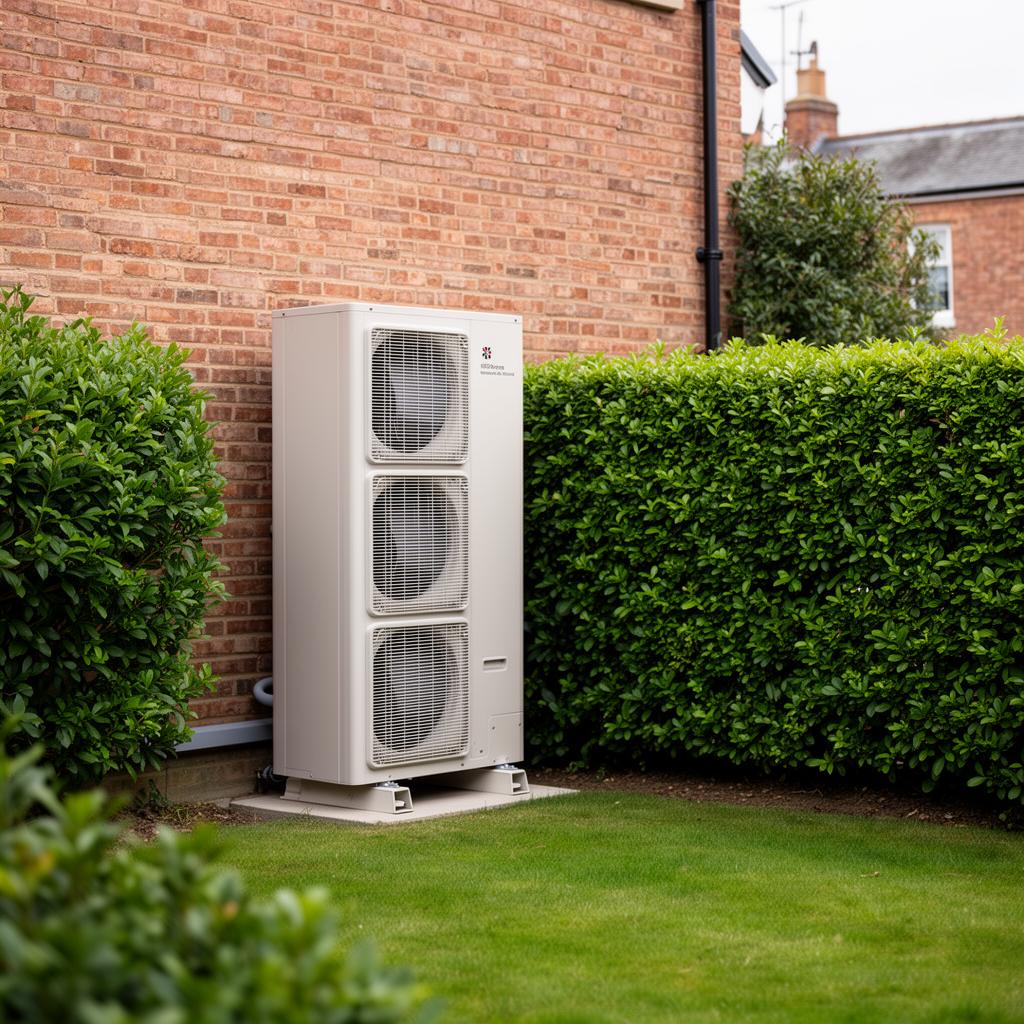
One of the most common questions from homeowners considering a heat pump is how much electricity it will actually consume. Real-world UK data shows that heat pump electricity consumption UK homes experience typically falls between 3,000 and 7,000 kWh per year, with a daily average of 6-10 kWh across the heating season. These figures come from monitored installations across thousands of UK properties, including data from the Electrification of Heat Demonstration Project and Octopus Energy’s customer base.
How Much Electricity Does a Heat Pump Use Per Year?
A typical air source heat pump uses 3,000 to 5,000 kWh of electricity per year to heat a UK home, costing £735 to £1,225 at the standard 2026 electricity rate of 24.5p per kWh. This is based on a 3-bedroom semi-detached house with 12,000 to 15,000 kWh of annual heat demand and a real-world seasonal COP of 3.0 to 3.5.
Actual electricity consumption varies significantly depending on your home’s insulation, heat pump efficiency, thermostat settings and local climate. Well-insulated homes with underfloor heating can achieve a COP of 4.0 or higher, reducing consumption to 2,500–3,500 kWh. Poorly insulated properties running radiators at higher flow temperatures may use 5,000–7,000 kWh. Switching to a heat pump tariff such as Octopus Cosy (12–15p per kWh off-peak) can cut annual heating costs to £450–£700.
However, your actual consumption will vary significantly based on your property size, insulation quality, heat pump efficiency, and how you control the system. This guide breaks down the real numbers and explains what drives the differences.
Average Heat Pump Electricity Consumption by Property Type
The following figures are based on monitored UK heat pump installations and represent typical annual electricity consumption for heating and hot water:
| Property Type | Annual Heat Demand (kWh) | Heat Pump Electricity Use (kWh) | Annual Cost (at 24.5p/kWh) |
|---|---|---|---|
| 1-2 bed flat | 5,000-7,000 | 1,500-2,300 | £370-£565 |
| 2-bed terraced | 7,000-10,000 | 2,200-3,300 | £540-£810 |
| 3-bed semi-detached | 10,000-14,000 | 3,000-4,700 | £735-£1,150 |
| 3-bed detached | 12,000-17,000 | 3,600-5,700 | £880-£1,400 |
| 4-bed detached | 15,000-22,000 | 4,500-7,300 | £1,100-£1,790 |
| 5-bed+ period property | 20,000-35,000 | 6,000-11,700 | £1,470-£2,870 |
These ranges assume a Seasonal Coefficient of Performance (SCOP) of 3.0-3.5, which is typical for a well-installed air source heat pump in UK conditions. A higher SCOP means lower electricity consumption for the same heat output.
Daily Heat Pump Electricity Usage Through the Seasons
Heat pump electricity consumption varies dramatically across the year, with winter usage often five to eight times higher than summer:
| Month | Typical Daily Use (3-bed semi) | Main Driver |
|---|---|---|
| January | 18-25 kWh | Peak heating demand |
| February | 16-22 kWh | Cold weather continuing |
| March | 12-18 kWh | Transitional, milder days |
| April | 8-12 kWh | Reduced heating, hot water dominant |
| May | 4-7 kWh | Mostly hot water only |
| June-August | 3-5 kWh | Hot water only |
| September | 5-8 kWh | Heating starts intermittently |
| October | 10-15 kWh | Heating demand increasing |
| November | 14-20 kWh | Full heating season |
| December | 17-24 kWh | Near-peak demand |
During summer months, your heat pump consumes electricity primarily for hot water production, typically 3-5 kWh per day. This is significantly less than an immersion heater would use for the same hot water (approximately 6-10 kWh per day) because the heat pump’s efficiency multiplier still applies to hot water production.
What Affects Heat Pump Electricity Consumption?
Six key factors determine how much electricity your heat pump will consume:
1. Insulation quality
This is the single biggest factor. A well-insulated home (EPC rating B or above) might have an annual heat demand of 8,000 kWh, while the same size property with poor insulation could need 18,000 kWh. That difference directly translates to electricity consumption. Investing in insulation before or alongside heat pump installation is the most effective way to reduce ongoing electricity costs.
2. Property size and type
Larger properties with more external walls lose more heat. A detached house has four exposed walls, while a mid-terrace has only two, resulting in approximately 30-40% lower heat loss for the same floor area.
3. Heat pump SCOP
The Seasonal Coefficient of Performance measures the heat pump’s average efficiency across the entire heating season. Real-world UK SCOPs typically range from 2.5 to 4.0:
- SCOP 2.5 – Poor installation or inappropriate controls. Needs investigation
- SCOP 3.0 – Average performance. Acceptable but room for improvement
- SCOP 3.5 – Good performance. Well-installed system with weather compensation
- SCOP 4.0+ – Excellent. Optimised system with low flow temperatures and underfloor heating
The difference between an SCOP of 2.5 and 3.5 for a 12,000 kWh heat demand property is 1,370 kWh of additional electricity consumption per year, costing an extra £335.
4. Flow temperature
Heat pump efficiency drops as the flow temperature increases. Running at 35 degrees C (ideal for underfloor heating) achieves significantly higher COP than running at 55 degrees C (sometimes needed for older radiators). Every degree reduction in flow temperature improves efficiency by approximately 2-3%.
5. Control strategy
How you control the system makes a substantial difference. Weather compensation controls that adjust flow temperature automatically based on outside conditions improve SCOP by 0.3-0.8 compared to simple on-off thermostats. Smart controls like Homely or Passiv can further optimise performance.
6. Electricity tariff
While the tariff does not change how much electricity the heat pump uses, it dramatically affects the cost. On the standard flat rate of 24.5p per kWh, 4,000 kWh costs £980. On the Octopus Cosy heat pump tariff with off-peak scheduling, the effective blended rate drops to around 15-18p per kWh, reducing the cost to £600-£720.
Real Customer Data: Octopus Energy Heat Pump Users
Octopus Energy, the UK’s largest heat pump tariff provider, has published data from thousands of heat pump customers showing that 80% of their heat pump customers pay less for heating than the average gas bill. The median annual heating cost for Octopus heat pump customers on the Cosy tariff is approximately £600-£750, compared to an average gas heating bill of £850-£1,050.
These figures include all property types and reflect real-world performance including user behaviour, imperfect insulation, and varying climatic conditions. They demonstrate that when a heat pump is paired with the right electricity tariff, it is consistently cheaper than gas for the majority of UK homes.
The top-performing 25% of Octopus heat pump customers achieve annual heating costs below £500, typically by combining their heat pump with solar panels, battery storage, and smart scheduling that maximises off-peak electricity use.
How to Reduce Your Heat Pump’s Electricity Consumption
If your heat pump is consuming more electricity than expected, or you want to optimise before installation, these steps make the biggest difference:
- Improve insulation – Loft, cavity wall, and floor insulation reduce heat demand by 20-40%. This is the single most impactful action
- Reduce flow temperature – Work with your installer to reduce the flow temperature as low as your radiators can handle. Even a 5 degree reduction saves 10-15%
- Use weather compensation – Ensure the weather compensation curve is correctly set and allow it to run continuously rather than using setback periods
- Switch to a heat pump tariff – Time-of-use tariffs can reduce costs by 25-40% without changing consumption
- Upgrade radiators – Larger radiators or adding underfloor heating allows lower flow temperatures
- Upgrade windows – Double or triple glazing reduces heat loss through windows by up to 70%
- Smart thermostat – A heat pump-optimised thermostat can improve SCOP by 0.3-0.8
The combination of proper insulation, low flow temperatures, and weather compensation can reduce your heat pump’s electricity consumption by 30-50% compared to a poorly optimised installation. That translates to savings of £300-£700 per year for a typical home.
To find out what your heat pump would cost to run based on your specific property, request a free quote and our installers will provide an accurate consumption estimate as part of the survey.
Frequently Asked Questions
How much electricity does a heat pump use per day in winter?
In the coldest months (December to February), a typical air source heat pump in a 3-bed semi-detached house uses 16-25 kWh per day. On the coldest days, this can peak at 30-35 kWh. In milder winter weather (5-10 degrees C outside), daily consumption drops to 10-15 kWh. These figures include hot water production.
Will a heat pump double my electricity bill?
Your electricity consumption will increase, typically by 3,000-5,000 kWh per year for a 3-bed house. However, this must be set against the elimination of your gas bill, which is typically 12,000-15,000 kWh per year. Most homeowners see their combined energy bill (electricity plus gas) reduce by £200-£600 per year after switching, depending on the electricity tariff chosen.
Does a heat pump use electricity when it is not heating?
Yes, but very little. The heat pump’s standby consumption is typically 10-50 watts, similar to a TV on standby. The circulation pump and controller also draw small amounts of power. In summer, the main consumption is for hot water production, averaging 3-5 kWh per day. You cannot and should not switch a heat pump off at the mains, as it needs to run periodic defrost and anti-legionella cycles.
How does heat pump electricity use compare to a gas boiler?
A gas boiler consumes 12,000-18,000 kWh of gas per year for a typical 3-bed home. A heat pump delivering the same heat output consumes 3,000-5,000 kWh of electricity. While electricity costs more per unit than gas (24.5p vs 6.76p), the heat pump’s 3x efficiency means the total cost is comparable or lower. On a heat pump-specific tariff, the heat pump is consistently cheaper than gas.
Can solar panels cover all my heat pump’s electricity needs?
Solar panels can offset a significant portion but will not cover all consumption, primarily due to seasonal mismatch. A 4kW solar array generates approximately 3,400-4,000 kWh per year, but most of this is in summer when heating demand is minimal. Realistically, solar panels can directly offset 30-50% of annual heat pump consumption, with the remainder coming from the grid. Adding battery storage increases this to 50-70%.
See what these numbers mean for your home
Free instant estimate — costs, savings, payback and grants for your region.

Related Articles
Heat Pump Installation Costs in 2026: The Real Numbers
Heat pumps are now the default replacement for gas boilers in UK government policy, but the question most homeowners ask first is always the same: how much does it actually…
28 May 2026
Infrared Panels vs Heat Pumps: Which Heating System Is Right for Your Home?
Comparing infrared panels vs heat pumps across cost, efficiency, running expenses, and grant eligibility. This guide helps UK homeowners choose the right low-carbon heating system for their property.
8 May 2026
Renewable Heating vs Gas Boiler: An Honest Cost and Comfort Comparison
An honest comparison of heat pumps, biomass and solar thermal against gas boilers on cost, comfort, maintenance, grants and carbon savings for UK homes.
8 May 2026