Heat Pump Planning Permission: When You Need It and When You Don’t
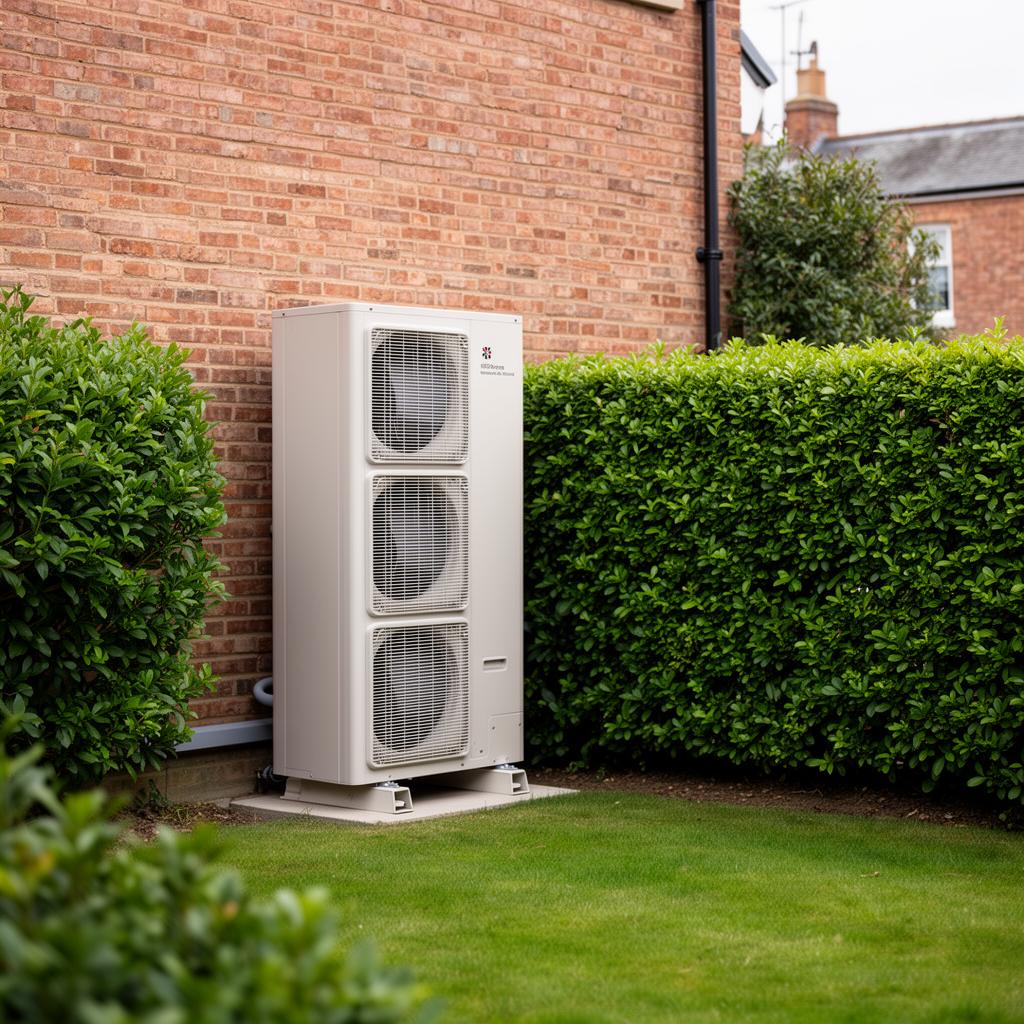
Understanding heat pump planning permission UK rules is essential before committing to an installation. The good news is that most domestic air source heat pump installations fall under permitted development rights, meaning you do not need to apply for planning permission. However, there are important exceptions for conservation areas, listed buildings, flats, and properties subject to Article 4 directions. Getting this wrong can result in enforcement action and the requirement to remove an installed system at your expense.
Do You Need Planning Permission for a Heat Pump?
Most air source heat pumps in England, Scotland and Wales do not require planning permission because they fall under permitted development rights. However, you will need to apply for planning permission if your property is a listed building, located in a conservation area or World Heritage Site, or if the heat pump exceeds 0.6 cubic metres in volume or breaches the one-metre boundary rule.
Ground source heat pumps also benefit from permitted development in most cases, provided no borehole exceeds 200 metres in depth. It is always worth confirming with your local planning authority before installation, as some councils apply additional restrictions. Properties that have already used their permitted development allowance for other extensions may also need a formal application.
This guide covers the full planning framework for heat pump installations in England, including the 2025 boundary rule relaxations, MCS 020 noise standards, and what to do if your property falls outside permitted development.
Permitted Development Rights for Heat Pumps
Under the Town and Country Planning (General Permitted Development) (England) Order, air source heat pumps are classified as permitted development for residential properties, subject to certain conditions. This means that in most cases, you can install a heat pump without applying for planning permission, provided you meet all of the following requirements:
- The installation complies with the MCS 020 planning standard for noise
- The heat pump is installed on a detached house, semi-detached house, terraced house, or bungalow (not a flat or maisonette)
- Only one air source heat pump is installed per property (relaxed for detached houses from 2025; see below)
- The unit is not installed on a wall or roof that fronts a highway
- The unit is at least one metre from the property boundary (with exceptions for detached houses since 2025)
- The volume of the outdoor unit does not exceed 0.6 cubic metres
- The property is not a listed building or within a conservation area (additional rules apply)
If your installation meets all these conditions, you can proceed without a planning application. Your MCS-certified installer should confirm permitted development compliance as part of their survey and will note this on the MCS certificate.
The 2025 Boundary Rule Relaxation for Detached Houses
In 2025, the government introduced significant relaxations to the permitted development rules specifically for detached houses. These changes were designed to make heat pump installation easier for the property type that is most suitable for the technology:
- Two ASHPs now permitted – Detached houses can install up to two air source heat pumps under permitted development, up from the previous limit of one. This accommodates larger properties that may benefit from a two-unit system
- Reduced boundary distance – The minimum distance from the property boundary has been reduced from one metre to no minimum for detached houses, provided the MCS 020 noise standard is met at the nearest neighbouring property. This dramatically increases the placement options for properties with limited side access
- Rear placement flexibility – Units can now be placed on rear walls or in rear gardens with greater flexibility on positioning
These relaxations do not apply to semi-detached or terraced houses, which retain the one-metre boundary rule and single-unit limit. The rationale is that detached houses have more space between neighbours, reducing noise concerns.
MCS 020 Noise Standard Explained
The MCS 020 planning standard is a critical part of the permitted development framework. It sets noise limits that the heat pump must meet at the nearest neighbouring property’s boundary or window. Your installer must carry out a noise assessment as part of the system design.
The key requirements are:
- The noise level at the nearest neighbouring window must not exceed 42 dB(A) during normal operation
- The assessment must account for the specific heat pump model’s sound power level, the distance to the neighbour, and any screening or barriers
- Low-frequency noise characteristics must be considered, as heat pumps can produce a persistent low hum that is more noticeable than the overall decibel level suggests
Modern heat pumps from manufacturers like Vaillant, Daikin, and Samsung typically produce 40-52 dB(A) at 1 metre from the unit. At a distance of 3-5 metres (typical boundary distance), this drops to approximately 30-38 dB(A), well within the 42 dB limit for most installations.
If the noise assessment shows the limit would be exceeded, several mitigation options exist:
- Repositioning the unit further from the boundary
- Installing an acoustic enclosure or barrier (adds £300-£800)
- Choosing a quieter heat pump model
- Angling the unit so the fan discharge faces away from the neighbour
Conservation Areas and Heat Pump Planning Permission
Properties in conservation areas face additional restrictions. The key difference is that a heat pump in a conservation area must not be visible from the highway. This means:
- The unit cannot be installed on a front-facing wall or in a front garden
- The unit cannot be installed on a side wall if it is visible from the road
- Rear installations that are not visible from any highway are generally permitted
If the only viable position for the heat pump is visible from the highway, you will need to apply for full planning permission. This process typically takes 8-12 weeks and costs £206 for a householder application in England. Success depends on your local authority’s policies, but many councils are increasingly supportive of renewable energy installations, even in conservation areas.
Screening the unit with fencing or planting can sometimes bring an installation within permitted development, but the screening must not impede airflow to the heat pump, so solid enclosures are not suitable. Louvred fencing or hedge planting at a distance of at least 0.5 metres from the unit is the typical approach.
Listed Buildings: Planning Permission Required
If your property is a listed building (Grade I, Grade II* or Grade II), you will always need listed building consent before installing a heat pump. This applies to both the outdoor unit and any internal alterations required for pipework, cylinders, or electrical supply.
Listed building consent is separate from planning permission and is assessed on the impact to the building’s historic character and significance. Key considerations include:
- The visual impact of the outdoor unit on the building’s setting
- Any fixings to the historic fabric of the building
- Internal alterations such as pipework routes and cylinder placement
- Vibration transmission from the outdoor unit to the building structure
Ground source heat pumps sometimes receive more favourable treatment for listed buildings because they have no visible outdoor unit. The ground loop or borehole is entirely below ground, and the indoor unit is similar in size to a conventional boiler. However, listed building consent is still required for the indoor components and any ground disturbance.
If you own a listed property, speak to your local conservation officer early in the process. Many are supportive of sensitively designed renewable energy installations and can advise on likely acceptable approaches. Improving insulation in listed buildings requires similar sensitivity but can dramatically reduce the heat pump size needed.
Article 4 Directions and Other Restrictions
Some properties are subject to Article 4 directions, which remove specific permitted development rights in a defined area. Article 4 directions are used by local authorities to control development in sensitive areas beyond standard conservation area rules.
If your property is subject to an Article 4 direction that covers the installation of equipment on external walls or in gardens, you will need planning permission for a heat pump regardless of whether it would otherwise qualify as permitted development. Check with your local planning authority if you are unsure whether an Article 4 direction applies to your property.
Other scenarios that require planning permission include:
- Flats and maisonettes – Permitted development rights for heat pumps do not extend to flats. You will need both planning permission and the consent of your freeholder or management company
- New build properties – Some new builds have conditions on their planning permission that restrict external alterations
- National Parks, AONBs, and World Heritage Sites – Additional restrictions may apply, similar to conservation areas
Ground Source Heat Pumps: Different Planning Rules
Ground source heat pumps have their own set of permitted development conditions, which are generally less restrictive because the main installation is underground:
- The installation must be on land within the boundary of the property
- The ground works must not be on designated land (e.g., scheduled monuments) without consent
- Any above-ground equipment must meet the same visual and noise standards as air source units
- The borehole or trench must not interfere with underground services or drainage
In practice, ground source heat pumps rarely face planning issues for the installation itself. The main consideration is the disruption during ground works, particularly for horizontal loop systems that require significant trenching.
If you are unsure about the planning position for your property, request a free quote and our MCS-certified installers will assess the planning requirements during the property survey.
Frequently Asked Questions
Do I need planning permission for a heat pump in the UK?
Most domestic air source heat pump installations in England do not require planning permission, as they fall under permitted development rights. However, you will need planning permission if your property is a listed building, if the unit would be visible from the highway in a conservation area, if you live in a flat, or if your property is subject to an Article 4 direction that covers external equipment.
How close to the boundary can I install a heat pump?
For semi-detached and terraced houses, the minimum distance from the property boundary is one metre under permitted development. For detached houses, following the 2025 rule change, there is no minimum boundary distance provided the MCS 020 noise standard of 42 dB(A) is met at the nearest neighbouring window. Your installer will carry out a noise assessment to confirm compliance.
Can I install a heat pump on the front of my house?
Under permitted development, a heat pump cannot be installed on a wall or roof that fronts a highway. This effectively prevents front-of-house installations in most cases. If the front of your house does not face a highway (for example, if the property is set back on a private road), the restriction may not apply, but this should be confirmed with your local planning authority.
What happens if I install a heat pump without planning permission when I need it?
If you install a heat pump that requires planning permission without obtaining it, the local authority can issue an enforcement notice requiring you to remove the unit at your own expense. There is no time limit for enforcement action against installations that require listed building consent. For other planning breaches, the usual enforcement period is 4 years from the date of installation.
Do the same planning rules apply in Scotland, Wales, and Northern Ireland?
No. Permitted development rights for heat pumps vary between the four UK nations. Scotland has its own permitted development framework that is broadly similar to England but with some differences in noise standards and boundary distances. Wales and Northern Ireland have their own separate rules. This guide covers England only; homeowners in other parts of the UK should check with their local planning authority for the applicable rules.
See what these numbers mean for your home
Free instant estimate — costs, savings, payback and grants for your region.

Related Articles
Heat Pump Installation Costs in 2026: The Real Numbers
Heat pumps are now the default replacement for gas boilers in UK government policy, but the question most homeowners ask first is always the same: how much does it actually…
28 May 2026
Infrared Panels vs Heat Pumps: Which Heating System Is Right for Your Home?
Comparing infrared panels vs heat pumps across cost, efficiency, running expenses, and grant eligibility. This guide helps UK homeowners choose the right low-carbon heating system for their property.
8 May 2026
Renewable Heating vs Gas Boiler: An Honest Cost and Comfort Comparison
An honest comparison of heat pumps, biomass and solar thermal against gas boilers on cost, comfort, maintenance, grants and carbon savings for UK homes.
8 May 2026