Heat Pumps for Semi-Detached Houses: Sizing, Placement and Costs
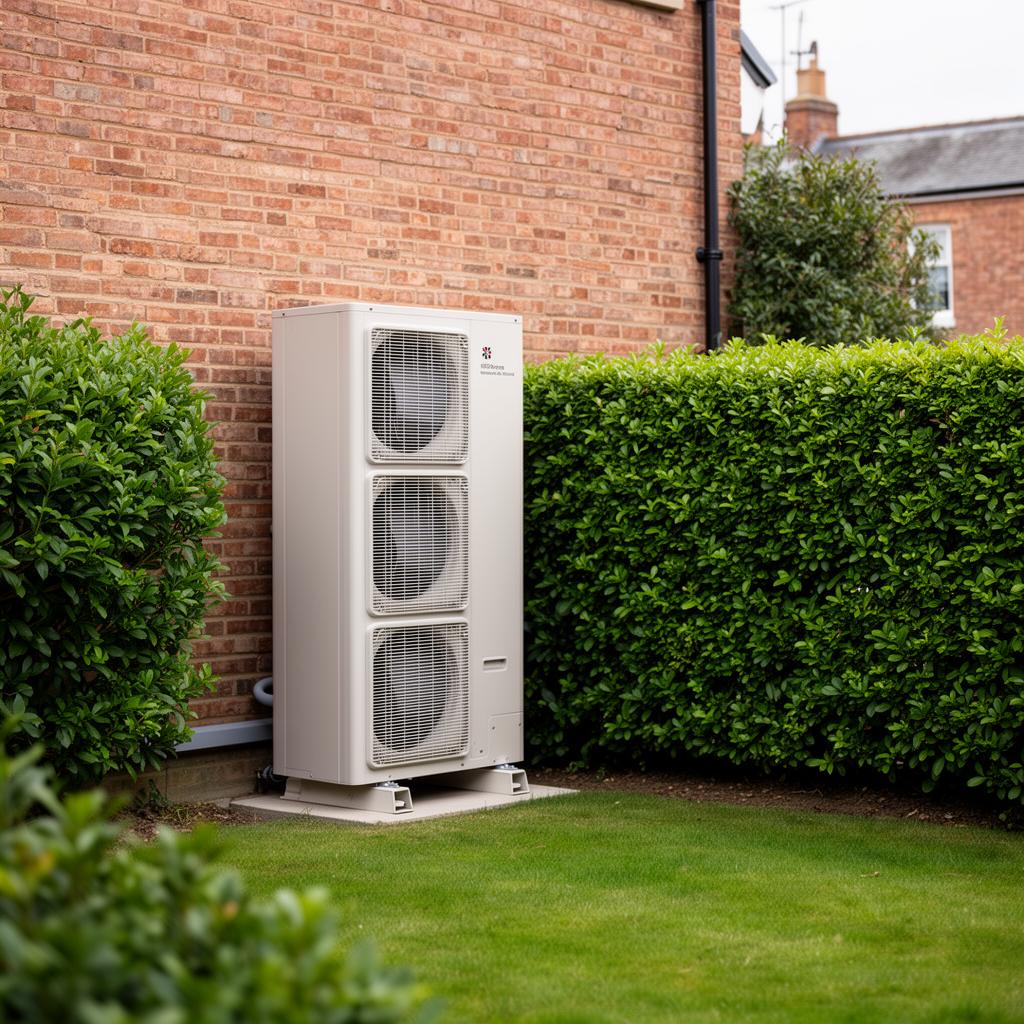
Semi-detached houses are the most common property type in the UK, with approximately 8.2 million semis across England alone. If you own one and are considering a heat pump semi detached house installation, you are in good company. The semi-detached layout presents specific opportunities and challenges for heat pump installation that differ from detached homes and terraces. This guide covers sizing, noise considerations with neighbours, placement options, and realistic costs for UK semi-detached properties.
Can You Install a Heat Pump in a Semi-Detached House?
Yes, semi-detached houses are excellent candidates for heat pump installation. A typical three-bedroom semi needs a 7–10 kW air source heat pump, which costs £10,000–£14,000 before the £7,500 BUS grant. The outdoor unit requires a space of roughly 1m x 1m with at least 300mm clearance around it, and must be positioned at least one metre from the neighbouring property boundary to meet permitted development noise rules.
The main considerations for semi-detached homes are noise, placement and insulation. The outdoor unit should be sited away from your neighbour’s bedroom windows — front or rear gardens usually work best. Cavity wall insulation is essential for good performance, and most post-1930s semis already have cavities that can be filled for £500–£1,000 under ECO4 funding. With adequate insulation, a semi-detached house can achieve a COP of 3.5 or higher.
Heat Pump Sizing for Semi-Detached Houses
Getting the heat pump size right is the single most important factor for performance and running costs. An oversized unit short-cycles (turning on and off frequently), reducing efficiency and increasing wear. An undersized unit struggles to heat the home adequately in cold weather.
For a typical 3-bedroom semi-detached house in the UK, heat pump sizing generally falls between 6kW and 9kW. The exact requirement depends on:
- Insulation levels: A well-insulated semi (cavity wall insulation, 270mm loft insulation, double glazing) may need only 5-6kW. A poorly insulated semi with solid walls and single glazing could need 10-12kW.
- Floor area: Most 3-bed semis range from 75-110 square metres. Larger 4-bed semis may be 110-140 square metres.
- Number of external walls: A semi shares one party wall, reducing heat loss compared to a detached house by approximately 15-25%.
- Window area and orientation: South-facing semis with moderate glazing have lower heat demand than north-facing properties with large windows.
A proper room-by-room heat loss calculation is essential and should be carried out by your installer before specifying the heat pump. This calculation accounts for your specific insulation levels, window sizes, ceiling heights, ventilation rates, and local climate data. Never accept an installation quote based on a rough estimate or a simple floor area multiplier.
| Semi-Detached Type | Typical Heat Loss | Recommended HP Size |
|---|---|---|
| 2-bed, well insulated | 4-5kW | 5kW |
| 3-bed, well insulated | 5-7kW | 6-7kW |
| 3-bed, average insulation | 7-9kW | 8-9kW |
| 3-bed, poor insulation | 9-12kW | 10-12kW |
| 4-bed, well insulated | 7-9kW | 8-9kW |
| 4-bed, average insulation | 9-12kW | 10-12kW |
Boundary Noise Considerations With Your Neighbour
The shared boundary with your attached neighbour is the defining challenge of heat pump semi detached house installations. Under permitted development rules, the heat pump must not exceed 42dB at the nearest neighbour’s habitable room. For a semi-detached house, this boundary is literally the party wall, and any habitable rooms on the other side must be considered.
However, the outdoor unit is always positioned on the external side of your property, not against the party wall. The key measurement point is the nearest habitable room window of your attached neighbour, which is typically on their ground floor or first floor facing your side of the property.
Practical strategies for managing noise in semi-detached installations:
Position away from the shared boundary: Place the unit on the opposite side of the property from the party wall, against your detached side wall or in the rear garden. This maximises distance from your neighbour’s windows.
Choose a quiet model: The Samsung EHS Gen 7 at 35dB in quiet mode and the Mitsubishi Ecodan Ultra Quiet at 45dB are the best choices for semi-detached properties. At 3 metres distance, the Samsung drops to approximately 23dB, well within the 42dB limit even for close-boundary installations.
Use the rear garden: A ground-level installation in the rear garden, at least 2-3 metres from the shared boundary fence, provides good noise separation. Sound dissipates rapidly in open air, losing approximately 6dB for every doubling of distance.
Consider acoustic barriers: A solid fence or purpose-built acoustic enclosure between the unit and the boundary can reduce noise by 5-10dB. Ensure any barrier maintains adequate airflow clearance of at least 300mm around the unit.
Permitted Development Rules for Semi-Detached Houses
Semi-detached houses benefit from the same permitted development rights as detached houses for heat pump installations. You can install an air source heat pump without planning permission if:
- The unit does not exceed 0.6 cubic metres in volume
- No part of the unit is within 1 metre of the property boundary
- The unit is not on a wall or roof fronting a highway
- Noise does not exceed 42dB at the nearest neighbour’s habitable room
- Only one air source heat pump is installed on the property
- The installation complies with MCS planning standards
The 1-metre boundary rule is particularly relevant for semi-detached houses. The unit must be at least 1 metre from any property boundary, including the boundary with your attached neighbour. For many semis with narrow side passages, this effectively pushes the unit into the rear garden.
If your semi is in a conservation area, additional restrictions apply regarding visibility from the highway. Rear garden installations are typically compliant, but side-wall installations may require planning permission if visible from the street.
Best Placement Options for Semi-Detached Properties
The optimal position for a heat pump on a semi-detached house balances noise, efficiency, aesthetics, and practical access. The three most common positions are:
1. Rear garden (recommended): A concrete pad in the rear garden, positioned 1-2 metres from the rear wall and at least 1 metre from all boundaries. This keeps the unit hidden from the street, provides good airflow, and maximises distance from neighbours. Refrigerant or water pipes run through the rear wall into the kitchen or utility room.
2. Side passage (if wide enough): If the side passage on the detached side of your semi is at least 1.5 metres wide, the unit can be positioned here. The advantage is easy access for maintenance and a direct pipe run to the indoor components. The disadvantage is potential noise reflection between the two walls of the passage, which can amplify sound by 3-6dB.
3. Rear wall mounted: Wall-mounting the unit on the rear wall is an option for semis with very small gardens. This keeps the garden space clear and provides a clean installation. The wall must be structurally sound and able to support 60-120kg depending on the unit. Anti-vibration mounts are essential to prevent noise transmitting through the building structure.
Installed Costs for Semi-Detached Houses After Grants
The typical installed cost of a heat pump system for a 3-bedroom semi-detached house ranges from £9,000 to £13,000, depending on the brand, capacity, and whether radiator upgrades are needed. After the £7,500 BUS grant, the net cost is approximately £1,500-£5,500.
| Cost Component | Typical Range |
|---|---|
| Heat pump unit (6-9kW) | £3,000-£6,000 |
| Hot water cylinder | £1,200-£2,500 |
| Installation labour | £2,500-£4,500 |
| Radiator upgrades (2-4 radiators) | £500-£1,500 |
| Electrical supply upgrade | £0-£500 |
| BUS grant deduction | -£7,500 |
| Typical net cost | £1,500-£5,500 |
Running costs for a 3-bed semi with a heat pump depend on the SCOP achieved. At an SCOP of 3.5 and electricity at 24.5p/kWh, annual heating and hot water costs are approximately £700-£950. This compares to approximately £800-£1,100 for a gas boiler at current prices.
Adding solar panels to the south-facing roof of a semi can offset 30-50% of the heat pump’s electricity consumption, reducing annual costs to £400-£650. Get a free quote for your semi-detached property to see exact figures based on your home’s specifications.
Insulation Upgrades to Maximise Heat Pump Performance
Many UK semi-detached houses were built between the 1930s and 1970s with cavity walls that may not be insulated. Upgrading insulation before installing a heat pump reduces heat demand, allowing a smaller, cheaper, and more efficient system.
The most impactful upgrades for a semi-detached house are:
- Cavity wall insulation: Reduces heat loss through walls by approximately 35%, costing £500-£1,500 and often available free under the ECO4 scheme
- Loft insulation to 270mm: Reduces heat loss through the roof by up to 25%, costing £300-£600
- Double glazing: Replacing single-glazed windows with double glazing reduces heat loss through windows by approximately 50%
- Draught-proofing: Sealing gaps around doors, windows, and service penetrations costs £100-£300 and can reduce heat loss by 5-10%
A well-insulated 3-bed semi typically needs a 5-7kW heat pump, while a poorly insulated one may need 10-12kW. The cost saving from a smaller heat pump (approximately £1,000-£3,000) often exceeds the cost of the insulation upgrades, making the investment doubly worthwhile.
Frequently Asked Questions
Will a heat pump be noisy enough to disturb my attached neighbour?
With the right model and positioning, no. The Samsung EHS Gen 7 at 35dB quiet mode is quieter than a refrigerator and will not be audible inside a neighbouring property. Even the louder models, when positioned in the rear garden at least 2 metres from the boundary, will meet the 42dB permitted development limit. An acoustic assessment can confirm compliance before installation.
What size heat pump do I need for a 3-bed semi?
Most 3-bedroom semi-detached houses need between 6kW and 9kW. A well-insulated semi with cavity wall insulation, 270mm loft insulation, and double glazing typically needs 6-7kW. A semi with poor insulation may need 9-12kW. A room-by-room heat loss calculation is essential for accurate sizing.
Do I need to tell my neighbour I am installing a heat pump?
There is no legal requirement to notify your neighbour if the installation meets permitted development conditions. However, it is good practice to inform them as a courtesy, particularly about the expected noise levels and the positioning of the unit. This helps maintain good relations and avoids potential complaints later.
Can I install two heat pumps on a semi-detached house?
Permitted development allows only one air source heat pump per property. A second unit would require planning permission. However, a single correctly sized unit should meet the heating needs of any semi-detached house. If the heat demand exceeds the capacity of available single units, a ground source system or a larger air source unit with planning permission may be necessary.
How much will I save on energy bills with a heat pump in my semi?
For a 3-bed semi, annual heating savings compared to a gas boiler are currently modest at £100-£300 per year. The savings increase significantly with solar panels (additional £200-£400 saving) and are projected to grow as gas prices rise relative to electricity over the coming decade. Over the 20-year lifespan of the heat pump, total savings of £5,000-£12,000 are realistic.
See what these numbers mean for your home
Free instant estimate — costs, savings, payback and grants for your region.

Related Articles
Heat Pump Installation Costs in 2026: The Real Numbers
Heat pumps are now the default replacement for gas boilers in UK government policy, but the question most homeowners ask first is always the same: how much does it actually…
28 May 2026
Infrared Panels vs Heat Pumps: Which Heating System Is Right for Your Home?
Comparing infrared panels vs heat pumps across cost, efficiency, running expenses, and grant eligibility. This guide helps UK homeowners choose the right low-carbon heating system for their property.
8 May 2026
Renewable Heating vs Gas Boiler: An Honest Cost and Comfort Comparison
An honest comparison of heat pumps, biomass and solar thermal against gas boilers on cost, comfort, maintenance, grants and carbon savings for UK homes.
8 May 2026