Heat Pumps for New Builds and Self Builds: Future Homes Standard Guide
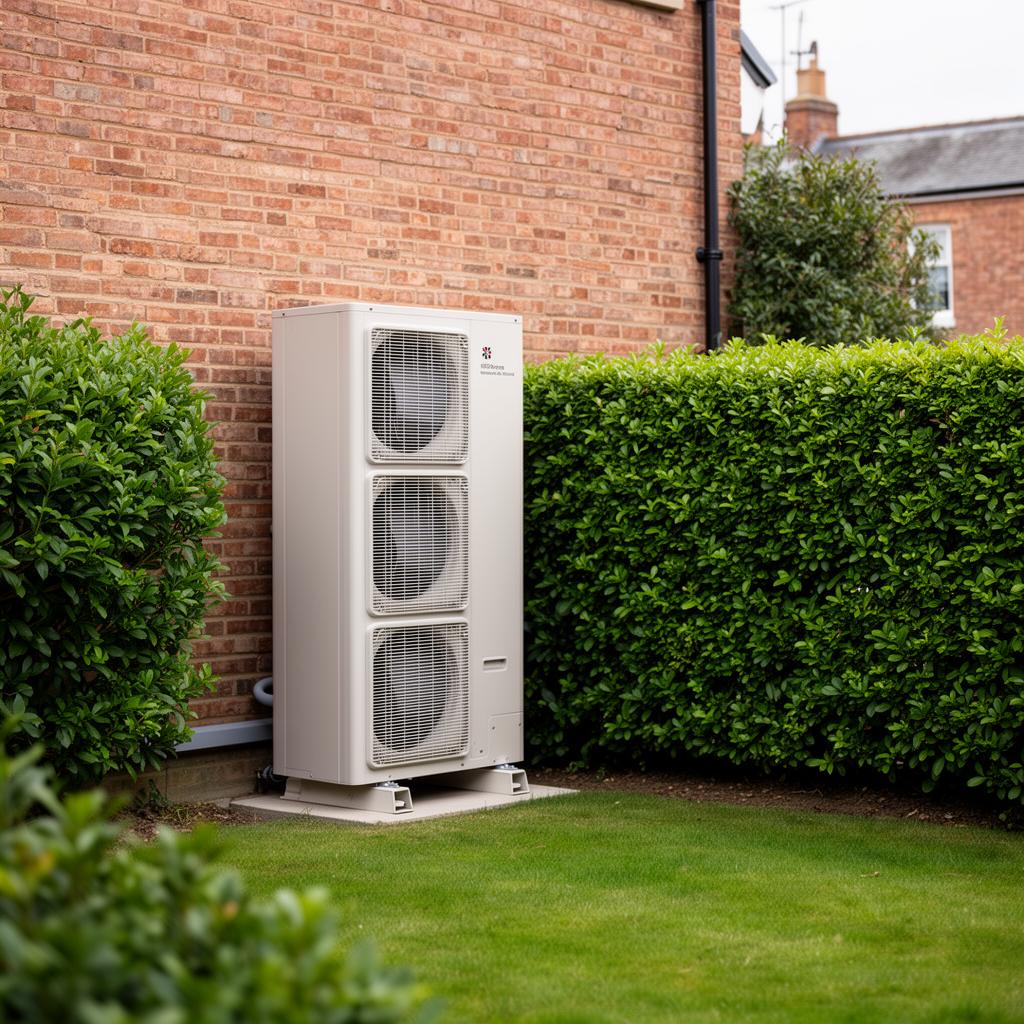
The heat pump new build UK market is about to change dramatically. The Future Homes Standard, taking effect from March 2027, will require all new homes to produce 75-80% less carbon emissions than current building regulations allow. In practice, this makes heat pumps the only realistic heating option for new build and self-build properties. If you are planning a new home or are a developer preparing for the regulatory shift, this guide covers everything you need to know.
Do New Builds Need Heat Pumps Under the Future Homes Standard?
Yes, from 2025 the Future Homes Standard requires all new-build homes in England to produce 75–80% fewer carbon emissions than current Building Regulations allow, effectively mandating heat pumps or equivalent low-carbon heating in every new property. Gas boilers are no longer permitted in new builds. Developers must also install higher levels of insulation, triple glazing and mechanical ventilation to ensure heat pumps operate at maximum efficiency.
For self-builders, this means designing your home around the heat pump from the outset. New builds benefit from lower heat loss by design, so a smaller 4–6 kW heat pump is usually sufficient, costing £6,000–£10,000 installed. Underfloor heating is the ideal emitter system for new builds, running at just 30–35°C and delivering COP values of 4.0 or higher. Budget for a well-insulated hot water cylinder of 200–250 litres as standard.
What Is the Future Homes Standard?
The Future Homes Standard is a set of building regulations that will apply to all new dwellings in England from March 2027. It sets maximum carbon emission rates and fabric energy efficiency targets that effectively eliminate gas boilers from new homes.
The standard requires new homes to achieve a 75-80% reduction in carbon emissions compared to Part L 2013 levels. The only heating systems that can realistically meet this target are:
- Air source heat pumps (the most common choice for volume housebuilders)
- Ground source heat pumps (higher efficiency but higher cost)
- Heat networks supplied by low-carbon sources (for higher-density developments)
- Direct electric heating combined with very high insulation levels (niche applications only)
Gas boilers, even high-efficiency condensing models, cannot meet the carbon emission targets. Hydrogen-ready boilers are not accepted as compliant because the hydrogen grid does not yet exist and there is no confirmed timeline for its delivery to residential properties.
SAP Notional Specifications for New Build Heat Pumps
The Standard Assessment Procedure (SAP) is the methodology used to calculate a new home’s energy performance rating. Under the Future Homes Standard, the notional dwelling specification assumes a heat pump as the primary heating system. This means the baseline against which your design is assessed already includes a heat pump.
Key SAP assumptions for the notional dwelling include:
- Air source heat pump with a seasonal COP of 2.8 or higher
- Low-temperature heating system (underfloor heating or appropriately sized radiators)
- Hot water cylinder with heat pump-compatible coil
- Wastewater heat recovery system
- Enhanced fabric specification (walls at 0.18 W/m2K, floors at 0.13 W/m2K, roofs at 0.11 W/m2K)
- Triple glazing or high-performance double glazing (1.2 W/m2K or better)
- Air permeability of 5 m3/h/m2 at 50 Pa or better
These fabric specifications are significantly more demanding than the current Part L 2021 requirements, meaning new builds designed for the Future Homes Standard will have much lower heat demand. This works in the heat pump’s favour, as lower heat demand means smaller, cheaper, and more efficient heat pump systems.
Why Heat Pumps Are the Only Realistic Option for New Builds
While the Future Homes Standard does not explicitly mandate heat pumps, the carbon emission targets make them the only practical choice for the vast majority of new homes. The mathematics are straightforward:
A gas boiler produces approximately 215g CO2 per kWh of heat delivered. A heat pump using grid electricity at the current carbon intensity of approximately 136g CO2 per kWh and achieving an SCOP of 3.0 produces approximately 45g CO2 per kWh of heat. This represents a 79% reduction in carbon emissions, which meets the Future Homes Standard target.
As the electricity grid continues to decarbonise (the government targets 95% clean electricity by 2030), heat pump carbon emissions will fall further, while gas boiler emissions remain fixed. By the early 2030s, heat pumps will produce approximately 85-90% less carbon than gas boilers per unit of heat delivered.
For new build heat pump systems, the combination of a well-insulated building envelope and low-temperature heating system means the heat pump operates at optimal efficiency. New builds typically achieve SCOP figures of 3.5-4.5, significantly better than retrofit installations in older properties.
Heat Pump System Design for New Builds
Designing a heat pump system from scratch in a new build offers significant advantages over retrofitting. The heating system can be optimised from the outset without the compromises that come with adapting an existing property.
Underfloor heating is the ideal heat distribution system for new builds with heat pumps. It operates at flow temperatures of 30-40C, where heat pumps are most efficient, and provides even heat distribution across the floor area. The cost premium over radiators in a new build is modest at approximately £2,000-£5,000 for a typical home.
Heat pump sizing in new builds is typically smaller than in retrofits because the enhanced fabric specification reduces heat demand. A 3-bedroom new build to Future Homes Standard may need only 4-6kW of heat pump capacity, compared to 8-12kW for the same size property built to older standards. Smaller heat pumps cost less, use less electricity, and operate more quietly.
Hot water provision requires a heat pump-compatible cylinder, typically 170-250 litres depending on the number of occupants. The cylinder must have a larger coil surface area than standard cylinders to work efficiently with the lower flow temperatures from a heat pump. Many new build specifications include an immersion heater backup for legionella pasteurisation cycles.
Ventilation integration is another new build advantage. Mechanical ventilation with heat recovery (MVHR) systems, which are common in Future Homes Standard properties, can be coordinated with the heat pump to optimise air quality and energy efficiency simultaneously.
Can Self-Builders Claim the BUS Grant?
Yes, self-builders can claim the £7,500 Boiler Upgrade Scheme (BUS) grant for a heat pump installation, but only if specific conditions are met. The key requirement is that the grant is for replacing an existing fossil fuel heating system, not for new installations in properties that have never had a heating system.
For self-builders, this creates a distinction:
Conversion projects (converting a barn, chapel, or commercial building into a dwelling) typically qualify for the BUS grant because the existing building often has or had a fossil fuel heating system that is being replaced.
New builds on greenfield sites do not qualify for the BUS grant because there is no existing heating system to replace. However, the lower heat demand of a well-insulated new build means the heat pump system is typically smaller and cheaper than a retrofit, partially offsetting the absence of the grant.
Demolish and rebuild projects may qualify if the previous dwelling had a fossil fuel system, though eligibility depends on the specific circumstances and should be confirmed with Ofgem before proceeding.
Self-builders should also consider the VAT reclaim scheme, which allows recovery of VAT on building materials and some services for new build projects. This effectively reduces the heat pump cost by 20%, which is more valuable than the BUS grant for higher-cost installations.
Costs of Heat Pump Systems in New Builds
Heat pump costs in new builds are typically lower than in retrofits because the installation is simpler, no existing system needs to be removed, and the building fabric is designed to work with a heat pump from the outset.
| Component | New Build Cost | Retrofit Cost (comparison) |
|---|---|---|
| Heat pump unit (4-8kW) | £3,000-£5,500 | £4,000-£7,000 |
| Hot water cylinder | £1,200-£2,000 | £1,500-£2,500 |
| Underfloor heating | £2,000-£5,000 | £4,000-£10,000 |
| Installation and commissioning | £1,500-£3,000 | £2,500-£5,000 |
| Total system cost | £7,700-£15,500 | £12,000-£24,500 |
Compared to a gas boiler system (approximately £3,000-£6,000 for a new build), the heat pump adds approximately £4,700-£9,500 to the build cost. This premium is recovered through lower running costs over 8-15 years, after which the heat pump delivers ongoing savings for the remainder of its 20+ year lifespan.
Pairing the heat pump with solar panels during construction is highly cost-effective, as the panels can be integrated into the roof design and the wiring installed before plastering. A 4kW solar array costing approximately £5,000-£7,000 in a new build can offset 40-60% of the heat pump’s electricity consumption.
Preparing for the Future Homes Standard: Timeline
If you are currently planning a new build or self-build, the key dates are:
- Now to March 2027: Current Part L 2021 applies. Heat pumps are encouraged but not required. Gas boilers are still permitted but must meet current efficiency standards.
- March 2027: Future Homes Standard takes effect for all new building regulations applications submitted from this date.
- Transitional arrangements: Projects with full planning permission and building regulations approval before March 2027 may be able to complete under current standards, but the transitional period is expected to be limited to 12-18 months.
For developers and self-builders submitting planning applications in 2026, designing for the Future Homes Standard now avoids the risk of regulatory changes during the construction period. Many local planning authorities are already encouraging or requiring heat pump specifications in new developments ahead of the formal deadline.
To discuss heat pump options for your new build or self-build project, request a free consultation with an MCS-certified installer experienced in new construction.
Frequently Asked Questions
Will gas boilers be banned in new builds from 2027?
Not explicitly banned, but the Future Homes Standard carbon emission targets make gas boilers unable to comply. The effect is the same: new homes from March 2027 will need heat pumps or equivalent low-carbon heating. Gas connections for cooking may still be permitted, but the heating system must be electric or low-carbon.
Which heat pump brand is best for new builds?
For new builds with underfloor heating and good insulation, the Samsung EHS Gen 7 offers excellent value with its low price, R290 refrigerant, and quiet operation. The Vaillant Arotherm Plus and Grant Aerona 290 are premium alternatives with slightly higher efficiency. The Mitsubishi Ecodan is popular with volume housebuilders due to its proven reliability and large installer network.
Do I need radiators or underfloor heating with a heat pump in a new build?
Underfloor heating is strongly recommended for new builds because it operates at the low flow temperatures (30-40C) where heat pumps are most efficient. If radiators are preferred, they should be sized for 45C flow temperature rather than the traditional 70C to ensure good heat pump performance. High-quality insulation reduces the required radiator output regardless of the heat emitter type.
Can I install solar panels alongside my heat pump in a new build?
Yes, and this is highly recommended. Solar panels installed during construction are cheaper than retrofit installations and can be integrated into the roof design. The SAP calculation gives credit for solar generation, helping to meet the Future Homes Standard carbon targets. A 4kW system can offset approximately £300-£500 of annual heat pump running costs.
What happens if I start building before 2027 but finish after?
Transitional arrangements will apply. Projects with building regulations approval before March 2027 are expected to have a 12-18 month window to complete under current Part L 2021 standards. After this transitional period, the Future Homes Standard will apply to all properties regardless of when the planning application was submitted.
See what these numbers mean for your home
Free instant estimate — costs, savings, payback and grants for your region.

Related Articles
Heat Pump Installation Costs in 2026: The Real Numbers
Heat pumps are now the default replacement for gas boilers in UK government policy, but the question most homeowners ask first is always the same: how much does it actually…
28 May 2026
Infrared Panels vs Heat Pumps: Which Heating System Is Right for Your Home?
Comparing infrared panels vs heat pumps across cost, efficiency, running expenses, and grant eligibility. This guide helps UK homeowners choose the right low-carbon heating system for their property.
8 May 2026
Renewable Heating vs Gas Boiler: An Honest Cost and Comfort Comparison
An honest comparison of heat pumps, biomass and solar thermal against gas boilers on cost, comfort, maintenance, grants and carbon savings for UK homes.
8 May 2026