Heat Pumps for Listed Buildings: Planning Consent and Installation Guide
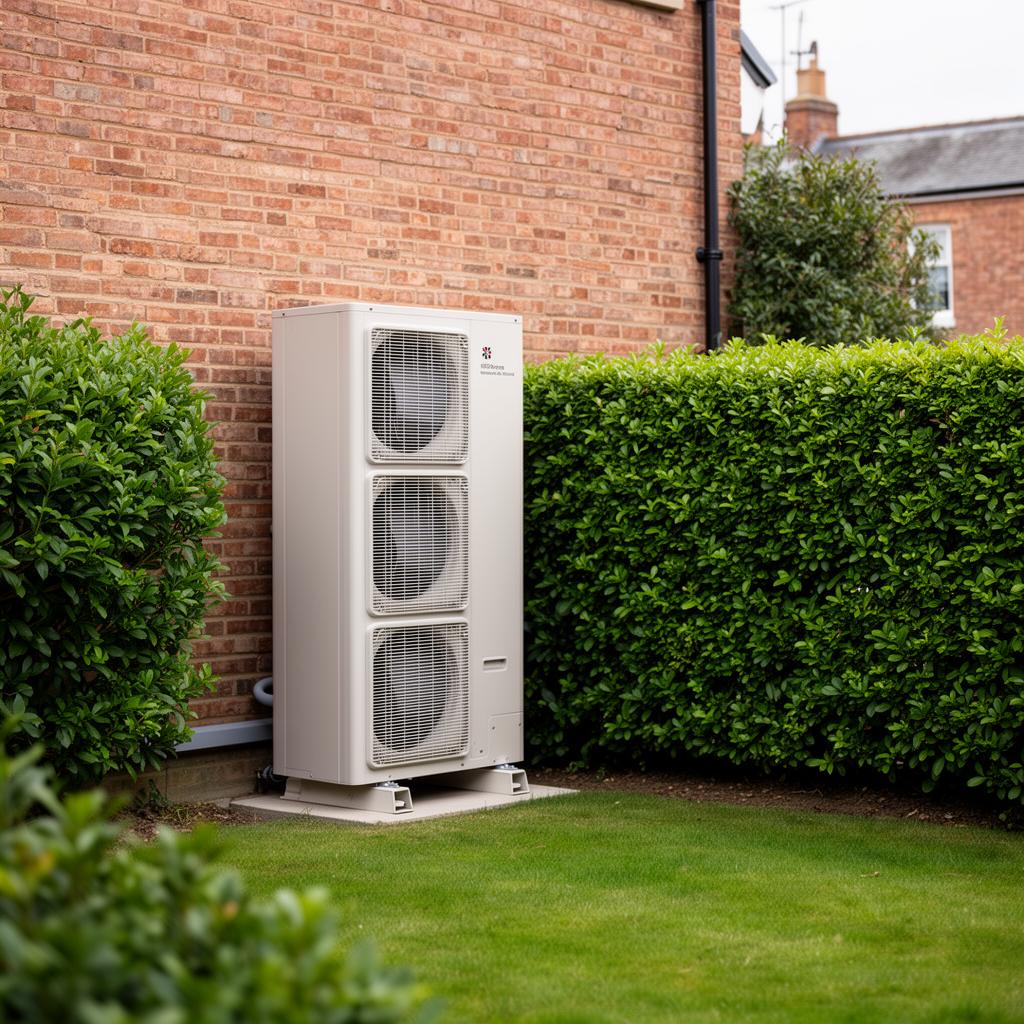
If you own a listed building and want to install a heat pump listed building UK, the process is more complex than for a standard property but far from impossible. Permitted development rights that allow most homeowners to install a heat pump without planning permission do not apply to listed buildings. You will need both planning permission and listed building consent before any work begins. This guide explains the dual approval process, what conservation officers look for, and practical strategies that increase your chances of approval.
Can You Put a Heat Pump in a Listed Building?
Yes, you can install a heat pump in a listed building, but you will need both planning permission and listed building consent before any work begins. The key challenge is demonstrating that the installation will not harm the building’s historic character or fabric. Air source heat pumps require careful positioning to avoid visual impact on significant elevations, while ground source systems may need archaeological assessment before trenching or drilling.
Grade II listed buildings are the most commonly approved, with internal modifications for pipework and a cylinder often posing fewer issues than the external unit placement. Contact your local conservation officer early in the process — a pre-application discussion (typically free or £50–£100) can save months of delay. Historic England has published guidance supporting heat pump installations in heritage buildings, and approval rates have increased significantly since the BUS grant launched.
Why Permitted Development Does Not Apply to Listed Buildings
Under the Town and Country Planning (General Permitted Development) (England) Order 2015, air source heat pumps benefit from permitted development rights that allow installation without a full planning application. However, Schedule 2, Part 14, Class G explicitly excludes listed buildings from these rights.
The exclusion exists because listed buildings are protected under the Planning (Listed Buildings and Conservation Areas) Act 1990. Any alteration that affects the character of a listed building, whether internal or external, requires listed building consent. Since a heat pump installation involves an outdoor unit, pipework, and potentially internal modifications, it falls within this requirement.
There are approximately 400,000 listed buildings in England alone, with roughly 92% at Grade II, 5.8% at Grade II*, and 2.5% at Grade I. The level of listing affects how strictly alterations are assessed, with Grade I buildings facing the most scrutiny.
The Dual Consent Requirement Explained
Installing a heat pump in a listed building requires two separate approvals:
1. Planning permission: This covers the outdoor unit placement, its visual impact on the building and surrounding area, and noise implications. The application is assessed by your local planning authority’s development management team.
2. Listed building consent: This covers any alteration to the fabric of the listed building, including drilling through walls for pipework, internal modifications to accommodate the heating system, and any changes to the building’s character or appearance. This application is assessed by the conservation officer.
Both applications can be submitted simultaneously and are typically considered together, but they are legally separate consents. Approval of one does not guarantee approval of the other. The standard determination period is 8 weeks for each, though complex cases may take longer.
For Grade I and Grade II* buildings, Historic England is consulted on all listed building consent applications. Their assessment carries significant weight, though the final decision rests with the local planning authority.
What Conservation Officers Look For
Conservation officers assess heat pump applications against the building’s significance and the impact of the proposed installation on that significance. Their key concerns typically include:
- Visual impact: Can the outdoor unit be seen from public viewpoints? Does it alter the principal elevation?
- Fabric impact: Does the installation require drilling through or altering historic fabric (original stonework, brickwork, timber)?
- Reversibility: Can the installation be removed in future without lasting damage to the building?
- Noise and vibration: Could vibration from the unit damage fragile historic structure?
- Setting impact: Does the installation affect the building’s contribution to the wider historic environment?
Conservation officers are increasingly sympathetic to renewable energy installations in listed buildings, recognising that climate change itself poses a long-term threat to historic buildings. The key is demonstrating that you have considered the building’s significance and minimised impact accordingly.
Practical Strategies for Getting Approval
The following approaches significantly increase the likelihood of approval for a heat pump listed building UK installation:
Position the unit out of sight: Placing the outdoor unit in a rear courtyard, behind an existing outbuilding, or in an area screened by existing walls or vegetation is the single most effective strategy. If the unit cannot be seen from any public viewpoint and does not affect the principal elevation, most conservation officers will be supportive.
Use a ground source heat pump: Where garden space allows, a ground source heat pump eliminates the outdoor unit entirely, removing the most contentious element of the application. The indoor unit and ground loops have no visual impact and cause minimal disruption to the building fabric. The BUS grant for ground source is also £7,500, the same as air source.
Choose a compact, quiet model: Specifying one of the quieter, more compact heat pump units demonstrates consideration for the building and its neighbours. The Samsung EHS Gen 7 at 35dB and the Mitsubishi Ultra Quiet at 45dB are particularly suitable for listed building installations.
Commission a heritage impact assessment: A formal heritage impact assessment prepared by a qualified conservation consultant adds weight to your application. It demonstrates that you have properly considered the building’s significance and designed the installation to minimise harm. Costs are typically £500-£1,500.
Engage in pre-application discussion: Most local planning authorities offer a pre-application advice service. For listed buildings, this is strongly recommended as it allows you to understand the conservation officer’s concerns before submitting a formal application. Pre-application fees are typically £150-£400.
Heat Pump Options Best Suited to Listed Buildings
Not all heat pump types are equally suited to listed buildings. Here is how the main options compare for heritage properties:
| Heat Pump Type | Visual Impact | Fabric Impact | Approval Likelihood | Cost Range |
|---|---|---|---|---|
| Ground source (borehole) | None | Minimal | High | £16,000-£35,000 |
| Ground source (horizontal) | None | Minimal | High | £14,000-£25,000 |
| Air source (hidden position) | Low | Low-Medium | Medium-High | £9,000-£14,000 |
| Air source (visible position) | Medium-High | Low-Medium | Low-Medium | £9,000-£14,000 |
Whichever option you choose, the installation must be carried out by an MCS-certified installer who understands the sensitivities of working on historic buildings. Pipework routes should avoid original plasterwork, historic timbers, and decorative features wherever possible. Using existing service routes (such as disused chimney flues) for pipework can minimise new penetrations through the building fabric.
Costs and Grants for Listed Building Heat Pump Installations
Heat pump installations in listed buildings typically cost 10-25% more than equivalent installations in standard properties due to the planning application costs, heritage assessments, specialist installation requirements, and potentially more complex pipework routes.
The £7,500 Boiler Upgrade Scheme grant applies to listed buildings on the same terms as any other property. Additional funding may be available through:
- Historic England grants for energy efficiency improvements to Grade I and Grade II* buildings
- Local authority grants for heritage properties in some areas
- ECO4 scheme for qualifying households regardless of listed status
Improving insulation in listed buildings is also possible, though the options are more limited than for standard properties. Internal wall insulation using breathable materials, secondary glazing (often preferred over replacement double glazing in listed buildings), and loft insulation are all typically achievable with listed building consent.
To explore the options for your listed property, request a free assessment from an installer experienced with heritage buildings.
Case Studies: Successful Listed Building Installations
Successful heat pump installations in listed buildings share common characteristics. In a Grade II listed Georgian townhouse in Bath, the owners positioned a compact air source unit in a rear courtyard screened by an existing garden wall. The conservation officer approved the application after a heritage impact assessment demonstrated no visual impact from any public viewpoint. The installed cost was £13,500, reduced to £6,000 after the BUS grant.
A Grade II* manor house in the Cotswolds opted for a ground source system with vertical boreholes in the rear garden. With no visible outdoor equipment and minimal impact on the building fabric, the application was approved without objection. The total cost was £28,000, reduced to £20,500 after the BUS grant, but the SCOP of 4.5 delivers annual heating costs under £1,000 for a large property that previously spent over £4,000 per year on oil.
Frequently Asked Questions
Can I install a heat pump in a Grade I listed building?
Yes, but the scrutiny is the most rigorous and Historic England will be consulted on every application. Ground source heat pumps have the highest approval rate for Grade I buildings due to zero visual impact. A heritage impact assessment and pre-application discussion with the conservation officer are essential.
How long does the planning process take for a listed building heat pump?
The standard determination period is 8 weeks for each consent (planning permission and listed building consent). In practice, allow 12-16 weeks including pre-application discussions and any amendments requested by the conservation officer. For Grade I and Grade II* buildings where Historic England is consulted, the process may take 16-24 weeks.
What happens if my listed building heat pump application is refused?
You can appeal the decision to the Planning Inspectorate within 6 months. Alternatively, you can amend the proposal to address the conservation officer’s concerns and resubmit. Common amendments include relocating the unit to a less visible position, screening with appropriate materials, or switching to a ground source system.
Does the BUS grant cover the extra costs of listed building installation?
The BUS grant is a flat £7,500 regardless of property type. It does not cover the additional costs of planning applications (approximately £250-£400), heritage impact assessments (£500-£1,500), or specialist installation requirements. However, the grant still significantly reduces the net cost and makes heat pump installation financially viable for most listed building owners.
See what these numbers mean for your home
Free instant estimate — costs, savings, payback and grants for your region.

Related Articles
Heat Pump Installation Costs in 2026: The Real Numbers
Heat pumps are now the default replacement for gas boilers in UK government policy, but the question most homeowners ask first is always the same: how much does it actually…
28 May 2026
Infrared Panels vs Heat Pumps: Which Heating System Is Right for Your Home?
Comparing infrared panels vs heat pumps across cost, efficiency, running expenses, and grant eligibility. This guide helps UK homeowners choose the right low-carbon heating system for their property.
8 May 2026
Renewable Heating vs Gas Boiler: An Honest Cost and Comfort Comparison
An honest comparison of heat pumps, biomass and solar thermal against gas boilers on cost, comfort, maintenance, grants and carbon savings for UK homes.
8 May 2026