Heat Pumps for Flats: Can You Install One in a UK Apartment?
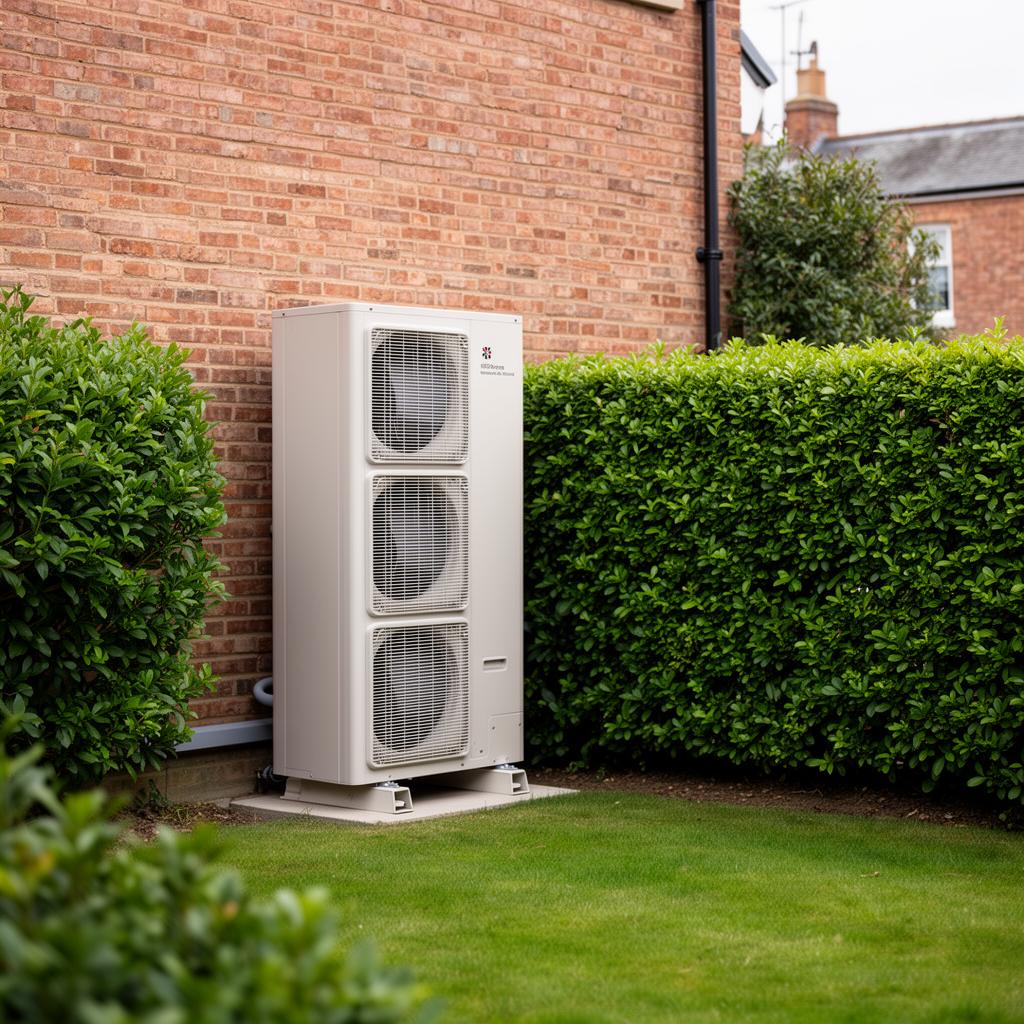
Installing a heat pump flat apartment UK is entirely possible, but the practical and legal requirements are more complex than for a house. With approximately 4.5 million flats in England alone, decarbonising apartment heating is essential for the UK’s net zero targets. This guide covers the genuine challenges, the realistic options, and what you need to know before pursuing a heat pump for your flat.
Can You Install a Heat Pump in a Flat?
Yes, but the type of heat pump and installation method depends on your flat’s layout, ownership structure, and available external space. The three main options for flats are:
- Individual air source heat pump with the outdoor unit on a balcony, wall-mounted, or at ground level
- Communal heat pump system serving the entire building via a shared heat network
- Air-to-air heat pump (similar to an air conditioning split system) providing both heating and cooling
Individual air source heat pumps are the most straightforward option for ground-floor and first-floor flats with access to a balcony or external wall. Higher-floor flats face more challenges around outdoor unit placement and may need to rely on communal systems or air-to-air solutions.
Leasehold Permissions and Freeholder Consent
For leaseholders, which covers the vast majority of UK flat owners, installing a heat pump requires permission from the freeholder or building management company. This is a critical first step that many homeowners overlook.
The Leasehold Reform (Ground Rent) Act 2022 and subsequent energy efficiency amendments have strengthened leaseholders’ rights to make green improvements, but freeholders can still refuse permission on reasonable grounds including structural impact, aesthetic changes to the building exterior, and noise disturbance to other residents.
You will typically need to provide:
- Detailed installation plans showing the outdoor unit position
- Acoustic assessment demonstrating compliance with noise limits
- Structural survey confirming the balcony or wall can support the unit weight
- Confirmation that the installation is reversible if required
- Evidence of MCS-certified installer and appropriate insurance
Starting this conversation with your freeholder early is essential. Many are now familiar with heat pump requests and have established approval processes, but some remain resistant. If permission is refused unreasonably, the leaseholder has the right to apply to the First-tier Tribunal for a determination.
Space Requirements and Installation Options for Flats
The outdoor unit of a heat pump needs adequate airflow and clearance space. For flats, the main installation options are:
Balcony mounting: The outdoor unit sits on the balcony floor or is mounted to the balcony wall. This works well for larger balconies with at least 1.5 metres of clear space around the unit. Noise can be a concern for neighbouring flats, so quiet models like the Samsung EHS Gen 7 (35dB quiet mode) or Mitsubishi Ultra Quiet (45dB) are strongly recommended.
Wall mounting: Smaller heat pump units can be bracket-mounted on the external wall, similar to air conditioning outdoor units. This requires a structurally sound wall and typically needs planning permission as it alters the building’s external appearance. Weight limits of approximately 60-120kg depending on the model must be within the wall’s load-bearing capacity.
Ground-level installation: Ground-floor flats may be able to position the outdoor unit at ground level in a communal garden or private patio area. This is the simplest option where available, but requires agreement from the freeholder and potentially other residents if the garden is communal.
Roof mounting: For top-floor flats, roof-mounted installations are sometimes possible, though they require structural assessment, weatherproofing modifications, and typically need planning permission. This is the most complex and expensive option.
Heat Pump Costs for Flats in the UK
Heat pump installations for flats tend to be cheaper than for houses, primarily because flats have lower heat demand due to shared walls and smaller floor areas. Typical costs range from £8,000 to £14,000 fully installed, depending on the system type and installation complexity.
After the £7,500 BUS grant, net costs can be as low as £500-£6,500. The BUS grant is available to leaseholders as well as freeholders, provided the installation meets MCS standards and the property has an EPC.
| Installation Type | Typical Cost | After BUS Grant |
|---|---|---|
| Small ASHP (3-5kW) with balcony unit | £8,000-£10,000 | £500-£2,500 |
| Standard ASHP with ground-level unit | £9,000-£12,000 | £1,500-£4,500 |
| Wall-mounted ASHP | £9,000-£13,000 | £1,500-£5,500 |
| Air-to-air system (not BUS eligible) | £2,400-£5,000 | N/A |
Air-to-air heat pumps are significantly cheaper but do not qualify for the BUS grant and do not provide hot water. They are best suited to flats with existing electric heating where the primary goal is reducing heating costs rather than full system replacement.
Noise Considerations for Flat Installations
Noise is the most common obstacle to heat pump approval in flats. The outdoor unit must meet the 42dB permitted development limit at the nearest neighbour’s habitable room, and in a block of flats, this could be a window just metres from the installation point.
For balcony installations, the enclosed space can amplify noise through reverberation. An acoustic assessment by a qualified engineer is strongly recommended before installation. Solutions include:
- Choosing the quietest available unit (Samsung EHS Gen 7 at 35dB is the current leader)
- Anti-vibration mounting brackets to prevent structural noise transmission
- Acoustic barriers or enclosures (while maintaining adequate airflow)
- Scheduling quiet mode operation during night hours
For wall-mounted units, the bracket mounting must include vibration isolation pads to prevent noise transmitting through the building structure. Structural-borne noise can be more disruptive than airborne noise and is harder to mitigate after installation.
BUS Grant Eligibility for Leaseholders
The Boiler Upgrade Scheme grant of £7,500 is available to leaseholders installing individual heat pumps in their flats. The key requirements are:
- The property must have an Energy Performance Certificate (EPC) with no outstanding recommendations for loft or cavity wall insulation (where applicable)
- The installation must be carried out by an MCS-certified installer
- The heat pump must replace an existing fossil fuel heating system (gas, oil, or LPG)
- The property must be in England or Wales
Flats with existing electric heating (storage heaters, electric boilers) are not eligible for the BUS grant under current rules, as the scheme targets fossil fuel replacement. This is a significant limitation for the many UK flats that use electric heating.
For communal heat pump systems, the grant arrangements are different and typically coordinated through the building’s freeholder or management company. Individual leaseholders may not need to apply directly in these cases.
Communal Heat Pump Systems for Blocks of Flats
For larger blocks of flats, a communal heat pump system serving the entire building through a shared heat network is often the most practical solution. A single large heat pump (or multiple units) heats water that is distributed to each flat through insulated pipes, with individual heat meters measuring consumption.
Communal systems offer several advantages:
- A single outdoor unit rather than multiple units on balconies or walls
- Professional maintenance managed centrally
- Better efficiency from larger, optimised equipment
- No individual flat modifications needed beyond a heat interface unit
The Social Housing Decarbonisation Fund and Heat Network Efficiency Scheme provide funding for communal systems in social housing and mixed-tenure blocks. For privately owned blocks, the cost is typically shared among all leaseholders through the service charge, with typical contributions of £3,000-£8,000 per flat.
Insulation First: Preparing Your Flat for a Heat Pump
Flats generally have lower heat demand than houses due to shared walls reducing heat loss. However, improving insulation before installing a heat pump is still worthwhile. The most impactful upgrades for flats include:
- Window upgrades to double or triple glazing, which can reduce heat loss by 40-60% through glazed areas
- External wall insulation for end-of-terrace or exposed wall flats (subject to freeholder permission)
- Draught-proofing around windows, doors, and service penetrations
A well-insulated flat may need only a 3-5kW heat pump, which is the smallest and quietest available. Reducing heat demand through insulation makes the heat pump smaller, cheaper, quieter, and more efficient, addressing several of the main challenges of flat installations simultaneously.
To assess your flat’s suitability and get an accurate quote, request a free assessment from an MCS-certified installer experienced with flat installations.
Frequently Asked Questions
Do I need planning permission for a heat pump in a flat?
Flats do not benefit from the same permitted development rights as houses for heat pump installations. You will typically need planning permission for any externally visible outdoor unit, plus freeholder consent. The exception is ground-floor flats where the outdoor unit is positioned within the property’s curtilage and meets all noise and distance requirements.
Can I get a heat pump if my flat has electric storage heaters?
You can install a heat pump, but you will not be eligible for the £7,500 BUS grant as the scheme only covers replacement of fossil fuel systems. An air-to-air heat pump costing £2,400-£5,000 may be a more cost-effective option for flats with existing electric heating, offering running cost savings of 30-50% compared to storage heaters.
What is the smallest heat pump suitable for a flat?
The smallest mainstream air source heat pumps start at 3.5-5kW, which is sufficient for a well-insulated 1-2 bedroom flat. Vaillant offers a 3.5kW Arotherm Plus model, and Samsung’s EHS Gen 7 starts at 5kW. For very small flats, an air-to-air system rated at 2-3kW may be more appropriate.
Will a heat pump on my balcony disturb my neighbours?
This depends on the unit chosen and the balcony layout. The quietest models at 35dB (Samsung) and 45dB (Mitsubishi Ultra Quiet) are unlikely to cause disturbance if properly installed with anti-vibration mounts. An acoustic assessment before installation is strongly recommended to ensure compliance and avoid disputes.
Are communal heat pumps better than individual ones for flats?
For blocks of more than 6-8 flats, communal systems are generally more cost-effective and practical. They avoid multiple outdoor units, simplify maintenance, and achieve better economies of scale. For smaller blocks or individual flats within older buildings, individual heat pumps may be the only practical option if communal infrastructure is not feasible.
See what these numbers mean for your home
Free instant estimate — costs, savings, payback and grants for your region.

Related Articles
Heat Pump Installation Costs in 2026: The Real Numbers
Heat pumps are now the default replacement for gas boilers in UK government policy, but the question most homeowners ask first is always the same: how much does it actually…
28 May 2026
Infrared Panels vs Heat Pumps: Which Heating System Is Right for Your Home?
Comparing infrared panels vs heat pumps across cost, efficiency, running expenses, and grant eligibility. This guide helps UK homeowners choose the right low-carbon heating system for their property.
8 May 2026
Renewable Heating vs Gas Boiler: An Honest Cost and Comfort Comparison
An honest comparison of heat pumps, biomass and solar thermal against gas boilers on cost, comfort, maintenance, grants and carbon savings for UK homes.
8 May 2026