Workplace EV Charging Grants for Lancashire Businesses
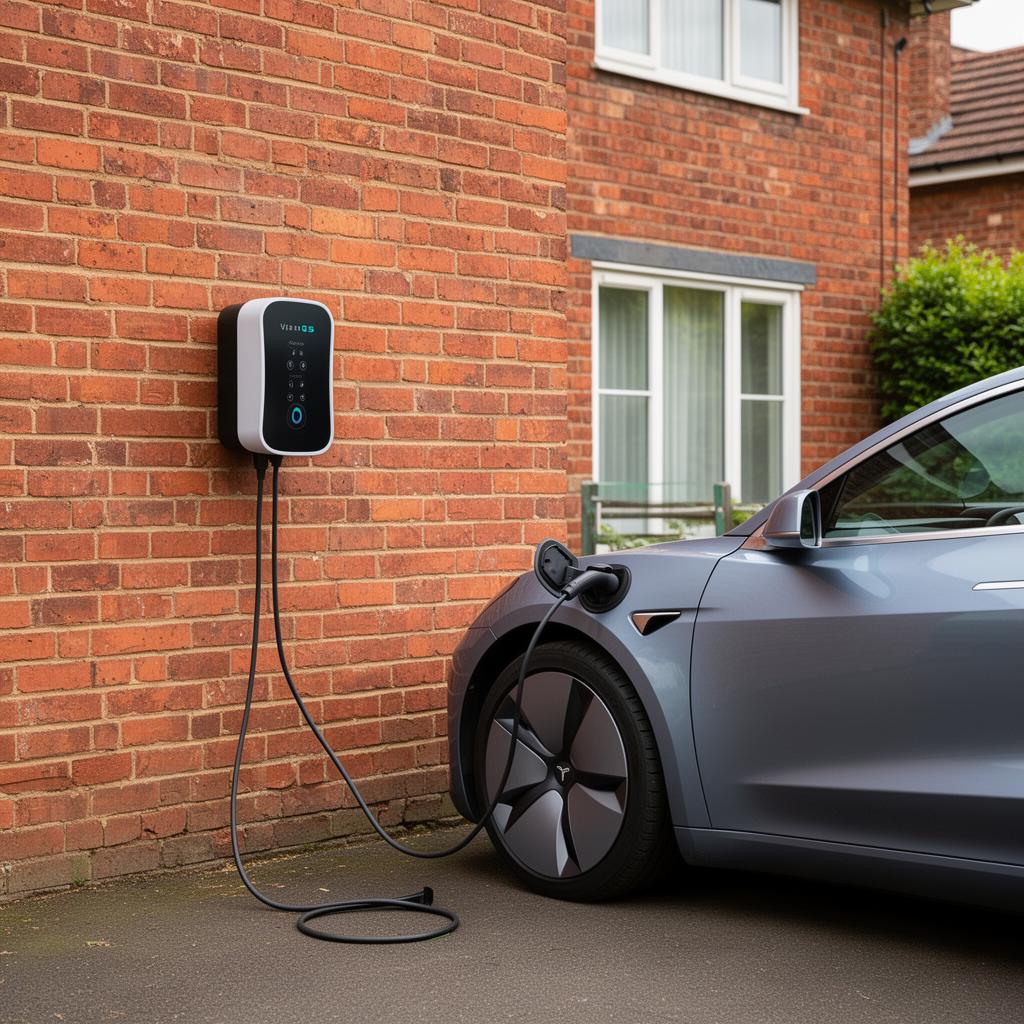
Lancashire businesses can claim up to £350 per charging socket (up to a maximum of 40 sockets) towards the cost of installing workplace EV chargers through the Workplace Charging Scheme (WCS). For a typical installation of 4-8 chargers at a Lancashire business premises, the grant covers £1,400-£2,800 of the total cost, which typically ranges from £4,000-£12,000. The scheme is available to any registered business, charity or public sector organisation with dedicated off-street parking, making it accessible to everything from a small accountancy firm in Preston to a large distribution centre in Skelmersdale.
What EV Charging Grants Are Available for Lancashire Businesses?
Lancashire businesses can access the Workplace Charging Scheme (WCS), a UK government grant covering up to 75 percent of the cost of purchasing and installing EV charge points, capped at £350 per socket for up to 40 sockets per applicant. This means a business installing 10 charge points could receive up to £3,500 in grant funding towards a typical total cost of £8,000 to £15,000.
- Workplace Charging Scheme (WCS) — 75% of costs up to £350 per socket, max 40 sockets
- OZEV on-street residential scheme — for businesses providing public charging infrastructure
- Local Enterprise Partnership funding — Lancashire LEP may offer additional support for green transport projects
- Enhanced capital allowances — 100% first-year tax deduction on qualifying EV charging equipment
- Business rates exemption — dedicated EV charging equipment may be exempt from business rates
To claim the WCS grant, your business must have dedicated off-street parking and use an OZEV-approved installer. The charge points must be new and can be used by employees, fleet vehicles or visitors. Applications are submitted online through the Office for Zero Emission Vehicles portal before installation begins.
With more Lancashire employees switching to electric vehicles and the growing expectation that employers provide charging facilities, workplace charging is becoming a practical necessity rather than a perk. Here is everything Lancashire businesses need to know about the grant, the installation process and the financial case for workplace charging.
The Workplace Charging Scheme Explained
The Workplace Charging Scheme is funded by the Office for Zero Emission Vehicles (OZEV) and administered through an online portal. Key details:
- Grant amount: Up to £350 per charging socket (down from £500 previously)
- Maximum sockets: 40 per applicant
- Charger requirement: Must be a smart charger with at least 7kW output
- Eligible applicants: Any UK-registered business, charity, or public sector body
- Property requirement: You must have dedicated off-street parking at the premises where chargers will be installed
- Installer requirement: Must be installed by an OZEV-qualified installer
The grant is applied as a deduction from your installation invoice – you pay the net amount, and the installer claims the grant directly from OZEV. You do not need to claim the money back yourself.
Costs for Lancashire Business Installations
Workplace EV charging installations cost more than domestic setups due to longer cable runs, higher-spec chargers and the need for commercial electrical work. Typical costs for Lancashire businesses:
- Single 7kW charger (dual socket): £1,200-£2,000 installed, minus £700 WCS grant = £500-£1,300 net
- 4 x 7kW chargers (8 sockets): £5,000-£8,000 installed, minus £2,800 WCS grant = £2,200-£5,200 net
- 4 x 22kW chargers (commercial grade): £8,000-£14,000 installed, minus £2,800 WCS grant = £5,200-£11,200 net
- Rapid charger (50kW+): £20,000-£40,000 installed. WCS contributes a small proportion but the investment is justified for fleet charging or customer-facing locations.
Costs vary depending on the distance from the electrical supply to the parking area, whether ground works are needed (trenching across a car park), and whether your electrical supply needs upgrading to handle the additional load.
How to Apply
The application process is straightforward:
Step 1: Choose an OZEV-qualified installer. They will survey your premises, recommend charger types and positions, and provide a quote showing the WCS grant deduction.
Step 2: Apply online through the OZEV portal. You need your company registration number, the installer’s details and the proposed installation specification.
Step 3: Receive your voucher (usually within 2-4 weeks).
Step 4: The installer carries out the work and claims the grant directly. You pay the remaining balance.
The voucher is valid for 120 days from issue, so plan the installation timeline accordingly.
The Business Case for Workplace Charging
Beyond the grant, there are several financial and practical reasons for Lancashire businesses to install workplace EV chargers:
Employee benefit: Offering workplace charging is an increasingly valued employee perk. It effectively gives EV-driving employees free or subsidised fuel – a tangible benefit that aids recruitment and retention. For businesses in competitive sectors across Lancashire, this can be a genuine differentiator.
Tax advantages: The cost of workplace chargers and installation qualifies for capital allowances. The Enhanced Capital Allowance scheme allows 100% first-year allowance on qualifying EV charging equipment, providing immediate tax relief on the full cost.
No Benefit in Kind charge: Electricity provided by an employer for charging an employee’s EV at the workplace is currently exempt from Benefit in Kind tax. This means employees can charge for free at work without any tax liability – a significant advantage over fuel cards for petrol vehicles.
Fleet transition: If your business is transitioning its fleet to electric vehicles (which the whole-life cost data increasingly supports), workplace charging is essential. Vehicles can charge overnight or during the working day, ensuring they start each journey with a full battery.
Customer attraction: For customer-facing businesses like hotels, restaurants, retail outlets and leisure venues across Lancashire, offering EV charging attracts a growing segment of customers who plan their journeys around charging availability.
Choosing the Right Charger Type
For most Lancashire businesses, 7kW or 22kW chargers are the right choice. The decision depends on how long vehicles are typically parked:
- 7kW chargers: Best for vehicles parked all day (employees, office-based businesses). A 7kW charger adds about 30 miles of range per hour, so an 8-hour working day provides 240 miles of charge. More than enough for any employee’s daily commute.
- 22kW chargers: Better for vehicles parked for shorter periods (customer-facing businesses, retail, healthcare). A 22kW charger provides about 80 miles of range per hour. Requires a three-phase electrical supply.
- Rapid chargers (50kW+): For fleet depots where vehicles need quick turnaround, or destination charging where customers expect fast top-ups. Expensive to install and run, but essential for some use cases.
Electricity Supply Considerations
Multiple EV chargers draw significant power. Four 7kW chargers running simultaneously draw 28kW (about 120 amps on three-phase supply). If your business premises has a limited electrical supply, you may need a supply upgrade from Electricity North West, or consider load-managed chargers that share available power between vehicles.
Many modern workplace chargers support load management, which distributes available power across all connected vehicles. If only one car is charging, it gets the full 7kW. If four are charging, each gets a proportionate share. This avoids the need for an expensive supply upgrade while still serving multiple vehicles.
Solar panels on the business roof can offset some of the electricity cost. Several Lancashire businesses have combined solar installations with EV charging, generating free electricity during the day to charge employees’ and visitors’ vehicles. Our guide to the 0% VAT on solar panels explains the financial benefits for businesses.
Can sole traders apply for the Workplace Charging Scheme?
Yes, sole traders and partnerships can apply as long as they are VAT-registered or can provide proof of business activity. The charger must be installed at a business premises (not a domestic property). A sole trader working from home could potentially qualify if the home address is registered as the business premises, but the charger must be used primarily for business purposes.
Can tenants install workplace chargers?
Yes, but you need the landlord’s written permission to install chargers and make any electrical modifications. If you lease business premises in Lancashire, discuss the proposal with your landlord early. Many landlords are supportive as chargers add value to the property, but the lease may need to be varied to cover maintenance responsibilities and removal at the end of the lease term.
Can we charge employees for using workplace chargers?
Yes. You can offer free charging as an employee benefit, or you can charge for it. If you charge, you can set your own rate – many businesses charge at cost (covering the electricity) or add a small margin. The charger management software handles billing and payment. Note that charging employees creates a Benefit in Kind consideration if you sell electricity below market rate, so take tax advice.
See what these numbers mean for your home
Free instant estimate — costs, savings, payback and grants for your region.

Related Articles
Home EV Charger Costs in the North West: 2026 Prices, Grants and Running Costs
A 7kW home EV charger costs £800–£1,500 installed in the North West. Here are the 2026 numbers — including the £500 grant and 2–3p-per-mile overnight charging.
10 June 2026EV Chargers for Renters and Flat Owners: How the £500 Grant Works (2026)
The OZEV Chargepoint Grant now pays £500 per socket — but only renters and flat owners qualify. Here's exactly how to claim it in 2026.
10 June 2026
EV Home Charging: How Much Does It Really Cost to Charge at Home in 2026?
Update (June 2026): The OZEV Electric Vehicle Chargepoint Grant provides £500 per socket towards home charger installation for eligible renters and flat owners (increased from April 2026). Electric vehicles are…
28 April 2026