ULEZ and Clean Air Zones: How EVs Beat Charges in Manchester
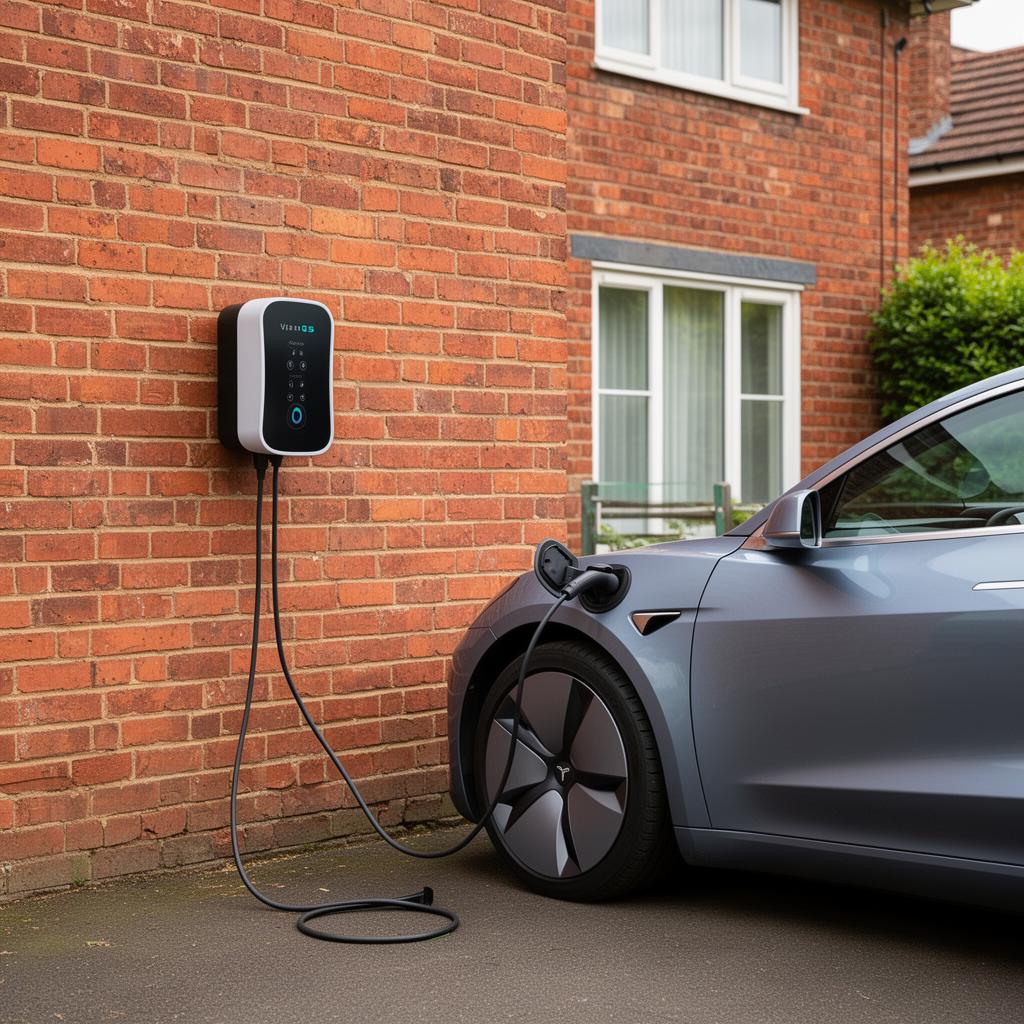
Greater Manchester’s Clean Air Zone charges non-compliant commercial vehicles up to £60 per day for entering the zone, which covers most of the urban area within the M60 motorway. While private cars are currently exempt from charges, the direction of travel is clear – Manchester committed to becoming a net-zero city by 2038, and restrictions on polluting vehicles will tighten over time. Electric vehicles are permanently exempt from all clean air charges, making them the future-proof choice for Lancashire drivers who regularly travel into Manchester.
How Do EVs Avoid Clean Air Zone Charges in Manchester?
Electric vehicles are fully exempt from all UK Clean Air Zone charges because they produce zero tailpipe emissions. In Greater Manchester, where the Clean Air Zone targets older high-emission commercial vehicles, EV owners drive freely without daily charges, registration requirements or compliance checks. This exemption applies to all battery electric vehicles regardless of age or model.
While Manchester’s current Clean Air Zone primarily affects non-compliant taxis, buses and HGVs rather than private cars, the scheme may expand in future. EV owners are permanently future-proofed against any tightening of emission standards, and with running costs of 2p to 5p per mile compared to 12p to 16p for petrol vehicles, the financial case for switching is strongest for drivers who regularly travel into city centres.
Understanding Manchester’s Clean Air Zone
Manchester’s Clean Air Zone (CAZ) is a Category C zone, meaning it currently charges non-compliant buses, coaches, taxis, private hire vehicles, heavy goods vehicles, light goods vehicles, and minibuses. Private cars are not currently charged, but the infrastructure to monitor all vehicles is in place through the ANPR camera network.
The daily charges for non-compliant vehicles are significant: £60 for buses, coaches, and HGVs, £10 for taxis and private hire vehicles, and £10 for LGVs (vans). For Lancashire-based businesses running delivery vans into Manchester, the £10 daily charge on a non-compliant van adds up to £2,600 per year if entering the zone five days a week. Switching to an electric van eliminates this charge entirely.
What counts as compliant? For diesel vehicles, compliance means meeting Euro 6 emission standards (broadly vehicles registered from September 2015 onwards). For petrol vehicles, Euro 4 standards apply (vehicles from approximately 2006 onwards). Electric vehicles and hydrogen vehicles are automatically compliant regardless of age.
The Wider Clean Air Picture Across Lancashire
While Manchester has the most prominent CAZ, air quality management areas (AQMAs) exist across Lancashire, including parts of Preston, Burnley, and along major road corridors. These do not currently impose charges but involve monitoring and improvement plans that could lead to future restrictions.
Nationally, other cities including Bath, Birmingham, Bristol, and London already have operational clean air zones. The trend is clearly towards expanding coverage and tightening standards. For any Lancashire driver considering a new vehicle, the question is not just about today’s restrictions but about what will apply over the vehicle’s 10-15 year lifespan.
EV drivers can enter any current or future clean air zone without charges or restrictions. This permanent exemption provides certainty and peace of mind that no fossil fuel vehicle can match, regardless of its Euro emission rating.
Financial Impact for Lancashire Commuters and Businesses
For Lancashire workers commuting into Manchester by car, the current exemption for private vehicles means there is no immediate financial pressure. However, a growing number of Manchester employers are offering workplace parking incentives for zero-emission vehicles, some Manchester car parks offer free or discounted parking for EVs, and congestion charging (separate from clean air charges) remains a possibility for the future.
For businesses, the impact is more immediate. A plumbing company in Wigan running three non-compliant vans into Manchester daily faces annual clean air charges of £7,800 (3 vans x £10 x 260 working days). Switching those three vans to electric models eliminates the charge entirely and also saves on fuel – roughly £3,000-5,000 per van per year in diesel costs replaced by cheaper electricity. The combined savings often exceed the additional cost of electric vehicles, particularly when factoring in grants and tax benefits.
Taxi and private hire drivers based in Lancashire but working in Greater Manchester face the £10 daily charge on non-compliant vehicles. Many Lancashire-based taxi drivers who operate in Manchester have already switched to electric or hybrid vehicles, supported by government grants of up to £5,000 for CAZ-compliant replacements.
Available Financial Support for Switching to EVs
GMCA has allocated significant funding to help businesses and individuals switch to compliant or zero-emission vehicles. The Clean Air Fund provides grants and interest-free loans for vehicle replacement. For LGV (van) owners, grants of up to £4,500 are available towards the cost of a compliant or electric replacement. Taxi and private hire vehicle owners can access grants towards electric vehicle purchases.
Beyond the local grants, national incentives including the plug-in van grant (up to £2,500 for qualifying electric vans), salary sacrifice schemes (saving 30-40% on personal EV costs), and the ultra-low BIK rate of 2% for company electric vehicles all reduce the cost of going electric.
The combination of avoided clean air charges, lower fuel costs, tax benefits, and available grants means that switching to electric is already cost-neutral or cost-positive for many Lancashire businesses operating in Manchester. The financial tipping point has passed – the remaining barrier is awareness and confidence rather than economics.
Charging Infrastructure in Manchester’s CAZ
Manchester’s public charging network has expanded rapidly to support the transition. Over 500 public chargepoints are now operational within the CAZ boundary, including rapid chargers at key locations around the city centre, Salford Quays, and Trafford. The network includes chargers from major providers including BP Pulse, GeniePoint, Connected Kerb, and Osprey.
For Lancashire businesses running electric vans in Manchester, knowing the charging locations along your regular routes is important for planning. Most electric vans have sufficient range (150-200 miles) to complete a full day’s work in the Manchester area from a single charge at your Lancashire depot. Public rapid chargers serve as a safety net for unusually busy days rather than a daily requirement.
On-street residential charging in Manchester is also expanding, with the Connected Kerb rollout delivering thousands of lamppost-integrated chargers across the boroughs. This benefits EV drivers visiting friends or family in areas without off-street parking, and Manchester residents who want to drive electric but lack a driveway.
What Could Change: Future Restrictions
While private cars are currently exempt from Manchester’s CAZ charges, several developments could change the landscape. The Greater Manchester Transport Strategy includes a review of private vehicle emissions within the CAZ framework. GMCA’s 2038 net-zero target may require additional traffic management measures in future years. The government’s 2035 ban on new petrol and diesel car sales will gradually shift the fleet towards electric.
Other UK cities have already implemented or are planning more restrictive clean air zones. London’s ULEZ covers the entire Greater London area and charges non-compliant private cars £12.50 per day. While Manchester has not announced similar plans, the precedent exists and the infrastructure is in place.
For Lancashire residents buying a car today that they plan to keep for 8-12 years, choosing electric provides certainty that no future clean air restriction – in Manchester, London, or any other UK city – will affect them. That forward-looking protection has real financial value.
Do I need to register my electric vehicle for the Manchester CAZ?
For private cars, no registration is currently required as private vehicles are exempt from charges. For commercial vehicles (vans, taxis, HGVs), your vehicle is automatically identified by the ANPR cameras. If your electric commercial vehicle is incorrectly flagged as non-compliant, you can register it through the Clean Air Zone portal to ensure the exemption is applied correctly.
Are hybrid vehicles exempt from CAZ charges?
Plug-in hybrid vehicles (PHEVs) are currently exempt from Manchester’s CAZ charges as long as they meet Euro 6 emission standards, which all modern PHEVs do. However, only fully electric vehicles are guaranteed permanent exemption from all future clean air restrictions. PHEVs may face tighter scrutiny as standards evolve, particularly given concerns about real-world emissions when PHEVs are driven primarily on their petrol engines.
Can I appeal a CAZ charge if I was just passing through Manchester?
The CAZ applies to any non-compliant commercial vehicle driving within the zone boundary, regardless of whether you are making a delivery, passing through, or visiting. There is no exemption for transit traffic. The M60 motorway itself is within the zone boundary, though some routes around the periphery remain outside it. The only way to avoid charges entirely is to drive a compliant vehicle, with zero-emission vehicles being the most future-proof option.
See what these numbers mean for your home
Free instant estimate — costs, savings, payback and grants for your region.

Related Articles
Home EV Charger Costs in the North West: 2026 Prices, Grants and Running Costs
A 7kW home EV charger costs £800–£1,500 installed in the North West. Here are the 2026 numbers — including the £500 grant and 2–3p-per-mile overnight charging.
10 June 2026EV Chargers for Renters and Flat Owners: How the £500 Grant Works (2026)
The OZEV Chargepoint Grant now pays £500 per socket — but only renters and flat owners qualify. Here's exactly how to claim it in 2026.
10 June 2026
EV Home Charging: How Much Does It Really Cost to Charge at Home in 2026?
Update (June 2026): The OZEV Electric Vehicle Chargepoint Grant provides £500 per socket towards home charger installation for eligible renters and flat owners (increased from April 2026). Electric vehicles are…
28 April 2026