Underfloor Heating with Heat Pumps: Is It Essential or Optional?
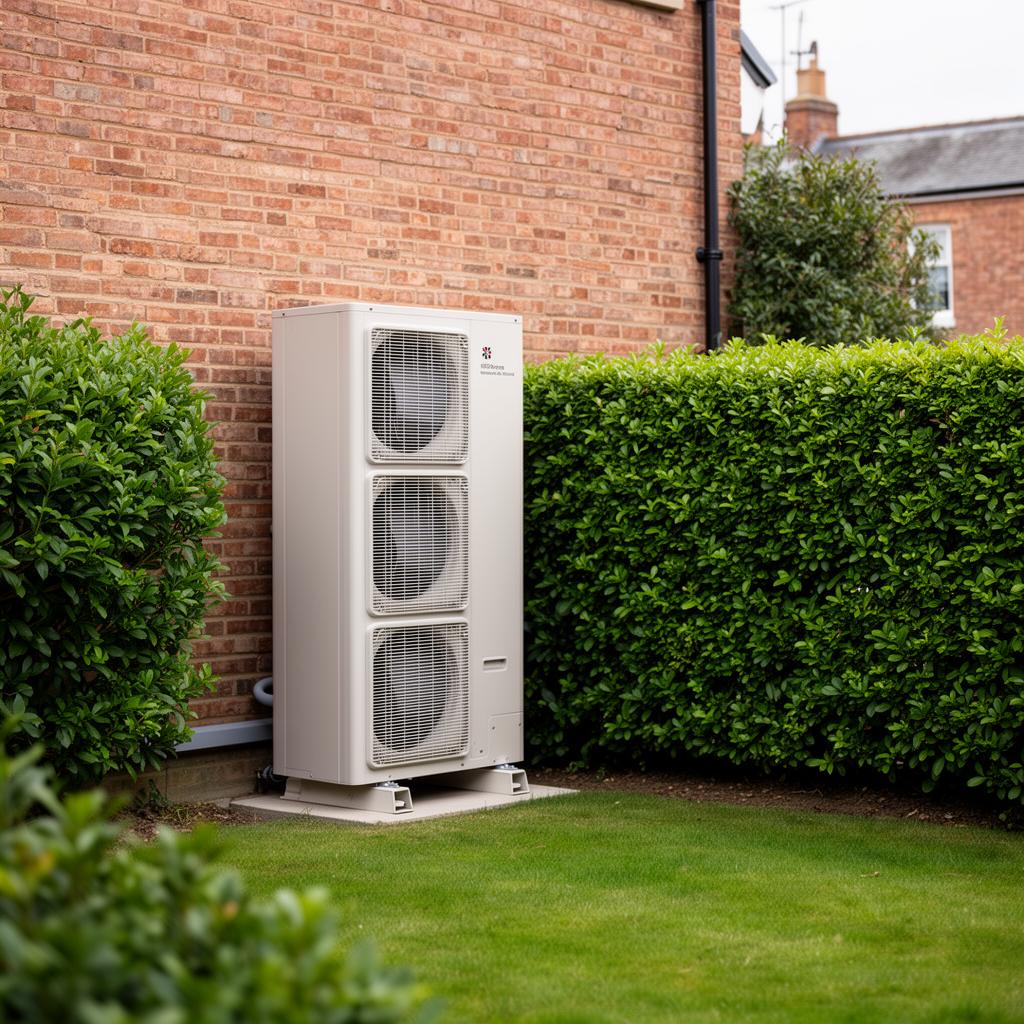
Underfloor heating is not essential for a heat pump – most Lancashire installations work perfectly well with radiators. However, underfloor heating may improve heat pump efficiency by an estimated 10% to 20% because it operates at lower water temperatures, which is exactly where heat pumps perform best. The real question is whether the extra cost of £3,000 to £8,000 for underfloor heating justifies the efficiency gains. For most existing Lancashire homes, upgrading a few radiators is the more practical and affordable route.
Is Underfloor Heating Essential with a Heat Pump?
No, underfloor heating is not essential with a heat pump. Heat pumps work with standard radiators, provided they are correctly sized for lower flow temperatures of 35 to 45°C. In many UK homes, simply upsizing radiators by one or two sizes — or fitting double-panel convector radiators — is sufficient. Underfloor heating is the most efficient emitter option, but it is optional rather than required.
Underfloor heating operates at 30 to 40°C, which aligns perfectly with a heat pump’s optimal output and delivers COP values of 3.5 to 4.5. Radiators need slightly higher temperatures (40–50°C), which reduces COP to 2.8 to 3.5. The performance difference translates to roughly £50 to £150 per year in running costs. Retrofitting underfloor heating costs £3,000 to £8,000, so the payback from efficiency gains alone takes decades — it is best treated as a comfort upgrade rather than a necessity.
Why Underfloor Heating and Heat Pumps Work Well Together
A heat pump operates most efficiently at low flow temperatures, typically 35 to 45 degrees Celsius. The lower the temperature it needs to produce, the more heat it extracts per unit of electricity. This efficiency is measured as the Coefficient of Performance (COP).
Underfloor heating uses large surface areas to distribute heat, which means it can warm a room effectively at flow temperatures as low as 30 to 35 degrees. Radiators, with their smaller surface area, need higher flow temperatures of 40 to 55 degrees to achieve the same room temperature. The difference in COP between 35 degrees and 50 degrees can be 0.5 to 1.0 – meaning underfloor heating helps the heat pump produce 15% to 25% more heat per unit of electricity.
In practical terms, for a Lancashire home spending £800 per year on heat pump electricity, switching from radiators to underfloor heating could save an estimated £100 to £160 per year. That is meaningful, but the installation cost means the payback period is long – typically 20 to 50 years if underfloor heating is the only upgrade.
When Radiators Work Fine With a Heat Pump
Modern heat pumps work well with radiators in most Lancashire homes, provided the radiators are adequately sized. The key factor is whether your existing radiators can deliver enough heat at the lower flow temperatures a heat pump uses.
A radiator that was sized for a 70-degree gas boiler system will only produce about 50% of its rated output at a 45-degree heat pump flow temperature. This means it may not heat the room adequately. The solution is not necessarily underfloor heating – it is simply fitting a larger radiator that can deliver enough heat at lower temperatures.
In many Lancashire homes built from the 1980s onwards, the existing radiators are actually larger than strictly necessary for the room sizes, because builders typically oversized them. A competent heat pump installer will do a room-by-room heat loss calculation and check whether each radiator can cope at 45-degree flow temperatures. Often, only two or three radiators need upgrading, at a cost of £200 to £400 each.
Well-insulated homes need less heat overall, which means the existing radiators are more likely to be adequate. If your Lancashire home has good loft insulation, cavity wall insulation, and double glazing, your radiators may be perfectly fine for a heat pump without any changes.
Underfloor Heating Costs for Existing Lancashire Homes
Installing underfloor heating in an existing home is significantly more expensive and disruptive than in a new build. Here is what it costs in Lancashire in 2026:
Wet underfloor heating (water-based) – This is the type used with heat pumps. Warm water circulates through pipes embedded in or laid on top of the floor. Costs for a retrofit installation:
- Ground floor only (typical 50 sq m) – £3,500 to £6,000
- Whole house including upstairs (100 sq m) – £7,000 to £12,000
- Low-profile overlay system (adds less floor height) – £80 to £120 per square metre
- Full screed system (dug into existing floor) – £60 to £100 per square metre, plus £2,000 to £4,000 for floor removal and new screed
The overlay system is the most practical for existing Lancashire homes because it sits on top of the current floor with minimal construction work. The trade-off is that it raises the floor level by 15mm to 25mm, which means adjusting doors, skirting boards, and thresholds. In terraced houses across Burnley, Blackburn, and Preston where room heights are already modest, this can feel noticeable.
Electric underfloor heating is cheaper to install (£30 to £60 per square metre) but much more expensive to run because it uses direct electricity rather than a heat pump. It is not suitable as a main heating source for a heat pump system. Electric UFH can work as supplementary heating in a single room, such as a bathroom, but should not replace a proper wet system.
The Best Approach for Different Lancashire Home Types
Victorian and Edwardian terraces (Blackburn, Burnley, Accrington) – These homes usually have suspended timber ground floors and small rooms. Full underfloor heating retrofit is expensive and disruptive. The better option is upgrading radiators to larger panel radiators and adding a towel rail in the bathroom. Cost: £800 to £2,000 for new radiators versus £5,000+ for underfloor heating.
1930s to 1960s semis (Preston, Chorley, Leyland) – Many of these homes have solid concrete ground floors, which makes wet underfloor heating more feasible. An overlay system on the ground floor combined with upgraded radiators upstairs is a practical compromise. Cost: £4,000 to £6,000 for ground floor UFH plus £500 to £1,000 for radiator upgrades upstairs.
Modern homes (post-2000 builds, Buckshaw Village, Cottam) – Some of these already have underfloor heating on the ground floor, making them ideal for heat pump conversion. If your home has existing UFH, switching to a heat pump is straightforward and delivers the best efficiency. Just ensure the UFH pipework and manifold are compatible with a heat pump system.
New builds and major renovations – If you are building or renovating, install wet underfloor heating from the start. The cost during construction is much lower (£30 to £50 per square metre versus £80 to £120 for retrofit) and there is no disruption to existing floors. Combine it with a heat pump for the lowest possible running costs.
Mixed Systems: UFH Downstairs, Radiators Upstairs
The most common approach for Lancashire homeowners retrofitting a heat pump is a mixed system: underfloor heating on the ground floor (where it is easier to install and where you spend most of your waking hours) and upgraded radiators upstairs (where rooms are typically smaller, used mainly for sleeping, and kept at lower temperatures).
This works well because the heat pump can run at two different flow temperatures using a mixing valve. The ground floor UFH receives water at 30 to 35 degrees, while the upstairs radiators get 40 to 50 degrees. The overall system efficiency is higher than radiators alone but the cost is much less than whole-house UFH.
A good Lancashire installer will design the system to balance the two circuits, ensuring even heating throughout the house without hot or cold spots. Ask your installer about zoning controls that let you set different temperatures for upstairs and downstairs independently.
What Installers in Lancashire Recommend
Speaking to several heat pump installers operating across Lancashire, the consensus is clear: for most existing homes, upgraded radiators are the practical first choice. Underfloor heating is a bonus, not a necessity.
The typical Lancashire installation uses the existing radiators where they are adequate and replaces two to four undersized radiators with larger models. The total additional cost for radiator upgrades is usually £600 to £1,600 on top of the heat pump installation itself.
Underfloor heating is most often recommended for ground floor extensions, conservatory conversions, or homes undergoing significant renovation where the floors are being replaced anyway. In those cases, adding UFH during the building work is much cheaper and less disruptive than retrofitting later.
Can a heat pump work with my existing radiators without any changes?
Possibly. If your home is well insulated and your radiators are generously sized, they may work fine at the lower flow temperatures a heat pump uses. The only way to know for certain is a room-by-room heat loss calculation by your installer. Do not let anyone tell you that all radiators must be replaced or that underfloor heating is mandatory – that is not true.
How long does underfloor heating take to warm up?
Wet underfloor heating in a screed floor takes two to four hours to bring a room from cold to comfortable. Overlay systems are faster at one to two hours. This slower response time means you need to run UFH for longer periods rather than switching it on and off. Most heat pump systems with UFH run the heating at a low, constant level throughout the day, which is generally considered an efficient way to operate a heat pump.
Does underfloor heating work under carpet?
Underfloor heating works under most floor coverings, but carpet and underlay act as insulation that slows heat transfer into the room. Thin carpet with a low tog underlay (less than 1.5 tog combined) is fine. Thick pile carpet with heavy underlay significantly reduces effectiveness. Hard floors like tile, stone, engineered wood, or luxury vinyl tile are the best conductors of heat from UFH and are ideal for Lancashire homes with heat pump systems.
See what these numbers mean for your home
Free instant estimate — costs, savings, payback and grants for your region.

Related Articles
Heat Pump Installation Costs in 2026: The Real Numbers
Heat pumps are now the default replacement for gas boilers in UK government policy, but the question most homeowners ask first is always the same: how much does it actually…
28 May 2026
Infrared Panels vs Heat Pumps: Which Heating System Is Right for Your Home?
Comparing infrared panels vs heat pumps across cost, efficiency, running expenses, and grant eligibility. This guide helps UK homeowners choose the right low-carbon heating system for their property.
8 May 2026
Renewable Heating vs Gas Boiler: An Honest Cost and Comfort Comparison
An honest comparison of heat pumps, biomass and solar thermal against gas boilers on cost, comfort, maintenance, grants and carbon savings for UK homes.
8 May 2026