Smart EV Charging: Using Off-Peak Electricity in the North West
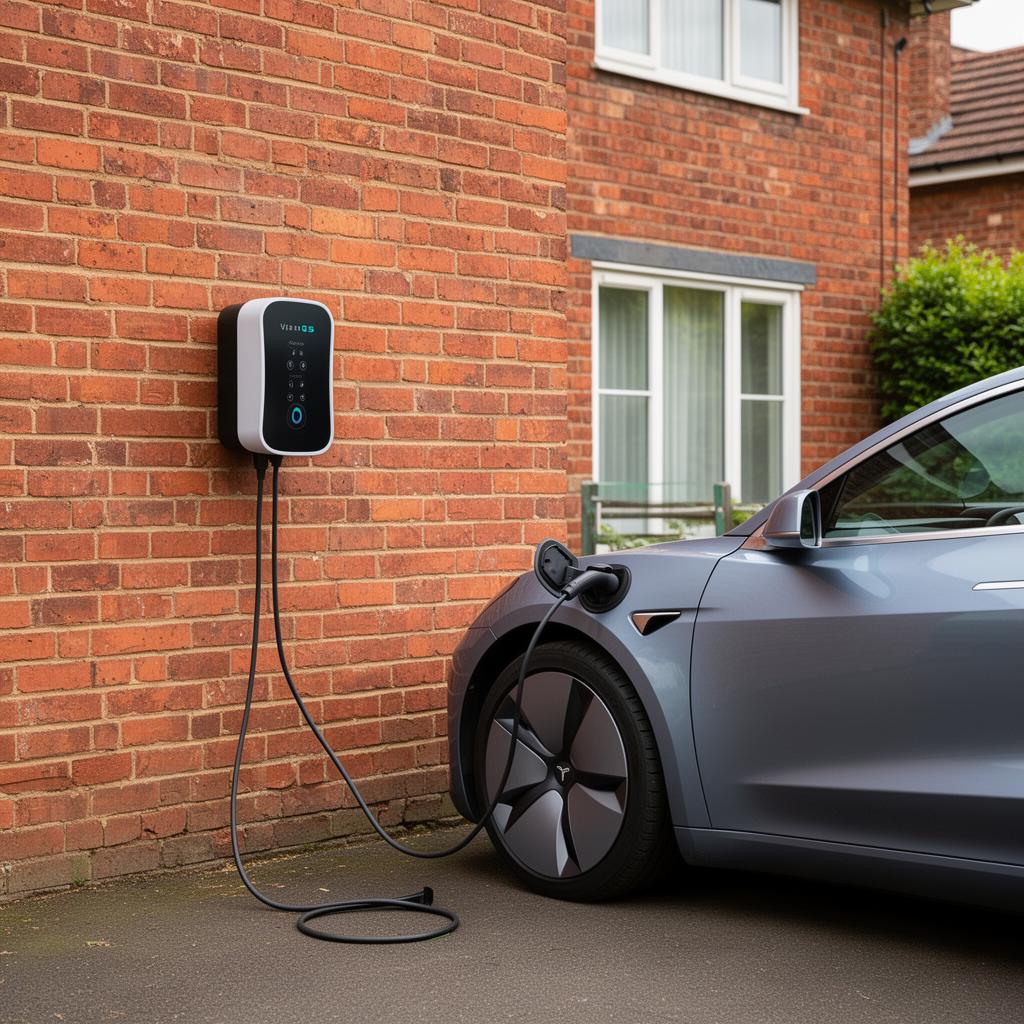
Charging your electric car at the right time can save Lancashire drivers over £700 per year. The difference between a standard electricity tariff and an off-peak EV tariff is dramatic: charging a typical EV at the standard rate of 24p per kWh costs around £1,200 per year for 10,000 miles, while charging overnight on an off-peak tariff at 7-10p per kWh brings the same mileage down to £350-500. Smart charging technology makes this automatic, handling the timing so you do not have to set an alarm for 2am.
What Is Smart EV Charging?
Smart EV charging uses a connected home charger and a time-of-use electricity tariff to automatically charge your electric vehicle during off-peak hours when rates are lowest — typically between midnight and 5:30am. In the North West, this reduces charging costs from around 24p per kWh on a standard tariff to 7p to 10p per kWh on an off-peak rate, cutting the cost of a full charge from £16 to as low as £4 to £7.
Most smart chargers from manufacturers like Ohme, Hypervolt and Zappi connect to your home Wi-Fi and integrate with tariffs such as Octopus Intelligent Go and OVO Charge Anytime. You simply plug in when you get home, set your departure time and the charger schedules charging to coincide with the cheapest electricity window — saving the average North West EV driver £500 to £800 per year compared to charging on a flat-rate tariff.
How Off-Peak EV Tariffs Work
Off-peak EV tariffs split the day into time bands with different electricity prices. The off-peak window – typically midnight to 5am or midnight to 7am depending on the tariff – offers electricity at 7-12p per kWh, roughly 50-70% cheaper than daytime rates. In return, daytime rates may be slightly higher than a flat-rate tariff, usually 25-30p per kWh. The economics work in your favour if you can shift most of your electricity use (especially EV charging) into the cheap overnight window.
The main off-peak EV tariffs available to Lancashire homeowners in 2025 include Octopus Go (7.5p off-peak midnight to 5:30am, widely regarded as the benchmark), OVO Charge Anytime (variable off-peak rate, longer off-peak window), Intelligent Octopus Go (extends the cheap rate based on your car’s charging needs), and EDF GoElectric (fixed off-peak window with competitive rates).
Octopus Energy’s Agile tariff takes a different approach, with half-hourly pricing that tracks the wholesale market. While more complex, Agile can deliver even cheaper charging during periods of high wind generation – common in the North West where Irish Sea wind farms produce plentiful cheap electricity, particularly during autumn and winter nights.
Smart Chargers: The Essential Hardware
A smart charger connects to your home Wi-Fi and allows you to schedule charging sessions, set power limits, and integrate with your energy tariff. All new home EV charger installations in England must be smart by law (since June 2022), but if you have an older charger, upgrading to a smart model is worthwhile.
Popular smart chargers available in Lancashire include the Ohme Home Pro (from £899 installed, with tariff integration that automatically charges during the cheapest periods), the myenergi Zappi (from £950 installed, excellent for solar panel owners as it can prioritise surplus solar energy), the Easee One (from £850 installed, sleek design with app control), and the Pod Point Solo 3S (from £799 installed, straightforward scheduling features).
The Ohme and Zappi stand out for Lancashire homeowners because of their tariff integration. Both can read half-hourly pricing from tariffs like Octopus Agile and automatically charge your car during the cheapest periods of the night, without any manual scheduling required. You plug in your car when you get home, and the charger handles the rest.
Setting Up Smart Charging: A Practical Guide
Getting smart charging working involves three steps: choosing and installing a smart charger, switching to an off-peak tariff, and configuring the charger and car to work together.
First, install your smart charger. Any OZEV-qualified installer in Lancashire can handle this, and installation typically takes 2-4 hours. The charger needs a dedicated 32A circuit from your consumer unit and a stable Wi-Fi connection at the charging location. For detached houses in Preston, Bolton, or Manchester where the driveway is close to the house, Wi-Fi signal is usually fine. For longer driveways or detached garages, a Wi-Fi extender (£20-40) may be needed.
Second, switch to an off-peak tariff. This can be done alongside or independently of your charger installation. Most tariff switches complete within 2-5 working days. Note that EV tariffs are for your whole home electricity supply, not just the charger – so you benefit from off-peak rates on all overnight electricity use including dishwashers, washing machines, and heat pumps set on timers.
Third, configure your charging schedule. The simplest approach is to set your departure time in the charger app and let the smart charger calculate the optimal charging window. For most Lancashire commuters needing 30-50 miles of charge per night, the charger only needs to run for 2-3 hours, easily fitting within a 5-hour off-peak window.
Solar and EV Charging: A Perfect Partnership
If you have solar panels, a smart charger like the myenergi Zappi can divert surplus solar generation directly to your EV. During summer months, when a 4kW solar system in Lancashire might generate 15-20 kWh on a clear day, you could get 50-70 miles of free driving from sunshine alone.
The Zappi’s eco mode slows the charging rate to match available solar surplus, so you never draw from the grid unless you choose to. In eco-plus mode, the charger only activates when solar surplus is available, completely eliminating grid electricity costs for your car. Combined with off-peak overnight charging for topping up when solar is not enough, this approach can reduce EV running costs to near zero.
A Lancashire household with a 4kW solar system, home battery, and smart EV charger can realistically cover 70-80% of their annual EV charging from solar energy during the lighter months (April through September) and rely on cheap off-peak electricity during winter. Total annual charging costs under this setup could be as low as £150-250 for 10,000 miles of driving.
Common Smart Charging Mistakes
Several common errors can undermine your smart charging savings. Setting the in-car charging schedule instead of (or in conflict with) the charger’s schedule is the most frequent problem. Many EVs have built-in charging timers that can override or conflict with the smart charger’s schedule. The best practice is to disable the in-car timer and let the smart charger handle scheduling, or alternatively use only the in-car timer if your charger does not have tariff integration.
Forgetting to account for preconditioning is another issue. Many EVs preheat the cabin and battery before your departure time, drawing 1-3kW from the charger. If this happens after the off-peak window ends, you pay peak rates for this electricity. Set your departure time in the car to match the end of your off-peak window, or set preconditioning to draw from the battery rather than the charger.
Not updating your charger’s tariff information when you switch energy supplier or tariff is a third mistake. If you move from Octopus Go to EDF GoElectric, the off-peak window times may differ. Update your charger settings immediately after any tariff change to ensure charging happens at the correct times.
Vehicle-to-Grid: The Future of Smart Charging
Vehicle-to-grid (V2G) technology takes smart charging a step further by allowing your EV to export stored energy back to the grid during peak demand periods. You charge cheaply overnight and sell electricity back at a premium during the evening peak. Several V2G trials are running in the North West, and commercial V2G chargers from companies like Wallbox and Indra are now available.
Currently, only certain EV models support V2G (notably the Nissan Leaf and some CHAdeMO-equipped vehicles), but the upcoming V2G standard for CCS charging will open this to most new EVs from 2026 onwards. For Lancashire homeowners, V2G could add another £200-400 per year in income from their EV battery, on top of the savings from smart charging.
Will off-peak charging damage my car battery?
No. Home charging at 7kW is considered slow charging by EV standards and places minimal stress on the battery. Charging overnight also means the battery cools naturally rather than fast-charging while hot from driving. If anything, scheduled overnight charging at a moderate rate is better for long-term battery health than frequent public fast charging.
Can I use an off-peak tariff without a smart charger?
Yes, but it is less convenient. You can use your car’s built-in charging timer to delay charging until the off-peak window. However, a smart charger offers better integration with variable tariffs, solar panels, and provides usage data for tracking costs. The tariff savings will be the same either way – the smart charger simply makes the process automatic and adds features like solar diversion.
Do off-peak tariffs affect my daytime electricity costs?
Most off-peak EV tariffs have slightly higher daytime rates (typically 25-30p vs 24p on a flat tariff). For a household that uses 60-70% of its electricity during the day, the higher daytime rate adds roughly £30-50 per year. This is far outweighed by the £500-700 annual saving on overnight EV charging. If you also run appliances like dishwashers and washing machines overnight, the net saving increases further.
See what these numbers mean for your home
Free instant estimate — costs, savings, payback and grants for your region.

Related Articles
Home EV Charger Costs in the North West: 2026 Prices, Grants and Running Costs
A 7kW home EV charger costs £800–£1,500 installed in the North West. Here are the 2026 numbers — including the £500 grant and 2–3p-per-mile overnight charging.
10 June 2026EV Chargers for Renters and Flat Owners: How the £500 Grant Works (2026)
The OZEV Chargepoint Grant now pays £500 per socket — but only renters and flat owners qualify. Here's exactly how to claim it in 2026.
10 June 2026
EV Home Charging: How Much Does It Really Cost to Charge at Home in 2026?
Update (June 2026): The OZEV Electric Vehicle Chargepoint Grant provides £500 per socket towards home charger installation for eligible renters and flat owners (increased from April 2026). Electric vehicles are…
28 April 2026