Can You Install a Heat Pump in a Victorian Terrace in Lancashire?
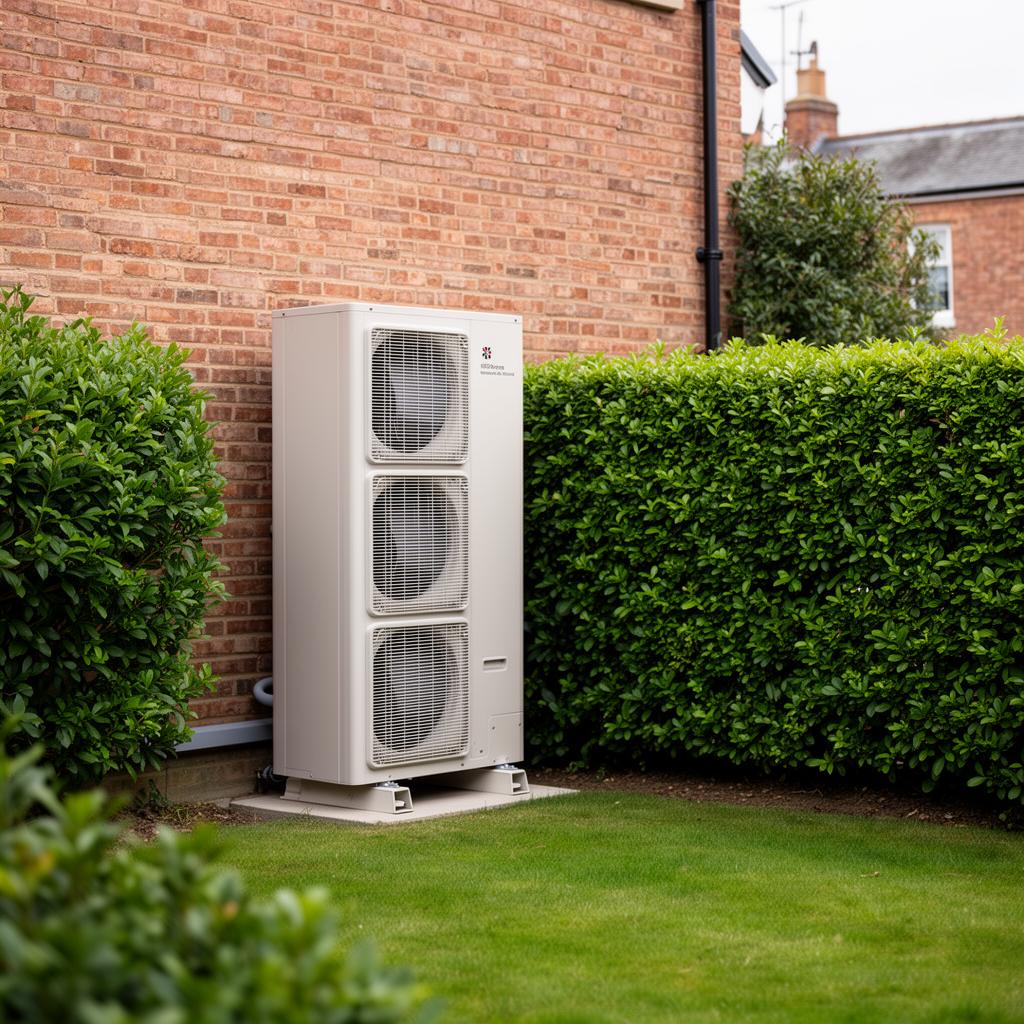
Yes, you can install an air source heat pump in a Victorian terrace in Lancashire, and thousands have been successfully fitted in similar properties across the UK. But it requires careful planning around three key challenges: limited outdoor space for the unit, the insulation level of the property, and ensuring the heating system can work at lower flow temperatures. Get these right, and a heat pump can heat a Victorian terrace effectively while qualifying for up to £7,500 in government grants.
Can You Install a Heat Pump in a Victorian Terrace?
Yes, you can install an air source heat pump in a Victorian terrace, but it requires careful planning. The main challenges are limited outdoor space for the unit, potentially undersized radiators, solid walls with poor insulation and noise proximity to neighbours. With proper design — including insulation upgrades, larger radiators or fan convectors and correct placement of the outdoor unit — a heat pump can effectively heat a Victorian terrace at running costs comparable to a gas boiler.
Many Lancashire Victorian terraces have rear yards or passageways where the outdoor unit can be positioned within permitted development rules (one metre from the boundary, below the highest part of the roof). The Boiler Upgrade Scheme provides a £7,500 grant towards the cost, bringing a typical installation down to £3,000 to £5,500 out of pocket. The key to success is insulating the property first — ideally internal wall insulation, loft insulation and draught-proofing — before sizing the heat pump to the reduced heat demand.
Lancashire has one of the highest concentrations of Victorian terraced housing in England. Streets of two-up-two-down and three-bed terraces dominate towns like Burnley, Blackburn, Nelson, Accrington, Darwen and Colne. These homes share common features: solid walls (brick or stone), compact back yards, small rooms with high ceilings, and gas boilers that are often the only heating source. Converting from gas to a heat pump is achievable but requires a different approach to a modern detached house.
Challenge 1: Where Does the Heat Pump Go?
An air source heat pump outdoor unit needs to be placed where it has good airflow, is accessible for maintenance, and meets noise regulations (42dB at the nearest neighbour’s boundary). In a Victorian terrace, the options are typically:
Back yard: This is the most common position. The unit sits against the back wall of the house or on the back yard floor. It needs clearance of at least 300mm from the wall behind and ideally 1 metre in front for airflow. In a typical Lancashire back yard of 3-5 metres deep, this is achievable but eats into your outdoor space. A compact heat pump like the Vaillant Arotherm Plus 5kW (measuring 960mm x 870mm x 410mm) takes up a modest footprint.
Side passage: Some terraces, particularly end-of-row and slightly larger properties, have a side passage or ginnel. This can work if the passage is wide enough (at least 1.2 metres) and there is adequate airflow. Avoid positioning the unit in a narrow, enclosed passage where noise can reverberate.
Front of property: Possible but less common. The unit is more visible, and noise towards the street and neighbouring front rooms needs careful assessment. Some homeowners in Lancashire have installed heat pumps in small front gardens or against front walls with acoustic screening.
Our guide to heat pump noise on terraced streets covers the noise considerations in detail.
Challenge 2: Insulation Levels
Victorian terraces in Lancashire typically have solid walls with no cavity, single-glazed or early double-glazed windows, and variable loft insulation. Their heat demand is high – typically 15,000-22,000kWh per year for a mid-terrace and 18,000-28,000kWh for an end-terrace.
Heat pumps work best in well-insulated homes because they operate more efficiently at lower flow temperatures. A poorly insulated terrace needs higher flow temperatures to keep warm, which reduces the heat pump’s efficiency (SCOP) and increases running costs.
The ideal sequence is: insulate first, then install the heat pump. Key insulation priorities for a Victorian terrace include:
- Loft insulation: Top up to 270mm if not already done. Cost: £300-£800. Often available free through government energy efficiency schemes.
- Solid wall insulation: Internal or external insulation dramatically reduces heat loss. Cost: £4,500-£14,000. May be funded through government energy efficiency schemes.
- Window upgrades: Double or secondary glazing reduces heat loss and draughts. Cost: £3,000-£7,000 for a full set, or £100-£500 per window for secondary glazing.
- Draught-proofing: Sealing gaps around doors, windows, floors and chimneys. Cost: £100-£300.
A fully insulated mid-terrace might have a heat demand of 8,000-12,000kWh, compared to 15,000-22,000kWh uninsulated. This lower demand means a smaller, cheaper heat pump running at higher efficiency. Our guide to solid wall insulation costs in Lancashire covers the options.
Challenge 3: Radiators and Flow Temperature
Gas boilers typically run at 60-70 degrees flow temperature. Heat pumps are most efficient at 35-45 degrees. If your existing radiators were sized for high flow temperatures (as most in Victorian terraces were), they may not deliver enough heat at the lower temperatures a heat pump prefers.
The solution is usually one or more of the following:
- Upgrade key radiators: Replace radiators in the main living rooms with larger models that provide the same heat output at lower flow temperatures. Typically 2-4 radiators need upgrading. Cost: £150-£300 per radiator including fitting.
- Add radiators: In some rooms, adding a second radiator is more practical than replacing the existing one with a much larger model. This is common in larger reception rooms.
- Run at 50 degrees: A compromise flow temperature of 50 degrees reduces heat pump efficiency slightly but allows more of the existing radiators to work adequately. With good insulation, this can be an acceptable trade-off.
- Underfloor heating (ground floor): If you are refurbishing the ground floor, installing underfloor heating provides the ideal low-temperature distribution for a heat pump. Cost: £1,500-£3,000 for the ground floor.
Sizing the Heat Pump
Heat pump sizing for a Victorian terrace depends on the heat demand after insulation improvements. Typical sizing for Lancashire terraces:
- Well-insulated mid-terrace (2-bed): 5-6kW heat pump
- Well-insulated mid-terrace (3-bed): 6-8kW heat pump
- Partially insulated end-terrace (3-bed): 8-10kW heat pump
- Poorly insulated end-terrace (3-bed): 10-12kW heat pump (but insulation should be prioritised first)
Oversizing is a common mistake. An oversized heat pump cycles on and off frequently, reducing efficiency and increasing wear. A properly sized heat pump runs for longer periods at lower intensity, which is more efficient and keeps the home at a more consistent temperature.
Costs for a Victorian Terrace Installation
Here is a realistic cost breakdown for a heat pump installation in a Lancashire Victorian terrace:
- Heat pump unit (6-8kW): £4,000-£7,000
- Installation labour and materials: £2,000-£3,500
- Hot water cylinder: £800-£1,500
- Radiator upgrades (3-4 radiators): £500-£1,200
- Heating controls: £200-£500
- Total before grant: £8,500-£13,700
- Less government grant: -£7,500
- Your cost: £1,000-£6,200
At the lower end, a well-insulated mid-terrace with a compact heat pump and minimal radiator upgrades can be installed for as little as £1,000-£2,000 after the grant. A larger, less-insulated end-terrace needing more extensive work will be towards the upper end. Our step-by-step guide to the government heat pump grant explains how to access the grant.
Hot Water in a Victorian Terrace
Most Victorian terraces in Lancashire currently have a combi boiler with no hot water cylinder. A heat pump requires a hot water cylinder because it heats water more gradually than a gas boiler. You will need space for a cylinder (typically 170-210 litres, roughly 600mm diameter x 1,400mm tall).
In a small terrace, finding space for the cylinder is often the biggest internal challenge. Common locations include an upstairs airing cupboard, under the stairs, or in a bedroom wardrobe space. Your installer will advise on the best location during the survey.
Will a heat pump keep a Victorian terrace warm enough in winter?
Yes, when properly sized and installed with adequate insulation and appropriately sized radiators. Heat pumps provide consistent, gentle warmth rather than the rapid blast of heat from a gas boiler. Many terrace owners report that rooms feel more evenly warm with fewer hot and cold spots. The transition from a gas boiler to a heat pump does require slightly different heating habits – running the system for longer at lower temperatures rather than short, intense heating bursts.
Do I need to insulate before installing a heat pump?
It is strongly recommended. The government grant requires that any loft or cavity wall insulation recommended on your EPC is addressed before or at the same time as the heat pump installation. Beyond the grant requirement, insulating first reduces the heat demand, allowing a smaller and cheaper heat pump to be used, and ensuring it runs at higher efficiency with lower running costs.
Can I keep my gas supply as backup?
Yes. Some homeowners keep a gas connection for a gas hob even after installing a heat pump for heating. You can also consider a hybrid heat pump system that uses a heat pump for most heating but switches to a gas boiler during the coldest periods. Our guide to hybrid heat pumps in Lancashire explores this option in detail.
See what these numbers mean for your home
Free instant estimate — costs, savings, payback and grants for your region.

Related Articles
Heat Pump Installation Costs in 2026: The Real Numbers
Heat pumps are now the default replacement for gas boilers in UK government policy, but the question most homeowners ask first is always the same: how much does it actually…
28 May 2026
Infrared Panels vs Heat Pumps: Which Heating System Is Right for Your Home?
Comparing infrared panels vs heat pumps across cost, efficiency, running expenses, and grant eligibility. This guide helps UK homeowners choose the right low-carbon heating system for their property.
8 May 2026
Renewable Heating vs Gas Boiler: An Honest Cost and Comfort Comparison
An honest comparison of heat pumps, biomass and solar thermal against gas boilers on cost, comfort, maintenance, grants and carbon savings for UK homes.
8 May 2026