Can Your Home Electrics Handle an EV Charger? A Lancashire Guide
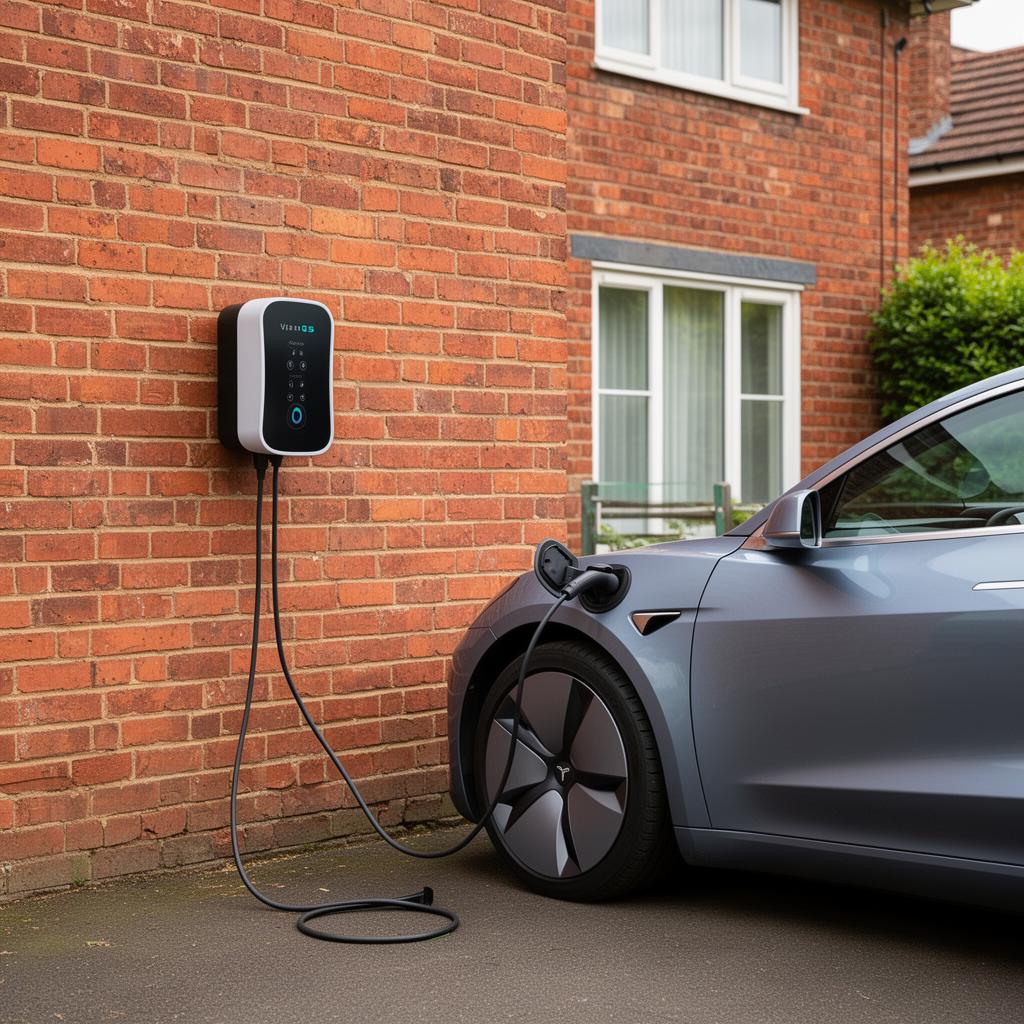
Most Lancashire homes with a standard single-phase electrical supply and a modern consumer unit can support a 7kW EV charger without any supply upgrade. A 7kW charger draws about 32 amps, and a typical domestic supply provides 80-100 amps total. As long as your other electrical demand does not regularly exceed 50-70 amps simultaneously, there is headroom for an EV charger. However, some older Lancashire properties with smaller supplies, outdated wiring or high existing electrical loads may need attention before a charger can be safely installed.
Can Your Home Electrics Handle an EV Charger?
Most Lancashire homes with a modern consumer unit and an 80A or 100A main fuse can support a 7kW EV charger without an electrical upgrade. However, older properties with a 60A fuse, outdated wiring or no earthing rod may need a consumer unit upgrade (£300 to £600) or a main fuse upgrade from your distribution network operator (usually free from Electricity North West). Your OZEV-approved installer will assess your supply as part of the standard installation survey.
If your supply is limited, a load-balancing charger (such as the Ohme Home Pro or Zappi) automatically adjusts the charging speed based on your household’s current electrical demand, preventing overload without requiring a costly upgrade. These smart chargers cost £800 to £1,100 installed and are eligible for the OZEV Electric Vehicle Homecharge Scheme grant of up to £350 where applicable.
This is a common concern for EV buyers across Lancashire, particularly those in older terraced houses in Burnley, Blackburn and Preston, or in rural properties that may have limited electrical supplies. Here is a practical guide to checking your electrical capacity and understanding what might need upgrading.
Understanding Your Electrical Supply
Your home has a maximum electrical capacity determined by the main fuse (also called the service fuse or cut-out fuse) provided by Electricity North West, the distribution network operator for Lancashire and Greater Manchester. The most common ratings are:
- 60 amps: Found in some older properties, particularly pre-1970 homes that have not had an electrical upgrade. This is tight for an EV charger.
- 80 amps: Common in properties from the 1970s-1990s. Adequate for a 7kW EV charger in most cases.
- 100 amps: Standard in modern properties and many that have been rewired. Plenty of capacity for an EV charger plus normal domestic loads.
You can check your main fuse rating by looking at the cut-out fuse next to your electricity meter. It is usually a large fuse carrier with the amperage marked on it. If you are not sure, your EV charger installer will check this during their survey.
The Demand Calculation
A 7kW EV charger draws 32 amps on a single-phase supply. To check if your supply can handle this, consider your peak simultaneous demand from other appliances:
- Electric shower (9.5kW): 41 amps
- Electric oven: 13 amps
- Kettle: 13 amps
- Immersion heater (3kW): 13 amps
- Washing machine: 10 amps
- Electric hob (if applicable): 30 amps
- Heat pump (if applicable): 10-20 amps
In practice, not all of these run at the same time. Your electric shower is the biggest single demand, and if you are showering while the EV charges, the oven is on and the kettle is boiling, you could momentarily exceed 100 amps. But this peak lasts only minutes, and modern EV chargers can be set to reduce their power if the total load gets too high (this is called load management).
On a 100-amp supply, a 7kW charger is almost always fine. On an 80-amp supply, it works in most situations but may need load management. On a 60-amp supply, you will likely need either a supply upgrade or a charger set to a lower power (3.6kW instead of 7kW).
Your Consumer Unit (Fuse Box)
The consumer unit is the distribution board inside your home that contains your circuit breakers. An EV charger needs its own dedicated circuit with a 32-amp MCB (miniature circuit breaker) and RCD protection.
Modern consumer unit (split-load with RCDs): If your consumer unit was installed in the last 15-20 years and has modern MCBs and RCDs, adding an EV charger circuit is straightforward. The installer adds a new 32-amp MCB in a spare way. Most modern units have spare ways for this purpose.
Older consumer unit (rewireable fuses or no RCD): If your property has an old fuse box with rewireable fuses (wire-type fuses rather than modern switches), it will need upgrading to a current-standard consumer unit before or at the same time as the EV charger installation. This adds £300-£500 to the project cost but brings your electrics up to current safety standards.
Many Lancashire terraces built in the early 1900s were rewired in the 1960s-70s and may still have consumer units from that era. If yours has not been upgraded, the EV charger installation is a good trigger to modernise it.
Load Management Solutions
If your supply is borderline (60-80 amps), load management allows you to install a 7kW charger without a supply upgrade. There are two main approaches:
CT clamp monitoring: A current transformer (CT) clamp is fitted around the main incoming cable. It monitors real-time demand and signals the EV charger to reduce its power if total household demand approaches the supply limit. When demand drops (the shower turns off, the oven finishes), the charger ramps back up. This costs about £50-£100 extra and is built into some charger models (the Zappi, for example, has this feature built in).
Reduced power setting: The simplest option is to set the charger permanently to a lower power, such as 3.6kW (16 amps) instead of 7kW (32 amps). This halves the demand on your supply but doubles the charging time. For overnight charging (8+ hours available), 3.6kW still provides a full charge for most EVs and is perfectly adequate for daily use.
Supply Upgrades
If you need a supply upgrade (from 60 amps to 100 amps), this is done by Electricity North West. The process involves:
- Applying to Electricity North West for a supply upgrade
- They assess whether the local network can support the increase
- An engineer visits to replace the main fuse and potentially the meter tails
- Cost: typically £0-£500 for a straightforward upgrade (Electricity North West does not charge for the supply increase itself, but there may be costs for internal work)
- Timeline: 4-12 weeks from application to completion
In most cases, a supply upgrade is not needed. Your EV charger installer will assess this as part of their survey and advise you if an upgrade is necessary.
Wiring Considerations for Lancashire Terraces
Lancashire’s terraced houses present some specific wiring challenges for EV charger installation:
Meter and consumer unit location: In many terraces, the electricity meter is under the stairs or in a hallway cupboard at the front of the house, while the most convenient charger location is at the back (near the back yard or alley). The cable run from the consumer unit to the charger location may need to go through or around several rooms, which increases installation complexity and cost.
Cable routing: The 6mm or 10mm cable used for an EV charger is thick and relatively inflexible. Running it neatly through a terraced house requires careful routing – typically along skirting boards, through the loft space, or externally along the wall. Good installers plan the route to minimise visual impact.
Shared yards and alleys: Some Lancashire terraces have shared access through back alleys. If you park in a shared area, the charger cable needs to reach your parking spot without creating a trip hazard for neighbours. Cable management solutions and retractable cables can help.
What Your Installer Should Check
A competent EV charger installer will check all of the following during their pre-installation survey:
- Main supply fuse rating (60A, 80A or 100A)
- Consumer unit type and available spare ways
- Earthing arrangement (TN-S, TN-C-S or TT)
- Cable route from consumer unit to charger location
- Total length of cable run (affects cable size selection)
- Whether load management is needed
- The proposed charger mounting location
- Wi-Fi signal at the charger location (smart chargers need connectivity)
The survey can often be done remotely using photos, but complex installations may need an in-person visit. Our guide to home EV charger installation in Manchester covers the full installation process.
Will an EV charger increase my electricity bill significantly?
Yes, but the increase is much less than you would spend on petrol. Charging an average EV at home for 10,000 miles per year adds approximately 2,500kWh to your annual electricity usage, costing £200-£600 depending on your tariff. On a smart overnight tariff, it could be as low as £190. Compare this to £1,200-£1,600 per year for petrol.
Can I install a 22kW charger at home?
A 22kW charger requires a three-phase electricity supply, which most UK homes do not have. Residential properties almost exclusively have single-phase supplies that support a maximum of 7kW for EV charging. Three-phase supplies are available for commercial properties and some large domestic properties but require a special application to the DNO and significantly higher connection costs. For most Lancashire homes, 7kW is the practical maximum.
Do I need building regulations approval for an EV charger?
EV charger installations must comply with Part P of the Building Regulations (electrical safety). Your installer should either be electrically qualified (meaning they can self-certify the work) or obtain building control approval from your local authority. All reputable EV charger installers are electrically qualified, so you should not need to arrange building control involvement yourself.
See what these numbers mean for your home
Free instant estimate — costs, savings, payback and grants for your region.

Related Articles
Home EV Charger Costs in the North West: 2026 Prices, Grants and Running Costs
A 7kW home EV charger costs £800–£1,500 installed in the North West. Here are the 2026 numbers — including the £500 grant and 2–3p-per-mile overnight charging.
10 June 2026EV Chargers for Renters and Flat Owners: How the £500 Grant Works (2026)
The OZEV Chargepoint Grant now pays £500 per socket — but only renters and flat owners qualify. Here's exactly how to claim it in 2026.
10 June 2026
EV Home Charging: How Much Does It Really Cost to Charge at Home in 2026?
Update (June 2026): The OZEV Electric Vehicle Chargepoint Grant provides £500 per socket towards home charger installation for eligible renters and flat owners (increased from April 2026). Electric vehicles are…
28 April 2026