How Noisy Are Air Source Heat Pumps? A Realistic Guide for Terraced Streets
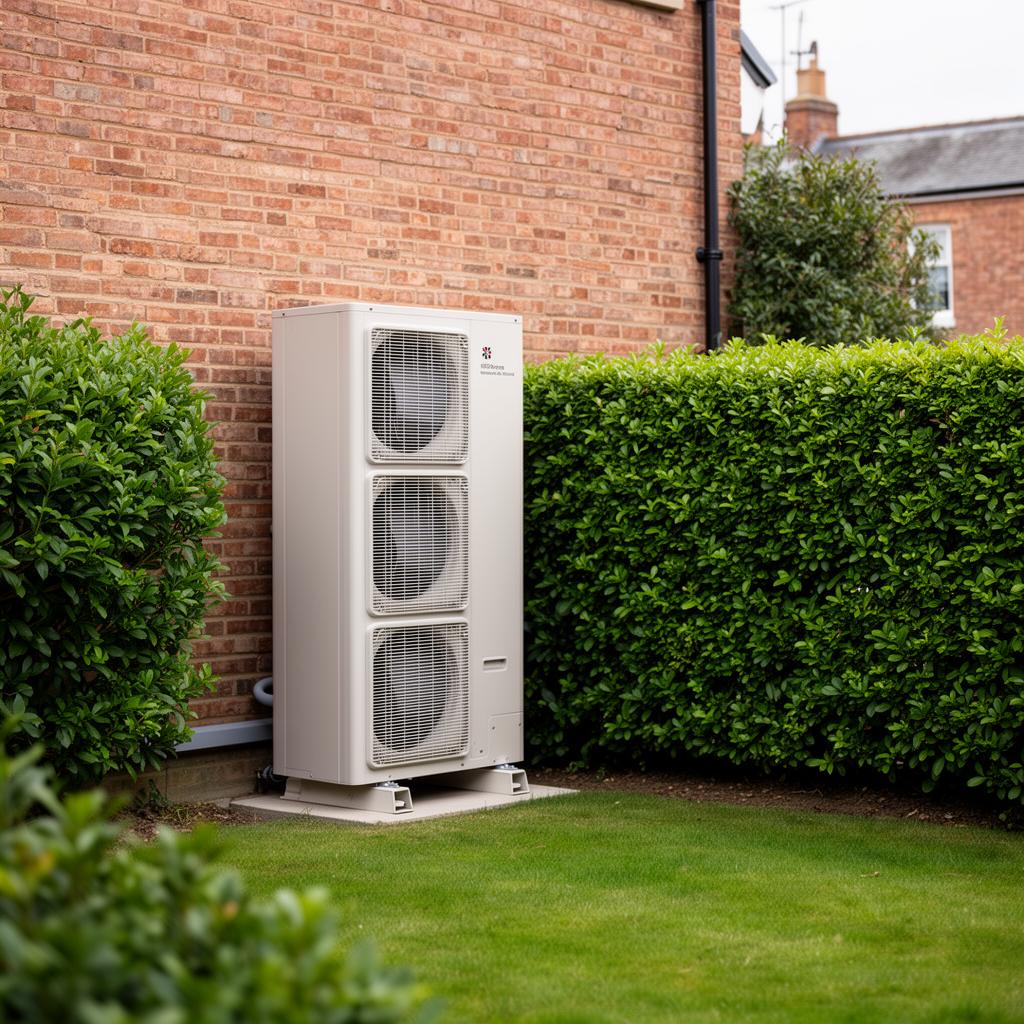
A modern air source heat pump runs at approximately 40-55 decibels measured from one metre away, which is roughly the same volume as a domestic fridge or a quiet conversation. At the boundary of a typical terraced house garden (3-4 metres from the unit), the sound drops to around 30-42 decibels – below the level of background noise in most urban streets across Lancashire and Greater Manchester. But noise is subjective, and in tight terraced streets where your neighbour’s bedroom window may be just 2-3 metres from your heat pump, placement and product choice matter enormously.
How Noisy Is an Air Source Heat Pump?
A modern air source heat pump produces 40 to 55 decibels at one metre — roughly the same volume as a quiet conversation or a domestic fridge-freezer. At a distance of three metres, this drops to around 35 to 45 decibels. Under permitted development rules, the heat pump must not exceed 42 decibels at the nearest neighbour’s window, which most current models achieve when installed correctly.
On terraced streets, noise is a legitimate concern because outdoor units sit closer to neighbouring properties. Choosing a low-noise model (such as Vaillant Arotherm, Daikin Altherma or Samsung EHS Mono, all rated below 50dB), mounting on anti-vibration feet rather than directly onto a wall, and positioning the unit away from bedroom windows all help. Sound-absorbing acoustic barriers or fencing can reduce perceived noise by a further 5 to 10 decibels if needed. Your MCS-certified installer must complete an MCS 020 noise assessment before installation to confirm compliance.
Heat pump noise is the number one concern we hear from homeowners in terraced streets across Burnley, Blackburn, Bolton, Rochdale and Oldham. It is a legitimate worry, and the answer is not simply “they are quiet” – it depends on the specific unit, where it is placed, how it is installed and what your neighbours’ expectations are. Here is the full picture.
How Loud Are Heat Pumps in Real Terms?
Decibel levels can be confusing, so here are some everyday comparisons to put heat pump noise in context:
- Rustling leaves: 20dB
- Quiet library: 30dB
- Fridge humming: 35-40dB
- Quiet air source heat pump at 1 metre: 40-45dB
- Normal conversation at 1 metre: 50-60dB
- Standard air source heat pump at 1 metre: 48-55dB
- Washing machine spin cycle: 70-75dB
- Gas boiler flue: 45-55dB
Importantly, sound reduces with distance. Every time you double the distance from the heat pump, the sound level drops by roughly 6 decibels. So a unit measuring 50dB at 1 metre would be about 44dB at 2 metres and 38dB at 4 metres. By the time you are 8 metres away, it is barely audible above normal background noise.
The Challenge with Terraced Houses
The issue with Lancashire’s terraced streets is that distances are short. A typical two-up-two-down terrace in Accrington or Nelson has a back yard of perhaps 4-6 metres deep and 3-5 metres wide. Your heat pump might be 2 metres from your own back door and 3 metres from your neighbour’s bedroom window.
Planning regulations in England require that a heat pump must not exceed 42dB at the nearest neighbour’s boundary (measured according to planning standards). This is achievable with most modern units if they are positioned thoughtfully, but it does limit your options compared to a detached house with a large garden.
The noise is also not constant. Heat pumps run harder (and louder) in cold weather when they need to extract more heat from cold air. On a mild October evening, your heat pump might tick along at 38dB. On a freezing January night, it could ramp up to 50-55dB. This is the scenario that catches some homeowners off guard – the pump is fine most of the time but becomes noticeably louder in the deepest cold spells when it works hardest.
Quietest Heat Pump Models for Terraced Homes
Not all heat pumps are equally quiet. Here are some of the quieter models that are well-suited to terraced properties in Lancashire:
- Vaillant Arotherm Plus (5kW): 38dB at 3 metres in heating mode. One of the quietest units on the market and a popular choice for terraced streets.
- Daikin Altherma 3 (4-8kW): 40dB at 1 metre in standard operation. Well-regarded for consistent low noise across different outdoor temperatures.
- Samsung EHS Mono (5kW): 41dB at 1 metre. Good value and relatively quiet, though it can be louder in defrost mode.
- Grant Aerona3 (6kW): 40dB at 1 metre. A popular choice in the North West with good cold weather performance.
- Mitsubishi Ecodan (5kW): 45dB at 1 metre. Slightly louder but very reliable and widely available in Lancashire.
When comparing noise figures, make sure you are comparing like with like. Some manufacturers quote noise at 1 metre, others at 3 metres. Always check the product data sheet for the standardised sound power level (LWA), which allows fair comparison.
Installation Tips to Minimise Noise
Where and how the heat pump is installed makes as much difference as the model you choose. A good installer in Lancashire will consider all of these factors:
Position it away from neighbour’s windows. Even a metre extra distance reduces noise noticeably. If your back yard allows it, place the unit against the back wall of the yard rather than right against the house wall near bedroom windows.
Avoid corners and enclosed spaces. Sound bounces off walls, and a heat pump tucked into a corner between two walls can sound louder than one in an open position. This is a common mistake in small Lancashire yards where the temptation is to hide the unit in a corner.
Use anti-vibration mounts. The heat pump should sit on rubber or composite anti-vibration pads rather than directly on a concrete base. Vibrations transmitted through the ground into building structures can create low-frequency noise indoors that is more annoying than the airborne sound. Good anti-vibration mounts cost £50-£100 and make a real difference.
Consider acoustic barriers. A purpose-built acoustic enclosure or fence panel positioned between the heat pump and the nearest sensitive location (your neighbour’s window or your own bedroom) can reduce perceived noise by 5-10dB. The barrier must not restrict airflow around the unit, so it needs to be designed carefully – not just a wooden fence panel nailed up close to the pump.
Ensure proper pipework installation. Vibrations can transmit through copper pipework into the house, causing a humming noise indoors. Flexible connections between the heat pump and the fixed pipework prevent this.
Planning Permission and the Noise Limit
Air source heat pumps benefit from permitted development rights in England, meaning you generally do not need planning permission. However, one of the conditions is that the unit must comply with planning standards, which include a noise limit of 42dB at the nearest neighbour’s habitable room.
Your qualified installer is required to carry out a noise assessment as part of the installation design. They use the manufacturer’s sound data and the distances to neighbouring properties to calculate whether the 42dB limit will be met. If it cannot be met with the proposed positioning, they must either relocate the unit, choose a quieter model, or you may need to apply for full planning permission.
In very tight terraced rows where the back yards are small and neighbours are close, meeting the 42dB limit requires careful specification. It is achievable in most cases with a quiet model and good positioning, but it is not automatic – your installer needs to demonstrate compliance.
What About the Defrost Cycle?
One noise event that catches new heat pump owners off guard is the defrost cycle. When outdoor temperatures drop below about 5 degrees and humidity is high (a frequent Lancashire scenario), ice forms on the heat pump’s outdoor coil. The unit periodically reverses its cycle to melt this ice, which can produce a brief burst of louder noise and a rush of steam. This typically lasts 2-5 minutes and happens every 30-90 minutes in cold, damp weather.
The defrost noise is usually 5-10dB louder than normal operation and is temporary. Most people get used to it quickly, but it is worth mentioning to your neighbours before installation so they know what to expect.
Talking to Your Neighbours
While you do not legally need your neighbours’ permission to install a heat pump under permitted development, having a conversation with them before installation is common sense and good neighbourliness. Explain what the unit will look like, where it will go, and what it will sound like. Offer to discuss positioning if they have concerns. Most neighbours are understanding, especially when they realise a heat pump is no louder than a boiler or air conditioning unit.
If you are considering a heat pump for your Lancashire terrace, talking to your installer about noise early in the process ensures the system is designed with both performance and neighbourly relations in mind.
Are heat pumps noisier in winter?
Yes. Heat pumps work harder when the outdoor temperature is lower, which means the compressor and fan run at higher speeds. A unit that is barely audible on a mild autumn day may be noticeably louder on a cold January night. Most modern units have variable-speed compressors that minimise this effect, but some increase in noise during cold weather is normal.
Can I enclose a heat pump to reduce noise?
You can use an acoustic barrier or screen, but you must not enclose the unit fully. Heat pumps need a clear airflow path to work efficiently. Restricting airflow by boxing the unit in will reduce performance, increase running costs and can damage the system. Purpose-designed acoustic enclosures that maintain airflow are available but typically cost £500-£1,500.
What if my neighbour complains about heat pump noise?
If the installation meets the permitted development noise limit of 42dB at the neighbour’s property and is qualified, you are within your rights. However, addressing concerns proactively is better than relying on regulations. Adjusting the heat pump’s night-mode settings (which cap the fan speed and reduce noise by 3-5dB) can resolve most complaints. If there is a genuine issue, an acoustic assessment by a qualified engineer can identify solutions.
See what these numbers mean for your home
Free instant estimate — costs, savings, payback and grants for your region.

Related Articles
Heat Pump Installation Costs in 2026: The Real Numbers
Heat pumps are now the default replacement for gas boilers in UK government policy, but the question most homeowners ask first is always the same: how much does it actually…
28 May 2026
Infrared Panels vs Heat Pumps: Which Heating System Is Right for Your Home?
Comparing infrared panels vs heat pumps across cost, efficiency, running expenses, and grant eligibility. This guide helps UK homeowners choose the right low-carbon heating system for their property.
8 May 2026
Renewable Heating vs Gas Boiler: An Honest Cost and Comfort Comparison
An honest comparison of heat pumps, biomass and solar thermal against gas boilers on cost, comfort, maintenance, grants and carbon savings for UK homes.
8 May 2026