Home EV Charger Installation in Manchester: Costs and Best Options
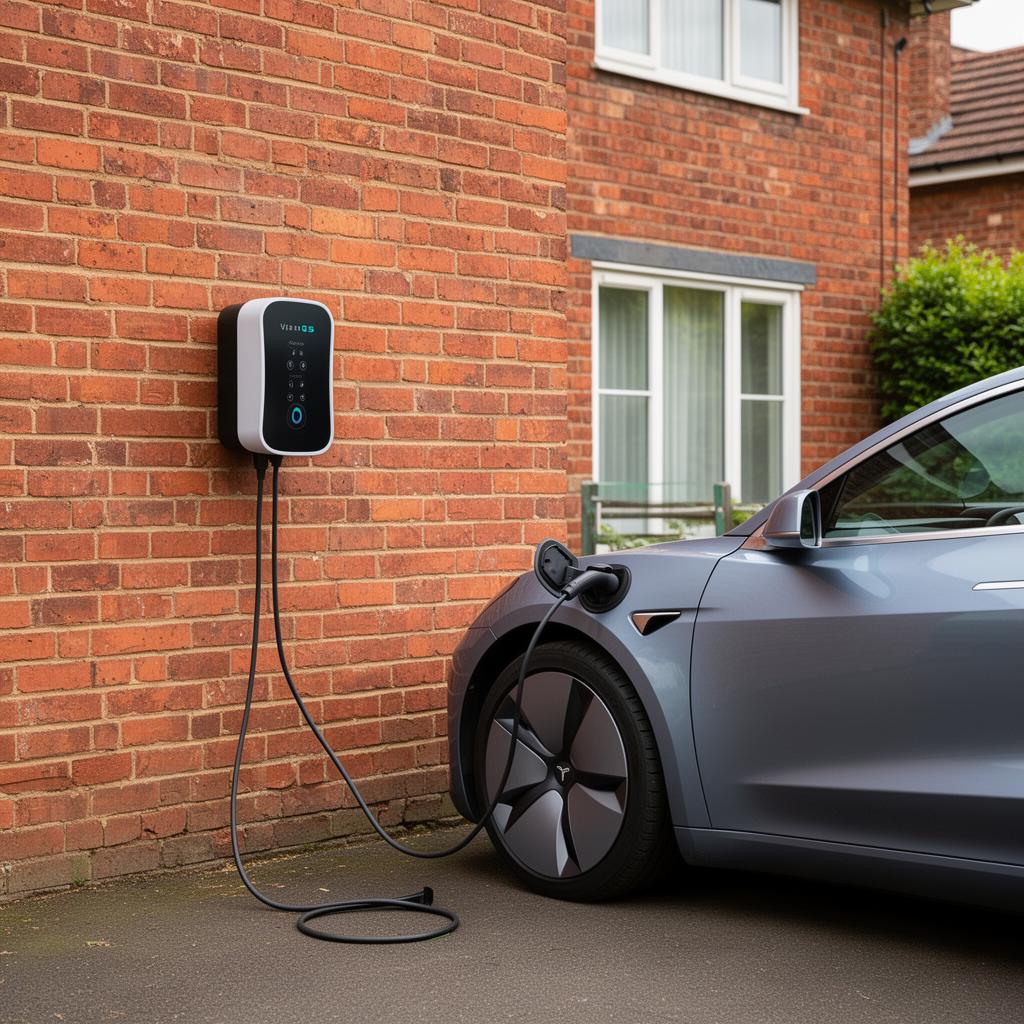
A home EV charger installation in Manchester costs between £800 and £1,200 for a standard 7kW unit fully fitted, including the charger, cabling, mounting and connection to your consumer unit. That gives you a full charge overnight for most electric cars, at roughly a third of the cost of public charging and a fraction of petrol costs. With Manchester’s Clean Air Zone influencing more drivers to go electric, a home charger is becoming as essential as a driveway.
How Much Does a Home EV Charger Cost in Manchester?
A home EV charger in Manchester costs £800 to £1,300 fully installed in 2026, including the unit, cabling, mounting and electrical connection. The Ohme Home Pro, Zappi and Pod Point Solo 3 are the most popular 7kW smart chargers in the region. If you qualify for the OZEV Electric Vehicle Homecharge Scheme (EVHS) grant — available for flats and rental properties — you can claim up to £350 towards the installation cost.
| Charger Model | Power | Installed Cost | Key Feature |
|---|---|---|---|
| Ohme Home Pro | 7.4kW | £850–£1,000 | Smart tariff integration (Octopus Go) |
| Zappi | 7kW | £900–£1,100 | Solar panel integration, eco mode |
| Pod Point Solo 3 | 7kW | £800–£950 | Simple setup, no monthly fees |
| Wallbox Pulsar Plus | 7.4kW | £850–£1,050 | Compact design, power sharing |
| Easee One | 7.4kW | £950–£1,300 | Load balancing, multi-charger ready |
All home chargers must be installed by an OZEV-approved installer and comply with the 2022 Electric Vehicle Smart Charge Point Regulations, meaning they must be smart-enabled, capable of off-peak scheduling and preset to charge during off-peak hours by default. Most Manchester installations are completed in two to four hours with no disruption to your existing electrical supply.
Whether you live in a detached house in Hale, a semi in Bury or a terrace in Salford, the process of getting a home charger installed is simpler than most people expect. Here is everything you need to know about costs, charger options and the installation process in Greater Manchester.
What Does a Home EV Charger Cost?
The total cost has two components: the charger unit itself and the installation labour plus materials.
- Charger unit: £350-£800 depending on brand and features
- Standard installation: £300-£500 for a straightforward fit (charger mounted on the wall near the consumer unit, cable run under 10 metres)
- Complex installation: £500-£900 if you need a longer cable run, ground works for an underground cable, or an electrical supply upgrade
A typical total cost for a mid-range charger with standard installation in Manchester comes to £900-£1,100. Premium chargers with advanced features like solar integration push the total to £1,200-£1,500.
Best Home EV Chargers for Manchester Homes
Here are the most popular and well-reviewed home chargers that Manchester installers commonly fit:
Ohme Home Pro (£450-£550): A smart charger that integrates with time-of-use tariffs like Octopus Agile and Intelligent Go. It automatically charges your car when electricity is cheapest overnight, which can cut charging costs to as low as 3-5p per kWh. It is the top choice for cost-conscious drivers in the North West.
Zappi by myenergi (£700-£800): Made in Lincolnshire, the Zappi is the go-to charger if you have or plan to get solar panels. It can divert surplus solar electricity to your car, giving you genuinely free driving miles. It also works with time-of-use tariffs. Popular with eco-conscious homeowners across South Manchester and the Trafford area.
Pod Point Solo 3 (£400-£500): A reliable, no-frills smart charger with a clean design. It connects to the Pod Point app for scheduling and monitoring. A good mid-range option that does everything most drivers need without the premium price tag.
Easee One (£500-£600): A compact, well-designed charger from Norway that looks smart on the wall and has excellent software. It is load-balancing capable, which is useful if you have two EVs or need to manage your home’s electrical capacity carefully.
The Installation Process
A typical home EV charger installation in Manchester takes 2-4 hours and follows these steps:
Survey: The installer checks your consumer unit (fuse box), electrical supply capacity, cable route from the consumer unit to the charger location, and where you will park the car. Many Manchester installers do this remotely using photos you send, which speeds things up.
Consumer unit work: A new dedicated circuit breaker is installed in your consumer unit for the charger. If your consumer unit is old (a rewireable fuse box rather than modern MCBs), it may need upgrading first, which adds £200-£400.
Cable run: The installer routes a heavy-duty cable (typically 6mm or 10mm twin and earth) from the consumer unit to the charger location. In a straightforward installation where the charger is on an exterior wall near the consumer unit, this is a short, simple run. If your consumer unit is at the back of the house and you want the charger at the front, the cable route is longer and potentially more disruptive.
Charger mounting: The charger unit is fixed to the wall (or a free-standing post if you do not have a suitable wall) and connected. The installer tests everything and sets up the app on your phone.
DNO notification: All EV charger installations must be notified to your local Distribution Network Operator (Electricity North West in the Manchester area). Your installer handles this paperwork.
Charging Costs: How Much Does It Cost to Charge at Home?
This is where home charging really shines compared to public chargers or petrol:
- Home charging on standard tariff (24p/kWh): A typical 60kWh EV battery costs about £14.40 for a full charge, giving 180-200 miles of range. That is roughly 7-8p per mile.
- Home charging on Octopus Go (7.5p/kWh off-peak): The same charge costs about £4.50. That is roughly 2-2.5p per mile.
- Public rapid charger (55-79p/kWh): The same charge costs £33-£47. That is 18-26p per mile.
- Petrol equivalent (150p/litre, 40mpg): 200 miles costs about £34. That is roughly 17p per mile.
Home charging on a smart tariff can be up to 85% cheaper per mile than petrol. Even on a standard tariff, it is around 55% cheaper. For a driver covering 10,000 miles per year, the annual fuel saving is £900-£1,400 compared to petrol. Our detailed comparison of EV charging costs vs petrol for Lancashire drivers covers the full picture.
Do You Need to Upgrade Your Electrics?
Most Manchester homes with a modern consumer unit and a standard single-phase electrical supply (which is what virtually all homes have) can support a 7kW EV charger without any supply upgrade. The charger draws about 32 amps, and a standard domestic supply provides 80-100 amps total.
However, if you have an older property with a smaller electrical supply (60 amps, still found in some older Lancashire homes), or if you are already running high-demand equipment like an electric shower, heat pump and oven simultaneously, you may need the charger set to a lower power or have your supply upgraded. Our guide on whether your home electrics can handle an EV charger covers this in detail.
Terraced Houses and On-Street Parking
If you do not have a driveway or dedicated parking space, home charging is more complicated but not impossible. Manchester City Council has been expanding on-street charging infrastructure, and there are several approaches for terrace dwellers:
- Trailing cable: You can run a cable from a charger on your house wall to a car parked on the street, using a cable cover to prevent trip hazards. Some councils allow this with conditions, though Manchester’s policy is still being developed.
- Lamp post charging: Several Manchester streets now have lamp post-mounted chargers. Check the Zap-Map app for locations near you.
- Community charging hubs: Manchester is developing neighbourhood charging hubs in residential areas. These are not quite home charging but offer convenient local options.
For terraced streets across Moss Side, Rusholme and Fallowfield, the on-street charging situation is improving but remains a challenge. If you rely on street parking, factor public charging availability into your EV decision.
Solar and EV Charging Together
If you have solar panels (or plan to get them), combining solar with a Zappi or similar solar-diverting charger means you can charge your car for free during sunny days. In Manchester, a 4kW solar system could provide 3,000-4,000 free miles per year, depending on when the car is parked at home during daylight hours.
For households working from home or with a car parked during the day, this combination is excellent. Our guide to solar panels for 3-bed semis in Manchester explains how to size a system that includes EV charging capacity.
Can I use a 3-pin plug instead of a dedicated charger?
Technically yes – most EVs come with a granny cable that plugs into a standard 3-pin socket. However, this charges at only 2.3kW (taking 24+ hours for a full charge), puts sustained load on a domestic socket (which can overheat if the wiring is old), and is intended as emergency use only. A dedicated 7kW charger is 3 times faster and much safer for daily use.
Do I need planning permission for a home EV charger?
No. Home EV chargers are permitted development in England as long as the charger is not facing a highway on a listed building. Chargers must not exceed 0.2 cubic metres in size and must be removed when no longer needed. For the vast majority of Manchester homes, no planning application is required.
How long does installation take?
A standard installation takes 2-4 hours. If a consumer unit upgrade or long cable run is needed, it may take a full day. Most Manchester installers can complete the whole process from survey to working charger within 2-4 weeks, with the actual installation day being the only time they need access to your home.
See what these numbers mean for your home
Free instant estimate — costs, savings, payback and grants for your region.

Related Articles
Home EV Charger Costs in the North West: 2026 Prices, Grants and Running Costs
A 7kW home EV charger costs £800–£1,500 installed in the North West. Here are the 2026 numbers — including the £500 grant and 2–3p-per-mile overnight charging.
10 June 2026EV Chargers for Renters and Flat Owners: How the £500 Grant Works (2026)
The OZEV Chargepoint Grant now pays £500 per socket — but only renters and flat owners qualify. Here's exactly how to claim it in 2026.
10 June 2026
EV Home Charging: How Much Does It Really Cost to Charge at Home in 2026?
Update (June 2026): The OZEV Electric Vehicle Chargepoint Grant provides £500 per socket towards home charger installation for eligible renters and flat owners (increased from April 2026). Electric vehicles are…
28 April 2026