Air Source Heat Pumps in Bolton and Wigan: Costs, Grants and Running Costs
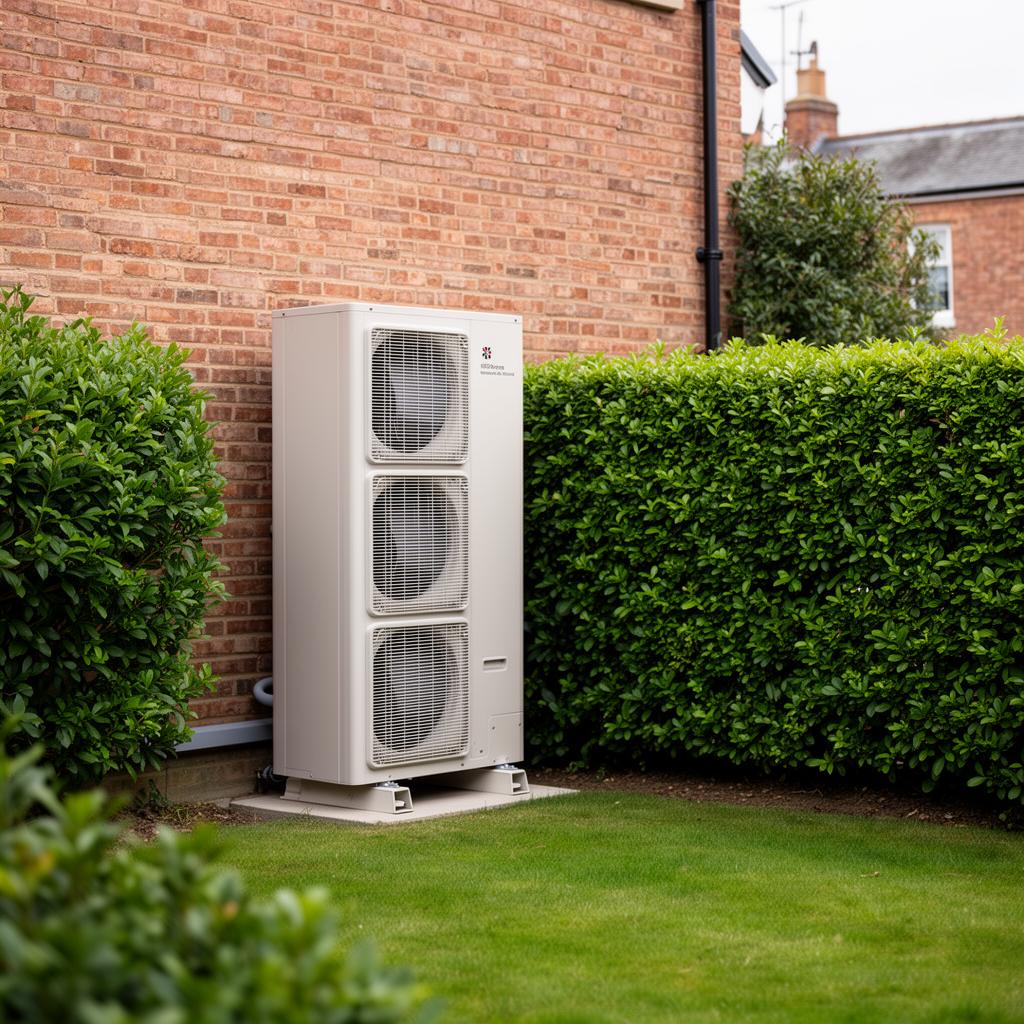
An air source heat pump (ASHP) for a typical semi-detached home in Bolton or Wigan costs between £8,000 and £14,000 before grants. With up to £7,500 in government grants, that drops to between £500 and £6,500 out of pocket. Running costs are currently comparable to a gas boiler, and the gap is closing as electricity prices fall relative to gas. Here is what you need to know if you are considering one for your home.
What Is an Air Source Heat Pump and How Does It Work?
An air source heat pump works a bit like a fridge in reverse. It absorbs heat from the outside air (even when it is cold) and uses it to heat water, which then flows through your radiators or underfloor heating to warm your home. It also heats your hot water.
The key measure of how well a heat pump performs is its COP, or Coefficient of Performance. A COP of 3.0 means that for every 1 kWh of electricity the pump uses, it produces 3 kWh of heat. In the Bolton and Wigan area, where winter temperatures typically sit between 2-7°C, a well-installed ASHP may achieve a seasonal average COP of 2.5-3.5. That makes it roughly 2.5 to 3.5 times more efficient than a direct electric heater, and significantly more efficient than a gas boiler (which operates at around 90% efficiency at best).
Heat pumps do work harder when temperatures drop below freezing, and their COP falls. But even at -5°C, a modern ASHP still delivers a COP of around 2.0-2.5. Greater Manchester’s relatively mild winters (rarely dropping below -5°C for extended periods) actually make it a decent location for heat pumps.
How Much Does an Air Source Heat Pump Cost in Bolton and Wigan?
The total installed cost depends on the size of your home, the existing heating system, and how much additional work is needed (such as upgrading radiators or adding insulation). Here is what you can expect from qualified local installers in the BL and WN postcode areas:
Small home (2-bed terrace): £8,000-£10,000 before grant, £500-£2,500 after government grant
Medium home (3-bed semi): £10,000-£12,000 before grant, £2,500-£4,500 after government grant
Larger home (4-bed detached): £12,000-£14,000 before grant, £4,500-£6,500 after government grant
These prices include the heat pump unit, installation, controls, and any necessary modifications to your heating distribution system. Some homes may need larger radiators or additional insulation to get the best performance from a heat pump, which can add £1,000-£3,000 to the total.
The 0% VAT rate on heat pumps (in place until at least March 2027) means there is no VAT to add on top of these figures, which saves you another £1,600-£2,800 compared to the standard 20% rate.
The government heat pump grant: £7,500 Towards Your Heat Pump
the government heat pump grant offers a government grant (currently up to £7,500, subject to eligibility) towards the cost of an air source heat pump. The grant is available to homeowners in England and Wales who are replacing an existing fossil fuel heating system (gas, oil, or LPG boiler). It is not means-tested, so your income does not affect eligibility.
To qualify, you need:
– A valid EPC for your property (dated within the last 10 years)
– No outstanding EPC recommendations for loft or cavity wall insulation (you need to have these done first, or show they are not applicable)
– A qualified installer to carry out the work and apply for the grant on your behalf
The grant is deducted from your installation quote, so you never need to pay the full price and claim the money back. Your installer handles the paperwork.
Compare quotes from qualified installers in your area. It takes 30 seconds.
Running Costs: Air Source Heat Pump vs Gas Boiler
This is the question everyone asks, and the honest answer is: it depends on electricity and gas prices, your home’s insulation, and how well the heat pump is set up. Here is a realistic comparison for a typical 3-bed semi in the Bolton or Wigan area:
| Cost Factor | Gas Boiler | Air Source Heat Pump |
|---|---|---|
| Fuel cost per kWh | 6.8p (gas) | 24.5p (electricity) |
| Efficiency | 90% (modern condensing) | COP 2.8 (seasonal average) |
| Effective cost per kWh of heat | 7.6p | 8.75p |
| Annual heat demand (typical 3-bed semi) | 12,000 kWh | 12,000 kWh |
| Annual heating cost | £910 | £1,050 |
| Hot water cost (approx) | £150 | £190 |
| Total annual running cost | £1,060 | £1,240 |
| Annual maintenance | £80-£120 (service) | £100-£150 (service) |
| Estimated annual total | £1,140-£1,180 | £1,340-£1,390 |
Based on current energy prices, an ASHP costs around £100-£200 more per year to run than a gas boiler in a typical Bolton or Wigan home. That gap has been narrowing as the ratio between electricity and gas prices improves. Some energy tariffs specifically designed for heat pump households offer lower electricity rates, which can close the gap further or even eliminate it.
If you combine a heat pump with solar panels, you can reduce the electricity cost significantly. A 4kW solar system generating 3,400 kWh a year could offset a substantial portion of your heat pump’s electricity consumption, particularly during the shoulder months of spring and autumn.
Will a Heat Pump Work for Bolton and Wigan’s Housing Stock?
Bolton and Wigan have a distinctive mix of housing. The BL and WN postcode areas feature large numbers of 1930s-1960s semi-detached houses, Victorian and Edwardian terraces, and post-war estates. Here is how heat pumps fit each type:
Semi-detached homes (the most common type): Generally well-suited to heat pumps. Most semis have enough garden space for the outdoor unit, and cavity walls that can be insulated if not already. You may need to upgrade some radiators to larger ones, as heat pumps work best at lower flow temperatures than gas boilers. Budget £500-£1,500 for radiator upgrades if needed.
Terraced homes: Can work well, but outdoor space is the main consideration. The heat pump unit needs to be at least one metre from a neighbour’s boundary (or have their written consent if closer). In a typical BL or WN terrace with a back yard, there is usually enough space. Noise is less of a concern with modern units (typically 40-45 dB at one metre, about the volume of a quiet conversation), but positioning matters when gardens are small and neighbours are close.
Older stone-built properties: Found in parts of Wigan and the more rural edges of Bolton, these homes may need additional insulation work before a heat pump makes financial sense. Solid walls lose more heat, which means the heat pump has to work harder. External or internal wall insulation (potentially funded through government energy efficiency schemes) can address this.
Noise, Planning and Practical Considerations
A few practical points that come up regularly for homeowners in the Bolton and Wigan area:
Noise levels: Modern ASHPs operate at around 40-50 dB, which is roughly the level of a quiet conversation or a humming fridge. Permitted development rules require that the unit does not exceed 42 dB at the nearest neighbour’s window. Your installer will calculate this during the survey and position the unit accordingly. In practice, most homeowners report that they quickly stop noticing the sound.
Planning permission: Most ASHP installations fall under permitted development, meaning you do not need planning permission. The main exceptions are listed buildings and conservation areas. Bolton has a few conservation areas (such as parts of Smithills and Barrow Bridge), and Wigan has areas around Haigh Hall. If your property is in one of these areas, check with your local planning authority before proceeding.
Garden space: The outdoor unit typically measures around 1m x 0.4m x 1m (roughly the size of a large suitcase on its side). It needs adequate airflow around it, so it cannot be boxed in tightly. Most Bolton and Wigan homes with a back garden or side passage have sufficient space.
Electricity supply: A heat pump usually requires a 32-amp supply. Most homes already have a sufficient supply, but your installer will check this as part of their survey. In rare cases, an upgrade to your incoming supply may be needed, which your electricity distributor (Electricity North West in this area) would handle.
Is an Air Source Heat Pump Worth It in Bolton or Wigan?
If you are replacing an ageing gas boiler and your home is reasonably well insulated, a heat pump is worth serious consideration. With up to £7,500 in government grants and 0% VAT, the upfront cost is now within reach for many homeowners. Running costs are slightly higher than gas at current prices, but the gap is closing, and A heat pump typically lasts 20-25 years compared to 12-15 for a gas boiler.
The environmental case is clear: a heat pump produces around 60-70% fewer carbon emissions than a gas boiler. And as the electricity grid continues to decarbonise, that figure will improve further.
The best next step is to get free quotes from qualified local installers who can survey your specific property and give you accurate cost and savings figures. Comparing at least three quotes ensures you get a fair price and the right system for your home.
Frequently Asked Questions
Do air source heat pumps work in cold Greater Manchester winters?
Yes. Modern ASHPs are designed to work in temperatures as low as -15°C to -25°C depending on the model. Greater Manchester winters rarely drop below -5°C for sustained periods, which is well within comfortable operating range. Performance does decrease as temperatures fall, but even in the coldest weeks, a properly sized heat pump can help keep your home warm. Scandinavian countries, where winters are far harsher, use heat pumps extensively.
Can I keep my existing radiators with a heat pump?
In many cases, yes. Heat pumps work best at lower flow temperatures (around 35-45°C compared to 60-70°C for a gas boiler), which means your radiators need to be large enough to deliver sufficient heat at these lower temperatures. In some rooms, your existing radiators will be fine. In others, you may need to swap one or two for larger models. A good installer will do a room-by-room heat loss calculation to identify which radiators, if any, need upgrading.
How long does an air source heat pump installation take?
A straightforward installation typically takes 2-4 days. If additional work is needed, such as upgrading radiators, modifying pipework, or installing a new hot water cylinder, it could take up to a week. Your installer will give you a clear timeline during the quoting stage. Most of the work happens outdoors and in your utility or plant room, so disruption inside the house is relatively minimal.
Will a heat pump reduce my energy bills?
Compared to a gas boiler, annual running costs are currently similar or slightly higher (around £100-£200 more per year for a typical Bolton or Wigan semi). However, if you are replacing an old, inefficient boiler (say 70-80% efficiency rather than 90%), the gap narrows significantly. If you combine a heat pump with solar panels, you can reduce electricity costs substantially. And with energy price trends favouring electricity over gas in the medium term, heat pumps are expected to become the more cost-effective option within the next few years.
Related Product Guides
Solar Panels — UK Costs, Grants & Installers (2026)
Heat Pumps — UK Costs, Grants & Installers (2026)
See what these numbers mean for your home
Free instant estimate — costs, savings, payback and grants for your region.

Related Articles
Heat Pump Installation Costs in 2026: The Real Numbers
Heat pumps are now the default replacement for gas boilers in UK government policy, but the question most homeowners ask first is always the same: how much does it actually…
28 May 2026
Infrared Panels vs Heat Pumps: Which Heating System Is Right for Your Home?
Comparing infrared panels vs heat pumps across cost, efficiency, running expenses, and grant eligibility. This guide helps UK homeowners choose the right low-carbon heating system for their property.
8 May 2026
Renewable Heating vs Gas Boiler: An Honest Cost and Comfort Comparison
An honest comparison of heat pumps, biomass and solar thermal against gas boilers on cost, comfort, maintenance, grants and carbon savings for UK homes.
8 May 2026