Solar Panels on a Garage, Shed or Outbuilding: Is It Worth It
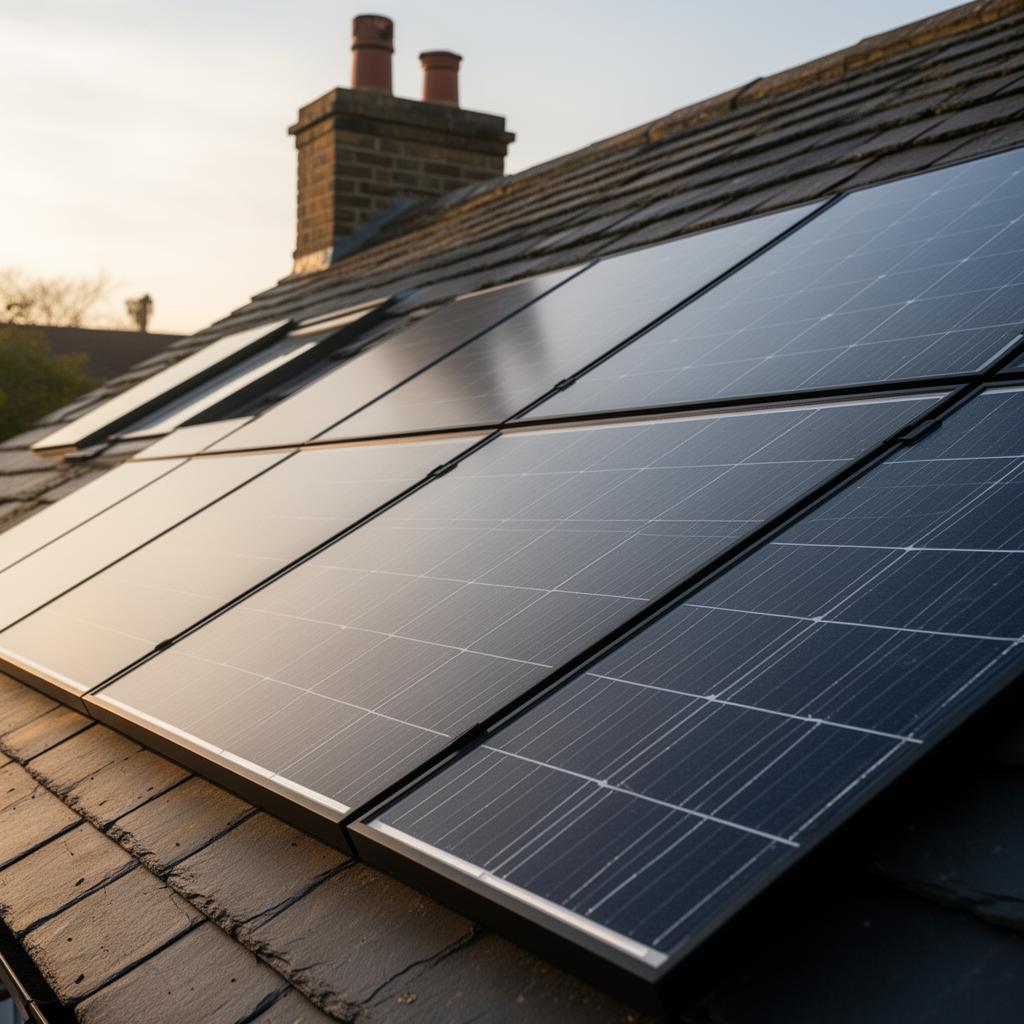
Not every home has a roof that is ideal for solar panels. Shading from trees, an unfavourable orientation, or a roof in poor condition can make the main house unsuitable. But what about the garage, shed, or outbuilding sitting in your garden? Installing solar panels on a garage roof in the UK is entirely possible and increasingly popular, particularly among homeowners who want to power EV charging, workshops, or garden offices. This guide covers the planning rules, practical considerations, costs, and whether it makes financial sense.
Is It Worth Putting Solar Panels on a Garage or Outbuilding?
Yes, installing solar panels on a garage, shed or outbuilding can be worth it if the structure has a suitable south-facing roof and is close enough to your house to connect to your consumer unit without excessive cabling costs. A typical 2–4kW system on a detached garage costs £3,500–£7,000 and generates £300–£600 per year in electricity savings, giving a payback period of 8–14 years.
The main considerations are structural strength (the roof must support 15–20kg per square metre), proximity to your main electrical supply, and whether the outbuilding’s roof orientation and shading are better or worse than your house roof. Ground-mounted systems near an outbuilding are an alternative if the roof is unsuitable. Outbuilding installations qualify for the same 0% VAT relief and Smart Export Guarantee payments as house-roof systems, and most fall under permitted development without planning permission.
Planning Rules for Solar Panels on Outbuildings
Solar panels on outbuildings within the grounds of a house benefit from the same permitted development rights as panels on the main house. This means you generally do not need planning permission, subject to these conditions:
- Panels must not protrude more than 200mm from the roof surface
- The installation must not result in the panel being higher than the highest part of the roof
- In conservation areas, AONBs, and national parks, panels must not be on a wall or roof facing a highway
- Listed building consent is needed if the outbuilding is listed (rare for garages and sheds)
Ground-mounted panels adjacent to an outbuilding have their own rules: maximum 9 square metres of array area, no higher than 4 metres, and at least 5 metres from the property boundary. Only one standalone ground-mounted installation is permitted per property.
In practice, most garage and outbuilding solar installations fall comfortably within permitted development. The key advantage is that outbuildings often have completely unshaded south-facing roof space, even when the main house roof is compromised.
Typical Output From a Garage or Outbuilding Solar Array
Most garages and outbuildings have smaller roof areas than the main house, which limits the number of panels you can fit. Here is what you can typically expect from common outbuilding types.
| Outbuilding Type | Typical Roof Area | Panels (approx.) | System Size | Annual Generation |
|---|---|---|---|---|
| Single garage | 12-15 m2 | 4-6 | 1.6-2.5 kW | 1,360-2,125 kWh |
| Double garage | 25-35 m2 | 8-14 | 3.2-5.6 kW | 2,720-4,760 kWh |
| Large workshop/barn | 40-60 m2 | 16-24 | 6.4-10 kW | 5,440-8,500 kWh |
| Garden office | 8-12 m2 | 3-5 | 1.2-2 kW | 1,020-1,700 kWh |
| Large shed | 6-10 m2 | 2-4 | 0.8-1.6 kW | 680-1,360 kWh |
A double garage with a south-facing roof can accommodate a respectable 4-5 kW system, which is equivalent to what many homes have on their main roof. Even a single garage can fit enough panels to make a meaningful contribution to household electricity or EV charging.
Cable Run Costs Back to the Main Consumer Unit
The biggest additional cost of an outbuilding solar installation compared to a house roof installation is the cable run. The electricity generated by panels on your garage needs to get back to the main consumer unit in your house, and this requires a buried armoured cable (SWA cable) running underground from the outbuilding to the house.
Typical cable run costs include:
- SWA cable: £5-£10 per metre for the cable itself
- Trenching: £15-£30 per metre for digging and backfilling (or DIY if you are comfortable with groundwork)
- Ducting: £3-£5 per metre for protective ducting
- Connections at each end: £100-£200 for termination and testing
For a typical cable run of 15-30 metres from a garage to the house, the total additional cost is £400-£1,000. Longer runs or routes that cross hard landscaping (patios, driveways) cost more because of the excavation involved.
If you are having other work done in the garden (landscaping, driveway replacement, or drainage work), running the cable at the same time can save significantly on trenching costs.
Using Outbuilding Solar for EV Charging
One of the most popular reasons for installing solar panels on a garage is to power an EV charger. If your car is parked in or near the garage, having the solar panels and charger in the same location makes practical and financial sense.
A 2-3 kW solar array on a single garage can generate enough electricity to cover 4,000-6,000 miles of driving per year for a typical EV (assuming 3-4 kWh per 10 miles). A larger double-garage array of 4-5 kW could cover 8,000-12,000 miles, which exceeds the average UK annual mileage.
For this setup, you have two options:
Option 1: Connect to the main house system
Run a cable back to the house consumer unit and treat the outbuilding panels as part of your overall household system. The EV charger can be mounted on the garage wall and powered by the house supply. This gives maximum flexibility, as surplus solar can be used by the house or exported for SEG payments.
Option 2: Independent outbuilding system
Install a small inverter and potentially a battery in the outbuilding itself, with the EV charger connected locally. This avoids the cable run to the house but limits the use of solar surplus to what can be consumed or stored in the outbuilding. This approach suits garages that are very far from the house or where the cable run would be prohibitively expensive.
Micro-Inverters vs String Inverters for Outbuilding Arrays
For smaller outbuilding arrays of 2-6 panels, micro-inverters can be a practical choice. A micro-inverter is a small inverter attached to each individual panel, converting DC to AC right at the panel. This eliminates the need for a separate string inverter box, which can be advantageous in outbuildings with limited wall space.
Advantages of micro-inverters for outbuilding installations:
- No separate inverter unit needed in the outbuilding
- Each panel operates independently, so partial shading on one panel does not reduce output from others
- Easier to expand the system by adding more panels later
- Per-panel monitoring for fault detection
The downside is that micro-inverters cost slightly more per panel than a single string inverter for the whole array. For a 4-6 panel system, the total cost difference is typically £200-£400 more for micro-inverters. For systems larger than 8 panels, a string inverter is usually more cost-effective.
Structural Considerations for Outbuilding Roofs
Before installing solar panels on any outbuilding, the roof structure needs to be assessed for its ability to carry the additional weight. Solar panels and mounting add approximately 12-15 kg per square metre to the roof loading.
- Brick or block garages with a timber truss roof are generally suitable without modification, as they are built to the same structural standards as houses.
- Prefabricated concrete garages need careful assessment. Some can support panels, others cannot. The roof panels may need additional bracing.
- Timber sheds and workshops may need reinforcement. A standard garden shed roof is not designed for the additional load of solar panels. Upgrading the roof joists or adding supporting beams may be necessary.
- Flat-roofed outbuildings can work but require angled mounting frames that add wind loading. The flat roof membrane must also be in good condition and not punctured by the mounting system.
Your solar installer should assess the roof structure as part of the site survey. If reinforcement is needed, factor this into the project cost. For timber buildings, structural work might add £300-£800 to the total.
Is It Worth Installing Solar Panels on an Outbuilding?
The financial case depends on the specific circumstances. Here are the scenarios where outbuilding solar makes strong sense:
- Your main house roof is unsuitable (north-facing, heavily shaded, in poor condition) but your garage or outbuilding has a clear south-facing roof
- You want to charge an EV and the garage or car port is the natural location for a charger
- You run a workshop or home office from the outbuilding and want to offset its electricity consumption
- You have already filled your house roof with panels and want additional capacity
- The outbuilding is close to the house, keeping cable run costs low
For a typical double-garage installation of 8 panels (3.2 kW) with a 20-metre cable run, the total cost is approximately £5,500-£7,500. Annual generation of around 2,700 kWh would save approximately £450-£650 per year depending on self-consumption, delivering a payback period of 9-14 years.
If you are considering solar panels on an outbuilding, get a free quote from installers who can assess both your house roof and outbuilding options to recommend the best approach for your property.
Frequently Asked Questions
Can I put solar panels on a garden shed?
You can, but standard garden sheds are not built to support the weight of solar panels without reinforcement. If the shed has a strong enough roof structure (or can be upgraded), 2-4 panels are feasible. For a typical shed, the small number of panels means the output is modest (0.8-1.6 kW), which is best suited for powering lighting, tools, or a small battery system within the shed itself rather than feeding back to the house.
Do I need a separate meter for outbuilding solar panels?
No. If the outbuilding panels feed back to your main house consumer unit via a cable run, they are treated as part of your household’s single electricity supply. A single generation meter covers all panels on the property. The MCS certificate and SEG registration cover the total system regardless of where the panels are physically located on the property.
Can I install panels on a flat garage roof?
Yes. Flat roofs require angled mounting frames (typically 15-25 degrees) to optimise generation and allow rainwater to wash the panels. The frames add cost (approximately £200-£500) and create wind loading that the roof must be able to withstand. Flat roof panels must be set back from the edges to reduce wind uplift and are usually ballasted or mechanically fixed depending on the roof construction.
Is it cheaper to put panels on a garage or the house?
House roof installations are generally cheaper per kW because there is no cable run cost and the scaffolding may be simpler. For the same number of panels, expect an outbuilding installation to cost £400-£1,000 more than a house roof installation due to the cable run and any structural assessment. However, if the house roof is unsuitable and the garage roof is ideal, the outbuilding installation delivers better performance per panel, which can offset the additional cost over time.
See what these numbers mean for your home
Free instant estimate — costs, savings, payback and grants for your region.

Related Articles
Is Solar Battery Storage Worth It in 2026?
Solar panels are now a common sight on UK rooftops, but the real game-changer in 2026 is battery storage. A home battery lets you store the electricity your panels generate…
2 June 2026
Why Spring Is the Perfect Time to Install Solar Panels
If you have been thinking about solar panels for a while but never quite pulled the trigger, spring is the moment to act. The combination of lengthening days, mild installation…
23 April 2026
How the Energy Price Cap Affects Heat Pump and Solar Panel Payback
See how the energy price cap affects heat pump and solar panel payback periods. Real calculations using current UK unit rates show why investing now locks in stronger returns.
15 April 2026