Solar Panels on a Flat Roof: Costs, Tilt Frames and What to Expect
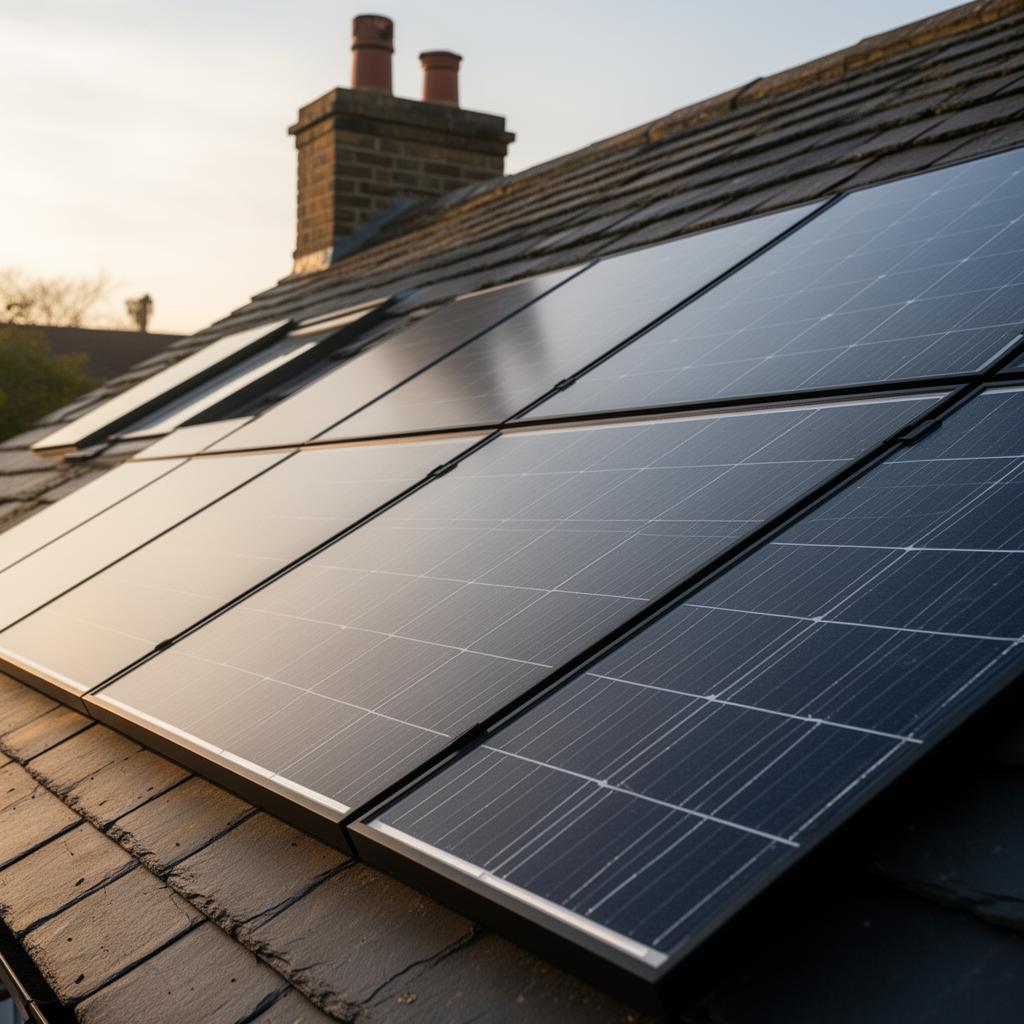
Installing solar panels flat roof UK properties can accommodate is perfectly feasible and increasingly common, but it does come with additional costs and design considerations compared to a standard pitched roof installation. Flat roofs need angled mounting frames, careful spacing to avoid self-shading and specialist fixings that protect your roof membrane. The good news is that flat roofs also offer some genuine advantages, including flexible panel orientation and easy maintenance access.
How Much Do Solar Panels Cost on a Flat Roof?
Solar panels on a flat roof cost £6,500 to £10,000 for a typical 4 to 6 kW system in 2026, around £1,000 to £2,000 more than a pitched roof installation. The extra cost covers tilt frames that angle the panels at 30 to 35 degrees for optimal UK sun exposure, ballast weights to hold the frames in place without penetrating the roof membrane, and additional labour time for assembly.
Flat roof installations have some advantages: panels can be oriented to face due south regardless of the building’s orientation, they are invisible from street level (avoiding planning concerns), and maintenance access is easier. The main considerations are ensuring the roof structure can support the additional weight of frames and ballast — typically 15 to 25 kg per panel — and leaving adequate spacing between rows to prevent shading, which reduces the number of panels you can fit compared to a pitched roof.
This guide covers everything UK homeowners and property owners need to know about flat roof solar installations, from costs and mounting options to the practical factors that affect system design.
Why Flat Roofs Need Tilt Frames for Solar Panels
Solar panels generate the most electricity when angled at 30 to 35 degrees facing south. On a pitched roof, the roof itself provides this angle. On a flat roof, panels laid flat would generate approximately 10 to 15% less electricity per year than the same panels on a 30-degree tilt, because they do not capture low-angle winter sun effectively and rainwater does not run off easily, leading to soiling.
Tilt frames solve this by mounting each panel at the optimal angle. These aluminium or steel frames sit on the flat roof surface and hold panels at a fixed tilt, typically 15 to 30 degrees. The precise angle is chosen to balance maximum generation against wind loading and self-shading between rows.
Most UK flat roof installations use a tilt angle of 15 to 20 degrees rather than the theoretical optimum of 30-35 degrees. This compromise reduces wind loading (important on exposed flat roofs), reduces the shadow each row casts on the row behind it and keeps the overall system height low for aesthetic and planning purposes. The generation penalty for a 20-degree tilt versus 30 degrees is only about 3 to 5%.
Flat Roof Solar Panel Costs vs Pitched Roof
Flat roof installations cost more than pitched roof systems primarily because of the mounting hardware and additional labour.
| Component | Pitched Roof 4 kWp | Flat Roof 4 kWp |
|---|---|---|
| Solar panels | 2,500 – 3,500 | 2,500 – 3,500 |
| Inverter | 800 – 1,200 | 800 – 1,200 |
| Mounting system | 400 – 700 | 1,200 – 3,000 |
| Installation labour | 1,500 – 2,000 | 2,000 – 3,000 |
| Scaffolding | 500 – 800 | 300 – 600 (often lower) |
| Total installed | 5,700 – 8,200 | 6,800 – 11,300 |
The tilt frame system alone adds 100 to 300 pounds per panel compared to standard pitched roof rails. For a 10-panel system, that is an additional 1,000 to 3,000 pounds. The higher labour cost reflects the extra time needed to assemble frames, ensure proper ballasting or fixing and manage waterproofing around penetrations.
Scaffolding costs are often lower for flat roofs because access is easier, particularly for single-storey extensions or commercial buildings with existing roof access.
Mounting Options for Flat Roof Solar Panels
There are two main approaches to securing solar panels on a flat roof, each with distinct advantages and limitations.
Ballasted Mounting Systems
Ballasted systems use heavy weights, typically concrete blocks or trays filled with aggregate, to hold the mounting frames in place without penetrating the roof membrane. This is the most popular approach for flat roof solar in the UK because it avoids any risk of roof leaks.
Each panel typically requires 30 to 60 kg of ballast, depending on the building’s wind exposure and height. For a 10-panel system, the total ballast weight is 300 to 600 kg plus the weight of the panels and frames themselves. Your roof must be structurally capable of supporting this additional load.
A structural engineer’s assessment is recommended before installing a ballasted system, particularly on older buildings. The assessment typically costs 200 to 400 pounds and confirms whether your roof joists and walls can handle the additional weight.
Penetrating Mounting Systems
Penetrating systems bolt the mounting frames directly through the roof membrane into the structural deck below. This eliminates the need for heavy ballast and distributes loads more evenly, but it requires careful waterproofing around each fixing point.
Modern penetrating fixings use a combination of EPDM rubber gaskets, liquid-applied waterproofing and counter-flashing to seal each penetration. When installed correctly, they are watertight and backed by installer warranties. However, any future roof membrane replacement becomes more complex because the panels must be removed first.
Penetrating systems are preferred when the roof structure cannot support ballast weight or when wind exposure is very high, such as on tall buildings or coastal properties.
Spacing Requirements to Avoid Self-Shading
On a pitched roof, panels sit flush in a single plane so shading between panels is not an issue. On a flat roof with tilted frames, each row of panels casts a shadow on the row behind it. If the rows are too close together, the front row shades the back row during low winter sun angles, reducing output when generation is already at its lowest.
The spacing between rows depends on the panel tilt angle and your latitude. For a typical UK installation at 52 degrees latitude with a 20-degree tilt angle, the recommended gap between rows is approximately 1.5 to 2 times the height of the tilted panel.
For standard 1.7-metre panels tilted at 20 degrees, this means a gap of roughly 0.9 to 1.2 metres between each row. The practical effect is that a flat roof needs approximately 40 to 50% more area than a pitched roof to accommodate the same number of panels.
This spacing requirement means a flat roof that could theoretically hold 15 panels if they were laid flat might only fit 10 panels on tilt frames once inter-row spacing is accounted for. Your installer should model this carefully during the design stage.
Advantages of Flat Roof Solar Installations
Despite the higher cost, flat roof solar installations offer several genuine advantages:
- Flexible orientation: tilt frames can be pointed in any direction. If your building faces east-west, you can still orient panels due south for maximum generation
- East-west split: some flat roof systems use a low-angle east-west split configuration where alternating rows face east and west. This produces a flatter generation curve across the day, which is better for self-consumption
- Easy maintenance: flat roofs are easier and safer to access than pitched roofs, making cleaning, inspection and any repairs straightforward. No scaffolding is needed for routine maintenance
- No aesthetic impact from street level: panels on a flat roof are invisible from ground level in most cases, which can be an advantage in conservation areas or for homeowners who prefer a clean roof line
- Commercial building suitability: flat-roofed commercial buildings, warehouses and extensions are ideal candidates for solar because they often have large, unshaded roof areas
Planning Permission for Flat Roof Solar
Flat roof solar panels fall under permitted development in most cases, with the same rules as pitched roof installations. The key planning conditions are:
- Panels must not protrude more than 200mm above the roof plane when measured perpendicular to the roof surface. With tilt frames, this effectively limits the frame height
- No panel or frame can extend above the highest part of the roof (excluding chimneys)
- Panels must not be installed on a listed building without consent or in certain sensitive areas without checking local rules
The 200mm protrusion rule can be a constraint for flat roofs using steeper tilt angles. At a 20-degree tilt, a standard panel protrudes approximately 580mm above the flat roof surface, which exceeds the 200mm limit. However, Ofgem and many local authorities interpret this rule as applying to the highest point of the panel rather than the perpendicular measurement, making most flat roof installations compliant. Check with your installer and local planning department if in doubt.
To explore flat roof solar options for your property, request a free quote from local MCS-certified installers experienced with flat roof systems.
Frequently Asked Questions
Can you put solar panels on a flat roof?
Yes. Flat roof solar installations are common and effective in the UK. Panels are mounted on tilt frames that angle them towards the sun for optimal generation. The main additional considerations are the cost of the mounting system, spacing between rows to avoid self-shading and ensuring the roof structure can support the additional weight.
How much more do flat roof solar panels cost?
Flat roof installations typically cost 20 to 35% more than equivalent pitched roof systems. The premium comes from tilt frames (100 to 300 pounds per panel), additional labour and potential structural assessment costs. For a 4 kWp system, expect to pay approximately 1,000 to 3,000 pounds more than a pitched roof equivalent.
Do flat roof solar panels generate less electricity?
Not significantly, if tilt frames are used. Panels on a 20-degree tilt frame generate approximately 3 to 5% less than the same panels on a 30-degree pitched roof. Without tilt frames, panels laid flat generate 10 to 15% less. The flexible orientation advantage of flat roofs can partially offset this if the building does not face south.
Will flat roof solar panels damage my roof membrane?
Ballasted systems do not penetrate the roof membrane and pose minimal risk if the weight is within the roof’s structural capacity. Penetrating systems require careful waterproofing around fixings. In both cases, a reputable MCS-certified installer will protect your membrane and warranty. Ensure your installer has specific experience with flat roof installations.
Can I install solar panels on a flat garage roof?
Yes. Flat garage roofs are popular locations for solar panels, particularly if the main house roof is unsuitable. Check that the garage roof structure can support the panel and ballast weight (a structural assessment may be needed for older garages) and that the cable run from garage to house is not excessively long. Panels on a detached garage may need their own planning permission check if the garage is more than 5 metres from the house.
See what these numbers mean for your home
Free instant estimate — costs, savings, payback and grants for your region.

Related Articles
Is Solar Battery Storage Worth It in 2026?
Solar panels are now a common sight on UK rooftops, but the real game-changer in 2026 is battery storage. A home battery lets you store the electricity your panels generate…
2 June 2026
Why Spring Is the Perfect Time to Install Solar Panels
If you have been thinking about solar panels for a while but never quite pulled the trigger, spring is the moment to act. The combination of lengthening days, mild installation…
23 April 2026
How the Energy Price Cap Affects Heat Pump and Solar Panel Payback
See how the energy price cap affects heat pump and solar panel payback periods. Real calculations using current UK unit rates show why investing now locks in stronger returns.
15 April 2026