7 Warning Signs Your Boiler Needs Replacing
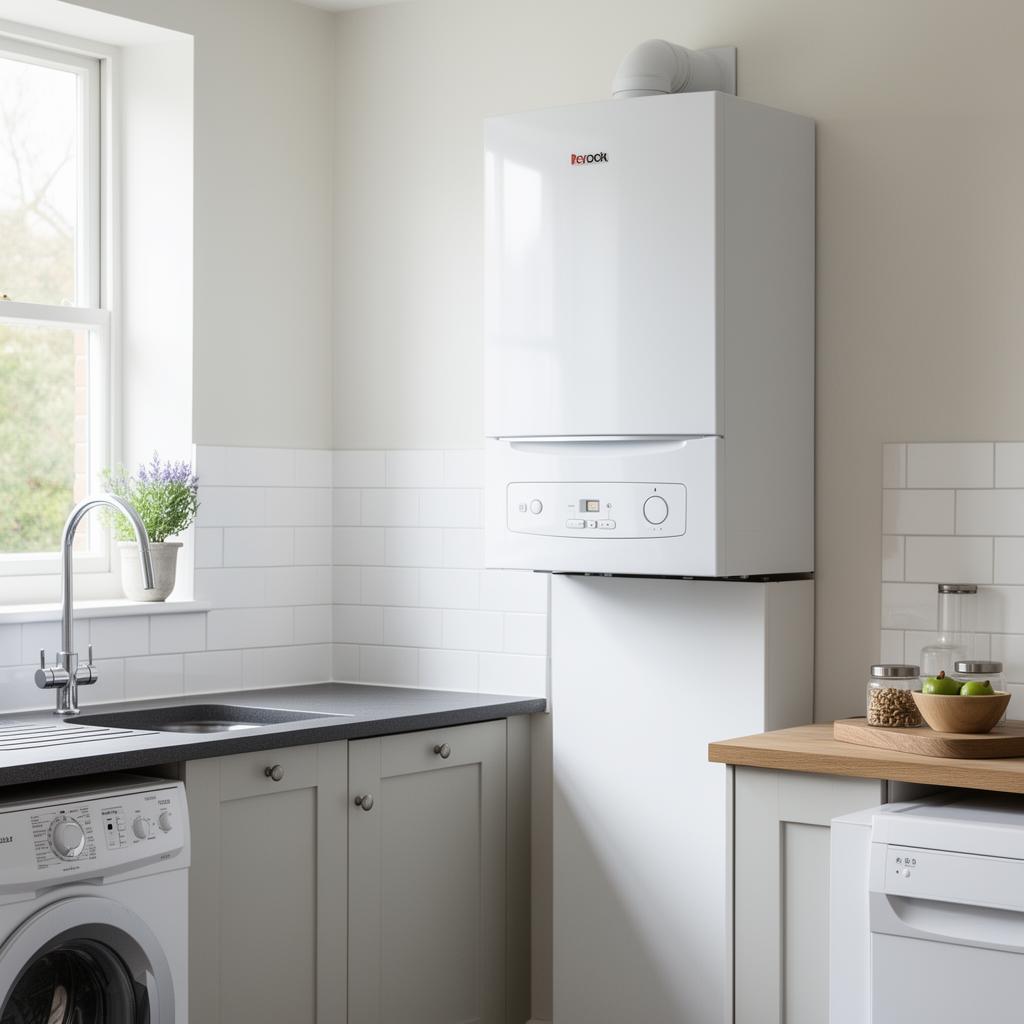
Knowing when to replace your boiler can save you from unexpected breakdowns, sky-high repair bills, and even dangerous carbon monoxide leaks. A modern condensing boiler should last 12-15 years with proper maintenance, but many UK homes still rely on units well past their prime. If your boiler is showing any of the following seven warning signs, it may be time to stop repairing and start replacing.
Signs Your Boiler Needs Replacing
- It is over 10 to 15 years old — boiler efficiency drops significantly with age, costing more to run each year
- The pilot flame is yellow or orange — a healthy flame is blue; discolouration can indicate incomplete combustion or carbon monoxide risk
- Your energy bills keep rising — increasing gas costs despite normal usage suggest your boiler is losing efficiency
- You need repairs more than once a year — frequent breakdowns mean repair costs are approaching replacement value
- There are visible leaks or corrosion — water damage around your boiler signals internal component failure
- It makes banging, whistling or gurgling noises — unusual sounds indicate limescale buildup, air in the system or failing parts
- Boiler pressure keeps dropping — persistent pressure loss points to a leak in the sealed system or a faulty pressure relief valve
If your boiler shows two or more of these warning signs, replacement is almost certainly more cost-effective than continued repairs. A modern condensing boiler operates at 90 percent efficiency or higher, compared to 60 to 70 percent for older models, meaning you could save £200 to £350 per year on gas bills from the upgrade alone.
1. Your Boiler Is Over 10-15 Years Old
Age alone does not mean a boiler must be replaced, but it is the single most reliable indicator that the end is approaching. Most boiler manufacturers design their products to last 12-15 years. After this point, parts become harder to source, efficiency declines, and the risk of a major component failure increases significantly.
If your boiler was installed before 2005, it is almost certainly a non-condensing model with an efficiency rating of just 70-80%. A modern A-rated condensing boiler operates at 90-94% efficiency, meaning you could cut your gas bill by GBP 150-315 per year simply by upgrading. Over a 15-year lifespan, that represents potential savings of GBP 2,250-4,725.
Even if your boiler is a condensing model installed between 2005 and 2012, it may be running at lower efficiency than current models due to worn components or outdated controls. An annual service can confirm whether your boiler is still performing within acceptable parameters.
2. The Flame Is Yellow or Orange Instead of Blue
This is the most serious warning sign on the list and requires immediate action. A healthy gas boiler flame should burn a crisp blue colour. A yellow or orange flame indicates incomplete combustion, which means the gas is not burning cleanly and the boiler may be producing carbon monoxide (CO) — an odourless, colourless gas that can be fatal.
Other signs of potential carbon monoxide issues include:
- Dark staining or soot marks around the boiler
- A pilot light that frequently goes out
- Increased condensation on windows when the boiler is running
- Occupants experiencing headaches, dizziness, or nausea
If you notice a yellow flame, turn off the boiler immediately, open windows, and call a Gas Safe registered engineer. Do not use the boiler until it has been inspected and either repaired or condemned. Every home should also have a working CO alarm, which costs as little as GBP 15-25 and could save your life.
3. Your Energy Bills Keep Rising When to Replace Your Boiler Becomes Obvious
If your gas bills are climbing year on year despite no change in your heating habits, your boiler’s efficiency is almost certainly declining. This is particularly common in boilers over 10 years old, where wear on the heat exchanger, burner, and seals gradually reduces the amount of useful heat extracted from each unit of gas.
To put this in perspective:
| Boiler Efficiency | Annual Gas Cost (3-bed semi) | Waste Per Year |
|---|---|---|
| 94% (new A-rated) | GBP 850 | GBP 54 |
| 85% (aging condensing) | GBP 940 | GBP 144 |
| 75% (old non-condensing) | GBP 1,065 | GBP 269 |
| 65% (very old boiler) | GBP 1,230 | GBP 434 |
If your bills seem disproportionately high, ask your heating engineer to test the boiler’s combustion efficiency during the next service. If it has dropped below 85%, replacement is likely to pay for itself within 7-10 years through energy savings alone.
4. You Are Calling for Repairs More Than Once a Year
An occasional repair over a boiler’s lifetime is normal. A callout every few months is not. Common repeat issues include failing diverter valves, leaking expansion vessels, corroded heat exchangers, and faulty PCBs (printed circuit boards). Each repair typically costs between GBP 150 and GBP 500, and some parts for older models can cost even more due to scarcity.
A useful rule of thumb: if your total repair costs in the past 12 months have exceeded GBP 500, or if the next quoted repair is more than half the cost of a new boiler, it is time to replace. A new combi boiler installed costs between GBP 1,800 and GBP 3,500, and comes with a manufacturer’s warranty of 5-10 years — meaning no repair bills for a significant period.
Frequent breakdowns are also a reliability issue. A boiler failure in January, when engineers are at their busiest, can leave you without heating for days. A proactive replacement in the summer months avoids this entirely.
5. There Are Visible Leaks or Corrosion
Water leaks from the boiler casing, pipe connections, or internal components are a clear sign of deterioration. Small drips may seem manageable, but they indicate that seals, joints, or the heat exchanger itself are failing. A leaking heat exchanger is usually an end-of-life diagnosis because the replacement part alone can cost GBP 400-800, making it uneconomical on an older unit.
External corrosion — rust on the casing, green discolouration on copper pipes, or white mineral deposits around fittings — suggests long-term moisture exposure and can indicate internal problems that are not yet visible. Any leak also poses a risk of water damage to surrounding walls, floors, and electrical components.
If your boiler is leaking, turn off the water supply to the boiler (if you know how) and call a Gas Safe engineer. Do not attempt to fix leaks yourself.
6. Strange Noises: Banging, Whistling, or Gurgling
Some boiler noise is normal — a low hum when the burner fires, or a quiet click when the thermostat triggers ignition. But loud, persistent, or unusual noises are cause for concern:
- Banging or clunking — Often caused by delayed ignition (gas building up before it catches) or kettling (limescale on the heat exchanger). Delayed ignition is a safety concern; kettling reduces efficiency and can crack the heat exchanger over time.
- Whistling (kettling) — The classic sound of limescale restricting water flow through the heat exchanger, similar to a kettle boiling. A power flush may resolve early cases, but if the exchanger is badly scaled, replacement is the only option.
- Gurgling — Usually indicates air in the system or a frozen condensate pipe. Air can be bled from radiators easily, but persistent gurgling after bleeding suggests a more systemic issue such as a failing pump or a leak drawing air into the system.
- Humming or vibrating — A failing pump or loose internal component. The pump is replaceable, but if the boiler is old, it may not be worth the cost.
If a power flush and a service cannot resolve the noise, and your boiler is over 10 years old, replacement is almost certainly the most cost-effective path. A power flush alone costs GBP 300-600, so factor that into your repair-versus-replace calculation.
7. Boiler Pressure Keeps Dropping
Central heating systems typically operate at a pressure of 1-1.5 bar. If your pressure gauge keeps falling and you find yourself repeatedly topping up via the filling loop, there is a problem. Common causes include:
- Slow leaks in the system — these may be in radiator valves, pipe joints, or the boiler itself, and can be difficult to locate
- A failing expansion vessel — the internal diaphragm wears out over time, causing pressure fluctuations
- A faulty pressure relief valve — if it is discharging water externally, you may notice a drip from the overflow pipe outside
An expansion vessel replacement costs around GBP 150-250 and is a reasonable repair on a relatively new boiler. On an older unit, persistent pressure loss is often a symptom of wider corrosion within the system, and patching one leak frequently leads to another appearing elsewhere.
What to Do When You Decide to Replace
Once you have decided that your boiler needs replacing, you have several options to consider:
- Like-for-like replacement — Swapping your existing boiler for a modern condensing equivalent. This is the simplest and most affordable option, typically costing GBP 1,800-3,500 for a combi boiler.
- System upgrade — If you want to change from a regular boiler with a tank to a combi, or vice versa, the cost increases to GBP 2,500-4,500 due to additional pipework.
- Heat pump — For well-insulated homes, an air source heat pump offers a long-term low-carbon alternative. The Boiler Upgrade Scheme provides GBP 7,500 towards the cost, bringing many installations within reach of boiler replacement budgets.
Before committing, it is worth checking whether better insulation could reduce your heating demand enough to make a smaller (and cheaper) boiler sufficient, or to make a heat pump viable. Improving your home’s thermal envelope first is almost always the smartest investment.
You can get a free quote to compare boiler replacement and heat pump options for your specific property.
Frequently Asked Questions
Can a boiler last 20 years?
Some boilers do last 20 years or more, particularly older cast-iron models that were over-engineered by modern standards. However, a boiler running beyond 15 years is almost certainly operating at significantly reduced efficiency, costing you more in fuel than the savings you gain by avoiding replacement. Parts availability also becomes a serious issue, with some manufacturers discontinuing spares after 10-15 years.
Is it worth replacing a boiler before it breaks down?
Yes, for three reasons. First, you can plan the installation at a convenient time rather than scrambling in an emergency. Second, summer installations are often cheaper because demand for engineers is lower. Third, you start saving on energy bills immediately rather than continuing to waste money on an inefficient unit. If your boiler is showing two or more of the warning signs above, proactive replacement is almost always the right call.
Should I replace my boiler or switch to a heat pump?
This depends on your property. If your home has good insulation, adequate outdoor space, and you are prepared for the higher upfront cost (even after the GBP 7,500 grant), a heat pump is the better long-term investment. If your home is poorly insulated, has limited space, or you need the lowest possible upfront cost, a new condensing boiler is a pragmatic choice. Many homeowners opt for a new boiler now with a plan to transition to a heat pump when they next need to replace it.
How long does it take to install a new boiler?
A straightforward like-for-like combi boiler swap typically takes one day. If you are changing the boiler type (for example, from a regular to a combi), relocating the boiler, or upgrading the flue and pipework, it can take two to three days. A heat pump installation usually takes two to four days depending on the complexity of the system.
See what these numbers mean for your home
Free instant estimate — costs, savings, payback and grants for your region.

Related Articles
7 Quick Wins to Cut Your Energy Bills This Summer
Summer might seem like the wrong time to think about energy bills, but it is actually when the smartest homeowners make changes. Lower heating demand means more of your spending…
22 May 2026
The Best Time of Year to Replace Your Boiler (and How to Get the Best Price)
Find out why summer is the best time to replace your boiler in the UK, how to negotiate better prices and what to check before committing to an installation.
9 May 2026
Electric Heating Options Explained: Panel Heaters, Storage Heaters and Infrared
Compare electric heating options for UK homes including modern storage heaters, ceramic panel heaters and infrared panels with running cost breakdowns.
7 May 2026