Myenergi Eddi and Zappi: The Complete Solar Home Ecosystem
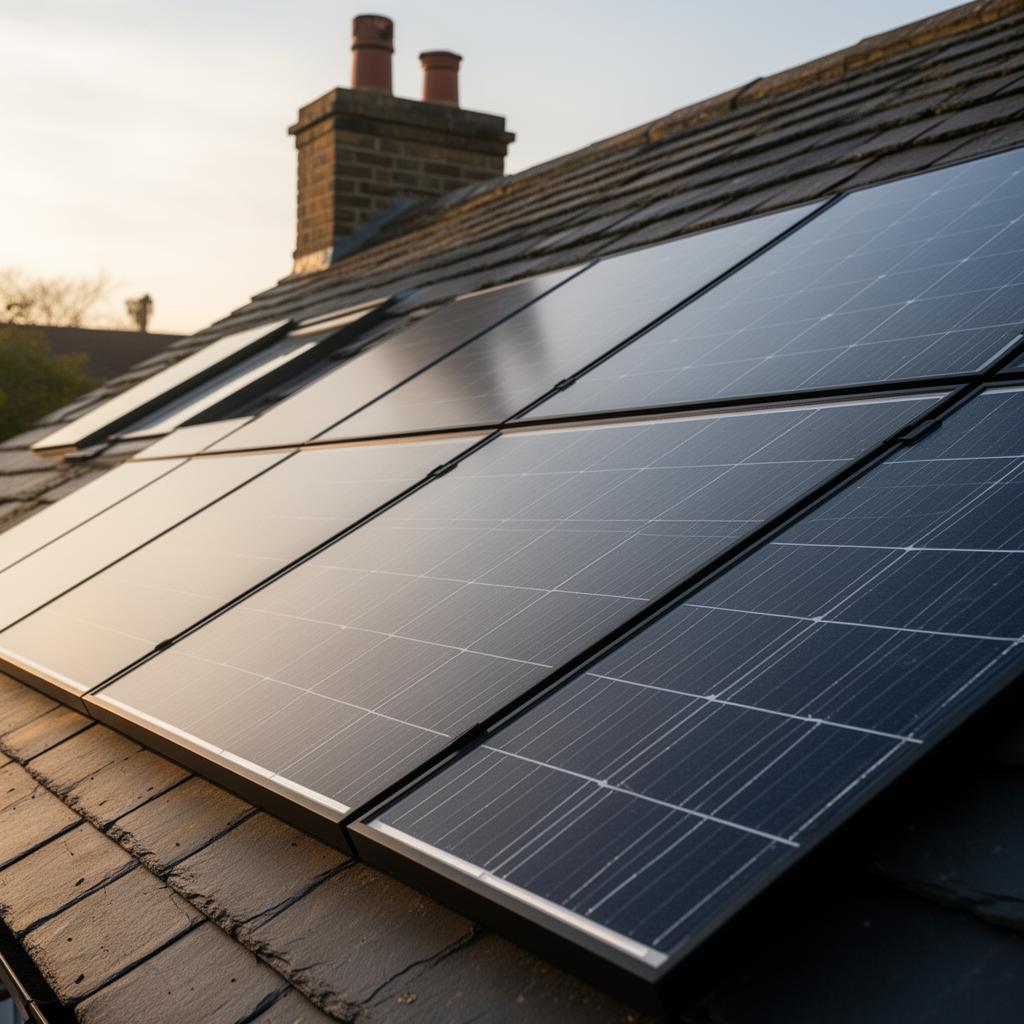
If you have solar panels and want to squeeze every last drop of value from your system, the Myenergi product range deserves serious attention. This Myenergi Eddi Zappi review covers the two flagship products in detail: the Eddi solar diverter for hot water heating and the Zappi V2 EV charger that prioritises free solar electricity. Together with the Myenergi app, they create an integrated ecosystem that maximises self-consumption and minimises grid imports.
What Are the Myenergi Eddi and Zappi?
The Myenergi Eddi is a solar power diverter that redirects surplus solar electricity to heat your hot water tank instead of exporting it to the grid, saving 5 to 8p per kWh compared to export tariff rates. The Zappi is a smart EV charger that does the same for your electric car, charging from excess solar during the day at zero marginal cost. Together, they form a complete solar self-consumption ecosystem that maximises the value of every unit your panels generate.
The Eddi costs around £800 to £900 installed and the Zappi around £1,000 to £1,200. Both connect to the Myenergi app for real-time monitoring and can be set to prioritise solar, grid or a mix. For a household with a 4 kW solar system, an EV and a hot water cylinder, the combined Eddi and Zappi setup typically increases solar self-consumption from 30% to 70%, adding £400 to £600 in annual savings.
What Is the Myenergi Eddi Solar Diverter?
The Myenergi Eddi is a solar power diverter that automatically redirects surplus solar panel electricity to your immersion heater or other resistive loads. Instead of exporting excess generation to the grid for a few pence per kilowatt-hour, the Eddi uses it to heat your hot water tank for free.
The device costs around £400-£450 plus installation (typically £150-£250 for a qualified electrician). It connects between your consumer unit and immersion heater and communicates with a CT clamp on your electricity meter to detect exactly when surplus power is available.
Key specifications of the Eddi include:
- Maximum diversion power: 3.68 kW (single phase)
- Two heater connections for priority sequencing
- Built-in energy monitoring and data logging
- Compatible with all solar PV systems regardless of inverter brand
- Manual boost function for on-demand heating
- Timer schedules for off-peak tariff integration
How Much Can the Eddi Save on Hot Water?
The average UK household spends £200-£350 per year on hot water heating. If you have a hot water cylinder with an immersion heater (most common in homes with a system boiler, heat pump, or oil boiler), the Eddi can divert enough solar surplus to cover 60-80% of your hot water needs between April and September.
Over a full year, including the lower-output winter months, realistic savings are around £150-£250 per year. At that rate, the Eddi pays for itself in approximately 2-3 years, making it one of the fastest-returning solar accessories available.
The Eddi is particularly effective for households that are out during the day. If no one is home to use appliances during peak solar hours, the surplus would otherwise be exported. The Eddi ensures that energy goes into your hot water tank instead, ready for use when you get home.
The Zappi V2 EV Charger: Solar-Powered Driving
The Zappi V2 is a smart EV charger designed specifically for homes with solar panels, though it works perfectly well without them too. It costs around £695-£799 depending on the model (tethered or untethered) plus installation costs of £200-£400.
What sets the Zappi apart from standard EV chargers is its three intelligent charging modes, which let you choose exactly how your car is charged.
Eco+ mode (solar only)
In Eco+ mode, the Zappi charges your EV exclusively from surplus solar generation. It will not draw any power from the grid. This means completely free driving miles, though charging will be slower and intermittent depending on how much surplus your panels are producing. On a sunny day with a 4 kW solar system, you might add 15-25 miles of range during daylight hours.
Eco mode (solar priority with grid top-up)
Eco mode uses as much solar surplus as possible but tops up from the grid to maintain the minimum charging rate your EV requires (typically 1.4 kW or 6 amps). This ensures charging never stalls completely on cloudy days while still prioritising free solar power. Most Zappi owners find this the best everyday mode.
Fast mode (full speed from grid)
Fast mode charges at the maximum rate (7 kW on single phase, 22 kW on three phase) regardless of solar generation. Use this when you need a full charge quickly, such as before an unexpected journey. It works identically to a standard smart charger in this mode.
How the Eddi and Zappi Work Together
The real power of the Myenergi ecosystem emerges when you use both devices together. The Eddi and Zappi communicate via the Myenergi hub (a small device that connects to your home broadband), allowing them to share information about solar surplus and coordinate their energy use.
You can set priorities so that, for example, the Zappi gets first access to solar surplus until your EV is charged, then the Eddi takes over and heats your water. Or you can prioritise the Eddi in the morning to ensure hot water is ready, then switch surplus to the Zappi for the afternoon.
The coordination works in real time, adjusting every few seconds based on actual generation and consumption. On a good solar day, a typical 4 kW system might:
- Power your home’s base load (0.3-0.5 kW)
- Divert 1.5-2 kW to the Eddi to heat water for 2-3 hours
- Send 2-3 kW to the Zappi to charge the EV for 4-5 hours
- Export very little to the grid
Without these devices, that same household might export 60-70% of its solar generation. With the Eddi and Zappi, self-consumption can reach 85-95%, dramatically improving the return on your solar investment.
The Myenergi App: Monitoring and Control
The Myenergi app (available for iOS and Android) provides comprehensive monitoring and remote control for all connected devices. The app displays real-time data including:
- Current solar generation in watts
- Grid import or export in real time
- Energy being diverted to the Eddi
- EV charging rate and energy delivered via the Zappi
- Historical data by day, week, month, and year
- Total self-consumption percentage
You can also set charging schedules, switch modes remotely, and configure boost timers from anywhere. The app integrates with smart tariff data from providers like Octopus Energy, allowing the Zappi to automatically charge during the cheapest overnight slots when solar is not available.
Myenergi Eddi and Zappi: Costs and Savings Summary
| Product | Purchase Cost | Installation | Annual Saving | Payback Period |
|---|---|---|---|---|
| Eddi solar diverter | £400-£450 | £150-£250 | £150-£250 | 2-3 years |
| Zappi V2 (tethered) | £695-£750 | £200-£400 | £200-£400 | 2-4 years |
| Zappi V2 (untethered) | £750-£799 | £200-£400 | £200-£400 | 2-4 years |
| Hub (for app connectivity) | £50-£60 | Included | N/A | N/A |
The Zappi savings assume 5,000-8,000 miles per year charged from solar surplus rather than grid electricity. At current electricity prices of around 24p per kWh, that translates to £200-£400 per year in avoided grid charges for EV charging alone.
Who Should Consider the Myenergi Ecosystem?
The Myenergi range is ideal for households that tick one or more of these boxes:
- You have solar panels generating surplus electricity during the day
- You have a hot water cylinder with an immersion heater (for the Eddi)
- You own or plan to buy an electric vehicle (for the Zappi)
- You want to maximise self-consumption rather than exporting at low SEG rates
- You prefer a UK-designed and UK-manufactured product with local support
Myenergi is a Lincolnshire-based company, and all products are designed and assembled in the UK. Customer support is UK-based with generally positive reviews for responsiveness and helpfulness.
If you do not yet have solar panels, adding them alongside a Zappi or Eddi creates the strongest financial case. You can get a free quote for a solar panel system that includes smart accessories to maximise your savings from day one.
Alternatives to the Myenergi Range
Myenergi is not the only option in this space, though it remains the most integrated ecosystem for solar homes.
- Solar iBoost+ (around £300) – A simpler, cheaper solar diverter than the Eddi, but with fewer features and no app connectivity.
- Ohme EV charger (around £450-£500) – A smart EV charger with excellent tariff integration but without the solar-specific Eco+ mode.
- Hypervolt EV charger (around £650) – Another well-regarded smart charger with solar integration, though it lacks the seamless communication with a solar diverter.
The Myenergi advantage lies in having both the diverter and charger from the same manufacturer, sharing a single monitoring platform and communicating in real time to optimise energy flows across the whole household.
Frequently Asked Questions
Do I need a Myenergi Hub to use the Eddi or Zappi?
The Hub is not required for the devices to work. Both the Eddi and Zappi function independently using the CT clamp to detect surplus solar power. However, the Hub is required for app access, remote control, scheduling, and smart tariff integration. At around £50-£60, it is a worthwhile addition for most households.
Can I use the Zappi without solar panels?
Yes. In Fast mode, the Zappi works as a standard 7 kW smart charger. It also integrates with smart tariffs to charge automatically during cheap overnight periods. If you add solar panels later, the Zappi’s Eco and Eco+ modes will immediately start using surplus generation. It is a future-proof choice even if solar is not installed yet.
Is the Zappi OZEV grant eligible?
The Zappi V2 is eligible for the EV chargepoint grant (formerly OZEV grant), which provides up to £350 towards installation costs for qualifying households including tenants and flat owners. Check the latest eligibility criteria on the gov.uk website as the scheme rules have changed several times.
How does the Eddi compare to a battery for storing solar surplus?
The Eddi and a battery serve different purposes. The Eddi converts surplus electricity directly into hot water, which is a form of thermal storage. It is much cheaper than a battery (£500-£700 installed vs £3,500-£7,000 for a battery) but only offsets hot water costs. A battery stores electricity for any purpose, including powering appliances, lighting, and heating. Many solar households install both for maximum self-consumption.
See what these numbers mean for your home
Free instant estimate — costs, savings, payback and grants for your region.

Related Articles
Is Solar Battery Storage Worth It in 2026?
Solar panels are now a common sight on UK rooftops, but the real game-changer in 2026 is battery storage. A home battery lets you store the electricity your panels generate…
2 June 2026
Why Spring Is the Perfect Time to Install Solar Panels
If you have been thinking about solar panels for a while but never quite pulled the trigger, spring is the moment to act. The combination of lengthening days, mild installation…
23 April 2026
How the Energy Price Cap Affects Heat Pump and Solar Panel Payback
See how the energy price cap affects heat pump and solar panel payback periods. Real calculations using current UK unit rates show why investing now locks in stronger returns.
15 April 2026