How to Live Off-Grid With Solar in the UK: Costs and Practicalities
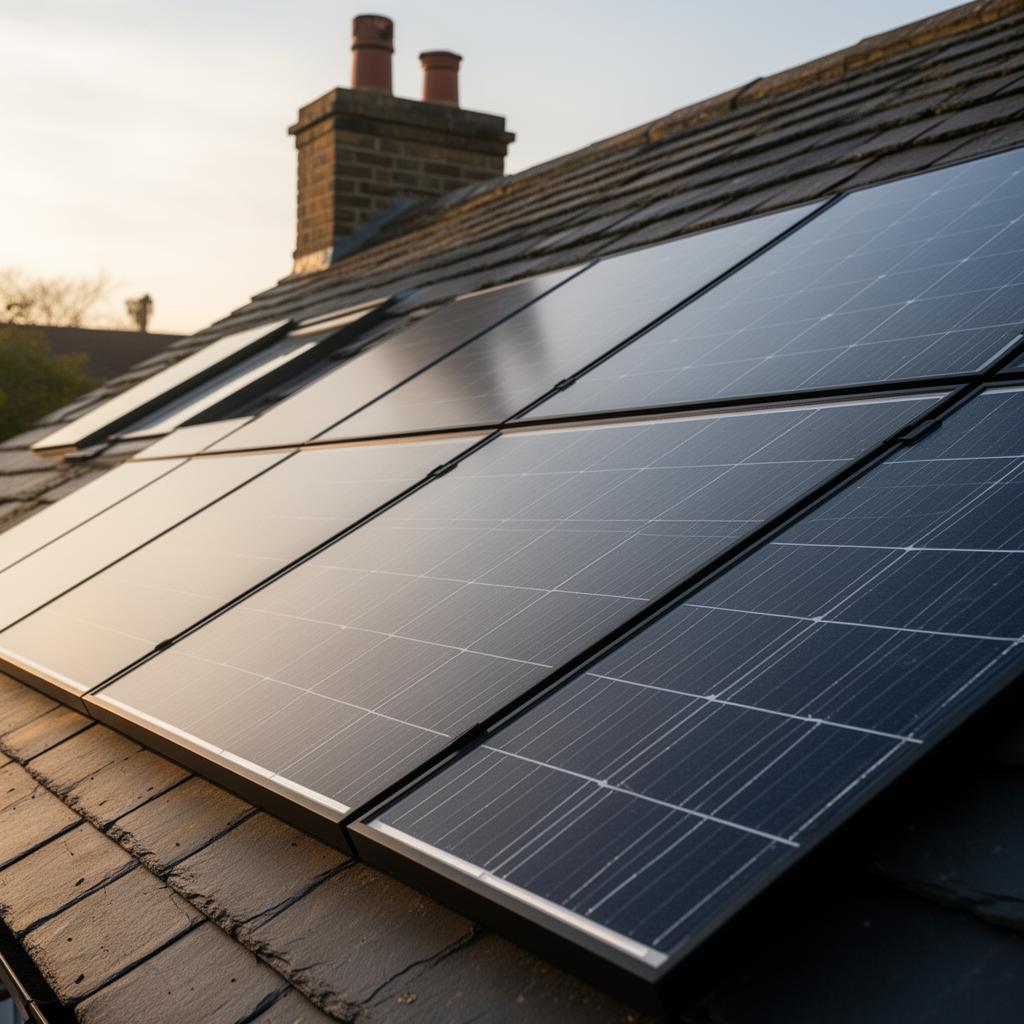
The idea of disconnecting from the electricity grid entirely and powering your home with solar panels is appealing. No more energy bills, no dependence on volatile wholesale prices, and complete energy independence. But is off grid solar in the UK actually practical? The honest answer is that it is possible but extremely challenging and expensive. This guide walks through the real costs, the technical requirements, the legal considerations, and why a hybrid grid-tied approach may be the smarter choice for most households.
How to Live Off-Grid With Solar in the UK
- Calculate your daily energy demand — the average UK home uses 8 to 10 kWh per day; off-grid homes should aim for 5 to 7 kWh through efficiency measures
- Size your solar array for winter — you need 6 to 10 kW of panels to generate enough power through December and January when output drops to 1 to 2 kWh per kW per day
- Install a large battery bank — at least 20 to 40 kWh of lithium storage to cover 3 to 5 days of low sun, costing £8,000 to £18,000
- Add a backup generator — a propane or diesel generator for extended cloudy spells, budgeting £1,500 to £4,000
- Fit a hybrid inverter with off-grid capability — not all inverters work without a grid connection; choose one rated for island mode
- Switch to efficient appliances — induction hob, heat pump hot water cylinder and LED lighting reduce total demand significantly
- Budget £25,000 to £45,000 total — the full off-grid solar setup including panels, batteries, inverter and backup generator
Living fully off-grid with solar in the UK is technically achievable but expensive, and winter remains the biggest challenge. Most households that explore off-grid living settle on a hybrid approach: a large solar and battery system that covers 80 to 90% of their energy needs, with a backup generator or small grid connection for the darkest months.
What Does Going Off-Grid Actually Mean?
True off-grid living means your property has no connection to the national electricity grid whatsoever. You generate all your own power, store what you need, and have no fallback supply from the grid when your generation falls short. This is fundamentally different from having solar panels with a grid connection, where the grid acts as a backup and you can export surplus.
In the UK context, going fully off-grid with electricity is rare for occupied homes. The vast majority of properties with solar panels remain grid-connected and use the grid as a buffer. However, there are genuine off-grid properties, typically in remote rural locations where the cost of a new grid connection would be prohibitively expensive.
The Real Cost of Off-Grid Solar in the UK
A fully off-grid power system for a typical UK home costs around £42,000 on average, though this varies significantly depending on the size of the property and energy consumption. Here is a breakdown of what that figure includes.
| Component | Specification | Estimated Cost |
|---|---|---|
| Solar panels | 16 panels (6-7 kW system) | £8,000-£10,000 |
| Battery storage | 30-40 kWh (multiple units) | £15,000-£20,000 |
| Hybrid inverter system | Off-grid rated, 5-8 kW | £3,000-£5,000 |
| Wind turbine | 1-3 kW small wind | £3,000-£6,000 |
| Backup generator | Diesel or LPG, 5-10 kW | £2,000-£4,000 |
| Wiring, installation, commissioning | Full system integration | £3,000-£5,000 |
| Total | £34,000-£50,000 |
The battery storage is the single largest cost. An off-grid home needs enough storage to cover 2-3 days of consumption without any generation, to handle extended cloudy spells in winter. A grid-connected home might get by with 5-10 kWh of storage, but an off-grid property needs 30-40 kWh or more, which means multiple battery units stacked together.
Why Multiple Energy Sources Are Essential
Relying solely on solar panels for off-grid living in the UK is impractical because of the dramatic seasonal variation in output. A solar system that generates 25 kWh per day in June might produce only 3-5 kWh per day in December. Even with massive battery storage, you cannot bridge a three-month winter deficit with solar alone.
This is why successful off-grid installations in the UK almost always include multiple generation sources:
- Solar panels – The primary summer generation source, producing the bulk of annual electricity
- Small wind turbine – Wind generation tends to peak in winter when solar is weakest, providing complementary output. A 1-3 kW turbine can generate 2,000-4,000 kWh per year in an exposed location.
- Backup generator – A diesel or LPG generator provides emergency power when both solar and wind fall short. Most off-grid homeowners run their generator 200-500 hours per year, primarily in November-January.
The combination of solar and wind is particularly effective because they are naturally counter-cyclical. The windiest months tend to be the least sunny and vice versa, smoothing out the overall generation profile across the year.
Planning Permission and Legal Requirements
There is no law preventing you from disconnecting your home from the electricity grid, though it is irreversible in practical terms as reconnection is expensive. However, several legal and planning considerations apply to off-grid systems.
Solar panels
Roof-mounted solar panels generally fall under permitted development and do not require planning permission, provided they do not protrude more than 200mm from the roof plane and the property is not listed or in a conservation area.
Wind turbines
Small wind turbines have more complex planning requirements. A building-mounted turbine may be permitted development if it meets size limits, but a free-standing mast-mounted turbine almost always requires planning permission. Height restrictions, noise levels, and visual impact are all considered.
Building regulations
Any electrical installation must comply with Part P of the Building Regulations. Off-grid systems should be installed by a qualified electrician registered with a competent person scheme. The system must meet the same safety standards as grid-connected installations.
Mortgage and insurance
If your property has a mortgage, disconnecting from the grid may affect your mortgage terms. Many lenders view off-grid properties as non-standard, which can limit lending options. Your home insurance provider also needs to be informed, as an off-grid power system with battery storage and a generator changes the risk profile.
Water and Heating Without the Grid
Going off-grid for electricity is one challenge, but a truly self-sufficient home also needs to address heating and hot water. In the UK climate, space heating is the largest energy demand, and covering it entirely with renewable electricity is extremely difficult.
Most off-grid UK homes use a combination of:
- Wood-burning stove or biomass boiler – For space heating, using locally sourced or purchased firewood
- Solar thermal panels – For hot water in summer, reducing demand on the electrical system
- Immersion heater with solar diverter – Using surplus solar electricity to heat water directly
- LPG for cooking – Bottled gas is more practical than electric cooking when power is limited
An air source heat pump is technically possible off-grid, but the electricity demand is substantial. A heat pump serving a well-insulated home might consume 4,000-6,000 kWh per year, most of it in winter when solar output is lowest. This would require an even larger solar and battery system, pushing costs further upward.
Is Hybrid Grid-Tied More Practical Than Full Off-Grid?
For the vast majority of UK homeowners, a hybrid grid-tied system offers most of the benefits of off-grid living at a fraction of the cost and complexity. A hybrid system includes solar panels and battery storage but remains connected to the grid for backup.
| Factor | Full Off-Grid | Hybrid Grid-Tied |
|---|---|---|
| Typical cost | £34,000-£50,000 | £8,000-£15,000 |
| Self-sufficiency | 100% (with generator backup) | 70-85% |
| Winter reliability | Requires generator | Grid provides backup |
| Maintenance | Generator servicing, fuel costs | Minimal |
| Export income | None (no grid connection) | SEG payments for surplus |
| Mortgage friendly | May cause issues | Fully accepted |
| Annual energy cost | Generator fuel: £300-£600 | Grid top-up: £200-£400 |
A well-designed hybrid system with a 6 kW solar array and a 10-13 kWh battery can achieve 70-85% energy self-sufficiency over the year. The remaining 15-30% comes from the grid, primarily in winter. Your annual electricity bill drops from £700-£900 to just £100-£250, and you earn export income on surplus generation.
The hybrid approach gives you energy independence in practical terms without the extreme cost and complexity of a full off-grid system. If the grid has an outage, a hybrid inverter with emergency power supply (EPS) function can power essential circuits from the battery, giving you resilience without a generator.
Who Should Actually Consider Going Off-Grid?
Full off-grid solar makes financial sense only in specific circumstances:
- Properties in remote locations where a new grid connection would cost £10,000-£50,000+ (the grid connection cost sometimes exceeds the cost of an off-grid system)
- Self-builders on rural plots who want to avoid the cost and delay of arranging a grid connection
- Holiday homes or second properties used seasonally where low consumption reduces system requirements
- Smallholdings or rural businesses combining domestic and agricultural energy needs
For an existing grid-connected home in a suburban or urban area, the cost of going fully off-grid is difficult to justify financially. A hybrid system delivers better value and less hassle while still dramatically reducing your dependence on the grid.
If you are interested in maximising your solar self-sufficiency while staying grid-connected, you can get a free quote for a solar and battery system tailored to your consumption and property.
Frequently Asked Questions
Can you legally disconnect from the electricity grid in the UK?
Yes. There is no legal obligation to maintain a grid connection. However, disconnection is a significant decision that may affect your property value, mortgage terms, and insurance. If you later want to reconnect, the cost can be substantial, particularly in rural areas where infrastructure may need upgrading.
How many solar panels do I need to go off-grid?
For a typical UK home consuming 3,000-4,000 kWh per year, you would need at least 14-20 panels (approximately 6-8 kW) to generate enough electricity annually. However, the real constraint is winter generation, which is why you also need wind generation and/or a backup generator to cover the seasonal shortfall.
How long do off-grid solar batteries last?
Modern lithium iron phosphate (LFP) batteries are rated for 6,000-10,000 cycles, which translates to approximately 15-25 years of daily cycling. Off-grid batteries work harder than grid-tied ones because they cycle more deeply and more frequently, so lifespan tends to be at the lower end of the range. Budget for battery replacement every 12-15 years.
What happens if my off-grid system runs out of power?
Without a grid connection, there is no fallback. If your batteries are empty and there is insufficient solar or wind generation, you have no electricity until conditions improve or you start a backup generator. This is the single biggest practical risk of off-grid living and why a generator is considered essential rather than optional for UK off-grid systems.
See what these numbers mean for your home
Free instant estimate — costs, savings, payback and grants for your region.

Related Articles
Is Solar Battery Storage Worth It in 2026?
Solar panels are now a common sight on UK rooftops, but the real game-changer in 2026 is battery storage. A home battery lets you store the electricity your panels generate…
2 June 2026
Why Spring Is the Perfect Time to Install Solar Panels
If you have been thinking about solar panels for a while but never quite pulled the trigger, spring is the moment to act. The combination of lengthening days, mild installation…
23 April 2026
How the Energy Price Cap Affects Heat Pump and Solar Panel Payback
See how the energy price cap affects heat pump and solar panel payback periods. Real calculations using current UK unit rates show why investing now locks in stronger returns.
15 April 2026